Hi,
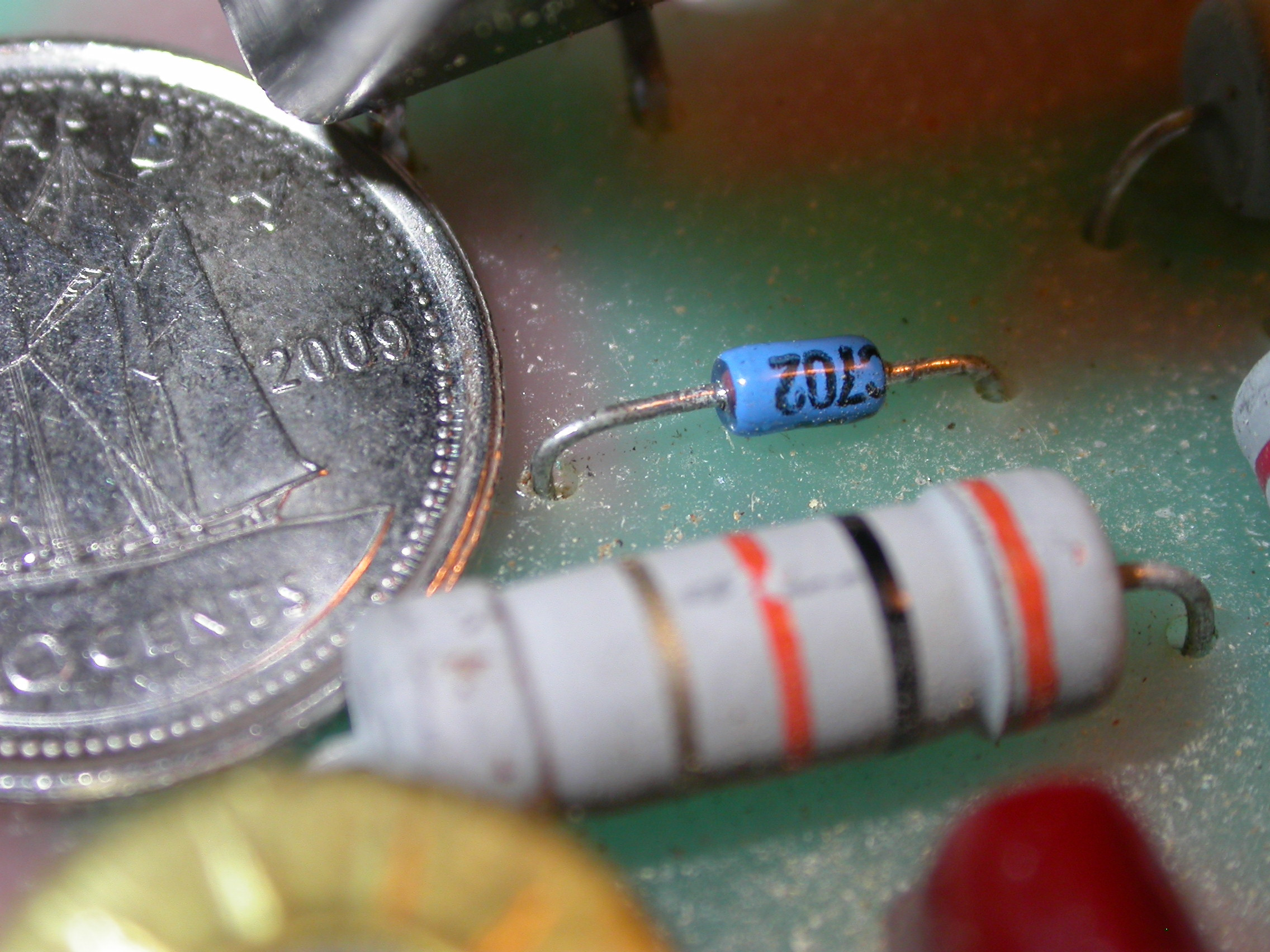
At https://easthope.ca/RyobiScrollSawSC164VS.jpg part of the power
board from a Ryobi scroll saw is visible. A dime is there for scale.
Is the blue thing a diode? Search for C702 produced many citations;
none seeming particularly relevant.
Thanks, ... P.
Likely a DIAC
In article <10tgrsa$11ss$1@ehsjr.eternal-september.org>, ehsjr <ehsjr@verizon.net> wrote:
Likely a DIAC
Thanks Ed.
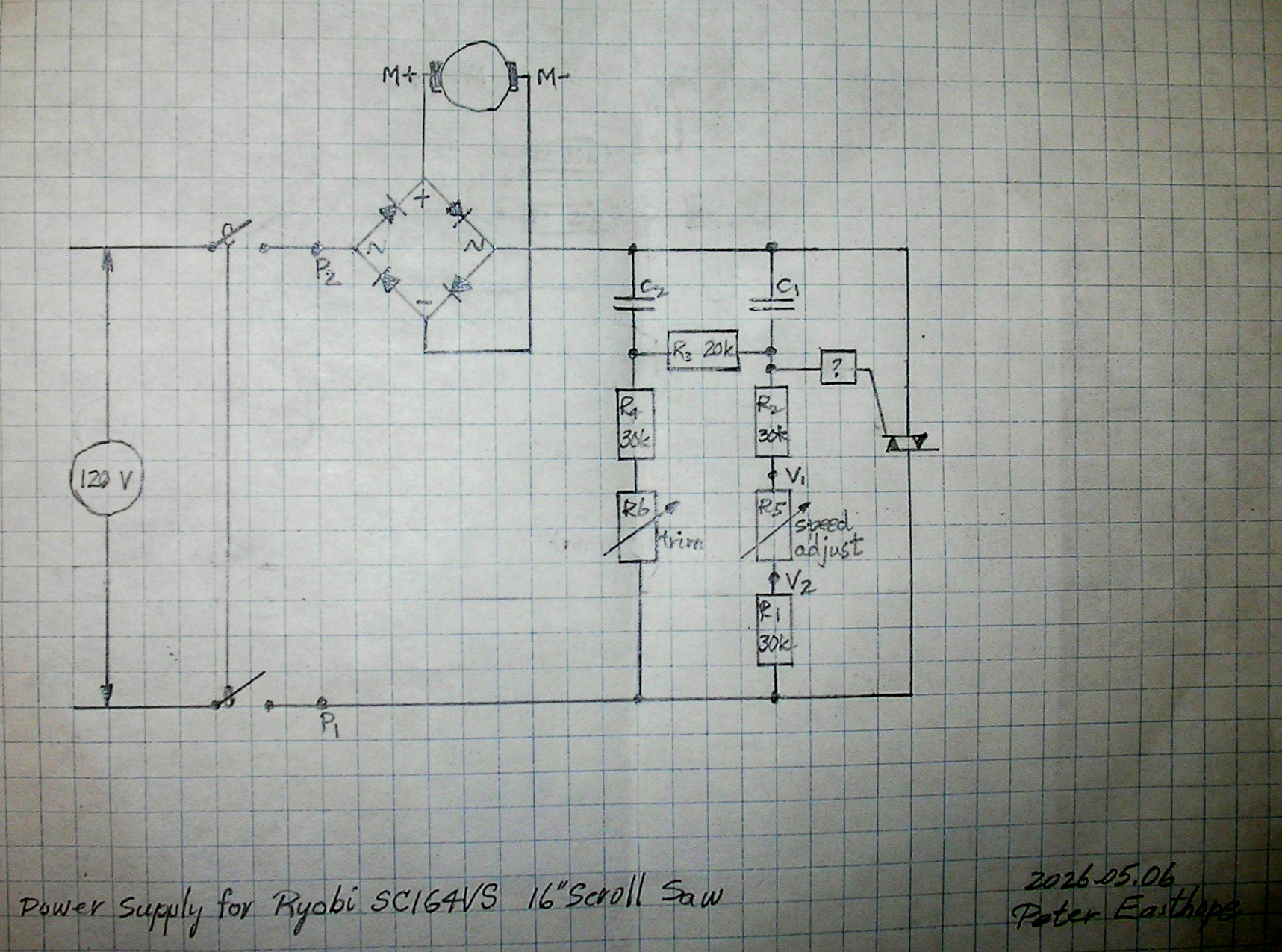
A sketch of the circuit is here. https://easthope.ca/RyobiScrollSawSC164VSboard.jpg
A search for "DIAC C702" gave these pages.
https://www.aliexpress.com/s/wiki-ssr/article/db3-c702-diode https://www.st.com/resource/en/datasheet/db3.pdf
In one of the documents, mention of a DIAC feeding the gate of a TRIAC
is consistent with the observed circuit.
In a week or two, can check Lee's Electronic Components here in
Vancouver for a replacment; a C702 or a DB3.
Meanwhile I'm curious about the circuit. R5 adjusts the voltage
delivered to the gate of the TRIAC. What do C2, R3, R4 and R6 add to
that?
Thanks, ... P.
They control the timing (what phase angle) of the trigger to the triac.
Maybe the simplest way to think of it is to picture 180 degrees of a
sine wave and consider how long the triac conducts if the trigger is
applied at 0 degrees, 1 degree, 2 degrees etc. ...
In article <10tiqi5$11st$1@ehsjr.eternal-september.org>, ehsjr <ehsjr@verizon.net> wrote:
They control the timing (what phase angle) of the trigger to the triac.
Maybe the simplest way to think of it is to picture 180 degrees of a
sine wave and consider how long the triac conducts if the trigger is
applied at 0 degrees, 1 degree, 2 degrees etc. ...
Ed, thanks for the explanation. Very helpful.
My immediate challenge is to find a replacement for the C702.
From Web based documentation, DB3 is somewhat equivalent and
may substitute.
Thx, ... P.
| Sysop: | Amessyroom |
|---|---|
| Location: | Fayetteville, NC |
| Users: | 74 |
| Nodes: | 6 (0 / 6) |
| Uptime: | 31:01:30 |
| Calls: | 1,195 |
| Files: | 1,354 |
| D/L today: |
16 files (19,622K bytes) |
| Messages: | 294,363 |