I'm going to build a new rear wheel for the Catrike. I will be buying
a new rim. I will use the almost new hub that came on a wheel I bought
for while I was rebuilding my last rear wheel, so it only has a few
hundred miles. I don't like the rim, but that's another story.
I see rim joints are either welded, pinned, or sleeved. I've read
varying opinions about the three joining methods, but I'm still not
clear on the pros and cons of each. I will be using a 35 or 40 MM
tube clincher tire, but there is no brake on my rear wheel, so that is
not a consideration. I'm open to any and all suggestions, comments or
???
--
C'est bon
Soloman
On 8/1/2026 12:50 PM, Catrike Ryder wrote:
I'm going to build a new rear wheel for the Catrike. I will be buying
a new rim. I will use the almost new hub that came on a wheel I bought
for while I was rebuilding my last rear wheel, so it only has a few
hundred miles. I don't like the rim, but that's another story.
I see rim joints are either welded, pinned, or sleeved. I've read
varying opinions about the three joining methods, but I'm still not
clear on the pros and cons of each. I will be using a 35 or 40 MM
tube clincher tire, but there is no brake on my rear wheel, so that is
not a consideration. I'm open to any and all suggestions, comments or
???
--
C'est bon
Soloman
All of those may be done well or poorly.
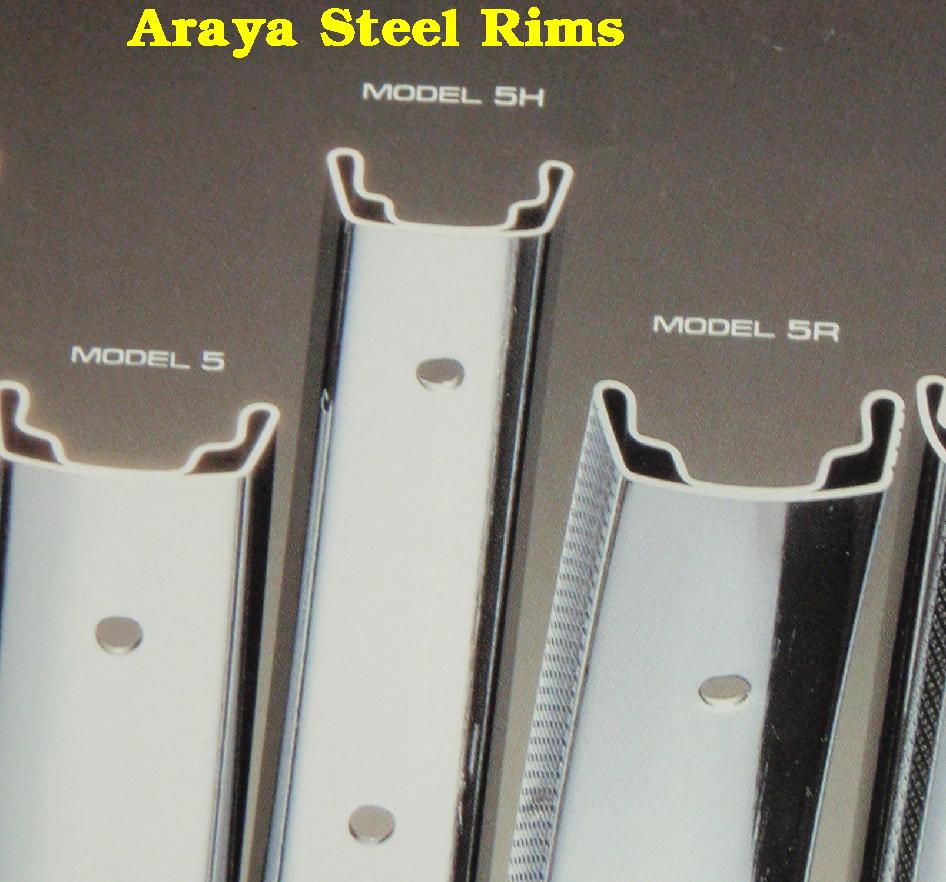
A simple steel rim is just butt welded. They work[1], but
are often uneven at the welded joint. Better quality models
can be very good at the seam: >https://www.yellowjersey.org/photosfromthepast/rimsec2.jpg
Basic aluminum solid-section rims are thicker, and so
usually have a better joint finish than steel when butt
welded. Cheaper models often show weld flash (with risk of
tube puncture) on the inside.
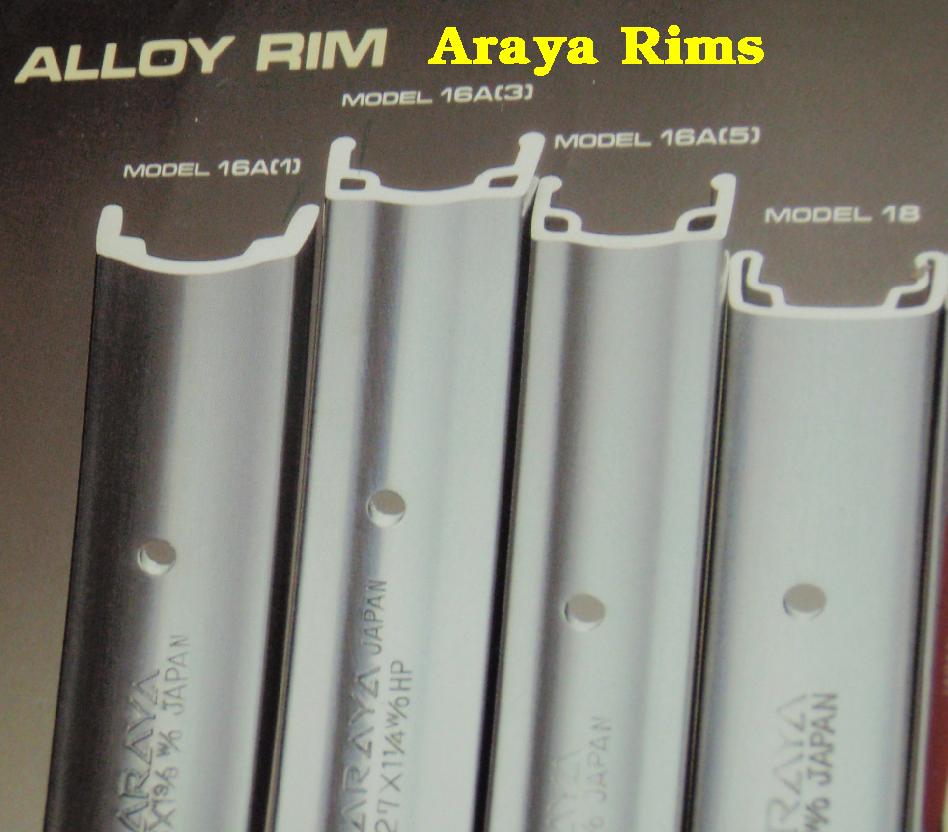
Cost and weight considerations mean there are a very wide
range of designs:
https://www.yellowjersey.org/photosfromthepast/WEINRIMS.JPG
https://www.yellowjersey.org/photosfromthepast/rimsec3.jpg
The styles shown in the two middle models may employ pins:
https://www.yellowjersey.org/photosfromthepast/rimpins.jpg
That means of course no welding, and hence a more even joint
at lower production cost. This is a much less common
technique now.
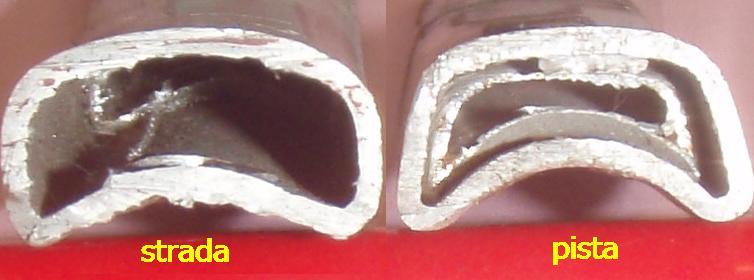
Hollow section rims are absolutely a better design in an
engineering sense[2]. They are stronger for their weight
than a solid section. The very light models may employ a
liner or sleeve at the joint.
https://www.yellowjersey.org/photosfromthepast/rimsect.jpg
Modern machinery allows a very effective post-weld finish
both for roundness and nicely cut even side faces at very
moderate cost and are the primary shop quality rims
wheelbuilders use. (where pennies matter, lower quality is
deemed acceptable)
Note that carbon rims have none of those joining or
finishing issues, since they are not rolled and seamed from
a strip or an extrusion.
[1] even the cheapest models do not fail at the weld.
[2] in urban use, heavier side sections resist denting
better than thinner, lighter designs. That's a good example
of 'better for what?' or 'better for whom?'
On Sat, 1 Aug 2026 13:24:50 -0500, AMuzi <am@yellowjersey.org> wrote:
On 8/1/2026 12:50 PM, Catrike Ryder wrote:
I'm going to build a new rear wheel for the Catrike. I will be buying
a new rim. I will use the almost new hub that came on a wheel I bought
for while I was rebuilding my last rear wheel, so it only has a few
hundred miles. I don't like the rim, but that's another story.
I see rim joints are either welded, pinned, or sleeved. I've read
varying opinions about the three joining methods, but I'm still not
clear on the pros and cons of each. I will be using a 35 or 40 MM
tube clincher tire, but there is no brake on my rear wheel, so that is
not a consideration. I'm open to any and all suggestions, comments or
???
--
C'est bon
Soloman
All of those may be done well or poorly.
A simple steel rim is just butt welded. They work[1], but
are often uneven at the welded joint. Better quality models
can be very good at the seam:
https://www.yellowjersey.org/photosfromthepast/rimsec2.jpg
Basic aluminum solid-section rims are thicker, and so
usually have a better joint finish than steel when butt
welded. Cheaper models often show weld flash (with risk of
tube puncture) on the inside.
Cost and weight considerations mean there are a very wide
range of designs:
https://www.yellowjersey.org/photosfromthepast/WEINRIMS.JPG
https://www.yellowjersey.org/photosfromthepast/rimsec3.jpg
The styles shown in the two middle models may employ pins:
https://www.yellowjersey.org/photosfromthepast/rimpins.jpg
That means of course no welding, and hence a more even joint
at lower production cost. This is a much less common
technique now.
Hollow section rims are absolutely a better design in an
engineering sense[2]. They are stronger for their weight
than a solid section. The very light models may employ a
liner or sleeve at the joint.
https://www.yellowjersey.org/photosfromthepast/rimsect.jpg
Modern machinery allows a very effective post-weld finish
both for roundness and nicely cut even side faces at very
moderate cost and are the primary shop quality rims
wheelbuilders use. (where pennies matter, lower quality is
deemed acceptable)
Note that carbon rims have none of those joining or
finishing issues, since they are not rolled and seamed from
a strip or an extrusion.
[1] even the cheapest models do not fail at the weld.
[2] in urban use, heavier side sections resist denting
better than thinner, lighter designs. That's a good example
of 'better for what?' or 'better for whom?'
I want a double wall rim, but is there any advantage to the rims with
a lot of height?
--
C'est bon
Soloman
On 8/1/2026 3:09 PM, Catrike Ryder wrote:
On Sat, 1 Aug 2026 13:24:50 -0500, AMuzi <am@yellowjersey.org> wrote:
On 8/1/2026 12:50 PM, Catrike Ryder wrote:
I'm going to build a new rear wheel for the Catrike. I will be buying
a new rim. I will use the almost new hub that came on a wheel I bought >>>> for while I was rebuilding my last rear wheel, so it only has a few
hundred miles. I don't like the rim, but that's another story.
I see rim joints are either welded, pinned, or sleeved. I've read
varying opinions about the three joining methods, but I'm still not
clear on the pros and cons of each. I will be using a 35 or 40 MM
tube clincher tire, but there is no brake on my rear wheel, so that is >>>> not a consideration. I'm open to any and all suggestions, comments or
???
--
C'est bon
Soloman
All of those may be done well or poorly.
A simple steel rim is just butt welded. They work[1], but
are often uneven at the welded joint. Better quality models
can be very good at the seam:
https://www.yellowjersey.org/photosfromthepast/rimsec2.jpg
Basic aluminum solid-section rims are thicker, and so
usually have a better joint finish than steel when butt
welded. Cheaper models often show weld flash (with risk of
tube puncture) on the inside.
Cost and weight considerations mean there are a very wide
range of designs:
https://www.yellowjersey.org/photosfromthepast/WEINRIMS.JPG
https://www.yellowjersey.org/photosfromthepast/rimsec3.jpg
The styles shown in the two middle models may employ pins:
https://www.yellowjersey.org/photosfromthepast/rimpins.jpg
That means of course no welding, and hence a more even joint
at lower production cost. This is a much less common
technique now.
Hollow section rims are absolutely a better design in an
engineering sense[2]. They are stronger for their weight
than a solid section. The very light models may employ a
liner or sleeve at the joint.
https://www.yellowjersey.org/photosfromthepast/rimsect.jpg
Modern machinery allows a very effective post-weld finish
both for roundness and nicely cut even side faces at very
moderate cost and are the primary shop quality rims
wheelbuilders use. (where pennies matter, lower quality is
deemed acceptable)
Note that carbon rims have none of those joining or
finishing issues, since they are not rolled and seamed from
a strip or an extrusion.
[1] even the cheapest models do not fail at the weld.
[2] in urban use, heavier side sections resist denting
better than thinner, lighter designs. That's a good example
of 'better for what?' or 'better for whom?'
I want a double wall rim, but is there any advantage to the rims with
a lot of height?
--
C'est bon
Soloman
Aside from aesthetics, yes, generally, probably.[1]
The torsional resistance of a tube is linear to wall
thickness but exponential of minor diameter. Rims are not
tubes (although tubular rims are closer to an idealized tube
than are demountables) but do approach those principles.
Making a rim section larger and thinner, placing the
material farther from the center, makes it more efficiently
stiff and light. Limits are of course buckling or cracking
of exceptionally thin material and, for urban cyclists, rim
dents. With rim brakes, thinner sidewalls do wear through
and thicker wear longer.
Modern rims also add material at the nipple seat to prevent
cracking under our current high spoke tensions.
There are a great many design considerations! Generally the
closer a rim is to an idealized tube, the stiffer it will be
for any given mass of material. But many other
considerations are important such as the differential
between tire bead seat diameter and depth of the center
section. A greater difference there makes tire changes
easier (and we have all experienced those shallow-drop rims
which are nigh-impossible with hands only!). For
tubeless-compatible designs, the tire bead seat is wider
laterally for another example.
To your question, deep aero rims will be stiffer per mass of
material but excessively large sections do use more material
and so are seldom all that light.
https://velocityusa.com/cdn/shop/files/Deep_V_1_272_450_600x.png?v=1764103561
The sweet spot seems to be where most midprice rims are now-
a truncated aero-ish shape but not too aero.
https://velocityusa.com/cdn/shop/files/Dyad_338_450_600x.png?v=1764103690
[1]
That's a very abbreviated survey of rim design.
There's a LOT more:
https://www.ssab.com/en/support/how-to-design/general-design/structural-stiffness/20-questions
On Sat, 1 Aug 2026 16:02:19 -0500, AMuzi <am@yellowjersey.org> wrote:
On 8/1/2026 3:09 PM, Catrike Ryder wrote:
On Sat, 1 Aug 2026 13:24:50 -0500, AMuzi <am@yellowjersey.org> wrote:
On 8/1/2026 12:50 PM, Catrike Ryder wrote:
I'm going to build a new rear wheel for the Catrike. I will be buying >>>>> a new rim. I will use the almost new hub that came on a wheel I bought >>>>> for while I was rebuilding my last rear wheel, so it only has a few
hundred miles. I don't like the rim, but that's another story.
I see rim joints are either welded, pinned, or sleeved. I've read
varying opinions about the three joining methods, but I'm still not
clear on the pros and cons of each. I will be using a 35 or 40 MM
tube clincher tire, but there is no brake on my rear wheel, so that is >>>>> not a consideration. I'm open to any and all suggestions, comments or >>>>> ???
--
C'est bon
Soloman
All of those may be done well or poorly.
A simple steel rim is just butt welded. They work[1], but
are often uneven at the welded joint. Better quality models
can be very good at the seam:
https://www.yellowjersey.org/photosfromthepast/rimsec2.jpg
Basic aluminum solid-section rims are thicker, and so
usually have a better joint finish than steel when butt
welded. Cheaper models often show weld flash (with risk of
tube puncture) on the inside.
Cost and weight considerations mean there are a very wide
range of designs:
https://www.yellowjersey.org/photosfromthepast/WEINRIMS.JPG
https://www.yellowjersey.org/photosfromthepast/rimsec3.jpg
The styles shown in the two middle models may employ pins:
https://www.yellowjersey.org/photosfromthepast/rimpins.jpg
That means of course no welding, and hence a more even joint
at lower production cost. This is a much less common
technique now.
Hollow section rims are absolutely a better design in an
engineering sense[2]. They are stronger for their weight
than a solid section. The very light models may employ a
liner or sleeve at the joint.
https://www.yellowjersey.org/photosfromthepast/rimsect.jpg
Modern machinery allows a very effective post-weld finish
both for roundness and nicely cut even side faces at very
moderate cost and are the primary shop quality rims
wheelbuilders use. (where pennies matter, lower quality is
deemed acceptable)
Note that carbon rims have none of those joining or
finishing issues, since they are not rolled and seamed from
a strip or an extrusion.
[1] even the cheapest models do not fail at the weld.
[2] in urban use, heavier side sections resist denting
better than thinner, lighter designs. That's a good example
of 'better for what?' or 'better for whom?'
I want a double wall rim, but is there any advantage to the rims with
a lot of height?
--
C'est bon
Soloman
Aside from aesthetics, yes, generally, probably.[1]
The torsional resistance of a tube is linear to wall
thickness but exponential of minor diameter. Rims are not
tubes (although tubular rims are closer to an idealized tube
than are demountables) but do approach those principles.
Making a rim section larger and thinner, placing the
material farther from the center, makes it more efficiently
stiff and light. Limits are of course buckling or cracking
of exceptionally thin material and, for urban cyclists, rim
dents. With rim brakes, thinner sidewalls do wear through
and thicker wear longer.
Modern rims also add material at the nipple seat to prevent
cracking under our current high spoke tensions.
There are a great many design considerations! Generally the
closer a rim is to an idealized tube, the stiffer it will be
for any given mass of material. But many other
considerations are important such as the differential
between tire bead seat diameter and depth of the center
section. A greater difference there makes tire changes
easier (and we have all experienced those shallow-drop rims
which are nigh-impossible with hands only!). For
tubeless-compatible designs, the tire bead seat is wider
laterally for another example.
To your question, deep aero rims will be stiffer per mass of
material but excessively large sections do use more material
and so are seldom all that light.
https://velocityusa.com/cdn/shop/files/Deep_V_1_272_450_600x.png?v=1764103561
The sweet spot seems to be where most midprice rims are now-
a truncated aero-ish shape but not too aero.
https://velocityusa.com/cdn/shop/files/Dyad_338_450_600x.png?v=1764103690
[1]
That's a very abbreviated survey of rim design.
There's a LOT more:
https://www.ssab.com/en/support/how-to-design/general-design/structural-stiffness/20-questions
Thanks... I've decided...
I'm looking at VELOCITY A23 NMSW BLACK 26IN RIM https://www.prowheelbuilder.com/velocity-a23-nmsw-black-26in-rim.html
But I'd rather buy it from a shop near my home town.. if you can,
tell me how.
I can do paypal or card.. No rush....
--
C'est bon
Soloman
On Sat, 1 Aug 2026 16:02:19 -0500, AMuzi <am@yellowjersey.org> wrote:
On 8/1/2026 3:09 PM, Catrike Ryder wrote:
On Sat, 1 Aug 2026 13:24:50 -0500, AMuzi <am@yellowjersey.org> wrote:
On 8/1/2026 12:50 PM, Catrike Ryder wrote:
I'm going to build a new rear wheel for the Catrike. I will be buying >>>>> a new rim. I will use the almost new hub that came on a wheel I bought >>>>> for while I was rebuilding my last rear wheel, so it only has a few
hundred miles. I don't like the rim, but that's another story.
I see rim joints are either welded, pinned, or sleeved. I've read
varying opinions about the three joining methods, but I'm still not
clear on the pros and cons of each. I will be using a 35 or 40 MM
tube clincher tire, but there is no brake on my rear wheel, so that is >>>>> not a consideration. I'm open to any and all suggestions, comments or >>>>> ???
--
C'est bon
Soloman
All of those may be done well or poorly.
A simple steel rim is just butt welded. They work[1], but
are often uneven at the welded joint. Better quality models
can be very good at the seam:
https://www.yellowjersey.org/photosfromthepast/rimsec2.jpg
Basic aluminum solid-section rims are thicker, and so
usually have a better joint finish than steel when butt
welded. Cheaper models often show weld flash (with risk of
tube puncture) on the inside.
Cost and weight considerations mean there are a very wide
range of designs:
https://www.yellowjersey.org/photosfromthepast/WEINRIMS.JPG
https://www.yellowjersey.org/photosfromthepast/rimsec3.jpg
The styles shown in the two middle models may employ pins:
https://www.yellowjersey.org/photosfromthepast/rimpins.jpg
That means of course no welding, and hence a more even joint
at lower production cost. This is a much less common
technique now.
Hollow section rims are absolutely a better design in an
engineering sense[2]. They are stronger for their weight
than a solid section. The very light models may employ a
liner or sleeve at the joint.
https://www.yellowjersey.org/photosfromthepast/rimsect.jpg
Modern machinery allows a very effective post-weld finish
both for roundness and nicely cut even side faces at very
moderate cost and are the primary shop quality rims
wheelbuilders use. (where pennies matter, lower quality is
deemed acceptable)
Note that carbon rims have none of those joining or
finishing issues, since they are not rolled and seamed from
a strip or an extrusion.
[1] even the cheapest models do not fail at the weld.
[2] in urban use, heavier side sections resist denting
better than thinner, lighter designs. That's a good example
of 'better for what?' or 'better for whom?'
I want a double wall rim, but is there any advantage to the rims with
a lot of height?
--
C'est bon
Soloman
Aside from aesthetics, yes, generally, probably.[1]
The torsional resistance of a tube is linear to wall
thickness but exponential of minor diameter. Rims are not
tubes (although tubular rims are closer to an idealized tube
than are demountables) but do approach those principles.
Making a rim section larger and thinner, placing the
material farther from the center, makes it more efficiently
stiff and light. Limits are of course buckling or cracking
of exceptionally thin material and, for urban cyclists, rim
dents. With rim brakes, thinner sidewalls do wear through
and thicker wear longer.
Modern rims also add material at the nipple seat to prevent
cracking under our current high spoke tensions.
There are a great many design considerations! Generally the
closer a rim is to an idealized tube, the stiffer it will be
for any given mass of material. But many other
considerations are important such as the differential
between tire bead seat diameter and depth of the center
section. A greater difference there makes tire changes
easier (and we have all experienced those shallow-drop rims
which are nigh-impossible with hands only!). For
tubeless-compatible designs, the tire bead seat is wider
laterally for another example.
To your question, deep aero rims will be stiffer per mass of
material but excessively large sections do use more material
and so are seldom all that light.
https://velocityusa.com/cdn/shop/files/Deep_V_1_272_450_600x.png?v=1764103561
The sweet spot seems to be where most midprice rims are now-
a truncated aero-ish shape but not too aero.
https://velocityusa.com/cdn/shop/files/Dyad_338_450_600x.png?v=1764103690
[1]
That's a very abbreviated survey of rim design.
There's a LOT more:
https://www.ssab.com/en/support/how-to-design/general-design/structural-stiffness/20-questions
Thanks... I've decided...
I'm looking at VELOCITY A23 NMSW BLACK 26IN RIM https://www.prowheelbuilder.com/velocity-a23-nmsw-black-26in-rim.html
But I'd rather buy it from a shop near my home town.. if you can,
tell me how.
I can do paypal or card.. No rush....
--
C'est bon
Soloman
On 8/1/2026 5:24 PM, Catrike Ryder wrote:
On Sat, 1 Aug 2026 16:02:19 -0500, AMuzi <am@yellowjersey.org> wrote:
On 8/1/2026 3:09 PM, Catrike Ryder wrote:
On Sat, 1 Aug 2026 13:24:50 -0500, AMuzi <am@yellowjersey.org> wrote:
On 8/1/2026 12:50 PM, Catrike Ryder wrote:
I'm going to build a new rear wheel for the Catrike. I will be buying >>>>>> a new rim. I will use the almost new hub that came on a wheel I bought >>>>>> for while I was rebuilding my last rear wheel, so it only has a few >>>>>> hundred miles. I don't like the rim, but that's another story.
I see rim joints are either welded, pinned, or sleeved. I've read
varying opinions about the three joining methods, but I'm still not >>>>>> clear on the pros and cons of each. I will be using a 35 or 40 MM >>>>>> tube clincher tire, but there is no brake on my rear wheel, so that is >>>>>> not a consideration. I'm open to any and all suggestions, comments or >>>>>> ???
--
C'est bon
Soloman
All of those may be done well or poorly.
A simple steel rim is just butt welded. They work[1], but
are often uneven at the welded joint. Better quality models
can be very good at the seam:
https://www.yellowjersey.org/photosfromthepast/rimsec2.jpg
Basic aluminum solid-section rims are thicker, and so
usually have a better joint finish than steel when butt
welded. Cheaper models often show weld flash (with risk of
tube puncture) on the inside.
Cost and weight considerations mean there are a very wide
range of designs:
https://www.yellowjersey.org/photosfromthepast/WEINRIMS.JPG
https://www.yellowjersey.org/photosfromthepast/rimsec3.jpg
The styles shown in the two middle models may employ pins:
https://www.yellowjersey.org/photosfromthepast/rimpins.jpg
That means of course no welding, and hence a more even joint
at lower production cost. This is a much less common
technique now.
Hollow section rims are absolutely a better design in an
engineering sense[2]. They are stronger for their weight
than a solid section. The very light models may employ a
liner or sleeve at the joint.
https://www.yellowjersey.org/photosfromthepast/rimsect.jpg
Modern machinery allows a very effective post-weld finish
both for roundness and nicely cut even side faces at very
moderate cost and are the primary shop quality rims
wheelbuilders use. (where pennies matter, lower quality is
deemed acceptable)
Note that carbon rims have none of those joining or
finishing issues, since they are not rolled and seamed from
a strip or an extrusion.
[1] even the cheapest models do not fail at the weld.
[2] in urban use, heavier side sections resist denting
better than thinner, lighter designs. That's a good example
of 'better for what?' or 'better for whom?'
I want a double wall rim, but is there any advantage to the rims with
a lot of height?
--
C'est bon
Soloman
Aside from aesthetics, yes, generally, probably.[1]
The torsional resistance of a tube is linear to wall
thickness but exponential of minor diameter. Rims are not
tubes (although tubular rims are closer to an idealized tube
than are demountables) but do approach those principles.
Making a rim section larger and thinner, placing the
material farther from the center, makes it more efficiently
stiff and light. Limits are of course buckling or cracking
of exceptionally thin material and, for urban cyclists, rim
dents. With rim brakes, thinner sidewalls do wear through
and thicker wear longer.
Modern rims also add material at the nipple seat to prevent
cracking under our current high spoke tensions.
There are a great many design considerations! Generally the
closer a rim is to an idealized tube, the stiffer it will be
for any given mass of material. But many other
considerations are important such as the differential
between tire bead seat diameter and depth of the center
section. A greater difference there makes tire changes
easier (and we have all experienced those shallow-drop rims
which are nigh-impossible with hands only!). For
tubeless-compatible designs, the tire bead seat is wider
laterally for another example.
To your question, deep aero rims will be stiffer per mass of
material but excessively large sections do use more material
and so are seldom all that light.
https://velocityusa.com/cdn/shop/files/Deep_V_1_272_450_600x.png?v=1764103561
The sweet spot seems to be where most midprice rims are now-
a truncated aero-ish shape but not too aero.
https://velocityusa.com/cdn/shop/files/Dyad_338_450_600x.png?v=1764103690 >>>
[1]
That's a very abbreviated survey of rim design.
There's a LOT more:
https://www.ssab.com/en/support/how-to-design/general-design/structural-stiffness/20-questions
Thanks... I've decided...
I'm looking at VELOCITY A23 NMSW BLACK 26IN RIM
https://www.prowheelbuilder.com/velocity-a23-nmsw-black-26in-rim.html
But I'd rather buy it from a shop near my home town.. if you can,
tell me how.
I can do paypal or card.. No rush....
--
C'est bon
Soloman
Just ask your preferred LBS. Velocity will sell you a rim,
but they are also very accommodating on the dealer side.
| Sysop: | Amessyroom |
|---|---|
| Location: | Fayetteville, NC |
| Users: | 74 |
| Nodes: | 6 (0 / 6) |
| Uptime: | 53:40:14 |
| Calls: | 1,101 |
| Calls today: | 1 |
| Files: | 1,339 |
| Messages: | 276,196 |