There are about 4100 calo4eiws in a lb of body fat. This means that excess wight which is entirely body fat would be over 20,000 calories for the 5 lbs I've managed to lose in 3,000 miles of riding.Cycling Calorie Calculator | runbundle
Riding burns a lot of calories but it also leaves your body depleted and you tired so you have to eat to replace the 1000 to 1500 calories you burn when riding. This is why it is difficult to lose weight. The half way stop includes a snack that is over 500 calories. Then after the ride and shower, I go out to lunch.
There are about 4100 calo4eiws in a lb of body fat. This means that excess wight which is entirely body fat would be over 20,000 calories for the 5 lbs I've managed to lose in 3,000 miles of riding.Riding a bike generally can burn a lot calories but it really depends on
Riding burns a lot of calories but it also leaves your body depleted and you tired so you have to eat to replace the 1000 to 1500 calories you burn when riding. This is why it is difficult to lose weight. The half way stop includes a snack that is over 500 calories. Then after the ride and shower, I go out to lunch.
On Fri Jul 17 16:29:44 2026 cyclintom wrote:
There are about 4100 calo4eiws in a lb of body fat. This means that excess wight which is entirely body fat would be over 20,000 calories for the 5 lbs I've managed to lose in 3,000 miles of riding.
Riding burns a lot of calories but it also leaves your body depleted and you tired so you have to eat to replace the 1000 to 1500 calories you burn when riding. This is why it is difficult to lose weight. The half way stop includes a snack that is over 500 calories. Then after the ride and shower, I go out to lunch.
Riding a bike generally can burn a lot calories but it really depends onDon't you think you should vbe telling Barmin that they are stupid and don't know what they're doing rather than telling me that I can't read the numbbers off of their meter?
the level of exertion you are riding at. Higher heart rate average and
more more power equal more calories.However leisurely riding along easy
you are not burning huge amounts of calories. Unlike running which is
much more consistent in burning calories.
Running burns by far the the most up about 100 Calories a mile for
average person and size. Not so dependent on pace but does go up if you
run faster. The length is the key. So if I run 5 miles about 500
calories and in the old days that was 40 minutes, or about 750 and hour.
On a bike it is more about 450-600 per hour but if you are really
pushing like TDF pro or climbing it can go way up to 1000 a hour. The
average person will never do this.
In my glory days of running in my mid 30's I could run 10 miles in about
78 minutes and burn up around 1100 calories. On a bike these days that
would take about 3 hours to accomplish at a good clip.
On Fri Jul 17 12:02:52 2026 Mark J cleary wrote:
Riding a bike generally can burn a lot calories but it really depends on
the level of exertion you are riding at. Higher heart rate average and
more more power equal more calories.However leisurely riding along easy
you are not burning huge amounts of calories. Unlike running which is
much more consistent in burning calories.
Running burns by far the the most up about 100 Calories a mile for
average person and size. Not so dependent on pace but does go up if you
run faster. The length is the key. So if I run 5 miles about 500
calories and in the old days that was 40 minutes, or about 750 and hour.
On a bike it is more about 450-600 per hour but if you are really
pushing like TDF pro or climbing it can go way up to 1000 a hour. The
average person will never do this.
In my glory days of running in my mid 30's I could run 10 miles in about
78 minutes and burn up around 1100 calories. On a bike these days that
would take about 3 hours to accomplish at a good clip.
Don't you think you should vbe telling Barmin that they are stupid and
don't know what they're doing rather than telling me that I can't read
the numbbers off of their meter?
On Fri Jul 17 16:47:47 2026 cyclintom wrote:
On Fri Jul 17 16:29:44 2026 cyclintom wrote:
There are about 4100 calo4eiws in a lb of body fat. This means that excess wight which is entirely body fat would be over 20,000 calories for the 5 lbs I've managed to lose in 3,000 miles of riding.
Riding burns a lot of calories but it also leaves your body depleted and you tired so you have to eat to replace the 1000 to 1500 calories you burn when riding. This is why it is difficult to lose weight. The half way stop includes a snack that is over 500 calories. Then after the ride and shower, I go out to lunch.
Cycling Calorie Calculator | runbundle
There are about 4100 calo4eiws in a lb of body fat.
"Cycling Calorie Calculator" ><https://runbundle.com/tools/cycling/cycling-calorie-calculator>
Am Fri, 17 Jul 2026 16:01:14 -0700 schrieb Jeff Liebermann <jeffl@cruzio.com>:
Using your calculator I get 244 watts and 1839 calories burned @ a rolling average speed of 14 mph. Right now my power meter has dead batteries which effects the reporting but three weeks ago when the batteries were still good on this same ride I reported 1593 calories and average power of 151 watts."Cycling Calorie Calculator" ><https://runbundle.com/tools/cycling/cycling-calorie-calculator>
IMO, this calculator is far too basic and therefore almost
useless.
<http://kreuzotter.de/english/espeed.htm> does more and does it
better.
By calculating an example (ten kilometers at 25 km/h assuming a
71.3 kg person), rundbundle estimates 297 kcal.
Calculating backwards with kreuzotter.de needs a roadster bike
and 185 Watts to get near that value: 298 kcal with 25 km/h over
ten kilometers.
Estimating me on my racing bike with hands on top instead needs
only 116 watt, burning only 181 kcal. Hands on the drops reduces
the necessary power to 86 watts, needing only 136 kcal.
297/86 is a factor of 3.45. An estimation that doesn't allow to
specify the bike type isn't usefull.
A look at my current power curve*) shows me that I can maintain
90 watts for hours on my bike, but can only sustain 300 watts for
30 seconds.
*) <https://support.garmin.com/en-US/?faq=3diK5cTU5TXn8LFtzx05CUx7>
cyclintom <cyclintom@yahoo.com> wrote:
On Fri Jul 17 12:02:52 2026 Mark J cleary wrote:
Riding a bike generally can burn a lot calories but it really depends on >> the level of exertion you are riding at. Higher heart rate average and
more more power equal more calories.However leisurely riding along easy
you are not burning huge amounts of calories. Unlike running which is
much more consistent in burning calories.
Running burns by far the the most up about 100 Calories a mile for
average person and size. Not so dependent on pace but does go up if you
run faster. The length is the key. So if I run 5 miles about 500
calories and in the old days that was 40 minutes, or about 750 and hour. >> On a bike it is more about 450-600 per hour but if you are really
pushing like TDF pro or climbing it can go way up to 1000 a hour. The
average person will never do this.
In my glory days of running in my mid 30's I could run 10 miles in about >> 78 minutes and burn up around 1100 calories. On a bike these days that
would take about 3 hours to accomplish at a good clip.
Yes, I've got you. Your imagination is far better than actual instrumentation. What poiwer meter do you own?Don't you think you should vbe telling Barmin that they are stupid and don't know what they're doing rather than telling me that I can't read
the numbbers off of their meter?
The Garmin is simply reporting what the Power meter is reporting, it
doesn?t process or sanity check it, it simply takes it as is.
On Fri Jul 17 19:15:21 2026 Roger Merriman wrote:
cyclintom <cyclintom@yahoo.com> wrote:
On Fri Jul 17 12:02:52 2026 Mark J cleary wrote:The Garmin is simply reporting what the Power meter is reporting, it
Riding a bike generally can burn a lot calories but it really depends on >>>> the level of exertion you are riding at. Higher heart rate average and >>>> more more power equal more calories.However leisurely riding along easy >>>> you are not burning huge amounts of calories. Unlike running which is >>>> much more consistent in burning calories.
Running burns by far the the most up about 100 Calories a mile for
average person and size. Not so dependent on pace but does go up if you >>>> run faster. The length is the key. So if I run 5 miles about 500
calories and in the old days that was 40 minutes, or about 750 and hour. >>>> On a bike it is more about 450-600 per hour but if you are really
pushing like TDF pro or climbing it can go way up to 1000 a hour. The >>>> average person will never do this.
In my glory days of running in my mid 30's I could run 10 miles in about >>>> 78 minutes and burn up around 1100 calories. On a bike these days that >>>> would take about 3 hours to accomplish at a good clip.
Don't you think you should vbe telling Barmin that they are stupid and
don't know what they're doing rather than telling me that I can't read
the numbbers off of their meter?
doesn?t process or sanity check it, it simply takes it as is.
Yes, I've got you. Your imagination is far better than actual instrumentation. What poiwer meter do you own?
On Sat Jul 18 13:49:06 2026 Wolfgang Strobl wrote:
Am Fri, 17 Jul 2026 16:01:14 -0700 schrieb Jeff Liebermann
<jeffl@cruzio.com>:
"Cycling Calorie Calculator"
<https://runbundle.com/tools/cycling/cycling-calorie-calculator>
IMO, this calculator is far too basic and therefore almost
useless.
<http://kreuzotter.de/english/espeed.htm> does more and does it
better.
By calculating an example (ten kilometers at 25 km/h assuming a
71.3 kg person), rundbundle estimates 297 kcal.
Calculating backwards with kreuzotter.de needs a roadster bike
and 185 Watts to get near that value: 298 kcal with 25 km/h over
ten kilometers.
Estimating me on my racing bike with hands on top instead needs
only 116 watt, burning only 181 kcal. Hands on the drops reduces
the necessary power to 86 watts, needing only 136 kcal.
297/86 is a factor of 3.45. An estimation that doesn't allow to
specify the bike type isn't usefull.
A look at my current power curve*) shows me that I can maintain
90 watts for hours on my bike, but can only sustain 300 watts for
30 seconds.
*) <https://support.garmin.com/en-US/?faq=iK5cTU5TXn8LFtzx05CUx7>
Using your calculator I get 244 watts and 1839 calories burned @ a rolling average speed of 14 mph.
Right now my power meter has dead batteries which effects the reporting but three weeks ago when the batteries were still good on this same ride I reported 1593 calories and average power of 151 watts.
I think that your calculator ir misrepresenting total
frontal area by assuming some relationship between
heigth and frontal area.
Am Sun, 19 Jul 2026 19:35:27 GMT schrieb cyclintom
<cyclintom@yahoo.com>:
On Sat Jul 18 13:49:06 2026 Wolfgang Strobl wrote:
Am Fri, 17 Jul 2026 16:01:14 -0700 schrieb Jeff Liebermann
<jeffl@cruzio.com>:
"Cycling Calorie Calculator"
<https://runbundle.com/tools/cycling/cycling-calorie-calculator>
IMO, this calculator is far too basic and therefore almost
useless.
<http://kreuzotter.de/english/espeed.htm> does more and does it
better.
By calculating an example (ten kilometers at 25 km/h assuming a
71.3 kg person), rundbundle estimates 297 kcal.
Calculating backwards with kreuzotter.de needs a roadster bike
and 185 Watts to get near that value: 298 kcal with 25 km/h over
ten kilometers.
Estimating me on my racing bike with hands on top instead needs
only 116 watt, burning only 181 kcal. Hands on the drops reduces
the necessary power to 86 watts, needing only 136 kcal.
297/86 is a factor of 3.45. An estimation that doesn't allow to
specify the bike type isn't usefull.
A look at my current power curve*) shows me that I can maintain
90 watts for hours on my bike, but can only sustain 300 watts for
30 seconds.
*) <https://support.garmin.com/en-US/?faq=iK5cTU5TXn8LFtzx05CUx7>
Using your calculator I get 244 watts and 1839 calories burned @ a
rolling average speed of 14 mph.
I guess you mean http://kreuzotter.de. That power estimator was
programmed by Walter Zorn, a German programmer, not by me.
Can't comment on the values you got, because you didn't tell what
values you put into that program.
Right now my power meter has dead batteries which effects the reporting
but three weeks ago when the batteries were still good on this same ride
I reported 1593 calories and average power of 151 watts.
What powermeter reports wrong values with a declining or dead
battery? Those power meters I have experience with don't do that
and I'm quite sure that none do it that way. Like most digital
devices, they just don't work without sufficient power. This
applies to both Garmin Rally XC200 powermeter pedals on my bike
and to what my wife has on her bike, a single sided powermeter
from Quarq.
I think that your calculator ir misrepresenting total
frontal area by assuming some relationship between
heigth and frontal area.
That's of course a lot better that calculating with a fixed
frontal area, independent from bicycle type and rider position.
What values did you enter, by the way?
Walter Zorns program calculates quite a lot from parameters you
have been asked to fill in. If you get that wrong, you get
misleading results. Garbage in, garbage out.
Am Sun, 19 Jul 2026 19:35:27 GMT schrieb cyclintom
<cyclintom@yahoo.com>:
On Sat Jul 18 13:49:06 2026 Wolfgang Strobl wrote:
Am Fri, 17 Jul 2026 16:01:14 -0700 schrieb Jeff Liebermann
<jeffl@cruzio.com>:
"Cycling Calorie Calculator"
<https://runbundle.com/tools/cycling/cycling-calorie-calculator>
IMO, this calculator is far too basic and therefore almost
useless.
<http://kreuzotter.de/english/espeed.htm> does more and does it
better.
By calculating an example (ten kilometers at 25 km/h assuming a
71.3 kg person), rundbundle estimates 297 kcal.
Calculating backwards with kreuzotter.de needs a roadster bike
and 185 Watts to get near that value: 298 kcal with 25 km/h over
ten kilometers.
Estimating me on my racing bike with hands on top instead needs
only 116 watt, burning only 181 kcal. Hands on the drops reduces
the necessary power to 86 watts, needing only 136 kcal.
297/86 is a factor of 3.45. An estimation that doesn't allow to
specify the bike type isn't usefull.
A look at my current power curve*) shows me that I can maintain
90 watts for hours on my bike, but can only sustain 300 watts for
30 seconds.
*) <https://support.garmin.com/en-US/?faq=3diK5cTU5TXn8LFtzx05CUx7>
Using your calculator I get 244 watts and 1839 calories burned @ a rolling average speed of 14 mph.
I guess you mean http://kreuzotter.de. That power estimator was
programmed by Walter Zorn, a German programmer, not by me.
Can't comment on the values you got, because you didn't tell what
values you put into that program.
Right now my power meter has dead batteries which effects the reporting but three weeks ago when the batteries were still good on this same ride I reported 1593 calories and average power of 151 watts.
What powermeter reports wrong values with a declining or dead
battery? Those power meters I have experience with don't do that
and I'm quite sure that none do it that way. Like most digital
devices, they just don't work without sufficient power. This
applies to both Garmin Rally XC200 powermeter pedals on my bike
and to what my wife has on her bike, a single sided powermeter
from Quarq.
I'm not blaming you for errors in that calculator, only saying that it's no more accurate than the other and suggesting a source of the errors. And remember that the Garmin is direct instrumentation and not a model.I think that your calculator ir misrepresenting total
frontal area by assuming some relationship between
heigth and frontal area.
That's of course a lot better that calculating with a fixed
frontal area, independent from bicycle type and rider position.
What values did you enter, by the way?
Walter Zorns program calculates quite a lot from parameters you
have been asked to fill in. If you get that wrong, you get
misleading results. Garbage in, garbage out.
Wolfgang Strobl <news51@mystrobl.de> wrote:You don't have a Garmin and you don't have a power meter so you don't know how they work. Actual riding speed is a lOT faster than the averages which contain the slowing dowjn to stop for traffic lights and stop signs etc. So average speed is misleding as hell. Particularly yesterday when I started to ride across a main street, my foot poped out of the pedal and I flopped down in the middle of the road in front of heavy traffic. I got up and walked the bike to the center didivider and had to dig my multitool out, straighten the saddle, recenter the brakes and put the chain back on the ring. This somehow switched the Garmin into Gravel mode which didn't have an autopause so my average speed was 7.9 mph rather than its normal 10 or 11. Now the autopause doesn't stop the Garmin until you come to a complete stop so the slowing up before stopping subtracts from the average speed. But the normal riding speed is 14 mph or more and my heart rate is usually hovering around 120 unless I am going slow
Am Sun, 19 Jul 2026 19:35:27 GMT schrieb cyclintom
<cyclintom@yahoo.com>:
On Sat Jul 18 13:49:06 2026 Wolfgang Strobl wrote:
Am Fri, 17 Jul 2026 16:01:14 -0700 schrieb Jeff Liebermann
<jeffl@cruzio.com>:
"Cycling Calorie Calculator"
<https://runbundle.com/tools/cycling/cycling-calorie-calculator>
IMO, this calculator is far too basic and therefore almost
useless.
<http://kreuzotter.de/english/espeed.htm> does more and does it
better.
By calculating an example (ten kilometers at 25 km/h assuming a
71.3 kg person), rundbundle estimates 297 kcal.
Calculating backwards with kreuzotter.de needs a roadster bike
and 185 Watts to get near that value: 298 kcal with 25 km/h over
ten kilometers.
Estimating me on my racing bike with hands on top instead needs
only 116 watt, burning only 181 kcal. Hands on the drops reduces
the necessary power to 86 watts, needing only 136 kcal.
297/86 is a factor of 3.45. An estimation that doesn't allow to
specify the bike type isn't usefull.
A look at my current power curve*) shows me that I can maintain
90 watts for hours on my bike, but can only sustain 300 watts for
30 seconds.
*) <https://support.garmin.com/en-US/?faq=3diK5cTU5TXn8LFtzx05CUx7>
Using your calculator I get 244 watts and 1839 calories burned @ a
rolling average speed of 14 mph.
I guess you mean http://kreuzotter.de. That power estimator was
programmed by Walter Zorn, a German programmer, not by me.
Can't comment on the values you got, because you didn't tell what
values you put into that program.
He?s claimed to be 215 pounds, and judging from Strava averages 10/11mph on flat rides around the airport. Which the calculator as with the others
gives 60 watts even using the tops and touring tyres etc.
If you actually looked at the calculator you'd know that you do not enter frontal area values, it calculates them from your hieght and weight. I am surprised that you talk about things that you haven't even bothered to look into. Please stop using your imagination to "prove" your point.What values did you enter, by the way?
Walter Zorns program calculates quite a lot from parameters you
have been asked to fill in. If you get that wrong, you get
misleading results. Garbage in, garbage out.
cyclintom <cyclintom@yahoo.com> wrote:
On Fri Jul 17 19:15:21 2026 Roger Merriman wrote:
cyclintom <cyclintom@yahoo.com> wrote:
On Fri Jul 17 12:02:52 2026 Mark J cleary wrote:The Garmin is simply reporting what the Power meter is reporting, it
Riding a bike generally can burn a lot calories but it really depends on >>>> the level of exertion you are riding at. Higher heart rate average and >>>> more more power equal more calories.However leisurely riding along easy >>>> you are not burning huge amounts of calories. Unlike running which is >>>> much more consistent in burning calories.
Running burns by far the the most up about 100 Calories a mile for
average person and size. Not so dependent on pace but does go up if you >>>> run faster. The length is the key. So if I run 5 miles about 500
calories and in the old days that was 40 minutes, or about 750 and hour. >>>> On a bike it is more about 450-600 per hour but if you are really
pushing like TDF pro or climbing it can go way up to 1000 a hour. The >>>> average person will never do this.
In my glory days of running in my mid 30's I could run 10 miles in about >>>> 78 minutes and burn up around 1100 calories. On a bike these days that >>>> would take about 3 hours to accomplish at a good clip.
Don't you think you should vbe telling Barmin that they are stupid and >>> don't know what they're doing rather than telling me that I can't read >>> the numbbers off of their meter?
doesn?t process or sanity check it, it simply takes it as is.
Yes, I've got you. Your imagination is far better than actual instrumentation. What poiwer meter do you own?
Yours for the last two rides is producing believable power (50) andWith virtually dead batte4ries in the power meter.Why do you find that so easy to overlook? Maybe you should consult with Liebermann. He is very good with excuses. The world's greatest EE who never founf a position doing actual engineering.
calories burned, ie 500/600.
Which is if your put in your claimed weight and average speed is what the calculation will give one.
On Mon Jul 20 15:57:26 2026 Roger Merriman wrote:
Wolfgang Strobl <news51@mystrobl.de> wrote:
Am Sun, 19 Jul 2026 19:35:27 GMT schrieb cyclintom
<cyclintom@yahoo.com>:
On Sat Jul 18 13:49:06 2026 Wolfgang Strobl wrote:
Am Fri, 17 Jul 2026 16:01:14 -0700 schrieb Jeff Liebermann
<jeffl@cruzio.com>:
"Cycling Calorie Calculator"
<https://runbundle.com/tools/cycling/cycling-calorie-calculator>
IMO, this calculator is far too basic and therefore almost
useless.
<http://kreuzotter.de/english/espeed.htm> does more and does it
better.
By calculating an example (ten kilometers at 25 km/h assuming a
71.3 kg person), rundbundle estimates 297 kcal.
Calculating backwards with kreuzotter.de needs a roadster bike
and 185 Watts to get near that value: 298 kcal with 25 km/h over
ten kilometers.
Estimating me on my racing bike with hands on top instead needs
only 116 watt, burning only 181 kcal. Hands on the drops reduces
the necessary power to 86 watts, needing only 136 kcal.
297/86 is a factor of 3.45. An estimation that doesn't allow to
specify the bike type isn't usefull.
A look at my current power curve*) shows me that I can maintain
90 watts for hours on my bike, but can only sustain 300 watts for
30 seconds.
*) <https://support.garmin.com/en-US/?faq=iK5cTU5TXn8LFtzx05CUx7>
Using your calculator I get 244 watts and 1839 calories burned @ a
rolling average speed of 14 mph.
I guess you mean http://kreuzotter.de. That power estimator was
programmed by Walter Zorn, a German programmer, not by me.
Can't comment on the values you got, because you didn't tell what
values you put into that program.
He?s claimed to be 215 pounds, and judging from Strava averages 10/11mph on >> flat rides around the airport. Which the calculator as with the others
gives 60 watts even using the tops and touring tyres etc.
You don't have a Garmin and you don't have a power meter so you don't
know how they work. Actual riding speed is a lOT faster than the averages which contain the slowing dowjn to stop for traffic lights and stop signs etc. So average speed is misleding as hell. Particularly yesterday when I started to ride across a main street, my foot poped out of the pedal and
I flopped down in the middle of the road in front of heavy traffic. I
got up and walked the bike to the center didivider and had to dig my multitool out, straighten the saddle, recenter the brakes and put the
chain back on the ring. This somehow switched the Garmin into Gravel mode which didn't have an autopause so my average speed was 7.9 mph rather
than its normal 10 or 11. Now the autopause doesn't stop the Garmin until
you come to a complete stop so the slowing up before stopping subtracts
from the average speed. But the normal riding speed is 14 mph or more and
my heart rate is usually hovering around 120 unless I am going slow
What values did you enter, by the way?
Walter Zorns program calculates quite a lot from parameters you
have been asked to fill in. If you get that wrong, you get
misleading results. Garbage in, garbage out.
If you actually looked at the calculator you'd know that you do not enter frontal area values, it calculates them from your hieght and weight. I am surprised that you talk about things that you haven't even bothered to
look into. Please stop using your imagination to "prove" your point.
Stop trying to say that the Garmin is full of shit or that the power
meter is incorrect. Please by all means contact Garmin+ and -prove to
them that they don't know what they're doing and you with no technical training know more.
i'm definiteoly not trying to insult you because you're doing a good
enough job yourself. I gave you a chart that predicted the amount of
power that the various levels of riders would generate and you even call
that wrong. Not only do I have instrumentation which I am simply
reporting on, but it is remarkably conservative. I said I was slow and
the numbers prove what I said!
Am Sun, 19 Jul 2026 19:35:27 GMT schrieb cyclintom
<cyclintom@yahoo.com>:
On Sat Jul 18 13:49:06 2026 Wolfgang Strobl wrote:
Am Fri, 17 Jul 2026 16:01:14 -0700 schrieb Jeff Liebermann
<jeffl@cruzio.com>:
"Cycling Calorie Calculator"
<https://runbundle.com/tools/cycling/cycling-calorie-calculator>
IMO, this calculator is far too basic and therefore almost
useless.
<http://kreuzotter.de/english/espeed.htm> does more and does it
better.
By calculating an example (ten kilometers at 25 km/h assuming a
71.3 kg person), rundbundle estimates 297 kcal.
Calculating backwards with kreuzotter.de needs a roadster bike
and 185 Watts to get near that value: 298 kcal with 25 km/h over
ten kilometers.
Estimating me on my racing bike with hands on top instead needs
only 116 watt, burning only 181 kcal. Hands on the drops reduces
the necessary power to 86 watts, needing only 136 kcal.
297/86 is a factor of 3.45. An estimation that doesn't allow to
specify the bike type isn't usefull.
A look at my current power curve*) shows me that I can maintain
90 watts for hours on my bike, but can only sustain 300 watts for
30 seconds.
*) <https://support.garmin.com/en-US/?faq=iK5cTU5TXn8LFtzx05CUx7>
Using your calculator I get 244 watts and 1839 calories burned @ a rolling average speed of 14 mph.
I guess you mean http://kreuzotter.de. That power estimator was
programmed by Walter Zorn, a German programmer, not by me.
Can't comment on the values you got, because you didn't tell what
values you put into that program.
Right now my power meter has dead batteries which effects the reporting but three weeks ago when the batteries were still good on this same ride I reported 1593 calories and average power of 151 watts.
What powermeter reports wrong values with a declining or dead
battery? Those power meters I have experience with don't do that
and I'm quite sure that none do it that way. Like most digital
devices, they just don't work without sufficient power. This
applies to both Garmin Rally XC200 powermeter pedals on my bike
and to what my wife has on her bike, a single sided powermeter
from Quarq.
I think that your calculator ir misrepresenting total
frontal area by assuming some relationship between
heigth and frontal area.
That's of course a lot better that calculating with a fixed
frontal area, independent from bicycle type and rider position.
What values did you enter, by the way?
Walter Zorns program calculates quite a lot from parameters you
have been asked to fill in. If you get that wrong, you get
misleading results. Garbage in, garbage out.
Tommy seems to think accuracy is affected by battery voltage. As usual,
he's wrong. You however are correct, when the the power level gets below
a certain point, it just stops working. Accuracy is unaffected before
that. Anyone who has done any electronic design work in the past 30
years knows this.
On Mon, 20 Jul 2026 19:02:38 -0400, zen cycle
<funkmasterxx@hotmail.com> wrote:
Tommy seems to think accuracy is affected by battery voltage. As usual, >>he's wrong. You however are correct, when the the power level gets below
a certain point, it just stops working. Accuracy is unaffected before >>that. Anyone who has done any electronic design work in the past 30
years knows this.
"Edge 1030. Lack of low battery warning" ><https://forums.garmin.com/sports-fitness/sports-fitness/f/edge-1030/214372/lack-of-low-battery-warning>
"To receive this notification about entering battery save mode when
battery goes below 10% you have to activate:
System -> Widget Management -> Notifications
When Notifications widget is active - you receive it. With
Notifications deactivated you won't receive it"
The battery in a Edge 1030+ uses LIPO (lithium polymer) chemistry. It
has a fairly flat (constant voltage) discharge curve. By the time the >voltage drops to 10% capacity, the discharge curve is in rapid
descent, which limits the amount of time a warning icon or message
might be seen before the device turns off.
On Mon, 20 Jul 2026 19:02:38 -0400, zen cycle
<funkmasterxx@hotmail.com> wrote:
Tommy seems to think accuracy is affected by battery voltage. As usual,
he's wrong. You however are correct, when the the power level gets below
a certain point, it just stops working. Accuracy is unaffected before
that. Anyone who has done any electronic design work in the past 30
years knows this.
"Edge 1030. Lack of low battery warning" <https://forums.garmin.com/sports-fitness/sports-fitness/f/edge-1030/214372/lack-of-low-battery-warning>
"To receive this notification about entering battery save mode when
battery goes below 10% you have to activate:
System -> Widget Management -> Notifications
When Notifications widget is active - you receive it. With
Notifications deactivated you won't receive it"
The battery in a Edge 1030+ uses LIPO (lithium polymer) chemistry. It
has a fairly flat (constant voltage) discharge curve. By the time the voltage drops to 10% capacity, the discharge curve is in rapid
descent, which limits the amount of time a warning icon or message
might be seen before the device turns off.
Am Mon, 20 Jul 2026 22:40:35 -0700 schrieb Jeff Liebermann <jeffl@cruzio.com>:
On Mon, 20 Jul 2026 19:02:38 -0400, zen cycle
<funkmasterxx@hotmail.com> wrote:
Tommy seems to think accuracy is affected by battery voltage. As usual, >>> he's wrong. You however are correct, when the the power level gets below >>> a certain point, it just stops working. Accuracy is unaffected before
that. Anyone who has done any electronic design work in the past 30
years knows this.
"Edge 1030. Lack of low battery warning"
<https://forums.garmin.com/sports-fitness/sports-fitness/f/edge-1030/214372/lack-of-low-battery-warning>
"To receive this notification about entering battery save mode when
battery goes below 10% you have to activate:
System -> Widget Management -> Notifications
When Notifications widget is active - you receive it. With
Notifications deactivated you won't receive it"
The battery in a Edge 1030+ uses LIPO (lithium polymer) chemistry. It
has a fairly flat (constant voltage) discharge curve. By the time the
voltage drops to 10% capacity, the discharge curve is in rapid
descent, which limits the amount of time a warning icon or message
might be seen before the device turns off.
I own an Edge 1030+ that I bought in early 2022. It gets mostly
used on my race bike, on our Tacx Neo 2T indoor trainer and
sometimes on one of my two utility bikes. Notifications are
enabled on my device, because I care about battery warnings for
other electronic components - speed sensor in the front wheel,
power meter pedals, wireless electronic shifting (SRAM Rival/GX
AXS Transmission Mullet Groupset) and notifications for group
rides*), when riding with the whole family. About battery
warnings for the 1030+, not so much, I don't care. Haven't seen
an actual warning from my 1030+, ever.
My device rarely gets below a 50% charge, because I usually
recharge it after a long ride and because I shut it down, when it
isn't in use.
While there isn't any installable widget that displays charge
level, it is hard to overlook the charge level, because that
level is displayed during boot and every time the system menu
gets opened by a simple swipe down.
<https://www8.garmin.com/manuals/webhelp/GUID-D9E9CF32-5A89-4140-8B6A-0A61633E397F/EN-US/GUID-3F668630-89EC-4576-ACFD-EF88D433D94F.html>
On Mon, 20 Jul 2026 19:02:38 -0400, zen cycle
<funkmasterxx@hotmail.com> wrote:
Tommy seems to think accuracy is affected by battery voltage. As usual,
he's wrong. You however are correct, when the the power level gets below
a certain point, it just stops working. Accuracy is unaffected before
that. Anyone who has done any electronic design work in the past 30
years knows this.
"Edge 1030. Lack of low battery warning" <https://forums.garmin.com/sports-fitness/sports-fitness/f/edge-1030/214372/lack-of-low-battery-warning>
"To receive this notification about entering battery save mode when
battery goes below 10% you have to activate:
System -> Widget Management -> Notifications
When Notifications widget is active - you receive it. With
Notifications deactivated you won't receive it"
The battery in a Edge 1030+ uses LIPO (lithium polymer) chemistry. It
has a fairly flat (constant voltage) discharge curve. By the time the voltage drops to 10% capacity, the discharge curve is in rapid
descent, which limits the amount of time a warning icon or message
might be seen before the device turns off.
On Mon Jul 20 17:35:18 2026 Wolfgang Strobl wrote:
Am Sun, 19 Jul 2026 19:35:27 GMT schrieb cyclintom
<cyclintom@yahoo.com>:
On Sat Jul 18 13:49:06 2026 Wolfgang Strobl wrote:
Am Fri, 17 Jul 2026 16:01:14 -0700 schrieb Jeff Liebermann
<jeffl@cruzio.com>:
"Cycling Calorie Calculator"
<https://runbundle.com/tools/cycling/cycling-calorie-calculator>
IMO, this calculator is far too basic and therefore almost
useless.
<http://kreuzotter.de/english/espeed.htm> does more and does it
better.
By calculating an example (ten kilometers at 25 km/h assuming a
71.3 kg person), rundbundle estimates 297 kcal.
Calculating backwards with kreuzotter.de needs a roadster bike
and 185 Watts to get near that value: 298 kcal with 25 km/h over
ten kilometers.
Estimating me on my racing bike with hands on top instead needs
only 116 watt, burning only 181 kcal. Hands on the drops reduces
the necessary power to 86 watts, needing only 136 kcal.
297/86 is a factor of 3.45. An estimation that doesn't allow to
specify the bike type isn't usefull.
A look at my current power curve*) shows me that I can maintain
90 watts for hours on my bike, but can only sustain 300 watts for
30 seconds.
*) <https://support.garmin.com/en-US/?faq=iK5cTU5TXn8LFtzx05CUx7>
Using your calculator I get 244 watts and 1839 calories burned @ a rolling average speed of 14 mph.
I guess you mean http://kreuzotter.de. That power estimator was
programmed by Walter Zorn, a German programmer, not by me.
Can't comment on the values you got, because you didn't tell what
values you put into that program.
Right now my power meter has dead batteries which effects the reporting but three weeks ago when the batteries were still good on this same ride I reported 1593 calories and average power of 151 watts.
What powermeter reports wrong values with a declining or dead
battery? Those power meters I have experience with don't do that
and I'm quite sure that none do it that way. Like most digital
devices, they just don't work without sufficient power. This
applies to both Garmin Rally XC200 powermeter pedals on my bike
and to what my wife has on her bike, a single sided powermeter
from Quarq.
I think that your calculator ir misrepresenting total
frontal area by assuming some relationship between
heigth and frontal area.
That's of course a lot better that calculating with a fixed
frontal area, independent from bicycle type and rider position.
What values did you enter, by the way?
Walter Zorns program calculates quite a lot from parameters you
have been asked to fill in. If you get that wrong, you get
misleading results. Garbage in, garbage out.
I'm not blaming you for errors in that calculator,
only saying that it's no more accurate than the other and suggesting a source of the errors. And remember that the Garmin is direct instrumentation and not a model.
I was looking back to when the batteries were new for power readings. An d calories which were reported the same as now when the power meter hadn't been loaded.The modeling programs agree very closely to the Garmin. Surely that should mean something to you.
Your cited program has a big fat butg in the middle of it. It you try to run a repeat it clears some of the readings and won't eork.
So you simple reload the program, fill in all of the variables and it works properly.
But again, it is a model and no replacement for direct instrumentation.
On Mon, 20 Jul 2026 19:02:38 -0400, zen cycle
<funkmasterxx@hotmail.com> wrote:
Tommy seems to think accuracy is affected by battery voltage. As usual,
he's wrong. You however are correct, when the the power level gets below
a certain point, it just stops working. Accuracy is unaffected before
that. Anyone who has done any electronic design work in the past 30
years knows this.
"Edge 1030. Lack of low battery warning" <https://forums.garmin.com/sports-fitness/sports-fitness/f/edge-1030/214372/lack-of-low-battery-warning>
"To receive this notification about entering battery save mode when
battery goes below 10% you have to activate:
System -> Widget Management -> Notifications
When Notifications widget is active - you receive it. With
Notifications deactivated you won't receive it"
The battery in a Edge 1030+ uses LIPO (lithium polymer) chemistry. It
has a fairly flat (constant voltage) discharge curve. By the time the voltage drops to 10% capacity, the discharge curve is in rapid
descent, which limits the amount of time a warning icon or message
might be seen before the device turns off.
On 7/21/2026 12:40 AM, Jeff Liebermann wrote:
On Mon, 20 Jul 2026 19:02:38 -0400, zen cycle
<funkmasterxx@hotmail.com> wrote:
Tommy seems to think accuracy is affected by battery voltage. As usual,
he's wrong. You however are correct, when the the power level gets below >>> a certain point, it just stops working. Accuracy is unaffected before
that. Anyone who has done any electronic design work in the past 30
years knows this.
"Edge 1030. Lack of low battery warning"
<https://forums.garmin.com/sports-fitness/sports-fitness/f/edge-1030/214372/lack-of-low-battery-warning>
"To receive this notification about entering battery save mode when
battery goes below 10% you have to activate:
System -> Widget Management -> Notifications
When Notifications widget is active - you receive it. With
Notifications deactivated you won't receive it"
The battery in a Edge 1030+ uses LIPO (lithium polymer) chemistry. It
has a fairly flat (constant voltage) discharge curve. By the time the
voltage drops to 10% capacity, the discharge curve is in rapid
descent, which limits the amount of time a warning icon or message
might be seen before the device turns off.
The problem may well lie in fantasy and self delusion rather
than electricity, electronics or software.
On 7/21/2026 1:40 AM, Jeff Liebermann wrote:
On Mon, 20 Jul 2026 19:02:38 -0400, zen cycle
<funkmasterxx@hotmail.com> wrote:
Tommy seems to think accuracy is affected by battery voltage. As usual,
he's wrong. You however are correct, when the the power level gets below >>> a certain point, it just stops working. Accuracy is unaffected before
that. Anyone who has done any electronic design work in the past 30
years knows this.
"Edge 1030. Lack of low battery warning"
<https://forums.garmin.com/sports-fitness/sports-fitness/f/edge-1030/214372/lack-of-low-battery-warning>
"To receive this notification about entering battery save mode when
battery goes below 10% you have to activate:
System -> Widget Management -> Notifications
When Notifications widget is active - you receive it. With
Notifications deactivated you won't receive it"
The battery in a Edge 1030+ uses LIPO (lithium polymer) chemistry. It
has a fairly flat (constant voltage) discharge curve. By the time the
voltage drops to 10% capacity, the discharge curve is in rapid
descent, which limits the amount of time a warning icon or message
might be seen before the device turns off.
Which also implies battery level has no effect on accuracy. A similar
search of accuracy vs battery voltage on the IQ2 pedal power meter
system shows no mention of the accuracy being affected by batter y
voltage. There's a reason for that - accuracy isn't affected by battery >voltage because the unit shuts itself off at a certain level. The ASIC
or uController inside the device (both the meter and the head unit) read
the voltage level and will shut down. This happens before the accuracy
of either one is affected - they're specifically designed that way.
With virtually dead batte4ries in the power meter.Why do you find that so easy to overlook? Maybe you should consult with Liebermann. He is very good with excuses. The world's greatest EE who never founf a position doing actual engineering.
Am Mon, 20 Jul 2026 16:29:43 GMT schrieb cyclintom
<cyclintom@yahoo.com>:
On Mon Jul 20 17:35:18 2026 Wolfgang Strobl wrote:
Am Sun, 19 Jul 2026 19:35:27 GMT schrieb cyclintom
<cyclintom@yahoo.com>:
On Sat Jul 18 13:49:06 2026 Wolfgang Strobl wrote:
Am Fri, 17 Jul 2026 16:01:14 -0700 schrieb Jeff Liebermann
<jeffl@cruzio.com>:
"Cycling Calorie Calculator"
<https://runbundle.com/tools/cycling/cycling-calorie-calculator>
IMO, this calculator is far too basic and therefore almost
useless.
<http://kreuzotter.de/english/espeed.htm> does more and does it
better.
By calculating an example (ten kilometers at 25 km/h assuming a
71.3 kg person), rundbundle estimates 297 kcal.
Calculating backwards with kreuzotter.de needs a roadster bike
and 185 Watts to get near that value: 298 kcal with 25 km/h over
ten kilometers.
Estimating me on my racing bike with hands on top instead needs
only 116 watt, burning only 181 kcal. Hands on the drops reduces
the necessary power to 86 watts, needing only 136 kcal.
297/86 is a factor of 3.45. An estimation that doesn't allow to
specify the bike type isn't usefull.
A look at my current power curve*) shows me that I can maintain
90 watts for hours on my bike, but can only sustain 300 watts for
30 seconds.
*) <https://support.garmin.com/en-US/?faq=3diK5cTU5TXn8LFtzx05CUx7>
Using your calculator I get 244 watts and 1839 calories burned @ a rolling average speed of 14 mph.
I guess you mean http://kreuzotter.de. That power estimator was
programmed by Walter Zorn, a German programmer, not by me.
Can't comment on the values you got, because you didn't tell what
values you put into that program.
No comment? But see below.
Right now my power meter has dead batteries which effects the reporting but three weeks ago when the batteries were still good on this same ride I reported 1593 calories and average power of 151 watts.
What powermeter reports wrong values with a declining or dead
battery? Those power meters I have experience with don't do that
and I'm quite sure that none do it that way. Like most digital
devices, they just don't work without sufficient power. This
applies to both Garmin Rally XC200 powermeter pedals on my bike
and to what my wife has on her bike, a single sided powermeter
from Quarq.
No comment, either?
I think that your calculator ir misrepresenting total
frontal area by assuming some relationship between
heigth and frontal area.
That's of course a lot better that calculating with a fixed
frontal area, independent from bicycle type and rider position.
... like the program you used for estimating calories in your
second posting in this thread
<hXt6S.90873$5LBb.46109@fx34.iad>
| Cycling Calorie Calculator | runbundle
That is actually an overblown, SEO optimized series of partially
specific calculators that expect you to select an intensity and
performance beforehand, instead of calculating from specific,
measurable quantities, like bicycle type, height, weight and
last but not least, riding position on the bike.
What's "bicycling, moutain, uphill, vigorous" good for, without
specifying riding speed and slope? kreuzotter.de asks about (and
uses) bicycle type (Roadster, Racing Bikes hands on the tops,
hands on the drops, Triathlon Bicycle, "Superman Position"),
Rider's Height, Rider's Weight, Bicycle Weight, Air Temperature,
Height above SeaLevel, Slope of Road, Wind Speed, Pedaling
Cadence and even has some recumbent types in its portfolio. In
addition, it chooses from six different tire types, but allows to
change that, for example it allows combining an MTB with medium
wide high pressure slicks.
What values did you enter, by the way?
Still no answer to that relevant question?
Walter Zorns program calculates quite a lot from parameters you
have been asked to fill in. If you get that wrong, you get
misleading results. Garbage in, garbage out.
I'm not blaming you for errors in that calculator,
I didn't blame you for your obvious errors so far, either.
I?m criticising you for failing to answer a relevant question.
You shouldn't criticize a program that works well just because
you're unable to use it properly. I'm able to compare actual
measurements with estimates done with kreuzotter.de, after
providing correct input.
This actually works quite well for steady-state operating
conditions. No provisions have been made for acceleration
manoeuvres or mixed operating conditions. But it's not hard to
combine two or three typical situations - uphill, downhill, and
flat terrain, when estimating a ride having a mixture of these.
only saying that it's no more accurate than the other and suggesting a source of the errors. And remember that the Garmin is direct instrumentation and not a model.
Bullshit. My Garmin device displays and reports valid power
measurements, because it gets those values from an external power
meters built into my pedals. These deliver a valid continuous
measurement, specified accuracy is +-1%. No idea what you claim
to use for your power measurement.
Garmin calculates calorie expenditure depending on whether or not
certain data is available.
"Calorie calculation uses your user profile data (age, weight,
height, etc.) from your Garmin Connect account." and
"When a power meter is paired to a compatible device it will
heavily rely on power data to calculate calories."
"If you are using a speed sensor paired to a compatible device
and you ride faster than 32 km/h, or about 20mph, the calorie
model makes the assumption that the bike is coasting/traveling
downhill and will not accumulate calories burned." is a bit
fishy. Even an old person like me can do 32 km/h for between one
and two minutes on flat ground. I guess they expect people
interested in that data to have power meters, anyway.
<https://support.garmin.com/en-US/?faq=3dlkl4cwCLlK7ox362uGQEV7>
I was looking back to when the batteries were new for power readings. An d calories which were reported the same as now when the power meter hadn't been loaded.The modeling programs agree very closely to the Garmin. Surely that should mean something to you.
It doesn?t, because that statement is far too vague. If you use
the same power value as input, the standard formula for
converting mechanical power into calorie expenditure (about 25%)
naturally gives exactly the same result.
Your cited program has a big fat butg in the middle of it. It you try to run a repeat it clears some of the readings and won't eork.
Of course it does. If you select roadster, fill in your weight
and speed, it calculates the necessary power using the remaining
defaults (air temperature 60--- Synchronet 3.22a-Linux NewsLink 1.2
On 7/20/2026 11:35 AM, Wolfgang Strobl wrote:
Am Sun, 19 Jul 2026 19:35:27 GMT schrieb cyclintom
<cyclintom@yahoo.com>:
On Sat Jul 18 13:49:06 2026 Wolfgang Strobl wrote:
Am Fri, 17 Jul 2026 16:01:14 -0700 schrieb Jeff Liebermann
<jeffl@cruzio.com>:
"Cycling Calorie Calculator"
<https://runbundle.com/tools/cycling/cycling-calorie-calculator>
IMO, this calculator is far too basic and therefore almost
useless.
<http://kreuzotter.de/english/espeed.htm> does more and does it
better.
By calculating an example (ten kilometers at 25 km/h assuming a
71.3 kg person), rundbundle estimates 297 kcal.
Calculating backwards with kreuzotter.de needs a roadster bike
and 185 Watts to get near that value: 298 kcal with 25 km/h over
ten kilometers.
Estimating me on my racing bike with hands on top instead needs
only 116 watt, burning only 181 kcal. Hands on the drops reduces
the necessary power to 86 watts, needing only 136 kcal.
297/86 is a factor of 3.45. An estimation that doesn't allow to
specify the bike type isn't usefull.
A look at my current power curve*) shows me that I can maintain
90 watts for hours on my bike, but can only sustain 300 watts for
30 seconds.
*) <https://support.garmin.com/en-US/?faq=3diK5cTU5TXn8LFtzx05CUx7>
Using your calculator I get 244 watts and 1839 calories burned @ a rolling average speed of 14 mph.
I guess you mean http://kreuzotter.de. That power estimator was
programmed by Walter Zorn, a German programmer, not by me.
Can't comment on the values you got, because you didn't tell what
values you put into that program.
Right now my power meter has dead batteries which effects the reporting but three weeks ago when the batteries were still good on this same ride I reported 1593 calories and average power of 151 watts.
What powermeter reports wrong values with a declining or dead
battery? Those power meters I have experience with don't do that
and I'm quite sure that none do it that way. Like most digital
devices, they just don't work without sufficient power. This
applies to both Garmin Rally XC200 powermeter pedals on my bike
and to what my wife has on her bike, a single sided powermeter
from Quarq.
Tommy seems to think accuracy is affected by battery voltage. As usual,
he's wrong. You however are correct, when the the power level gets below
a certain point, it just stops working. Accuracy is unaffected before
that. Anyone who has done any electronic design work in the past 30
years knows this.
Since you don't seem to understand what I'm saying let me be specific - When you engage a power meter it changes the calculations to include Watts as read by the power meter. So when the power drops on the power meter batteries and it begins misreading power, it also misreads calories which is ALSO a reading of power consumed. I just deleted the power meter since I'm going to install it on the Eddie Merckz that will be here on Thursday. The Colnago w3on't be ready to go until the press in Campy ultratorque fitings get here in August.I will put my Proton wheels on the Colnago and move the Ventos over3 to the Merckx San RemoI will give the Master X Lite a good cleaning and put it up on Ebay. Craigslist has become useless.
I think that your calculator ir misrepresenting total
frontal area by assuming some relationship between
heigth and frontal area.
That's of course a lot better that calculating with a fixed
frontal area, independent from bicycle type and rider position.
What values did you enter, by the way?
Walter Zorns program calculates quite a lot from parameters you
have been asked to fill in. If you get that wrong, you get
misleading results. Garbage in, garbage out.
That's the story of toms life.
Am Mon, 20 Jul 2026 22:40:35 -0700 schrieb Jeff Liebermann <jeffl@cruzio.com>:
On Mon, 20 Jul 2026 19:02:38 -0400, zen cycle
<funkmasterxx@hotmail.com> wrote:
Tommy seems to think accuracy is affected by battery voltage. As usual, >>he's wrong. You however are correct, when the the power level gets below >>a certain point, it just stops working. Accuracy is unaffected before >>that. Anyone who has done any electronic design work in the past 30
years knows this.
"Edge 1030. Lack of low battery warning" ><https://forums.garmin.com/sports-fitness/sports-fitness/f/edge-1030/214372/lack-of-low-battery-warning>
"To receive this notification about entering battery save mode when
battery goes below 10% you have to activate:
System -> Widget Management -> Notifications
When Notifications widget is active - you receive it. With
Notifications deactivated you won't receive it"
The battery in a Edge 1030+ uses LIPO (lithium polymer) chemistry. It
has a fairly flat (constant voltage) discharge curve. By the time the >voltage drops to 10% capacity, the discharge curve is in rapid
descent, which limits the amount of time a warning icon or message
might be seen before the device turns off.
I own an Edge 1030+ that I bought in early 2022. It gets mostly
used on my race bike, on our Tacx Neo 2T indoor trainer and
sometimes on one of my two utility bikes. Notifications are
enabled on my device, because I care about battery warnings for
other electronic components - speed sensor in the front wheel,
power meter pedals, wireless electronic shifting (SRAM Rival/GX
AXS Transmission Mullet Groupset) and notifications for group
rides*), when riding with the whole family. About battery
warnings for the 1030+, not so much, I don't care. Haven't seen
an actual warning from my 1030+, ever.
My device rarely gets below a 50% charge, because I usually
recharge it after a long ride and because I shut it down, when it
isn't in use.
While there isn't any installable widget that displays charge
level, it is hard to overlook the charge level, because that
level is displayed during boot and every time the system menu
gets opened by a simple swipe down.
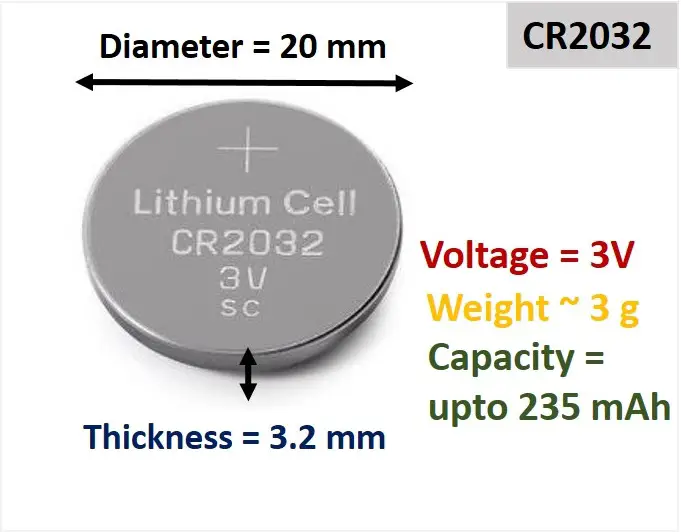
<https://www8.garmin.com/manuals/webhelp/GUID-D9E9CF32-5A89-4140-8B6A-0A61633E397F/EN-US/GUID-3F668630-89EC-4576-ACFD-EF88D433D94F.html>Quite right Wolfgang, but you have to have 2032 batteries for my various sensors and I used to last of mine on the heart rate monitor and have ordered more for the power meter pedals. I had been getting low battery signals until the batteries had gone flat.
Wolfgang Strobl <news51@mystrobl.de> wrote:
Am Mon, 20 Jul 2026 22:40:35 -0700 schrieb Jeff Liebermann <jeffl@cruzio.com>:
On Mon, 20 Jul 2026 19:02:38 -0400, zen cycle
<funkmasterxx@hotmail.com> wrote:
Tommy seems to think accuracy is affected by battery voltage. As usual, >>> he's wrong. You however are correct, when the the power level gets below >>> a certain point, it just stops working. Accuracy is unaffected before
that. Anyone who has done any electronic design work in the past 30
years knows this.
"Edge 1030. Lack of low battery warning"
<https://forums.garmin.com/sports-fitness/sports-fitness/f/edge-1030/214372/lack-of-low-battery-warning>
"To receive this notification about entering battery save mode when
battery goes below 10% you have to activate:
System -> Widget Management -> Notifications
When Notifications widget is active - you receive it. With
Notifications deactivated you won't receive it"
The battery in a Edge 1030+ uses LIPO (lithium polymer) chemistry. It
has a fairly flat (constant voltage) discharge curve. By the time the
voltage drops to 10% capacity, the discharge curve is in rapid
descent, which limits the amount of time a warning icon or message
might be seen before the device turns off.
I own an Edge 1030+ that I bought in early 2022. It gets mostly
used on my race bike, on our Tacx Neo 2T indoor trainer and
sometimes on one of my two utility bikes. Notifications are
enabled on my device, because I care about battery warnings for
other electronic components - speed sensor in the front wheel,
power meter pedals, wireless electronic shifting (SRAM Rival/GX
AXS Transmission Mullet Groupset) and notifications for group
rides*), when riding with the whole family. About battery
warnings for the 1030+, not so much, I don't care. Haven't seen
an actual warning from my 1030+, ever.
My device rarely gets below a 50% charge, because I usually
recharge it after a long ride and because I shut it down, when it
isn't in use.
While there isn't any installable widget that displays charge
level, it is hard to overlook the charge level, because that
level is displayed during boot and every time the system menu
gets opened by a simple swipe down.
<https://www8.garmin.com/manuals/webhelp/GUID-D9E9CF32-5A89-4140-8B6A-0A61633E397F/EN-US/GUID-3F668630-89EC-4576-ACFD-EF88D433D94F.html>
Can if one really wants have the battery level as one of the data fields seems rather pointless as seems to have decent battery life, I don?t charge after each ride but as and when. 830 which Tom also has, a long with the 1030+I'm not having any problems with the rechargewables but the sensors all have separate nonrecharable coin cells. The heart rate monitor gets priority and then the power meter. The speed sensor eats batteries as does the cadence counter so they are forever needing batteries and myrides measure 3% low without the speedo.
On 7/21/2026 12:40 AM, Jeff Liebermann wrote:Andrew, you are continually falling into the trap that idiot Liebermann knows something. As I explained to Zen, a failing battery on the power meter greatly effects the reading of power, and calories on the calculations. I have had all I could take from that stupid fool and have blocked him. I suggest you do the same. The very fact that he could never get an engineering job in an area with the hottest EE demands in the entire world should have told you something about him. Taking his word for anything is just asking to be made a fool of.
On Mon, 20 Jul 2026 19:02:38 -0400, zen cycle
<funkmasterxx@hotmail.com> wrote:
Tommy seems to think accuracy is affected by battery voltage. As usual,
he's wrong. You however are correct, when the the power level gets below >> a certain point, it just stops working. Accuracy is unaffected before
that. Anyone who has done any electronic design work in the past 30
years knows this.
"Edge 1030. Lack of low battery warning" <https://forums.garmin.com/sports-fitness/sports-fitness/f/edge-1030/214372/lack-of-low-battery-warning>
"To receive this notification about entering battery save mode when
battery goes below 10% you have to activate:
System -> Widget Management -> Notifications
When Notifications widget is active - you receive it. With
Notifications deactivated you won't receive it"
The battery in a Edge 1030+ uses LIPO (lithium polymer) chemistry. It
has a fairly flat (constant voltage) discharge curve. By the time the voltage drops to 10% capacity, the discharge curve is in rapid
descent, which limits the amount of time a warning icon or message
might be seen before the device turns off.
As I explained to Zen, a failing battery on the power meter greatly effects the reading of power, and calories on the calculations.
cyclintom <cyclintom@yahoo.com> wrote:
On Mon Jul 20 15:57:26 2026 Roger Merriman wrote:
Wolfgang Strobl <news51@mystrobl.de> wrote:
Am Sun, 19 Jul 2026 19:35:27 GMT schrieb cyclintom
<cyclintom@yahoo.com>:
On Sat Jul 18 13:49:06 2026 Wolfgang Strobl wrote:
Am Fri, 17 Jul 2026 16:01:14 -0700 schrieb Jeff Liebermann
<jeffl@cruzio.com>:
"Cycling Calorie Calculator"
<https://runbundle.com/tools/cycling/cycling-calorie-calculator>
IMO, this calculator is far too basic and therefore almost
useless.
<http://kreuzotter.de/english/espeed.htm> does more and does it
better.
By calculating an example (ten kilometers at 25 km/h assuming a
71.3 kg person), rundbundle estimates 297 kcal.
Calculating backwards with kreuzotter.de needs a roadster bike
and 185 Watts to get near that value: 298 kcal with 25 km/h over
ten kilometers.
Estimating me on my racing bike with hands on top instead needs
only 116 watt, burning only 181 kcal. Hands on the drops reduces
the necessary power to 86 watts, needing only 136 kcal.
297/86 is a factor of 3.45. An estimation that doesn't allow to
specify the bike type isn't usefull.
A look at my current power curve*) shows me that I can maintain
90 watts for hours on my bike, but can only sustain 300 watts for
30 seconds.
*) <https://support.garmin.com/en-US/?faq=3diK5cTU5TXn8LFtzx05CUx7> >>>>
Using your calculator I get 244 watts and 1839 calories burned @ a
rolling average speed of 14 mph.
I guess you mean http://kreuzotter.de. That power estimator was
programmed by Walter Zorn, a German programmer, not by me.
Can't comment on the values you got, because you didn't tell what
values you put into that program.
He?s claimed to be 215 pounds, and judging from Strava averages 10/11mph on
flat rides around the airport. Which the calculator as with the others
gives 60 watts even using the tops and touring tyres etc.
You don't have a Garmin and you don't have a power meter so you don't
know how they work. Actual riding speed is a lOT faster than the averages which contain the slowing dowjn to stop for traffic lights and stop signs etc. So average speed is misleding as hell. Particularly yesterday when I started to ride across a main street, my foot poped out of the pedal and
I flopped down in the middle of the road in front of heavy traffic. I
got up and walked the bike to the center didivider and had to dig my multitool out, straighten the saddle, recenter the brakes and put the
chain back on the ring. This somehow switched the Garmin into Gravel mode which didn't have an autopause so my average speed was 7.9 mph rather
than its normal 10 or 11. Now the autopause doesn't stop the Garmin until you come to a complete stop so the slowing up before stopping subtracts from the average speed. But the normal riding speed is 14 mph or more and my heart rate is usually hovering around 120 unless I am going slow
Yes Garmin connect doesn?t auto pause unless you set the Garmin unit to do so, so your averages on Garmin Connect will
Be lower, than the 10/11 mph that Strava will provide as it does auto
pause to calculate its averages.
Likewise with Strava it has segments so can see that your not holding 14mph
+ thats at best wishful thinking.
What values did you enter, by the way?
Walter Zorns program calculates quite a lot from parameters you
have been asked to fill in. If you get that wrong, you get
misleading results. Garbage in, garbage out.
If you actually looked at the calculator you'd know that you do not enter frontal area values, it calculates them from your hieght and weight. I am surprised that you talk about things that you haven't even bothered to
look into. Please stop using your imagination to "prove" your point.
Stop trying to say that the Garmin is full of shit or that the power
meter is incorrect. Please by all means contact Garmin+ and -prove to
them that they don't know what they're doing and you with no technical training know more.
The Garmin is fine it?s being given poor data, likewise a unit changingRoger, why are you telling me that no one is supporting the Garmin readings, THAT is direct intrumentation and only a fool dibelieves hard data. Until you get a Garmin please stop telling me no one is supporting me, because anyone that disbelieves the Garmin is an idiot. The ONLY manual input from me is my weight which is 210 lbs or perhaps back up to 215 but I haven't weighed myself lately and if I were heavier the numbers would be largerr.
user profiles as ever is a Tom thing and note that the last few rides it
has been producing power data that match?s the speeds your doing ie 50/60 rather than 130 which would get you a healthy PR up the Canyon you used to ride.
i'm definiteoly not trying to insult you because you're doing a good
enough job yourself. I gave you a chart that predicted the amount of
power that the various levels of riders would generate and you even call that wrong. Not only do I have instrumentation which I am simply
reporting on, but it is remarkably conservative. I said I was slow and
the numbers prove what I said!
No you produced age FTP charts based on your belief that your on the upper end for your age. Your FTP with 60/50 watts and weight will be around 0.6 though at full effort be touch more.
Note no one is supporting you in these claims.
On Tue Jul 21 07:57:33 2026 AMuzi wrote:
On 7/21/2026 12:40 AM, Jeff Liebermann wrote:
On Mon, 20 Jul 2026 19:02:38 -0400, zen cycle
<funkmasterxx@hotmail.com> wrote:
Tommy seems to think accuracy is affected by battery voltage. As usual, >>>> he's wrong. You however are correct, when the the power level gets below >>>> a certain point, it just stops working. Accuracy is unaffected before
that. Anyone who has done any electronic design work in the past 30
years knows this.
"Edge 1030. Lack of low battery warning"
<https://forums.garmin.com/sports-fitness/sports-fitness/f/edge-1030/214372/lack-of-low-battery-warning>
"To receive this notification about entering battery save mode when
battery goes below 10% you have to activate:
System -> Widget Management -> Notifications
When Notifications widget is active - you receive it. With
Notifications deactivated you won't receive it"
The battery in a Edge 1030+ uses LIPO (lithium polymer) chemistry. It
has a fairly flat (constant voltage) discharge curve. By the time the
voltage drops to 10% capacity, the discharge curve is in rapid
descent, which limits the amount of time a warning icon or message
might be seen before the device turns off.
Andrew, you are continually falling into the trap that idiot Liebermann knows something. As I explained to Zen, a failing battery on the power meter greatly effects the reading of power, and calories on the calculations. I have had all I could take from that stupid fool and have blocked him. I suggest you do the same. The very fact that he could never get an engineering job in an area with the hottest EE demands in the entire world should have told you something about him. Taking his word for anything is just asking to be made a fool of.
Wolfgang Strobl <news51@mystrobl.de> wrote:
Am Mon, 20 Jul 2026 22:40:35 -0700 schrieb Jeff Liebermann <jeffl@cruzio.com>:
On Mon, 20 Jul 2026 19:02:38 -0400, zen cycle
<funkmasterxx@hotmail.com> wrote:
Tommy seems to think accuracy is affected by battery voltage. As usual, >>> he's wrong. You however are correct, when the the power level gets below >>> a certain point, it just stops working. Accuracy is unaffected before
that. Anyone who has done any electronic design work in the past 30
years knows this.
"Edge 1030. Lack of low battery warning"
<https://forums.garmin.com/sports-fitness/sports-fitness/f/edge-1030/214372/lack-of-low-battery-warning>
"To receive this notification about entering battery save mode when
battery goes below 10% you have to activate:
System -> Widget Management -> Notifications
When Notifications widget is active - you receive it. With
Notifications deactivated you won't receive it"
The battery in a Edge 1030+ uses LIPO (lithium polymer) chemistry. It
has a fairly flat (constant voltage) discharge curve. By the time the
voltage drops to 10% capacity, the discharge curve is in rapid
descent, which limits the amount of time a warning icon or message
might be seen before the device turns off.
I own an Edge 1030+ that I bought in early 2022. It gets mostly
used on my race bike, on our Tacx Neo 2T indoor trainer and
sometimes on one of my two utility bikes. Notifications are
enabled on my device, because I care about battery warnings for
other electronic components - speed sensor in the front wheel,
power meter pedals, wireless electronic shifting (SRAM Rival/GX
AXS Transmission Mullet Groupset) and notifications for group
rides*), when riding with the whole family. About battery
warnings for the 1030+, not so much, I don't care. Haven't seen
an actual warning from my 1030+, ever.
My device rarely gets below a 50% charge, because I usually
recharge it after a long ride and because I shut it down, when it
isn't in use.
While there isn't any installable widget that displays charge
level, it is hard to overlook the charge level, because that
level is displayed during boot and every time the system menu
gets opened by a simple swipe down.
<https://www8.garmin.com/manuals/webhelp/GUID-D9E9CF32-5A89-4140-8B6A-0A61633E397F/EN-US/GUID-3F668630-89EC-4576-ACFD-EF88D433D94F.html>
Can if one really wants have the battery level as one of the data fields seems rather pointless as seems to have decent battery life, I don?t charge after each ride but as and when. 830 which Tom also has, a long with the 1030+Roger, now you claim to have a Garmin 830. Why don't you give us all of the readings. You don't need any sensors for a GPS to give 95% correct readings or even more accurate on perfectly flat ground.
AMuzi <am@yellowjersey.org> wrote:Roger, if you have a Garmin 830 why don't you give us your average speed, distance and calories? Then explain what you believe to be fantasy on my part?
On 7/21/2026 12:40 AM, Jeff Liebermann wrote:
On Mon, 20 Jul 2026 19:02:38 -0400, zen cycle
<funkmasterxx@hotmail.com> wrote:
Tommy seems to think accuracy is affected by battery voltage. As usual, >>> he's wrong. You however are correct, when the the power level gets below >>> a certain point, it just stops working. Accuracy is unaffected before
that. Anyone who has done any electronic design work in the past 30
years knows this.
"Edge 1030. Lack of low battery warning"
<https://forums.garmin.com/sports-fitness/sports-fitness/f/edge-1030/214372/lack-of-low-battery-warning>
"To receive this notification about entering battery save mode when
battery goes below 10% you have to activate:
System -> Widget Management -> Notifications
When Notifications widget is active - you receive it. With
Notifications deactivated you won't receive it"
The battery in a Edge 1030+ uses LIPO (lithium polymer) chemistry. It
has a fairly flat (constant voltage) discharge curve. By the time the
voltage drops to 10% capacity, the discharge curve is in rapid
descent, which limits the amount of time a warning icon or message
might be seen before the device turns off.
The problem may well lie in fantasy and self delusion rather
than electricity, electronics or software.
I have had all I could take from that stupid fool and have blocked him. I suggest you do the same. The very fact that he (Liebermann) could never get an engineering job in an area with the hottest EE demands in the entire world should have told you something about him. Taking his word for anything is just asking to be made a fool of.
There are about 4100 calo4eiws in a lb of body fat. This means that excess wight which is entirely body fat would be over 20,000 calories for the 5 lbs I've managed to lose in 3,000 miles of riding.
Riding burns a lot of calories but it also leaves your body depleted and you tired so you have to eat to replace the 1000 to 1500 calories you burn when riding. This is why it is difficult to lose weight. The half way stop includes a snack that is over 500 calories. Then after the ride and shower, I go out to lunch.
On Fri, 17 Jul 2026 16:29:44 GMT, cyclintom <cyclintom@yahoo.com>
wrote:
There are about 4100 calo4eiws in a lb of body fat.
That would be correct if your body was pure fat. However, you're not
made of pure fat:
"How Many Calories Are in a Pound of Body Fat?" <https://www.healthline.com/nutrition/calories-in-a-pound-of-fat>
"A pound of body fat is not pure fat, since fat cells also hold fluid
and protein. Based on estimates, it contains about 3,436 to 3,752
calories."
"Pure fat has a very high energy content, or about 9 calories per
gram. This amounts to about 4,100 calories per pound of pure fat."
The consensus figure is 3,500 calories per pound of body fat.
You might want to read the section starting with:
"The 500-calorie-deficit myth" <<https://www.healthline.com/nutrition/calories-in-a-pound-of-fat>>
"ItrCOs a common myth that if you eat 500 fewer calories each day, or
3,500 fewer calories a week, you will lose one pound of fat each
week."
On 7/21/2026 12:40 AM, Jeff Liebermann wrote:
On Mon, 20 Jul 2026 19:02:38 -0400, zen cycle
<funkmasterxx@hotmail.com> wrote:
Tommy seems to think accuracy is affected by battery voltage. As usual,
he's wrong. You however are correct, when the the power level gets below >>> a certain point, it just stops working. Accuracy is unaffected before
that. Anyone who has done any electronic design work in the past 30
years knows this.
"Edge 1030. Lack of low battery warning"
<https://forums.garmin.com/sports-fitness/sports-fitness/f/
edge-1030/214372/lack-of-low-battery-warning>
"To receive this notification about entering battery save mode when
battery goes below 10% you have to activate:
-a-a-a-a System -> Widget Management -> Notifications
When Notifications widget is active - you receive it. With
Notifications deactivated you won't receive it"
The battery in a Edge 1030+ uses LIPO (lithium polymer) chemistry.-a It
has a fairly flat (constant voltage) discharge curve.-a By the time the
voltage drops to 10% capacity, the discharge curve is in rapid
descent, which limits the amount of time a warning icon or message
might be seen before the device turns off.
The problem may well lie in fantasy and self delusion rather than electricity, electronics or software.
On 7/21/2026 3:34 PM, cyclintom wrote:
Andrew, you are continually falling into the trap that idiot
Liebermann knows something. As I explained to Zen, a failing battery
on the power meter greatly effects the reading of power, and calories
on the calculations.
Am Mon, 20 Jul 2026 16:29:43 GMT schrieb cyclintom
<cyclintom@yahoo.com>:
Your cited program has a big fat butg in the middle of it. It you try to run a repeat it clears some of the readings and won't eork.
On 7/17/26 9:29 AM, cyclintom wrote:
There are about 4100 calo4eiws in a lb of body fat. This means that
excess wight which is entirely body fat would be over 20,000 calories
for the 5 lbs I've managed to lose in 3,000 miles of riding.
Riding burns a lot of calories but it also leaves your body depleted
and you tired so you have to eat to replace the 1000 to 1500 calories
you burn when riding. This is why it is difficult to lose weight. The
half way stop includes a snack that is over 500 calories. Then after
the ride and shower, I go out to lunch.
My "solution": No on-the-road snacks but both my bicycles have a built-
in brewpub magnet. A good manly beer has around 150 calories, much less
than most snacks.
Am Mon, 20 Jul 2026 16:29:43 GMT schrieb cyclintom
<cyclintom@yahoo.com>:
Your cited program has a big fat butg in the middle of
it. It you try to run a repeat it clears some of the
readings and won't eork.
Hardly a "big fat bug". In software development that's known
a "known issue to be fixed on the next release".
Since you don't seem to understand what I'm saying let me be specific
When you engage a power meter it changes the calculations to include Watts as read by the power meter.
So when the power drops on the power meter batteries and it begins misreading power,
it also misreads calories which is ALSO a reading of power consumed.
I just deleted the power meter since I'm going to install it on the Eddie Merckz that will be here on Thursday.
The Colnago w3on't be ready to go until the press in Campy ultratorque fitings get here in August. I will put my Proton wheels on the Colnago and move the Ventos over3 to the Merckx San RemoI will give the Master X Lite a good cleaning and put it up on Ebay.
Craigslist has become useless.
On Tue, 21 Jul 2026 20:12:32 GMT, cyclintom <cyclintom@yahoo.com>
wrote:
Since you don't seem to understand what I'm saying let me be specific
Ok, you want specific...
When you engage a power meter it changes the calculations to include Watts as read by the power meter.
Changes from what? Since the output produced by a power meter is in
watts, what is NOT included in the calculations that required the
output to include itself? Also, a power meter does not "read"
anything. It's the user that reads the power meter.
So when the power drops on the power meter batteries and it begins misreading power,
The voltage, not the power, is what drops (decreases) as the battery discharges. The battery voltage sensor in the power meter measures
volts, not watts.
it also misreads calories which is ALSO a reading of power consumed.
The power meter does not directly measure calories. It measures
kilojoules of work, which it then converts to calories. 1 kilojoule
equals 1 calorie burned.
I just deleted the power meter since I'm going to install it on the Eddie Merckz that will be here on Thursday.
Deleted? Did you somehow destroy your power meter? If so, please
post a photo. I want to see the damage.
The Colnago w3on't be ready to go until the press in Campy ultratorque fitings get here in August. I will put my Proton wheels on the Colnago and move the Ventos over3 to the Merckx San RemoI will give the Master X Lite a good cleaning and put it up on Ebay.
Please be more specific such as including model numbers? It would
also be nice to know what this has to do with calculating or measuring calories.
Craigslist has become useless.
Yeah, I see the problem. You have 2 bicycles listed on Craigslist: <https://www.craigslist.org/view/d/san-leandro-specialized-allez-60-cm/5wBiDsT1TVY8f154LpWDLQ>
<https://www.craigslist.org/view/d/san-leandro-marin-san-marino-steel-road/fokQ1PYdkQJKydeW6TzFAo>
which were posted 4 and 5 months ago respectively. Good luck.
On 7/21/2026 6:05 PM, Joerg wrote:
On 7/17/26 9:29 AM, cyclintom wrote:-a150.....pfffft
There are about 4100 calo4eiws in a lb of body fat. This means that
excess wight which is entirely body fat would be over 20,000 calories
for the 5 lbs I've managed to lose in 3,000 miles of riding.
Riding burns a lot of calories but it also leaves your body depleted
and you tired so you have to eat to replace the 1000 to 1500 calories
you burn when riding. This is why it is difficult to lose weight. The
half way stop includes a snack that is over 500 calories. Then after
the ride and shower, I go out to lunch.
My "solution": No on-the-road snacks but both my bicycles have a
built- in brewpub magnet. A good manly beer has around 150 calories,
much less than most snacks.
https://www.beerboard.menu/Goose-Island-Bourbon-County-Brand-Stout-(2019)
On Tue Jul 21 12:59:59 2026 Roger Merriman wrote:
AMuzi <am@yellowjersey.org> wrote:
On 7/21/2026 12:40 AM, Jeff Liebermann wrote:
On Mon, 20 Jul 2026 19:02:38 -0400, zen cycle
<funkmasterxx@hotmail.com> wrote:
Tommy seems to think accuracy is affected by battery voltage. As usual, >>>>> he's wrong. You however are correct, when the the power level gets below >>>>> a certain point, it just stops working. Accuracy is unaffected before >>>>> that. Anyone who has done any electronic design work in the past 30
years knows this.
"Edge 1030. Lack of low battery warning"
<https://forums.garmin.com/sports-fitness/sports-fitness/f/edge-1030/214372/lack-of-low-battery-warning>
"To receive this notification about entering battery save mode when
battery goes below 10% you have to activate:
System -> Widget Management -> Notifications
When Notifications widget is active - you receive it. With
Notifications deactivated you won't receive it"
The battery in a Edge 1030+ uses LIPO (lithium polymer) chemistry. It >>>> has a fairly flat (constant voltage) discharge curve. By the time the >>>> voltage drops to 10% capacity, the discharge curve is in rapid
descent, which limits the amount of time a warning icon or message
might be seen before the device turns off.
The problem may well lie in fantasy and self delusion rather
than electricity, electronics or software.
Roger, if you have a Garmin 830 why don't you give us your average speed, distance and calories? Then explain what you believe to be fantasy on my part?
On Tue, 21 Jul 2026 20:12:32 GMT, cyclintom <cyclintom@yahoo.com>
wrote:
When you engage a power meter it changes the calculations to include Watts as read by the power meter.
So when the power drops on the power meter batteries and it begins misreading power,
it also misreads calories which is ALSO a reading of power consumed.
I just deleted the power meter since I'm going to install it on the Eddie Merckz that will be here on Thursday.
The Colnago w3on't be ready to go until the press in Campy ultratorque fitings get here in August. I will put my Proton wheels on the Colnago and move the Ventos over3 to the Merckx San RemoI will give the Master X Lite a good cleaning and put it up on Ebay.
Please be more specific such as including model numbers? It would
also be nice to know what this has to do with calculating or measuring calories.
Craigslist has become useless.
On 7/17/26 7:36 PM, Jeff Liebermann wrote:
On Fri, 17 Jul 2026 16:29:44 GMT, cyclintom <cyclintom@yahoo.com>
wrote:
There are about 4100 calo4eiws in a lb of body fat.
That would be correct if your body was pure fat. However, you're not
made of pure fat:
"How Many Calories Are in a Pound of Body Fat?"
<https://www.healthline.com/nutrition/calories-in-a-pound-of-fat>
"A pound of body fat is not pure fat, since fat cells also hold fluid
and protein. Based on estimates, it contains about 3,436 to 3,752
calories."
"Pure fat has a very high energy content, or about 9 calories per
gram. This amounts to about 4,100 calories per pound of pure fat."
The consensus figure is 3,500 calories per pound of body fat.
You might want to read the section starting with:
"The 500-calorie-deficit myth"
<<https://www.healthline.com/nutrition/calories-in-a-pound-of-fat>>
"ItAs a common myth that if you eat 500 fewer calories each day, or
3,500 fewer calories a week, you will lose one pound of fat each
week."
I can confirm that. More than half a year ago I went from eating two
main meals per day down to one. Every other day that's a main dish for >lunch, the other days just a sandwich for lunch. Nothing in the evening.
In the morning there is only a small bowl of cereals with milk. Weight
loss? Phhht. Nothing to write home about.
On 7/21/2026 3:34 PM, cyclintom wrote:
On Tue Jul 21 07:57:33 2026 AMuzi wrote:
On 7/21/2026 12:40 AM, Jeff Liebermann wrote:
On Mon, 20 Jul 2026 19:02:38 -0400, zen cycle
<funkmasterxx@hotmail.com> wrote:
Tommy seems to think accuracy is affected by battery voltage. As usual, >>>> he's wrong. You however are correct, when the the power level gets below >>>> a certain point, it just stops working. Accuracy is unaffected before >>>> that. Anyone who has done any electronic design work in the past 30
years knows this.
"Edge 1030. Lack of low battery warning"
<https://forums.garmin.com/sports-fitness/sports-fitness/f/edge-1030/214372/lack-of-low-battery-warning>
"To receive this notification about entering battery save mode when
battery goes below 10% you have to activate:
System -> Widget Management -> Notifications
When Notifications widget is active - you receive it. With
Notifications deactivated you won't receive it"
The battery in a Edge 1030+ uses LIPO (lithium polymer) chemistry. It >>> has a fairly flat (constant voltage) discharge curve. By the time the >>> voltage drops to 10% capacity, the discharge curve is in rapid
descent, which limits the amount of time a warning icon or message
might be seen before the device turns off.
But you did post "The problem may well lie in fantasy and self delusion rather than electricity, electronics or software" in commenting on my posting. Exactly how do you FAKE Garmin readings? The ONLY variable available to the user is weight. So exactly where does this fantasy come in? Is it fantasy to be riding 13 mph into a 10 mph headwind and 17 mph downwind to claim and average traveling speed of 14 mph? I was in real bad shape today with little sleep last night and my average heart rate was 117 bpm and 120 or avove for most of the ride and I still made a 10.2 average and rode at 12 and 13 mph the whole way. Note that 10.2 mph number hardlyAndrew, you are continually falling into the trap that idiot Liebermann knows something. As I explained to Zen, a failing battery on the power meter greatly effects the reading of power, and calories on the calculations. I have had all I could take from that stupid fool and have blocked him. I suggest you do the same. The very fact that he could never get an engineering job in an area with the hottest EE demands in the entire world should have told you something about him. Taking his word for anything is just asking to be made a fool of.
Nothing I wrote appears above.
On Tue Jul 21 15:56:58 2026 AMuzi wrote:
On 7/21/2026 3:34 PM, cyclintom wrote:
On Tue Jul 21 07:57:33 2026 AMuzi wrote:
On 7/21/2026 12:40 AM, Jeff Liebermann wrote:
On Mon, 20 Jul 2026 19:02:38 -0400, zen cycle
<funkmasterxx@hotmail.com> wrote:
Tommy seems to think accuracy is affected by battery voltage. As usual, >>>>>> he's wrong. You however are correct, when the the power level gets below >>>>>> a certain point, it just stops working. Accuracy is unaffected before >>>>>> that. Anyone who has done any electronic design work in the past 30 >>>>>> years knows this.
"Edge 1030. Lack of low battery warning"
<https://forums.garmin.com/sports-fitness/sports-fitness/f/edge-1030/214372/lack-of-low-battery-warning>
"To receive this notification about entering battery save mode when
battery goes below 10% you have to activate:
System -> Widget Management -> Notifications
When Notifications widget is active - you receive it. With
Notifications deactivated you won't receive it"
The battery in a Edge 1030+ uses LIPO (lithium polymer) chemistry. It >>>>> has a fairly flat (constant voltage) discharge curve. By the time the >>>>> voltage drops to 10% capacity, the discharge curve is in rapid
descent, which limits the amount of time a warning icon or message
might be seen before the device turns off.
Andrew, you are continually falling into the trap that idiot Liebermann knows something. As I explained to Zen, a failing battery on the power meter greatly effects the reading of power, and calories on the calculations. I have had all I could take from that stupid fool and have blocked him. I suggest you do the same. The very fact that he could never get an engineering job in an area with the hottest EE demands in the entire world should have told you something about him. Taking his word for anything is just asking to be made a fool of.
Nothing I wrote appears above.
But you did post "The problem may well lie in fantasy and self delusion rather
than electricity, electronics or software" in commenting on my posting. Exactly how do you FAKE Garmin readings? The ONLY variable available to the user is weight. So exactly where does this fantasy come in? Is it fantasy to be riding 13 mph into a 10 mph headwind and 17 mph downwind to claim and average traveling speed of 14 mph? I was in real bad shape today with little sleep last night and my average heart rate was 117 bpm and 120 or avove for most of the ride and I still made a 10.2 average and rode at 12 and 13 mph the whole way. Note that 10.2 mph number hardly
Zen,we're talking about two different things. Why is this so hard for you to understand? You're talking about the rechargeable battery in the Garmin which is designed to work with low battery levels and so full charges are regulated down to the working voltage of the uprocessor.On 7/21/2026 3:34 PM, cyclintom wrote:
Andrew, you are continually falling into the trap that idiot
Liebermann knows something. As I explained to Zen, a failing battery
on the power meter greatly effects the reading of power, and calories
on the calculations.
No, tom, it doesn't. The effect of a failing battery is that the unit
shuts down. Up until that point, the accuracy of all measurements and calculations are completely unaffected by the battery voltage level.
This is how we know all your claims of being some genius software and hardware developer are completely false. Battery management on devices
for the past 30 years is rote basic stuff - things high schoolers learn
in tech school these days. You now have three individuals here with
extensive EE experience telling you that you're incorrect. If you have
some technical source that states battery level in strain-gauge power
meters or ucontrolled products will give erroneous readings other than
simply dropping out or shutting off, please do list it here. Otherwise,
it's yet another example of you incompetence and ignorance on subjects
in which you claim expertise (and no, we don't believe you ever designed life-saving medical devices, or communications components for the space shuttle)
On 7/21/2026 1:40 AM, Jeff Liebermann wrote:I have bought IQ Square Power Meter Road Pedal --- Synchronet 3.22a-Linux NewsLink 1.2
On Mon, 20 Jul 2026 19:02:38 -0400, zen cycle
<funkmasterxx@hotmail.com> wrote:
Tommy seems to think accuracy is affected by battery voltage. As usual,
he's wrong. You however are correct, when the the power level gets below >> a certain point, it just stops working. Accuracy is unaffected before
that. Anyone who has done any electronic design work in the past 30
years knows this.
"Edge 1030. Lack of low battery warning" <https://forums.garmin.com/sports-fitness/sports-fitness/f/edge-1030/214372/lack-of-low-battery-warning>
"To receive this notification about entering battery save mode when
battery goes below 10% you have to activate:
System -> Widget Management -> Notifications
When Notifications widget is active - you receive it. With
Notifications deactivated you won't receive it"
The battery in a Edge 1030+ uses LIPO (lithium polymer) chemistry. It
has a fairly flat (constant voltage) discharge curve. By the time the voltage drops to 10% capacity, the discharge curve is in rapid
descent, which limits the amount of time a warning icon or message
might be seen before the device turns off.
Which also implies battery level has no effect on accuracy. A similar
search of accuracy vs battery voltage on the IQ2 pedal power meter
system shows no mention of the accuracy being affected by batter y
voltage. There's a reason for that - accuracy isn't affected by battery voltage because the unit shuts itself off at a certain level. The ASIC
or uController inside the device (both the meter and the head unit) read
the voltage level and will shut down. This happens before the accuracy
of either one is affected - they're specifically designed that way.
On 7/23/2026 2:18 PM, cyclintom wrote:
On Tue Jul 21 15:56:58 2026 AMuzi wrote:
On 7/21/2026 3:34 PM, cyclintom wrote:
On Tue Jul 21 07:57:33 2026 AMuzi wrote:
On 7/21/2026 12:40 AM, Jeff Liebermann wrote:
On Mon, 20 Jul 2026 19:02:38 -0400, zen cycle
<funkmasterxx@hotmail.com> wrote:
Tommy seems to think accuracy is affected by battery voltage. As usual,
he's wrong. You however are correct, when the the power level gets below
a certain point, it just stops working. Accuracy is unaffected before >>>>>> that. Anyone who has done any electronic design work in the past 30 >>>>>> years knows this.
"Edge 1030. Lack of low battery warning"
<https://forums.garmin.com/sports-fitness/sports-fitness/f/edge-1030/214372/lack-of-low-battery-warning>
"To receive this notification about entering battery save mode when >>>>> battery goes below 10% you have to activate:
System -> Widget Management -> Notifications
When Notifications widget is active - you receive it. With
Notifications deactivated you won't receive it"
The battery in a Edge 1030+ uses LIPO (lithium polymer) chemistry. It >>>>> has a fairly flat (constant voltage) discharge curve. By the time the >>>>> voltage drops to 10% capacity, the discharge curve is in rapid
descent, which limits the amount of time a warning icon or message >>>>> might be seen before the device turns off.
Andrew, you are continually falling into the trap that idiot Liebermann knows something. As I explained to Zen, a failing battery on the power meter greatly effects the reading of power, and calories on the calculations. I have had all I could take from that stupid fool and have blocked him. I suggest you do the same. The very fact that he could never get an engineering job in an area with the hottest EE demands in the entire world should have told you something about him. Taking his word for anything is just asking to be made a fool of.
Nothing I wrote appears above.
Andrew, I'm trying to understand your position. The Garmin gives me the numbers I quoted, Wolfgang's calculator agrees with them and you're saying that this is all fantasy? Deacon Mark shoes numbers about half the size on a trainer and you think it fantasy to double them on real road into real headwinds? Power Meters are a simple device which is nothing more than a pair of resisters. One of them fixed and the other one variable. (a volume control if you will.) The electronics does nothing more than scale the readings of the resisters in series. So of course, since it is an analog device it is sensitive to the voltage across the pair. It is possible to build a voltage regulator to supply the voltage but coin cell voltage is so low to start with the regulator would eat more power than the power meter probably making battery life a quarter of what it is. So they simply put a battery voltage level warning in the Garmin.But you did post "The problem may well lie in fantasy and self delusion rather
than electricity, electronics or software" in commenting on my posting. Exactly how do you FAKE Garmin readings? The ONLY variable available to the user is weight. So exactly where does this fantasy come in? Is it fantasy to be riding 13 mph into a 10 mph headwind and 17 mph downwind to claim and average traveling speed of 14 mph? I was in real bad shape today with little sleep last night and my average heart rate was 117 bpm and 120 or avove for most of the ride and I still made a 10.2 average and rode at 12 and 13 mph the whole way. Note that 10.2 mph number hardly
Yes, I did write that. It just wasn't quoted above your comment.
And none of your conclusions about expended power agree with
anyone else's experience, anywhere, ever.
On Thu Jul 23 14:29:16 2026 AMuzi wrote:
On 7/23/2026 2:18 PM, cyclintom wrote:
On Tue Jul 21 15:56:58 2026 AMuzi wrote:
On 7/21/2026 3:34 PM, cyclintom wrote:
On Tue Jul 21 07:57:33 2026 AMuzi wrote:
On 7/21/2026 12:40 AM, Jeff Liebermann wrote:
On Mon, 20 Jul 2026 19:02:38 -0400, zen cycle
<funkmasterxx@hotmail.com> wrote:
Tommy seems to think accuracy is affected by battery voltage. As usual,
he's wrong. You however are correct, when the the power level gets below
a certain point, it just stops working. Accuracy is unaffected before >>>>>>>> that. Anyone who has done any electronic design work in the past 30 >>>>>>>> years knows this.
"Edge 1030. Lack of low battery warning"
<https://forums.garmin.com/sports-fitness/sports-fitness/f/edge-1030/214372/lack-of-low-battery-warning>
"To receive this notification about entering battery save mode when >>>>>>> battery goes below 10% you have to activate:
System -> Widget Management -> Notifications
When Notifications widget is active - you receive it. With
Notifications deactivated you won't receive it"
The battery in a Edge 1030+ uses LIPO (lithium polymer) chemistry. It >>>>>>> has a fairly flat (constant voltage) discharge curve. By the time the >>>>>>> voltage drops to 10% capacity, the discharge curve is in rapid
descent, which limits the amount of time a warning icon or message >>>>>>> might be seen before the device turns off.
Andrew, you are continually falling into the trap that idiot
Liebermann knows something. As I explained to Zen, a failing battery >>>>> on the power meter greatly effects the reading of power, and calories >>>>> on the calculations. I have had all I could take from that stupid
fool and have blocked him. I suggest you do the same. The very fact
that he could never get an engineering job in an area with the
hottest EE demands in the entire world should have told you something >>>>> about him. Taking his word for anything is just asking to be made a fool of.
Nothing I wrote appears above.
But you did post "The problem may well lie in fantasy and self delusion rather
than electricity, electronics or software" in commenting on my posting.
Exactly how do you FAKE Garmin readings? The ONLY variable available to
the user is weight. So exactly where does this fantasy come in? Is it
fantasy to be riding 13 mph into a 10 mph headwind and 17 mph downwind
to claim and average traveling speed of 14 mph? I was in real bad shape
today with little sleep last night and my average heart rate was 117
bpm and 120 or avove for most of the ride and I still made a 10.2
average and rode at 12 and 13 mph the whole way. Note that 10.2 mph number hardly
Yes, I did write that. It just wasn't quoted above your comment.
And none of your conclusions about expended power agree with
anyone else's experience, anywhere, ever.
Andrew, I'm trying to understand your position. The Garmin gives me the numbers I quoted, Wolfgang's calculator agrees with them and you're
saying that this is all fantasy? Deacon Mark shoes numbers about half the size on a trainer and you think it fantasy to double them on real road
into real headwinds? Power Meters are a simple device which is nothing
more than a pair of resisters. One of them fixed and the other one
variable. (a volume control if you will.) The electronics does nothing
more than scale the readings of the resisters in series. So of course,
since it is an analog device it is sensitive to the voltage across the
pair. It is possible to build a voltage regulator to supply the voltage
but coin cell voltage is so low to start with the regulator would eat
more power than the power meter probably making battery life a quarter of what it is. So they simply put a battery voltage level warning in the Garmin.
Remember when I said I was interviewed by Tesla and claimed that the
engineer hung up on me when I said that they shouldn't call it a "self driving feature"? Elon Musk has now admitted that I was correct.
If you think that Zen knows anything beyond his own job and that his
comments have the slightest veracity concerning voltage levels, you are wrong.I became an engineer by knowing more than supposed engineers and convinced some of the best that I knew more than they on many points.
That isn't bragging, it's just simple fact. Zen is in a quality control position and he knows quality control. Donj't expect him to know
engineering. If Liebermann knew anything he could have gotten a job. I deleted 8 job offers from my email this morning and my resume is marked "retired". So they just keep offering me more money.
Remember when I said I was interviewed by Tesla and claimed that the engineer hung up on me when I said that they shouldn't call it a "self driving feature"? Elon Musk has now admitted that I was correct.
If Liebermann knew anything he could have gotten a job.
I deleted 8 job offers from my email this morning and my resume is marked "retired". So they just keep offering me more money.
cyclintom <cyclintom@yahoo.com> wrote:
On Tue Jul 21 12:59:59 2026 Roger Merriman wrote:
AMuzi <am@yellowjersey.org> wrote:
On 7/21/2026 12:40 AM, Jeff Liebermann wrote:
On Mon, 20 Jul 2026 19:02:38 -0400, zen cycle
<funkmasterxx@hotmail.com> wrote:
Tommy seems to think accuracy is affected by battery voltage. As usual, >>>>> he's wrong. You however are correct, when the the power level gets below
a certain point, it just stops working. Accuracy is unaffected before >>>>> that. Anyone who has done any electronic design work in the past 30 >>>>> years knows this.
"Edge 1030. Lack of low battery warning"
<https://forums.garmin.com/sports-fitness/sports-fitness/f/edge-1030/214372/lack-of-low-battery-warning>
"To receive this notification about entering battery save mode when
battery goes below 10% you have to activate:
System -> Widget Management -> Notifications
When Notifications widget is active - you receive it. With
Notifications deactivated you won't receive it"
The battery in a Edge 1030+ uses LIPO (lithium polymer) chemistry. It >>>> has a fairly flat (constant voltage) discharge curve. By the time the >>>> voltage drops to 10% capacity, the discharge curve is in rapid
descent, which limits the amount of time a warning icon or message
might be seen before the device turns off.
The problem may well lie in fantasy and self delusion rather
than electricity, electronics or software.
Roger, all of that seems reasonable except for the power your reporting. Do you have any idea what your rest heart rate is?Roger, if you have a Garmin 830 why don't you give us your average speed, distance and calories? Then explain what you believe to be fantasy on my part?
Which would prove what? For reference today?s commute was 11 something
miles each way so 22 something overall average speed 13mph on the roadie commuter clearly this is the commute so it?s just a utility ride, average estimated power was 80/90watts which is probably about right.
Strava?s estimates for power on the other commuter are too high, but as
it?s a old MTB that makes sense, it rolls well on the Big Apple tyres which are faster I suspect than even XC tyres, at 10/11mph at a easy effort, it?s definitely not the 130/150 ish Strava suggests, ie poor data in you?ll get poor data out!
The other weekend I did a early Gravel loop with the club, one of the chaps who?s is bit taller than me if probably bit lighter, has a power meter and averaged 121 watts, over 29 miles off road with average speed of 12mph. Ie faster on more difficult terrain and all that.
Hence your claims of power are just not believable nor capable of being logically valid.
Garmin and IAm sure all of the others cycling computers pass on low battery >warnings from sensors be that heart rate/powermeters/lights or so on.
And absolutely no ones powermeters drops the amount as the batteries drain, >as folks have been kind enough to explain why, likewise DC rainmaker is
very in-depth reviews and would absolutely note if your powermeters did
that!
On Wed Jul 22 19:31:10 2026 Roger Merriman wrote:
cyclintom <cyclintom@yahoo.com> wrote:
On Tue Jul 21 12:59:59 2026 Roger Merriman wrote:Which would prove what? For reference today?s commute was 11 something
AMuzi <am@yellowjersey.org> wrote:
On 7/21/2026 12:40 AM, Jeff Liebermann wrote:
On Mon, 20 Jul 2026 19:02:38 -0400, zen cycle
<funkmasterxx@hotmail.com> wrote:
Tommy seems to think accuracy is affected by battery voltage. As usual, >>>>>>> he's wrong. You however are correct, when the the power level gets below
a certain point, it just stops working. Accuracy is unaffected before >>>>>>> that. Anyone who has done any electronic design work in the past 30 >>>>>>> years knows this.
"Edge 1030. Lack of low battery warning"
<https://forums.garmin.com/sports-fitness/sports-fitness/f/edge-1030/214372/lack-of-low-battery-warning>
"To receive this notification about entering battery save mode when >>>>>> battery goes below 10% you have to activate:
System -> Widget Management -> Notifications
When Notifications widget is active - you receive it. With
Notifications deactivated you won't receive it"
The battery in a Edge 1030+ uses LIPO (lithium polymer) chemistry. It >>>>>> has a fairly flat (constant voltage) discharge curve. By the time the >>>>>> voltage drops to 10% capacity, the discharge curve is in rapid
descent, which limits the amount of time a warning icon or message >>>>>> might be seen before the device turns off.
The problem may well lie in fantasy and self delusion rather
than electricity, electronics or software.
Roger, if you have a Garmin 830 why don't you give us your average speed, >>> distance and calories? Then explain what you believe to be fantasy on my part?
miles each way so 22 something overall average speed 13mph on the roadie
commuter clearly this is the commute so it?s just a utility ride, average
estimated power was 80/90watts which is probably about right.
Strava?s estimates for power on the other commuter are too high, but as
it?s a old MTB that makes sense, it rolls well on the Big Apple tyres which >> are faster I suspect than even XC tyres, at 10/11mph at a easy effort, it?s >> definitely not the 130/150 ish Strava suggests, ie poor data in you?ll get >> poor data out!
The other weekend I did a early Gravel loop with the club, one of the chaps >> who?s is bit taller than me if probably bit lighter, has a power meter and >> averaged 121 watts, over 29 miles off road with average speed of 12mph. Ie >> faster on more difficult terrain and all that.
Hence your claims of power are just not believable nor capable of being
logically valid.
Roger, all of that seems reasonable except for the power your reporting.
Do you have any idea what your rest heart rate is?
cyclintom <cyclintom@yahoo.com> wrote:
Power Meters are a simple device which is nothing
more than a pair of resisters. One of them fixed and the other one
variable. (a volume control if you will.)
The electronics does nothing
more than scale the readings of the resisters in series.
So of course,
since it is an analog device it is sensitive to the voltage across the
pair.
It is possible to build a voltage regulator to supply the voltage
but coin cell voltage is so low to start with the regulator would eat
more power than the power meter probably making battery life a quarter of
what it is. So they simply put a battery voltage level warning in the Garmin.
Remember when I said I was interviewed by Tesla and claimed that the
engineer hung up on me when I said that they shouldn't call it a "self
driving feature"?
Elon Musk has now admitted that I was correct.
If you think that Zen knows anything beyond his own job and
that his
comments have the slightest veracity concerning voltage levels, you are
wrong.
I became an engineer by knowing more than supposed engineers and
convinced some of the best that I knew more than they on many points.
That isn't bragging, it's just simple fact.
Zen is in a quality control
position and he knows quality control. Donj't expect him to know
engineering.
If Liebermann knew anything he could have gotten a job. I
deleted 8 job offers from my email this morning and my resume is marked
"retired". So they just keep offering me more money.
cyclintom <cyclintom@yahoo.com> wrote:
Power Meters are a simple device which is nothing
more than a pair of resisters. One of them fixed and the
other one
variable. (a volume control if you will.)
No tommy, Strain Gauges are _not_ two resistors. Strain
gauges are a membrane circuit that changes resistance when
flexed in a particular plane, then measured through a
wheatstone bridge.
https://en.wikipedia.org/wiki/Strain_gauge
The electronics does nothing
more than scale the readings of the resisters in series.
No, tommy, the wheatstone bridge doesn't scale the resistors
in series (FYI, there is no such concept in circuit theory
of 'scaling resistors in series'. If you think there is,
post a reference to it. Any scaling will be at the a/d
conversion point, and be on the voltage measurement.) The
wheatstone bridge measures a voltage across a series/
parallel combination.
So of course,
since it is an analog device it is sensitive to the
voltage across the
pair.
Well, at least you got _one_ point right, all it does is
measure voltage.
It is possible to build a voltage regulator to supply the
voltage
but coin cell voltage is so low to start with the
regulator would eat
more power than the power meter probably making battery
life a quarter of
what it is. So they simply put a battery voltage level
warning in the Garmin.
Horseshit. They don't hook the strain gauge directly to the
battery you idiot. If they did that the measured voltage
would constantly change for the same input of force since
battery voltage will drop constantly.
The electronics that drive the meter have an integral
regulator specifically to hold the voltage to a certain
level at the meter reference constant. It's likely this is
the same precision regulator that the A/D converter in the
ucontroller uses for the digital conversion to be broadcast
through the Bluetooth and ANT+ radios. These are precision
Low Dropout Regulators (LDOs) with very little power loss.
The voltage regulation, ucontroller to read the voltage
output of both the battery and the strain gauge, and
connecting radios are completely integrated into one
monolithic device these days.
Remember when I said I was interviewed by Tesla and
claimed that the
engineer hung up on me when I said that they shouldn't
call it a "self
driving feature"?
You never interviewed with Tesla. You were called by a
headhunter, not an engineer.
Elon Musk has now admitted that I was correct.
Oh, you mean this? https://finance.yahoo.com/sectors/technology/articles/elon- musk-admits-lied-tesla-185650996.html
No tommy, he didn't agree with you.
""I do think over time its gonna make sense for us to
convert all HW3 cars to HW4, because that's what enables
them to enter the Robotaxi fleet and have unsupervised FSD,"
he said."
If you think that Zen knows anything beyond his own job and
Funny since my job actually requites Intrinsic Safety
circuit analysis and FMEDA. One of the aspects of which is
ensuring power consumption in the circuit isn't excessive so
that heat generated stays below the flash point of the
environment. This, of course, means doing the calculations
whch show the devices used don't exceed junction temperature
limits in normal operation.
that his
comments have the slightest veracity concerning voltage
levels, you are
wrong.
Way more veracity than yours.
I became an engineer by knowing more than supposed
engineers and
convinced some of the best that I knew more than they on
many points.
That isn't bragging, it's just simple fact.
No, it's a lie.
Zen is in a quality control
position and he knows quality control. Donj't expect him
to know
engineering.
No matter how many times you tell that lie, it will never
become true. I am not now nor have I ever been in a quality
control position. I know a lot about it since our Hazardous
Location certifications are in part dependent on our
engineering process controls - some of which are my
responsibility. I've also take a number of courses in
failure analysis which are core to Six Sigma concepts since
we have to produce RCFA reports as part of our audit trail,
but I am not now nor have I ever been in a quality control
position.
If Liebermann knew anything he could have gotten a job. I
deleted 8 job offers from my email this morning and my
resume is marked
"retired". So they just keep offering me more money.
Horseshit, you got AI generated job postings through
recruiters. They weren't offers, and you'll keep getting
them as long as you keep your LinkedIn profile active.
Heart rate isnAt particularly comparable person to person, ie is variation
so my resting heart rate which is 60 ish doesnAt tell you much.
Ie the resting isnAt that important itAs the difference ie how much the
heart rate increases.
On 25 Jul 2026 10:47:13 GMT, Roger Merriman <roger@sarlet.com> wrote:
Heart rate isn-At particularly comparable person to person, ie is variation >> so my resting heart rate which is 60 ish doesn-At tell you much.
Ie the resting isn-At that important it-As the difference ie how much the
heart rate increases.
I agree. I record my resting heart rate and blood pressure every
evening, before dinner, exactly one hour after swallowing 5 pills. My resting heart rate is not even close to regular.
Spreadsheet: <https://www.learnbydestroying.com/jeffl/crud/blood-pressure-to%202026-07-24.xlsx>
JPG screen grabs of BP graph: <https://www.learnbydestroying.com/jeffl/crud/blood-pressure-to-2026-07-24.jpg>
JPG screen grab of heart rate graph: <https://www.learnbydestroying.com/jeffl/crud/heart-rate-to-2026-07-24.jpg>
Notice the rather wide variations in heart rate and blood pressure[1]. Obtaining a single value for these is difficult. In order to get a
sane average resting heart rate, I had to add a line with the running
7 day averages. Even so, the averages are not even close to stable.
It's rather difficult to determine anything useful from a single
number for heart rate. In my case, I'm looking at whether the heart
rate is increasing, or decreasing.
[1] Note that there was a change is dosage around mid Jan 2026 is
partly responsible for the slow decrease in average blood pressure
after that date. The more recent decrease in heart rate is likely
caused by my change in diet and increased exercise suring summer.
On 25 Jul 2026 10:47:13 GMT, Roger Merriman <roger@sarlet.com> wrote:
Heart rate isnrCOt particularly comparable person to person, ie is variation >> so my resting heart rate which is 60 ish doesnrCOt tell you much.
Ie the resting isnrCOt that important itrCOs the difference ie how much the >> heart rate increases.
I agree. I record my resting heart rate and blood pressure every
evening, before dinner, exactly one hour after swallowing 5 pills. My resting heart rate is not even close to regular.
Spreadsheet: <https://www.learnbydestroying.com/jeffl/crud/blood-pressure-to%202026-07-24.xlsx>
JPG screen grabs of BP graph: <https://www.learnbydestroying.com/jeffl/crud/blood-pressure-to-2026-07-24.jpg>
JPG screen grab of heart rate graph: <https://www.learnbydestroying.com/jeffl/crud/heart-rate-to-2026-07-24.jpg>
Notice the rather wide variations in heart rate and blood pressure[1]. Obtaining a single value for these is difficult. In order to get a
sane average resting heart rate, I had to add a line with the running
7 day averages. Even so, the averages are not even close to stable.
It's rather difficult to determine anything useful from a single
number for heart rate. In my case, I'm looking at whether the heart
rate is increasing, or decreasing.
[1] Note that there was a change is dosage around mid Jan 2026 is
partly responsible for the slow decrease in average blood pressure
after that date. The more recent decrease in heart rate is likely
caused by my change in diet and increased exercise suring summer.
On 25 Jul 2026 10:47:13 GMT, Roger Merriman <roger@sarlet.com> wrote:
Heart rate isnrCOt particularly comparable person to person, ie is variation >> so my resting heart rate which is 60 ish doesnrCOt tell you much.
Ie the resting isnrCOt that important itrCOs the difference ie how much the >> heart rate increases.
I agree. I record my resting heart rate and blood pressure every
evening, before dinner, exactly one hour after swallowing 5 pills. My resting heart rate is not even close to regular.
Spreadsheet: <https://www.learnbydestroying.com/jeffl/crud/blood-pressure-to%202026-07-24.xlsx>
JPG screen grabs of BP graph: <https://www.learnbydestroying.com/jeffl/crud/blood-pressure-to-2026-07-24.jpg>
JPG screen grab of heart rate graph: <https://www.learnbydestroying.com/jeffl/crud/heart-rate-to-2026-07-24.jpg>
Notice the rather wide variations in heart rate and blood pressure[1]. Obtaining a single value for these is difficult. In order to get a
sane average resting heart rate, I had to add a line with the running
7 day averages. Even so, the averages are not even close to stable.
It's rather difficult to determine anything useful from a single
number for heart rate. In my case, I'm looking at whether the heart
rate is increasing, or decreasing.
[1] Note that there was a change is dosage around mid Jan 2026 is
partly responsible for the slow decrease in average blood pressure
after that date. The more recent decrease in heart rate is likely
caused by my change in diet and increased exercise suring summer.
What BP meds to you take? I take Losartan 50 mg twice a day and
Cervedillol 6.25 twice a day.
I take mine in early morning when I get up--
and that is the highest and then during the day day. But after riding in
am it can drop really low like 96/60. I feel fine though,
On 7/25/2026 12:15 PM, Jeff Liebermann wrote:
On 25 Jul 2026 10:47:13 GMT, Roger Merriman <roger@sarlet.com> wrote:Oh my resting pulse is usually around 44 and while my Garmin tracks it
Heart rate isnAt particularly comparable person to person, ie is variation >>> so my resting heart rate which is 60 ish doesnAt tell you much.
Ie the resting isnAt that important itAs the difference ie how much the
heart rate increases.
I agree. I record my resting heart rate and blood pressure every
evening, before dinner, exactly one hour after swallowing 5 pills. My
resting heart rate is not even close to regular.
Spreadsheet:
<https://www.learnbydestroying.com/jeffl/crud/blood-pressure-to%202026-07-24.xlsx>
JPG screen grabs of BP graph:
<https://www.learnbydestroying.com/jeffl/crud/blood-pressure-to-2026-07-24.jpg>
JPG screen grab of heart rate graph:
<https://www.learnbydestroying.com/jeffl/crud/heart-rate-to-2026-07-24.jpg> >>
Notice the rather wide variations in heart rate and blood pressure[1].
Obtaining a single value for these is difficult. In order to get a
sane average resting heart rate, I had to add a line with the running
7 day averages. Even so, the averages are not even close to stable.
It's rather difficult to determine anything useful from a single
number for heart rate. In my case, I'm looking at whether the heart
rate is increasing, or decreasing.
[1] Note that there was a change is dosage around mid Jan 2026 is
partly responsible for the slow decrease in average blood pressure
after that date. The more recent decrease in heart rate is likely
caused by my change in diet and increased exercise suring summer.
all night it runs from 50 down to 36.
On Sat, 25 Jul 2026 14:33:07 -0500, Mark J cleary
<mcleary08@comcast.net> wrote:
On 7/25/2026 12:15 PM, Jeff Liebermann wrote:
On 25 Jul 2026 10:47:13 GMT, Roger Merriman <roger@sarlet.com> wrote:Oh my resting pulse is usually around 44 and while my Garmin tracks it
Heart rate isn-At particularly comparable person to person, ie is variation
so my resting heart rate which is 60 ish doesn-At tell you much.
Ie the resting isn-At that important it-As the difference ie how much the >>>> heart rate increases.
I agree. I record my resting heart rate and blood pressure every
evening, before dinner, exactly one hour after swallowing 5 pills. My
resting heart rate is not even close to regular.
Spreadsheet:
<https://www.learnbydestroying.com/jeffl/crud/blood-pressure-to%202026-07-24.xlsx>
JPG screen grabs of BP graph:
<https://www.learnbydestroying.com/jeffl/crud/blood-pressure-to-2026-07-24.jpg>
JPG screen grab of heart rate graph:
<https://www.learnbydestroying.com/jeffl/crud/heart-rate-to-2026-07-24.jpg> >>>
Notice the rather wide variations in heart rate and blood pressure[1].
Obtaining a single value for these is difficult. In order to get a
sane average resting heart rate, I had to add a line with the running
7 day averages. Even so, the averages are not even close to stable.
It's rather difficult to determine anything useful from a single
number for heart rate. In my case, I'm looking at whether the heart
rate is increasing, or decreasing.
[1] Note that there was a change is dosage around mid Jan 2026 is
partly responsible for the slow decrease in average blood pressure
after that date. The more recent decrease in heart rate is likely
caused by my change in diet and increased exercise suring summer.
all night it runs from 50 down to 36.
That's pretty close to my BP/HR figures, too, although, it's natural,
I'm not taking any meds for it. My only medication is for cholesterol.
My BP is almost always below 120/75 and it can dip down below 100/60.
My cardiologist is not concerned, but it's been suggested (my RN
daughter) that I wear a monitor for a month to see just how low
everything gets. I checked out the monitors and quashed that idea.
Looked terribly uncomfortable. I have enough trouble sleeping as it
is.
--
C'est bon
Soloman
Catrike Ryder <Soloman@old.bikers.org> wrote:
On Sat, 25 Jul 2026 14:33:07 -0500, Mark J cleary
<mcleary08@comcast.net> wrote:
On 7/25/2026 12:15 PM, Jeff Liebermann wrote:
On 25 Jul 2026 10:47:13 GMT, Roger Merriman <roger@sarlet.com> wrote:Oh my resting pulse is usually around 44 and while my Garmin tracks it
Heart rate isn?t particularly comparable person to person, ie is variation
so my resting heart rate which is 60 ish doesn?t tell you much.
Ie the resting isn?t that important it?s the difference ie how much the >>>>> heart rate increases.
I agree. I record my resting heart rate and blood pressure every
evening, before dinner, exactly one hour after swallowing 5 pills. My >>>> resting heart rate is not even close to regular.
Spreadsheet:
<https://www.learnbydestroying.com/jeffl/crud/blood-pressure-to%202026-07-24.xlsx>
JPG screen grabs of BP graph:
<https://www.learnbydestroying.com/jeffl/crud/blood-pressure-to-2026-07-24.jpg>
JPG screen grab of heart rate graph:
<https://www.learnbydestroying.com/jeffl/crud/heart-rate-to-2026-07-24.jpg>
Notice the rather wide variations in heart rate and blood pressure[1]. >>>> Obtaining a single value for these is difficult. In order to get a
sane average resting heart rate, I had to add a line with the running
7 day averages. Even so, the averages are not even close to stable.
It's rather difficult to determine anything useful from a single
number for heart rate. In my case, I'm looking at whether the heart
rate is increasing, or decreasing.
[1] Note that there was a change is dosage around mid Jan 2026 is
partly responsible for the slow decrease in average blood pressure
after that date. The more recent decrease in heart rate is likely
caused by my change in diet and increased exercise suring summer.
all night it runs from 50 down to 36.
That's pretty close to my BP/HR figures, too, although, it's natural,
I'm not taking any meds for it. My only medication is for cholesterol.
My BP is almost always below 120/75 and it can dip down below 100/60.
My cardiologist is not concerned, but it's been suggested (my RN
daughter) that I wear a monitor for a month to see just how low
everything gets. I checked out the monitors and quashed that idea.
Looked terribly uncomfortable. I have enough trouble sleeping as it
is.
--
C'est bon
Soloman
I had to wear one for few days after the brain injury as my heart did
things they didnAt like, which apparently is common after a brain injury,
yes awkward to wash and sleep in with so many wiresa
Roger Merriman
On 26 Jul 2026 09:45:51 GMT, Roger Merriman <roger@sarlet.com> wrote:
Catrike Ryder <Soloman@old.bikers.org> wrote:
On Sat, 25 Jul 2026 14:33:07 -0500, Mark J cleary
<mcleary08@comcast.net> wrote:
On 7/25/2026 12:15 PM, Jeff Liebermann wrote:
On 25 Jul 2026 10:47:13 GMT, Roger Merriman <roger@sarlet.com> wrote: >>>>>Oh my resting pulse is usually around 44 and while my Garmin tracks it >>>> all night it runs from 50 down to 36.
Heart rate isn?t particularly comparable person to person, ie is variation
so my resting heart rate which is 60 ish doesn?t tell you much.
Ie the resting isn?t that important it?s the difference ie how much the >>>>>> heart rate increases.
I agree. I record my resting heart rate and blood pressure every
evening, before dinner, exactly one hour after swallowing 5 pills. My >>>>> resting heart rate is not even close to regular.
Spreadsheet:
<https://www.learnbydestroying.com/jeffl/crud/blood-pressure-to%202026-07-24.xlsx>
JPG screen grabs of BP graph:
<https://www.learnbydestroying.com/jeffl/crud/blood-pressure-to-2026-07-24.jpg>
JPG screen grab of heart rate graph:
<https://www.learnbydestroying.com/jeffl/crud/heart-rate-to-2026-07-24.jpg>
Notice the rather wide variations in heart rate and blood pressure[1]. >>>>> Obtaining a single value for these is difficult. In order to get a
sane average resting heart rate, I had to add a line with the running >>>>> 7 day averages. Even so, the averages are not even close to stable. >>>>>
It's rather difficult to determine anything useful from a single
number for heart rate. In my case, I'm looking at whether the heart >>>>> rate is increasing, or decreasing.
[1] Note that there was a change is dosage around mid Jan 2026 is
partly responsible for the slow decrease in average blood pressure
after that date. The more recent decrease in heart rate is likely
caused by my change in diet and increased exercise suring summer.
That's pretty close to my BP/HR figures, too, although, it's natural,
I'm not taking any meds for it. My only medication is for cholesterol.
My BP is almost always below 120/75 and it can dip down below 100/60.
My cardiologist is not concerned, but it's been suggested (my RN
daughter) that I wear a monitor for a month to see just how low
everything gets. I checked out the monitors and quashed that idea.
Looked terribly uncomfortable. I have enough trouble sleeping as it
is.
--
C'est bon
Soloman
I had to wear one for few days after the brain injury as my heart did
things they didn-At like, which apparently is common after a brain injury, >> yes awkward to wash and sleep in with so many wires-a
Roger Merriman
I was ordered to wear a portable heart monitor for two weeks prior to
kidney stone surgery. The hospital bureaucracy wanted some assurance
that I would not experience any heart related issues during or after
the surgery. After two weeks, the wires were disconnected and the
data checked for any potential problems. I was then informed that
data recording had ceased after one week because someone had forgotten
to charge or replace the battery. Nobody seemed concerned and I was
not asked for a repeat performance.
cyclintom <cyclintom@yahoo.com> wrote:
On Thu Jul 23 14:29:16 2026 AMuzi wrote:
On 7/23/2026 2:18 PM, cyclintom wrote:
On Tue Jul 21 15:56:58 2026 AMuzi wrote:
On 7/21/2026 3:34 PM, cyclintom wrote:
On Tue Jul 21 07:57:33 2026 AMuzi wrote:
On 7/21/2026 12:40 AM, Jeff Liebermann wrote:
On Mon, 20 Jul 2026 19:02:38 -0400, zen cycle
<funkmasterxx@hotmail.com> wrote:
Tommy seems to think accuracy is affected by battery voltage. As usual,
he's wrong. You however are correct, when the the power level gets below
a certain point, it just stops working. Accuracy is unaffected before
that. Anyone who has done any electronic design work in the past 30 >>>>>>>> years knows this.
"Edge 1030. Lack of low battery warning"
<https://forums.garmin.com/sports-fitness/sports-fitness/f/edge-1030/214372/lack-of-low-battery-warning>
"To receive this notification about entering battery save mode when >>>>>>> battery goes below 10% you have to activate:
System -> Widget Management -> Notifications
When Notifications widget is active - you receive it. With
Notifications deactivated you won't receive it"
The battery in a Edge 1030+ uses LIPO (lithium polymer) chemistry. It
has a fairly flat (constant voltage) discharge curve. By the time the
voltage drops to 10% capacity, the discharge curve is in rapid >>>>>>> descent, which limits the amount of time a warning icon or message >>>>>>> might be seen before the device turns off.
Andrew, you are continually falling into the trap that idiot
Liebermann knows something. As I explained to Zen, a failing battery >>>>> on the power meter greatly effects the reading of power, and calories >>>>> on the calculations. I have had all I could take from that stupid
fool and have blocked him. I suggest you do the same. The very fact >>>>> that he could never get an engineering job in an area with the
hottest EE demands in the entire world should have told you something >>>>> about him. Taking his word for anything is just asking to be made a fool of.
Nothing I wrote appears above.
But you did post "The problem may well lie in fantasy and self delusion rather
than electricity, electronics or software" in commenting on my posting. >>> Exactly how do you FAKE Garmin readings? The ONLY variable available to >>> the user is weight. So exactly where does this fantasy come in? Is it
fantasy to be riding 13 mph into a 10 mph headwind and 17 mph downwind >>> to claim and average traveling speed of 14 mph? I was in real bad shape >>> today with little sleep last night and my average heart rate was 117
bpm and 120 or avove for most of the ride and I still made a 10.2
average and rode at 12 and 13 mph the whole way. Note that 10.2 mph number hardly
Yes, I did write that. It just wasn't quoted above your comment.
And none of your conclusions about expended power agree with
anyone else's experience, anywhere, ever.
Stop using 11 mph since thst is a false reading. Average speed should be the speed you ride at and NOT correctred for slowing down for stop signs etc. This morning I was riding 12 mph almost directly into a 20 mph headwind. I did this for most of the first 17 miles. The second half (13 miles) the wind had clocked around to full on the beam and I was riding 15 mph in a 20 mph crosswind does that sound like 11 mph?Andrew, I'm trying to understand your position. The Garmin gives me the numbers I quoted, Wolfgang's calculator agrees with them and you're
saying that this is all fantasy? Deacon Mark shoes numbers about half the size on a trainer and you think it fantasy to double them on real road
into real headwinds? Power Meters are a simple device which is nothing
more than a pair of resisters. One of them fixed and the other one variable. (a volume control if you will.) The electronics does nothing
more than scale the readings of the resisters in series. So of course, since it is an analog device it is sensitive to the voltage across the pair. It is possible to build a voltage regulator to supply the voltage
but coin cell voltage is so low to start with the regulator would eat
more power than the power meter probably making battery life a quarter of what it is. So they simply put a battery voltage level warning in the Garmin.
No Wolfgang?s calculator he linked to did not agree with you as with all
the others at 215 or thereabouts and 11mph average that?s 50/60 watts.
Garmin and I?m sure all of the others cycling computers pass on low battery warnings from sensors be that heart rate/powermeters/lights or so on.
And absolutely no ones powermeters drops the amount as the batteries drain, as folks have been kind enough to explain why, likewise DC rainmaker is
very in-depth reviews and would absolutely note if your powermeters did
that!
Remember when I said I was interviewed by Tesla and claimed that the engineer hung up on me when I said that they shouldn't call it a "self driving feature"? Elon Musk has now admitted that I was correct.
Why claim things you know folks will not believe? Musk has rather trashed
his reputation, and companies connected to him. He at one point was viewed
as a real life Iron man now not so much!
If you think that Zen knows anything beyond his own job and that his comments have the slightest veracity concerning voltage levels, you are wrong.I became an engineer by knowing more than supposed engineers and convinced some of the best that I knew more than they on many points.
That isn't bragging, it's just simple fact. Zen is in a quality control position and he knows quality control. Donj't expect him to know engineering. If Liebermann knew anything he could have gotten a job. I deleted 8 job offers from my email this morning and my resume is marked "retired". So they just keep offering me more money.
Again this isn?t making you look good ie no one believes it to be true, and just make you look foolish.
Zen, stop pretending you know anything about electronics engineering because every time you say sometrhing you stick your foot in it. Why would they use a wheatstone bridge when there is only one variable? A Wheatstone is used to accurately measure an unknown resistance using a variable. Power meters measure a variable resistance against a known resistance. There is no need for a bridge circuit. And indeed, the only advantage of a Wheatstone is to make a circuit less sensitive to voltage levels. Less sensitive is not the same as not sensitive.cyclintom <cyclintom@yahoo.com> wrote:
Power Meters are a simple device which is nothing
more than a pair of resisters. One of them fixed and the other one
variable. (a volume control if you will.)
No tommy, Strain Gauges are _not_ two resistors. Strain gauges are a
membrane circuit that changes resistance when flexed in a particular
plane, then measured through a wheatstone bridge.
https://en.wikipedia.org/wiki/Strain_gauge
The electronics does nothing
more than scale the readings of the resisters in series.
No, tommy, the wheatstone bridge doesn't scale the resistors in series
(FYI, there is no such concept in circuit theory of 'scaling resistors
in series'. If you think there is, post a reference to it. Any scaling
will be at the a/d conversion point, and be on the voltage measurement.)
The wheatstone bridge measures a voltage across a series/parallel combination.
So of course,
since it is an analog device it is sensitive to the voltage across the
pair.
Well, at least you got _one_ point right, all it does is measure voltage.
It is possible to build a voltage regulator to supply the voltage
but coin cell voltage is so low to start with the regulator would eat
more power than the power meter probably making battery life a quarter of >> what it is. So they simply put a battery voltage level warning in the Garmin.
Horseshit. They don't hook the strain gauge directly to the battery you idiot. If they did that the measured voltage would constantly change for
the same input of force since battery voltage will drop constantly.
The electronics that drive the meter have an integral regulator
specifically to hold the voltage to a certain level at the meter
reference constant. It's likely this is the same precision regulator
that the A/D converter in the ucontroller uses for the digital
conversion to be broadcast through the Bluetooth and ANT+ radios. These
are precision Low Dropout Regulators (LDOs) with very little power loss.
The voltage regulation, ucontroller to read the voltage output of both
the battery and the strain gauge, and connecting radios are completely integrated into one monolithic device these days.
Remember when I said I was interviewed by Tesla and claimed that the
engineer hung up on me when I said that they shouldn't call it a "self
driving feature"?
You never interviewed with Tesla. You were called by a headhunter, not
an engineer.
Elon Musk has now admitted that I was correct.
Oh, you mean this? https://finance.yahoo.com/sectors/technology/articles/elon-musk-admits-lied-tesla-185650996.html
No tommy, he didn't agree with you.
""I do think over time its gonna make sense for us to convert all HW3
cars to HW4, because that's what enables them to enter the Robotaxi
fleet and have unsupervised FSD," he said."
If you think that Zen knows anything beyond his own job and
Funny since my job actually requites Intrinsic Safety circuit analysis
and FMEDA. One of the aspects of which is ensuring power consumption in
the circuit isn't excessive so that heat generated stays below the flash point of the environment. This, of course, means doing the calculations
whch show the devices used don't exceed junction temperature limits in
normal operation.
that his
comments have the slightest veracity concerning voltage levels, you are
wrong.
Way more veracity than yours.
I became an engineer by knowing more than supposed engineers and
convinced some of the best that I knew more than they on many points.
That isn't bragging, it's just simple fact.
No, it's a lie.
Zen is in a quality control
position and he knows quality control. Donj't expect him to know
engineering.
No matter how many times you tell that lie, it will never become true. I
am not now nor have I ever been in a quality control position. I know a
lot about it since our Hazardous Location certifications are in part dependent on our engineering process controls - some of which are my responsibility. I've also take a number of courses in failure analysis
which are core to Six Sigma concepts since we have to produce RCFA
reports as part of our audit trail, but I am not now nor have I ever
been in a quality control position.
If Liebermann knew anything he could have gotten a job. I
deleted 8 job offers from my email this morning and my resume is marked
"retired". So they just keep offering me more money.
Horseshit, you got AI generated job postings through recruiters. They
weren't offers, and you'll keep getting them as long as you keep your LinkedIn profile active.
On 7/25/2026 6:39 AM, zen cycle wrote:
cyclintom <cyclintom@yahoo.com> wrote:
Power Meters are a simple device which is nothing
more than a pair of resisters. One of them fixed and the
other one
variable. (a volume control if you will.)
No tommy, Strain Gauges are _not_ two resistors. Strain
gauges are a membrane circuit that changes resistance when
flexed in a particular plane, then measured through a
wheatstone bridge.
https://en.wikipedia.org/wiki/Strain_gauge
The electronics does nothing
more than scale the readings of the resisters in series.
No, tommy, the wheatstone bridge doesn't scale the resistors
in series (FYI, there is no such concept in circuit theory
of 'scaling resistors in series'. If you think there is,
post a reference to it. Any scaling will be at the a/d
conversion point, and be on the voltage measurement.) The
wheatstone bridge measures a voltage across a series/
parallel combination.
So of course,
since it is an analog device it is sensitive to the
voltage across the
pair.
Well, at least you got _one_ point right, all it does is
measure voltage.
It is possible to build a voltage regulator to supply the
voltage
but coin cell voltage is so low to start with the
regulator would eat
more power than the power meter probably making battery
life a quarter of
what it is. So they simply put a battery voltage level
warning in the Garmin.
Horseshit. They don't hook the strain gauge directly to the
battery you idiot. If they did that the measured voltage
would constantly change for the same input of force since
battery voltage will drop constantly.
The electronics that drive the meter have an integral
regulator specifically to hold the voltage to a certain
level at the meter reference constant. It's likely this is
the same precision regulator that the A/D converter in the
ucontroller uses for the digital conversion to be broadcast
through the Bluetooth and ANT+ radios. These are precision
Low Dropout Regulators (LDOs) with very little power loss.
The voltage regulation, ucontroller to read the voltage
output of both the battery and the strain gauge, and
connecting radios are completely integrated into one
monolithic device these days.
Remember when I said I was interviewed by Tesla and
claimed that the
engineer hung up on me when I said that they shouldn't
call it a "self
driving feature"?
You never interviewed with Tesla. You were called by a
headhunter, not an engineer.
Elon Musk has now admitted that I was correct.
Oh, you mean this? https://finance.yahoo.com/sectors/technology/articles/elon- musk-admits-lied-tesla-185650996.html
No tommy, he didn't agree with you.
""I do think over time its gonna make sense for us to
convert all HW3 cars to HW4, because that's what enables
them to enter the Robotaxi fleet and have unsupervised FSD,"
he said."
If you think that Zen knows anything beyond his own job and
Funny since my job actually requites Intrinsic Safety
circuit analysis and FMEDA. One of the aspects of which is
ensuring power consumption in the circuit isn't excessive so
that heat generated stays below the flash point of the
environment. This, of course, means doing the calculations
whch show the devices used don't exceed junction temperature
limits in normal operation.
that his
comments have the slightest veracity concerning voltage
levels, you are
wrong.
Way more veracity than yours.
I became an engineer by knowing more than supposed
engineers and
convinced some of the best that I knew more than they on
many points.
That isn't bragging, it's just simple fact.
No, it's a lie.
Zen is in a quality control
position and he knows quality control. Donj't expect him
to know
engineering.
No matter how many times you tell that lie, it will never
become true. I am not now nor have I ever been in a quality
control position. I know a lot about it since our Hazardous
Location certifications are in part dependent on our
engineering process controls - some of which are my
responsibility. I've also take a number of courses in
failure analysis which are core to Six Sigma concepts since
we have to produce RCFA reports as part of our audit trail,
but I am not now nor have I ever been in a quality control
position.
If Liebermann knew anything he could have gotten a job. I
deleted 8 job offers from my email this morning and my
resume is marked
"retired". So they just keep offering me more money.
Horseshit, you got AI generated job postings through
recruiters. They weren't offers, and you'll keep getting
them as long as you keep your LinkedIn profile active.
" Power Meters are a simple device which is nothingTrue, but a difference type of resister designed to operate at a much higher power to achieve a different end.
more than a pair of resisters [sic]."
Uh, a simple device with a pair of resistors is an electric
toaster.
cyclintom <cyclintom@yahoo.com> wrote:
On Wed Jul 22 19:31:10 2026 Roger Merriman wrote:
cyclintom <cyclintom@yahoo.com> wrote:
On Tue Jul 21 12:59:59 2026 Roger Merriman wrote:Which would prove what? For reference today?s commute was 11 something
AMuzi <am@yellowjersey.org> wrote:
On 7/21/2026 12:40 AM, Jeff Liebermann wrote:
On Mon, 20 Jul 2026 19:02:38 -0400, zen cycle
<funkmasterxx@hotmail.com> wrote:
Tommy seems to think accuracy is affected by battery voltage. As usual,
he's wrong. You however are correct, when the the power level gets below
a certain point, it just stops working. Accuracy is unaffected before >>>>>>> that. Anyone who has done any electronic design work in the past 30 >>>>>>> years knows this.
"Edge 1030. Lack of low battery warning"
<https://forums.garmin.com/sports-fitness/sports-fitness/f/edge-1030/214372/lack-of-low-battery-warning>
"To receive this notification about entering battery save mode when >>>>>> battery goes below 10% you have to activate:
System -> Widget Management -> Notifications
When Notifications widget is active - you receive it. With
Notifications deactivated you won't receive it"
The battery in a Edge 1030+ uses LIPO (lithium polymer) chemistry. It >>>>>> has a fairly flat (constant voltage) discharge curve. By the time the >>>>>> voltage drops to 10% capacity, the discharge curve is in rapid
descent, which limits the amount of time a warning icon or message >>>>>> might be seen before the device turns off.
The problem may well lie in fantasy and self delusion rather
than electricity, electronics or software.
Roger, if you have a Garmin 830 why don't you give us your average speed, >>> distance and calories? Then explain what you believe to be fantasy on my part?
miles each way so 22 something overall average speed 13mph on the roadie >> commuter clearly this is the commute so it?s just a utility ride, average >> estimated power was 80/90watts which is probably about right.
Strava?s estimates for power on the other commuter are too high, but as
it?s a old MTB that makes sense, it rolls well on the Big Apple tyres which
are faster I suspect than even XC tyres, at 10/11mph at a easy effort, it?s
definitely not the 130/150 ish Strava suggests, ie poor data in you?ll get >> poor data out!
The other weekend I did a early Gravel loop with the club, one of the chaps
who?s is bit taller than me if probably bit lighter, has a power meter and >> averaged 121 watts, over 29 miles off road with average speed of 12mph. Ie >> faster on more difficult terrain and all that.
Hence your claims of power are just not believable nor capable of being
logically valid.
Roger, your complaints should be with Garmin and not me. Why you think that I would accept your imagined caloric exopedentures from your imagination rather than the readings from the Garmin is beyond my understanding.Roger, all of that seems reasonable except for the power your reporting.
Do you have any idea what your rest heart rate is?
Heart rate isn?t particularly comparable person to person, ie is variation
so my resting heart rate which is 60 ish doesn?t tell you much.
Ie the resting isn?t that important it?s the difference ie how much the
heart rate increases.
I ride with others of broadly similar levels and weights so bar the old MTB/commuter that?s power is way too high, the Strava estimate are more or less what I?d expect so 70/80 on the roadie commuter, the MTB/commuter
should be this or slightly less.
Gravel bike where I ride with others who have power meters, and on a mix of terrain, from some tarmac to some single tracks gives a 120/140 range which probably is about right. At least in the summer, winter less so!
Taking the MTB out gets same figures ie Strava estimates 120/140 which
more or less likely to be correct.
Hence the 130 your meter was reporting wasn?t believable but the 50/60 was
as that match?s power calculations and folks experience be that their own meters or riding with others.
On 7/22/2026 4:35 AM, zen cycle wrote:zen is not a programmer and doesn't know anything about it. As usual, he wants everyone to think he is expert in things he doesn't understand. I would consider a bug that requires the system to be reset before it returns accurate readings to be a big fat bug. He considers it a petty annoyance which should give you a clue as to the type of software he is used to using.
Am Mon, 20 Jul 2026 16:29:43 GMT schrieb cyclintom
<cyclintom@yahoo.com>:
Your cited program has a big fat butg in the middle of
it. It you try to run a repeat it clears some of the
readings and won't eork.
Hardly a "big fat bug". In software development that's known
a "known issue to be fixed on the next release".
heh heh. Just like every other business.
"The crap we sold you last year is no good. Here's the new one."
Jeff Liebermann <jeffl@cruzio.com> wrote:
On Mon, 20 Jul 2026 19:02:38 -0400, zen cycle
<funkmasterxx@hotmail.com> wrote:
Tommy seems to think accuracy is affected by battery voltage. As usual,
he's wrong. You however are correct, when the the power level gets below >> a certain point, it just stops working. Accuracy is unaffected before
that. Anyone who has done any electronic design work in the past 30
years knows this.
"Edge 1030. Lack of low battery warning" <https://forums.garmin.com/sports-fitness/sports-fitness/f/edge-1030/214372/lack-of-low-battery-warning>
"To receive this notification about entering battery save mode when
battery goes below 10% you have to activate:
System -> Widget Management -> Notifications
When Notifications widget is active - you receive it. With
Notifications deactivated you won't receive it"
The battery in a Edge 1030+ uses LIPO (lithium polymer) chemistry. It
has a fairly flat (constant voltage) discharge curve. By the time the voltage drops to 10% capacity, the discharge curve is in rapid
descent, which limits the amount of time a warning icon or message
might be seen before the device turns off.
I assume he means the power meter than the Garmin unit, which apparently changes profiles all by itself self.How do you hink that power meters work? There are several ways, but there is not many ways to make them insensitive to voltage and it requires more voltage then is available to a colin cell which only has a volt and a half.
This would be as his power meter started giving correct values ie 50/60
watts
As ever this is a Tom problem!
On Fri Jul 24 21:13:37 2026 Roger Merriman wrote:
cyclintom <cyclintom@yahoo.com> wrote:
On Thu Jul 23 14:29:16 2026 AMuzi wrote:
On 7/23/2026 2:18 PM, cyclintom wrote:
On Tue Jul 21 15:56:58 2026 AMuzi wrote:
On 7/21/2026 3:34 PM, cyclintom wrote:
On Tue Jul 21 07:57:33 2026 AMuzi wrote:
On 7/21/2026 12:40 AM, Jeff Liebermann wrote:
On Mon, 20 Jul 2026 19:02:38 -0400, zen cycle
<funkmasterxx@hotmail.com> wrote:
Tommy seems to think accuracy is affected by battery voltage. As usual,
he's wrong. You however are correct, when the the power level gets below
a certain point, it just stops working. Accuracy is unaffected before
that. Anyone who has done any electronic design work in the past 30 >>>>>>>>>> years knows this.
"Edge 1030. Lack of low battery warning"
<https://forums.garmin.com/sports-fitness/sports-fitness/f/edge-1030/214372/lack-of-low-battery-warning>
"To receive this notification about entering battery save mode when >>>>>>>>> battery goes below 10% you have to activate:
System -> Widget Management -> Notifications
When Notifications widget is active - you receive it. With
Notifications deactivated you won't receive it"
The battery in a Edge 1030+ uses LIPO (lithium polymer) chemistry. It
has a fairly flat (constant voltage) discharge curve. By the time the
voltage drops to 10% capacity, the discharge curve is in rapid >>>>>>>>> descent, which limits the amount of time a warning icon or message >>>>>>>>> might be seen before the device turns off.
Andrew, you are continually falling into the trap that idiot
Liebermann knows something. As I explained to Zen, a failing battery >>>>>>> on the power meter greatly effects the reading of power, and calories >>>>>>> on the calculations. I have had all I could take from that stupid >>>>>>> fool and have blocked him. I suggest you do the same. The very fact >>>>>>> that he could never get an engineering job in an area with the
hottest EE demands in the entire world should have told you something >>>>>>> about him. Taking his word for anything is just asking to be made a fool of.
Nothing I wrote appears above.
But you did post "The problem may well lie in fantasy and self delusion rather
than electricity, electronics or software" in commenting on my posting. >>>>> Exactly how do you FAKE Garmin readings? The ONLY variable available to >>>>> the user is weight. So exactly where does this fantasy come in? Is it >>>>> fantasy to be riding 13 mph into a 10 mph headwind and 17 mph downwind >>>>> to claim and average traveling speed of 14 mph? I was in real bad shape >>>>> today with little sleep last night and my average heart rate was 117 >>>>> bpm and 120 or avove for most of the ride and I still made a 10.2
average and rode at 12 and 13 mph the whole way. Note that 10.2 mph number hardly
Yes, I did write that. It just wasn't quoted above your comment.
And none of your conclusions about expended power agree with
anyone else's experience, anywhere, ever.
Andrew, I'm trying to understand your position. The Garmin gives me the
numbers I quoted, Wolfgang's calculator agrees with them and you're
saying that this is all fantasy? Deacon Mark shoes numbers about half the >>> size on a trainer and you think it fantasy to double them on real road
into real headwinds? Power Meters are a simple device which is nothing
more than a pair of resisters. One of them fixed and the other one
variable. (a volume control if you will.) The electronics does nothing
more than scale the readings of the resisters in series. So of course,
since it is an analog device it is sensitive to the voltage across the
pair. It is possible to build a voltage regulator to supply the voltage
but coin cell voltage is so low to start with the regulator would eat
more power than the power meter probably making battery life a quarter of >>> what it is. So they simply put a battery voltage level warning in the Garmin.
No Wolfgang?s calculator he linked to did not agree with you as with all
the others at 215 or thereabouts and 11mph average that?s 50/60 watts.
Garmin and I?m sure all of the others cycling computers pass on low battery >> warnings from sensors be that heart rate/powermeters/lights or so on.
And absolutely no ones powermeters drops the amount as the batteries drain, >> as folks have been kind enough to explain why, likewise DC rainmaker is
very in-depth reviews and would absolutely note if your powermeters did
that!
Remember when I said I was interviewed by Tesla and claimed that the
engineer hung up on me when I said that they shouldn't call it a "self
driving feature"? Elon Musk has now admitted that I was correct.
Why claim things you know folks will not believe? Musk has rather trashed
his reputation, and companies connected to him. He at one point was viewed >> as a real life Iron man now not so much!
Again this isn?t making you look good ie no one believes it to be true, and >> just make you look foolish.
If you think that Zen knows anything beyond his own job and that his
comments have the slightest veracity concerning voltage levels, you are
wrong.I became an engineer by knowing more than supposed engineers and
convinced some of the best that I knew more than they on many points.
That isn't bragging, it's just simple fact. Zen is in a quality control
position and he knows quality control. Donj't expect him to know
engineering. If Liebermann knew anything he could have gotten a job. I
deleted 8 job offers from my email this morning and my resume is marked
"retired". So they just keep offering me more money.
Stop using 11 mph since thst is a false reading. Average speed should be
the speed you ride at and NOT correctred for slowing down for stop signs
etc. This morning I was riding 12 mph almost directly into a 20 mph
headwind. I did this for most of the first 17 miles. The second half (13 miles) the wind had clocked around to full on the beam and I was riding
15 mph in a 20 mph crosswind does that sound like 11 mph?
You saod you had a Garmin didn't you? What are your calories and average speed?
How do you hink that power meters work? There are several ways, but there is not many ways to make them insensitive to voltage and it requires more voltage then is available to a colin cell which only has a volt and a half.
On Sun, 26 Jul 2026 21:54:08 GMT, cyclintom <cyclintom@yahoo.com>
wrote:
How do you hink that power meters work? There are several ways, but there is not many ways to make them insensitive to voltage and it requires more voltage then is available to a colin cell which only has a volt and a half.
The CR2032 coin cell in your power meter has a nominal operating--
voltage of 3.0V, not 1.5V.
<https://data.energizer.com/pdfs/cr2032.pdf>
Some examples of 3V coin cell to 5V boost converters:
"BOOST CONVERTER USING COIN CELL" ><https://www.instructables.com/BOOST-CONVERTER-USING-COIN-CELL/>
"3 Volts DC to 5 Volts DC Converter" ><https://www.edn.com/3-volts-to-5-volts-converter/>
"Single Cell Boost Converter Circuit using Coin Cell" ><https://www.youtube.com/watch?v=qnmyHze9_C8>
Am Sun, 26 Jul 2026 17:58:04 -0700 schrieb Jeff Liebermann <jeffl@cruzio.com>:
On Sun, 26 Jul 2026 21:54:08 GMT, cyclintom <cyclintom@yahoo.com>
wrote:
How do you hink that power meters work? There are several ways, but
there is not many ways to make them insensitive to voltage and it
requires more voltage then is available to a colin cell which only has a volt and a half.
Do we know what power meter he has? None of the power meters that
I have or had access to run from a CR2032 coin cell. The one
from Assioma has an integrated rechargeable battery, the one from Garmin/Quarq needs a 1.5V AAA lithium battery, mine (Rally XC200)
is powered by CR1/3N cells.
The CR2032 coin cell in your power meter has a nominal operating
voltage of 3.0V, not 1.5V.
<https://data.energizer.com/pdfs/cr2032.pdf>
Some examples of 3V coin cell to 5V boost converters:
"BOOST CONVERTER USING COIN CELL"
<https://www.instructables.com/BOOST-CONVERTER-USING-COIN-CELL/>
"3 Volts DC to 5 Volts DC Converter"
<https://www.edn.com/3-volts-to-5-volts-converter/>
"Single Cell Boost Converter Circuit using Coin Cell"
<https://www.youtube.com/watch?v=qnmyHze9_C8>
Wolfgang Strobl <news51@mystrobl.de> wrote:
Am Sun, 26 Jul 2026 17:58:04 -0700 schrieb Jeff Liebermann
<jeffl@cruzio.com>:
On Sun, 26 Jul 2026 21:54:08 GMT, cyclintom <cyclintom@yahoo.com>
wrote:
How do you hink that power meters work? There are several ways, but
there is not many ways to make them insensitive to voltage and it
requires more voltage then is available to a colin cell which only has a volt and a half.
Do we know what power meter he has? None of the power meters that
I have or had access to run from a CR2032 coin cell. The one
from Assioma has an integrated rechargeable battery, the one from
Garmin/Quarq needs a 1.5V AAA lithium battery, mine (Rally XC200)
is powered by CR1/3N cells.
These I believe.
<https://www.dcrainmaker.com/2020/05/pedals-testing-accuracy.html>
No mention of power accuracy loss as batteries drain!
Am 27 Jul 2026 08:04:01 GMT schrieb Roger Merriman
<roger@sarlet.com>:
Wolfgang Strobl <news51@mystrobl.de> wrote:
Am Sun, 26 Jul 2026 17:58:04 -0700 schrieb Jeff Liebermann
<jeffl@cruzio.com>:
On Sun, 26 Jul 2026 21:54:08 GMT, cyclintom <cyclintom@yahoo.com>
wrote:
How do you hink that power meters work? There are several ways, but
there is not many ways to make them insensitive to voltage and it
requires more voltage then is available to a colin cell which only
has a volt and a half.
Do we know what power meter he has? None of the power meters that
I have or had access to run from a CR2032 coin cell. The one
from Assioma has an integrated rechargeable battery, the one from
Garmin/Quarq needs a 1.5V AAA lithium battery, mine (Rally XC200)
is powered by CR1/3N cells.
These I believe.
<https://www.dcrainmaker.com/2020/05/pedals-testing-accuracy.html>
No mention of power accuracy loss as batteries drain!
Did you browse the comment section? IMO, that product was
something that never got into mass production and was never sold
through regular shops. Perhaps prototypes were the only ones
distributed to reviewers and possibly sold to a small number of
people.
Am Sun, 26 Jul 2026 17:58:04 -0700 schrieb Jeff Liebermann ><jeffl@cruzio.com>:
On Sun, 26 Jul 2026 21:54:08 GMT, cyclintom <cyclintom@yahoo.com>
wrote:
How do you hink that power meters work? There are several ways, but there is not many ways to make them insensitive to voltage and it requires more voltage then is available to a colin cell which only has a volt and a half.
Do we know what power meter he has? None of the power meters that
I have or had access to run from a CR2032 coin cell. The one
from Assioma has an integrated rechargeable battery, the one from >Garmin/Quarq needs a 1.5V AAA lithium battery, mine (Rally XC200)
is powered by CR1/3N cells.
--The CR2032 coin cell in your power meter has a nominal operating
voltage of 3.0V, not 1.5V.
<https://data.energizer.com/pdfs/cr2032.pdf>
Some examples of 3V coin cell to 5V boost converters:
"BOOST CONVERTER USING COIN CELL" >><https://www.instructables.com/BOOST-CONVERTER-USING-COIN-CELL/>
"3 Volts DC to 5 Volts DC Converter" >><https://www.edn.com/3-volts-to-5-volts-converter/>
"Single Cell Boost Converter Circuit using Coin Cell" >><https://www.youtube.com/watch?v=qnmyHze9_C8>
Am 27 Jul 2026 08:04:01 GMT schrieb Roger Merriman
<roger@sarlet.com>:
Wolfgang Strobl <news51@mystrobl.de> wrote:
Am Sun, 26 Jul 2026 17:58:04 -0700 schrieb Jeff Liebermann
<jeffl@cruzio.com>:
On Sun, 26 Jul 2026 21:54:08 GMT, cyclintom <cyclintom@yahoo.com>
wrote:
How do you hink that power meters work? There are several ways, but
there is not many ways to make them insensitive to voltage and it
requires more voltage then is available to a colin cell which only has a volt and a half.
Do we know what power meter he has? None of the power meters that
I have or had access to run from a CR2032 coin cell. The one
from Assioma has an integrated rechargeable battery, the one from
Garmin/Quarq needs a 1.5V AAA lithium battery, mine (Rally XC200)
is powered by CR1/3N cells.
These I believe.
<https://www.dcrainmaker.com/2020/05/pedals-testing-accuracy.html>
No mention of power accuracy loss as batteries drain!
Did you browse the comment section? IMO, that product was
something that never got into mass production and was never sold
through regular shops. Perhaps prototypes were the only ones
distributed to reviewers and possibly sold to a small number of
people.
On Sun, 26 Jul 2026 21:54:08 GMT, cyclintom <cyclintom@yahoo.com>
wrote:
How do you hink that power meters work?
There are several ways, but there is not many ways to make them insensitive to voltage
and it requires more voltage then is available to a colin cell which only has a volt and a half.
On Sun, 26 Jul 2026 21:54:08 GMT, cyclintom <cyclintom@yahoo.com>
wrote:
How do you hink that power meters work? There are several ways, but there is not many ways to make them insensitive to voltage and it requires more voltage then is available to a colin cell which only has a volt and a half.
The CR2032 coin cell in your power meter has a nominal operating
voltage of 3.0V, not 1.5V.
<https://data.energizer.com/pdfs/cr2032.pdf>
Some examples of 3V coin cell to 5V boost converters:
"BOOST CONVERTER USING COIN CELL" <https://www.instructables.com/BOOST-CONVERTER-USING-COIN-CELL/>
"3 Volts DC to 5 Volts DC Converter" <https://www.edn.com/3-volts-to-5-volts-converter/>
"Single Cell Boost Converter Circuit using Coin Cell" <https://www.youtube.com/watch?v=qnmyHze9_C8>
Jeff Liebermann <jeffl@cruzio.com> wrote:
On 26 Jul 2026 09:45:51 GMT, Roger Merriman <roger@sarlet.com> wrote:I think my wife was mostly amused that they had to shave patches in my
Catrike Ryder <Soloman@old.bikers.org> wrote:
On Sat, 25 Jul 2026 14:33:07 -0500, Mark J cleary
<mcleary08@comcast.net> wrote:
On 7/25/2026 12:15 PM, Jeff Liebermann wrote:
On 25 Jul 2026 10:47:13 GMT, Roger Merriman <roger@sarlet.com> wrote: >>>>>>Oh my resting pulse is usually around 44 and while my Garmin tracks it >>>>> all night it runs from 50 down to 36.
Heart rate isn?t particularly comparable person to person, ie is variation
so my resting heart rate which is 60 ish doesn?t tell you much.
Ie the resting isn?t that important it?s the difference ie how much the >>>>>>> heart rate increases.
I agree. I record my resting heart rate and blood pressure every
evening, before dinner, exactly one hour after swallowing 5 pills. My >>>>>> resting heart rate is not even close to regular.
Spreadsheet:
<https://www.learnbydestroying.com/jeffl/crud/blood-pressure-to%202026-07-24.xlsx>
JPG screen grabs of BP graph:
<https://www.learnbydestroying.com/jeffl/crud/blood-pressure-to-2026-07-24.jpg>
JPG screen grab of heart rate graph:
<https://www.learnbydestroying.com/jeffl/crud/heart-rate-to-2026-07-24.jpg>
Notice the rather wide variations in heart rate and blood pressure[1]. >>>>>> Obtaining a single value for these is difficult. In order to get a >>>>>> sane average resting heart rate, I had to add a line with the running >>>>>> 7 day averages. Even so, the averages are not even close to stable. >>>>>>
It's rather difficult to determine anything useful from a single
number for heart rate. In my case, I'm looking at whether the heart >>>>>> rate is increasing, or decreasing.
[1] Note that there was a change is dosage around mid Jan 2026 is >>>>>> partly responsible for the slow decrease in average blood pressure >>>>>> after that date. The more recent decrease in heart rate is likely >>>>>> caused by my change in diet and increased exercise suring summer.
That's pretty close to my BP/HR figures, too, although, it's natural,
I'm not taking any meds for it. My only medication is for cholesterol. >>>> My BP is almost always below 120/75 and it can dip down below 100/60.
My cardiologist is not concerned, but it's been suggested (my RN
daughter) that I wear a monitor for a month to see just how low
everything gets. I checked out the monitors and quashed that idea.
Looked terribly uncomfortable. I have enough trouble sleeping as it
is.
--
C'est bon
Soloman
I had to wear one for few days after the brain injury as my heart did
things they didn-At like, which apparently is common after a brain injury, >>> yes awkward to wash and sleep in with so many wires-a
Roger Merriman
I was ordered to wear a portable heart monitor for two weeks prior to
kidney stone surgery. The hospital bureaucracy wanted some assurance
that I would not experience any heart related issues during or after
the surgery. After two weeks, the wires were disconnected and the
data checked for any potential problems. I was then informed that
data recording had ceased after one week because someone had forgotten
to charge or replace the battery. Nobody seemed concerned and I was
not asked for a repeat performance.
chest hair!
Roger Merriman
On 7/26/2026 3:25 PM, Roger Merriman wrote:
Jeff Liebermann <jeffl@cruzio.com> wrote:
On 26 Jul 2026 09:45:51 GMT, Roger Merriman <roger@sarlet.com> wrote:I think my wife was mostly amused that they had to shave patches in my
chest hair!
https://www.youtube.com/watch?v=PdFGk3rJRg4
Rumor has it that whole scene was real - no prep or faking...
On Mon, 27 Jul 2026 20:04:16 -0400, zen cycle
<funkmasterxx@hotmail.com> wrote:
On 7/26/2026 3:25 PM, Roger Merriman wrote:
Jeff Liebermann <jeffl@cruzio.com> wrote:
On 26 Jul 2026 09:45:51 GMT, Roger Merriman <roger@sarlet.com> wrote:I think my wife was mostly amused that they had to shave patches in my
chest hair!
https://www.youtube.com/watch?v=PdFGk3rJRg4
Rumor has it that whole scene was real - no prep or faking...
cyclintom <cyclintom@yahoo.com> wrote:
On Fri Jul 24 21:13:37 2026 Roger Merriman wrote:
cyclintom <cyclintom@yahoo.com> wrote:
On Thu Jul 23 14:29:16 2026 AMuzi wrote:
On 7/23/2026 2:18 PM, cyclintom wrote:
On Tue Jul 21 15:56:58 2026 AMuzi wrote:
On 7/21/2026 3:34 PM, cyclintom wrote:
On Tue Jul 21 07:57:33 2026 AMuzi wrote:
On 7/21/2026 12:40 AM, Jeff Liebermann wrote:
On Mon, 20 Jul 2026 19:02:38 -0400, zen cycle
<funkmasterxx@hotmail.com> wrote:
Tommy seems to think accuracy is affected by battery voltage. As usual,
he's wrong. You however are correct, when the the power level gets below
a certain point, it just stops working. Accuracy is unaffected before
that. Anyone who has done any electronic design work in the past 30
years knows this.
"Edge 1030. Lack of low battery warning"
<https://forums.garmin.com/sports-fitness/sports-fitness/f/edge-1030/214372/lack-of-low-battery-warning>
"To receive this notification about entering battery save mode when >>>>>>>>> battery goes below 10% you have to activate:
System -> Widget Management -> Notifications
When Notifications widget is active - you receive it. With >>>>>>>>> Notifications deactivated you won't receive it"
The battery in a Edge 1030+ uses LIPO (lithium polymer) chemistry. It
has a fairly flat (constant voltage) discharge curve. By the time the
voltage drops to 10% capacity, the discharge curve is in rapid >>>>>>>>> descent, which limits the amount of time a warning icon or message >>>>>>>>> might be seen before the device turns off.
Andrew, you are continually falling into the trap that idiot
Liebermann knows something. As I explained to Zen, a failing battery >>>>>>> on the power meter greatly effects the reading of power, and calories >>>>>>> on the calculations. I have had all I could take from that stupid >>>>>>> fool and have blocked him. I suggest you do the same. The very fact >>>>>>> that he could never get an engineering job in an area with the >>>>>>> hottest EE demands in the entire world should have told you something >>>>>>> about him. Taking his word for anything is just asking to be made a fool of.
Nothing I wrote appears above.
But you did post "The problem may well lie in fantasy and self delusion rather
than electricity, electronics or software" in commenting on my posting. >>>>> Exactly how do you FAKE Garmin readings? The ONLY variable available to >>>>> the user is weight. So exactly where does this fantasy come in? Is it >>>>> fantasy to be riding 13 mph into a 10 mph headwind and 17 mph downwind >>>>> to claim and average traveling speed of 14 mph? I was in real bad shape >>>>> today with little sleep last night and my average heart rate was 117 >>>>> bpm and 120 or avove for most of the ride and I still made a 10.2
average and rode at 12 and 13 mph the whole way. Note that 10.2 mph number hardly
Yes, I did write that. It just wasn't quoted above your comment.
And none of your conclusions about expended power agree with
anyone else's experience, anywhere, ever.
Andrew, I'm trying to understand your position. The Garmin gives me the >>> numbers I quoted, Wolfgang's calculator agrees with them and you're
saying that this is all fantasy? Deacon Mark shoes numbers about half the >>> size on a trainer and you think it fantasy to double them on real road >>> into real headwinds? Power Meters are a simple device which is nothing >>> more than a pair of resisters. One of them fixed and the other one
variable. (a volume control if you will.) The electronics does nothing >>> more than scale the readings of the resisters in series. So of course, >>> since it is an analog device it is sensitive to the voltage across the >>> pair. It is possible to build a voltage regulator to supply the voltage >>> but coin cell voltage is so low to start with the regulator would eat
more power than the power meter probably making battery life a quarter of >>> what it is. So they simply put a battery voltage level warning in the Garmin.
No Wolfgang?s calculator he linked to did not agree with you as with all >> the others at 215 or thereabouts and 11mph average that?s 50/60 watts.
Garmin and I?m sure all of the others cycling computers pass on low battery
warnings from sensors be that heart rate/powermeters/lights or so on.
And absolutely no ones powermeters drops the amount as the batteries drain,
as folks have been kind enough to explain why, likewise DC rainmaker is
very in-depth reviews and would absolutely note if your powermeters did
that!
Remember when I said I was interviewed by Tesla and claimed that the
engineer hung up on me when I said that they shouldn't call it a "self >>> driving feature"? Elon Musk has now admitted that I was correct.
Why claim things you know folks will not believe? Musk has rather trashed >> his reputation, and companies connected to him. He at one point was viewed >> as a real life Iron man now not so much!
Again this isn?t making you look good ie no one believes it to be true, and
If you think that Zen knows anything beyond his own job and that his
comments have the slightest veracity concerning voltage levels, you are >>> wrong.I became an engineer by knowing more than supposed engineers and >>> convinced some of the best that I knew more than they on many points.
That isn't bragging, it's just simple fact. Zen is in a quality control >>> position and he knows quality control. Donj't expect him to know
engineering. If Liebermann knew anything he could have gotten a job. I >>> deleted 8 job offers from my email this morning and my resume is marked >>> "retired". So they just keep offering me more money.
just make you look foolish.
Roger, I have no idea where you get your wild flights of imagination. Strava posts the READINGS directly from the Garmon and nothing else!Stop using 11 mph since thst is a false reading. Average speed should be the speed you ride at and NOT correctred for slowing down for stop signs etc. This morning I was riding 12 mph almost directly into a 20 mph headwind. I did this for most of the first 17 miles. The second half (13 miles) the wind had clocked around to full on the beam and I was riding
15 mph in a 20 mph crosswind does that sound like 11 mph?
You saod you had a Garmin didn't you? What are your calories and average speed?
Since you post to Strava, I?m using the strava average speeds which
generally remove stops, I rode today though Richmond Park and over Hammersmith Bridge and though Chiswick which had a food market though I didn?t stop and some nice cafes which I did stop at.
Strava average of 12.8 or Garmin 9.2 as I had a reasonable cafe stop, my Garmin 830 doesn?t auto pause as I don?t want it doing that, for example pausing on slow technical single track.
On the commute which is fairly low number of stops, it?s 13.2/12.9 for each platform as I have 3 traffic lights aka stops over the 11 or so miles,
hence the rim brake nature of the roadie commuter isn?t a problem.
Since you probably unintentionally post to Strava can see that the average speed was 10.4 and most of the segments are around 10mph some 7mph some
11/12 mph.
It?s a bit silly to claim otherwise!
https://mywindsock.com/ can calculate the amount of watts extra for wind, which shows how much watts you?d need for a give weather forecast and more importantly where the headwinds would be.
On 7/26/2026 3:25 PM, Roger Merriman wrote:
Jeff Liebermann <jeffl@cruzio.com> wrote:
On 26 Jul 2026 09:45:51 GMT, Roger Merriman <roger@sarlet.com> wrote:
Catrike Ryder <Soloman@old.bikers.org> wrote:
On Sat, 25 Jul 2026 14:33:07 -0500, Mark J cleary
<mcleary08@comcast.net> wrote:
On 7/25/2026 12:15 PM, Jeff Liebermann wrote:
On 25 Jul 2026 10:47:13 GMT, Roger Merriman <roger@sarlet.com> wrote: >>>>>>Oh my resting pulse is usually around 44 and while my Garmin tracks it >>>>> all night it runs from 50 down to 36.
Heart rate isn?t particularly comparable person to person, ie is variation
so my resting heart rate which is 60 ish doesn?t tell you much. >>>>>>>
Ie the resting isn?t that important it?s the difference ie how much the
heart rate increases.
I agree. I record my resting heart rate and blood pressure every >>>>>> evening, before dinner, exactly one hour after swallowing 5 pills. My >>>>>> resting heart rate is not even close to regular.
Spreadsheet:
<https://www.learnbydestroying.com/jeffl/crud/blood-pressure-to%202026-07-24.xlsx>
JPG screen grabs of BP graph:
<https://www.learnbydestroying.com/jeffl/crud/blood-pressure-to-2026-07-24.jpg>
JPG screen grab of heart rate graph:
<https://www.learnbydestroying.com/jeffl/crud/heart-rate-to-2026-07-24.jpg>
Notice the rather wide variations in heart rate and blood pressure[1]. >>>>>> Obtaining a single value for these is difficult. In order to get a >>>>>> sane average resting heart rate, I had to add a line with the running >>>>>> 7 day averages. Even so, the averages are not even close to stable. >>>>>>
It's rather difficult to determine anything useful from a single >>>>>> number for heart rate. In my case, I'm looking at whether the heart >>>>>> rate is increasing, or decreasing.
[1] Note that there was a change is dosage around mid Jan 2026 is >>>>>> partly responsible for the slow decrease in average blood pressure >>>>>> after that date. The more recent decrease in heart rate is likely >>>>>> caused by my change in diet and increased exercise suring summer. >>>>>>
That's pretty close to my BP/HR figures, too, although, it's natural, >>>> I'm not taking any meds for it. My only medication is for cholesterol. >>>> My BP is almost always below 120/75 and it can dip down below 100/60. >>>> My cardiologist is not concerned, but it's been suggested (my RN
daughter) that I wear a monitor for a month to see just how low
everything gets. I checked out the monitors and quashed that idea.
Looked terribly uncomfortable. I have enough trouble sleeping as it
is.
--
C'est bon
Soloman
I had to wear one for few days after the brain injury as my heart did
things they didn--- Synchronet 3.22a-Linux NewsLink 1.2
On 7/26/2026 8:58 PM, Jeff Liebermann wrote:
On Sun, 26 Jul 2026 21:54:08 GMT, cyclintom <cyclintom@yahoo.com>
wrote:
How do you hink that power meters work? There are several ways, but there is not many ways to make them insensitive to voltage and it requires more voltage then is available to a colin cell which only has a volt and a half.
The CR2032 coin cell in your power meter has a nominal operating
voltage of 3.0V, not 1.5V.
<https://data.energizer.com/pdfs/cr2032.pdf>
Some examples of 3V coin cell to 5V boost converters:
"BOOST CONVERTER USING COIN CELL" <https://www.instructables.com/BOOST-CONVERTER-USING-COIN-CELL/>
"3 Volts DC to 5 Volts DC Converter" <https://www.edn.com/3-volts-to-5-volts-converter/>
"Single Cell Boost Converter Circuit using Coin Cell" <https://www.youtube.com/watch?v=3dqnmyHze9_C8>
They might be using a boost converter, but I'm doubtful. More likelyIf they are using a microprocessor, they have to use a power supply to boost the voltage. I can't remember any uprocessors that use less than 6 volts and as the voltage starts failing, the input accuracy of the ADC goes all to hell. You can see that since a CR2032 is a 1.5 volt battery you can have conversion failures as the voltage drops. And that is the exact symptoms I reported to you.
they're using a small micro controller with a regulated reference output
for both the peripheral (in this case, the straingauge circuit) and an internal A/D. I didn't search too hard but I'm sure there are models
with a blue tooth radio included, something along these lines:
https://www.microchip.com/en-us/products/microcontrollers/8-bit-mcus/avr-mcus
It would also need a thermometer or thermocouple input to do temperature offset calculations for the strain gauge.
At any rate, nothing that can't be accomplished with the CR 2032. IQ2
rates a 80 hour battery life: https://www.iqsquareasia.com/en/pages/installation-guides
On Mon Jul 27 19:58:24 2026 zen cycle wrote:
On 7/26/2026 8:58 PM, Jeff Liebermann wrote:
On Sun, 26 Jul 2026 21:54:08 GMT, cyclintom <cyclintom@yahoo.com>
wrote:
How do you hink that power meters work? There are several ways, but there is not many ways to make them insensitive to voltage and it requires more voltage then is available to a colin cell which only has a volt and a half.
The CR2032 coin cell in your power meter has a nominal operating
voltage of 3.0V, not 1.5V.
<https://data.energizer.com/pdfs/cr2032.pdf>
Some examples of 3V coin cell to 5V boost converters:
"BOOST CONVERTER USING COIN CELL"
<https://www.instructables.com/BOOST-CONVERTER-USING-COIN-CELL/>
"3 Volts DC to 5 Volts DC Converter"
<https://www.edn.com/3-volts-to-5-volts-converter/>
"Single Cell Boost Converter Circuit using Coin Cell"
<https://www.youtube.com/watch?v=qnmyHze9_C8>
They might be using a boost converter, but I'm doubtful. More likely
they're using a small micro controller with a regulated reference output
for both the peripheral (in this case, the straingauge circuit) and an
internal A/D. I didn't search too hard but I'm sure there are models
with a blue tooth radio included, something along these lines:
https://www.microchip.com/en-us/products/microcontrollers/8-bit-mcus/avr-mcus
It would also need a thermometer or thermocouple input to do temperature
offset calculations for the strain gauge.
At any rate, nothing that can't be accomplished with the CR 2032. IQ2
rates a 80 hour battery life:
https://www.iqsquareasia.com/en/pages/installation-guides
If they are using a microprocessor, they have to use a power supply to boost the voltage. I can't remember any uprocessors that use less than 6 volts and as the voltage starts failing, the input accuracy of the ADC goes all to hell. You can see that since a CR2032 is a 1.5 volt battery you can have conversion failures as the voltage drops. And that is the exact symptoms I reported to you.
On 7/28/2026 2:24 PM, cyclintom wrote:
If they are using a microprocessor, they have to use a power supply to
boost the voltage. I can't remember any uprocessors that use less than
6 volts
and as the voltage starts failing, the input accuracy of the
ADC goes all to hell.
You can see that since a CR2032 is a 1.5 volt
battery you can have conversion failures as the voltage drops. And
that is the exact symptoms I reported to you.
ChatGPT's opinion: ><https://chatgpt.com/share/6a5f8946-f0e4-83e8-b301-97c377fbdc29>
Typical NMEA output after losing a fix:
For example, a receiver that is powered but has lost its fix might
output:
$GPRMC,123519,V,,,,,,,230394,,,N*53
$GPGGA,123519,,,,,0,00,99.99,,,,,,*48
where:
V = Navigation receiver warning (no valid fix)
0 = No GPS fix
00 = No satellites used
On 7/28/2026 2:24 PM, cyclintom wrote:
You can see that since a CR2032 is a 1.5 volt
battery you can have conversion failures as the voltage drops. And
that is the exact symptoms I reported to you.
HEY, DUMBASS...ALL CR2032 CELLS ARE 3 VOLTS.
Senior employment is very low:
"Employed people by detailed occupation and age" ><https://www.bls.gov/cps/cpsaat11b.htm>
Above the age of 65, 11,374,000 employed out of 163,493,000 or 7% of
the workforce. For Electrical and Electronic engineers there are
23,000 over 65, out of 284,00 or 8.1%.
On 7/26/2026 8:58 PM, Jeff Liebermann wrote:
On Sun, 26 Jul 2026 21:54:08 GMT, cyclintom <cyclintom@yahoo.com>
wrote:
How do you hink that power meters work? There are several ways, but there is not many ways to make them insensitive to voltage and it requires more voltage then is available to a colin cell which only has a volt and a half.
The CR2032 coin cell in your power meter has a nominal operating
voltage of 3.0V, not 1.5V.
<https://data.energizer.com/pdfs/cr2032.pdf>
Some examples of 3V coin cell to 5V boost converters:
"BOOST CONVERTER USING COIN CELL"
<https://www.instructables.com/BOOST-CONVERTER-USING-COIN-CELL/>
"3 Volts DC to 5 Volts DC Converter"
<https://www.edn.com/3-volts-to-5-volts-converter/>
"Single Cell Boost Converter Circuit using Coin Cell"
<https://www.youtube.com/watch?v=qnmyHze9_C8>
They might be using a boost converter, but I'm doubtful. More likely
they're using a small micro controller with a regulated reference output
for both the peripheral (in this case, the straingauge circuit) and an >internal A/D. I didn't search too hard but I'm sure there are models
with a blue tooth radio included, something along these lines:
https://www.microchip.com/en-us/products/microcontrollers/8-bit-mcus/avr-mcus
It would also need a thermometer or thermocouple input to do temperature >offset calculations for the strain gauge.
At any rate, nothing that can't be accomplished with the CR 2032. IQ2
rates a 80 hour battery life: >https://www.iqsquareasia.com/en/pages/installation-guides
On Sun Jul 26 22:32:34 2026 Roger Merriman wrote:
cyclintom <cyclintom@yahoo.com> wrote:
On Fri Jul 24 21:13:37 2026 Roger Merriman wrote:Since you post to Strava, I?m using the strava average speeds which
cyclintom <cyclintom@yahoo.com> wrote:
On Thu Jul 23 14:29:16 2026 AMuzi wrote:
On 7/23/2026 2:18 PM, cyclintom wrote:
On Tue Jul 21 15:56:58 2026 AMuzi wrote:
On 7/21/2026 3:34 PM, cyclintom wrote:
On Tue Jul 21 07:57:33 2026 AMuzi wrote:
On 7/21/2026 12:40 AM, Jeff Liebermann wrote:
On Mon, 20 Jul 2026 19:02:38 -0400, zen cycle
<funkmasterxx@hotmail.com> wrote:
Tommy seems to think accuracy is affected by battery voltage. As usual,
he's wrong. You however are correct, when the the power level gets below
a certain point, it just stops working. Accuracy is unaffected before
that. Anyone who has done any electronic design work in the past 30
years knows this.
"Edge 1030. Lack of low battery warning"
<https://forums.garmin.com/sports-fitness/sports-fitness/f/edge-1030/214372/lack-of-low-battery-warning>
"To receive this notification about entering battery save mode when >>>>>>>>>>> battery goes below 10% you have to activate:
System -> Widget Management -> Notifications
When Notifications widget is active - you receive it. With >>>>>>>>>>> Notifications deactivated you won't receive it"
The battery in a Edge 1030+ uses LIPO (lithium polymer) chemistry. It
has a fairly flat (constant voltage) discharge curve. By the time the
voltage drops to 10% capacity, the discharge curve is in rapid >>>>>>>>>>> descent, which limits the amount of time a warning icon or message >>>>>>>>>>> might be seen before the device turns off.
Andrew, you are continually falling into the trap that idiot >>>>>>>>> Liebermann knows something. As I explained to Zen, a failing battery >>>>>>>>> on the power meter greatly effects the reading of power, and calories >>>>>>>>> on the calculations. I have had all I could take from that stupid >>>>>>>>> fool and have blocked him. I suggest you do the same. The very fact >>>>>>>>> that he could never get an engineering job in an area with the >>>>>>>>> hottest EE demands in the entire world should have told you something >>>>>>>>> about him. Taking his word for anything is just asking to be made a fool of.
Nothing I wrote appears above.
But you did post "The problem may well lie in fantasy and self delusion rather
than electricity, electronics or software" in commenting on my posting. >>>>>>> Exactly how do you FAKE Garmin readings? The ONLY variable available to >>>>>>> the user is weight. So exactly where does this fantasy come in? Is it >>>>>>> fantasy to be riding 13 mph into a 10 mph headwind and 17 mph downwind >>>>>>> to claim and average traveling speed of 14 mph? I was in real bad shape >>>>>>> today with little sleep last night and my average heart rate was 117 >>>>>>> bpm and 120 or avove for most of the ride and I still made a 10.2 >>>>>>> average and rode at 12 and 13 mph the whole way. Note that 10.2 mph number hardly
Yes, I did write that. It just wasn't quoted above your comment.
And none of your conclusions about expended power agree with
anyone else's experience, anywhere, ever.
Andrew, I'm trying to understand your position. The Garmin gives me the >>>>> numbers I quoted, Wolfgang's calculator agrees with them and you're
saying that this is all fantasy? Deacon Mark shoes numbers about half the >>>>> size on a trainer and you think it fantasy to double them on real road >>>>> into real headwinds? Power Meters are a simple device which is nothing >>>>> more than a pair of resisters. One of them fixed and the other one
variable. (a volume control if you will.) The electronics does nothing >>>>> more than scale the readings of the resisters in series. So of course, >>>>> since it is an analog device it is sensitive to the voltage across the >>>>> pair. It is possible to build a voltage regulator to supply the voltage >>>>> but coin cell voltage is so low to start with the regulator would eat >>>>> more power than the power meter probably making battery life a quarter of >>>>> what it is. So they simply put a battery voltage level warning in the Garmin.
No Wolfgang?s calculator he linked to did not agree with you as with all >>>> the others at 215 or thereabouts and 11mph average that?s 50/60 watts. >>>>
Garmin and I?m sure all of the others cycling computers pass on low battery
warnings from sensors be that heart rate/powermeters/lights or so on.
And absolutely no ones powermeters drops the amount as the batteries drain,
as folks have been kind enough to explain why, likewise DC rainmaker is >>>> very in-depth reviews and would absolutely note if your powermeters did >>>> that!
Remember when I said I was interviewed by Tesla and claimed that the >>>>> engineer hung up on me when I said that they shouldn't call it a "self >>>>> driving feature"? Elon Musk has now admitted that I was correct.
Why claim things you know folks will not believe? Musk has rather trashed >>>> his reputation, and companies connected to him. He at one point was viewed >>>> as a real life Iron man now not so much!
Again this isn?t making you look good ie no one believes it to be true, and
If you think that Zen knows anything beyond his own job and that his >>>>> comments have the slightest veracity concerning voltage levels, you are >>>>> wrong.I became an engineer by knowing more than supposed engineers and >>>>> convinced some of the best that I knew more than they on many points. >>>>> That isn't bragging, it's just simple fact. Zen is in a quality control >>>>> position and he knows quality control. Donj't expect him to know
engineering. If Liebermann knew anything he could have gotten a job. I >>>>> deleted 8 job offers from my email this morning and my resume is marked >>>>> "retired". So they just keep offering me more money.
just make you look foolish.
Stop using 11 mph since thst is a false reading. Average speed should be >>> the speed you ride at and NOT correctred for slowing down for stop signs >>> etc. This morning I was riding 12 mph almost directly into a 20 mph
headwind. I did this for most of the first 17 miles. The second half (13 >>> miles) the wind had clocked around to full on the beam and I was riding
15 mph in a 20 mph crosswind does that sound like 11 mph?
You saod you had a Garmin didn't you? What are your calories and average speed?
generally remove stops, I rode today though Richmond Park and over
Hammersmith Bridge and though Chiswick which had a food market though I
didn?t stop and some nice cafes which I did stop at.
Strava average of 12.8 or Garmin 9.2 as I had a reasonable cafe stop, my
Garmin 830 doesn?t auto pause as I don?t want it doing that, for example
pausing on slow technical single track.
On the commute which is fairly low number of stops, it?s 13.2/12.9 for each >> platform as I have 3 traffic lights aka stops over the 11 or so miles,
hence the rim brake nature of the roadie commuter isn?t a problem.
Since you probably unintentionally post to Strava can see that the average >> speed was 10.4 and most of the segments are around 10mph some 7mph some
11/12 mph.
It?s a bit silly to claim otherwise!
https://mywindsock.com/ can calculate the amount of watts extra for wind,
which shows how much watts you?d need for a give weather forecast and more >> importantly where the headwinds would be.
Roger, I have no idea where you get your wild flights of imagination.
Strava posts the READINGS directly from the Garmon and nothing else!
Try and read this and see if you can understand it: https://www.cyclistshub.com/average-cycling-power/
Do you have that? UNTRAINED people should be able to hold full time power
of 2.6 watts/kg I weigh 210 lbs or 95 kg or 95 x 2,6 = 247 watts.I have
been reporting LESS thaqn that and your imagination tells you that is too much.
I burned 1300 calories on today's ride. If you are burning less, relative
to my weight, you are riding much slower. Stop trying to pretend that you know anything about this. Garmin engineers know a hundred times more than
you do and their approximations are far closer to correct than you could ever make.
On Mon, 27 Jul 2026 19:58:24 -0400, zen cycle
They might be using a boost converter, but I'm doubtful. More likely
they're using a small micro controller with a regulated reference output
for both the peripheral (in this case, the straingauge circuit) and an
internal A/D. I didn't search too hard but I'm sure there are models
with a blue tooth radio included, something along these lines:
https://www.microchip.com/en-us/products/microcontrollers/8-bit-mcus/avr-mcus
You might be correct. I haven't torn apart an expensive bicycle power
meter to see what's inside. I couldn't find any disassembly or
autopsy photos online.
However, one change. The communications device needs to be tiny and
low power. Methinks BLE (Bluetooth low energy) is more appropriate. I
don't have enough experience with such devices to offer a
recommendation.
cyclintom <cyclintom@yahoo.com> wrote:
Roger, I have no idea where you get your wild flights of imagination.
Strava posts the READINGS directly from the Garmon and nothing else!
Try and read this and see if you can understand it:
https://www.cyclistshub.com/average-cycling-power/
Do you have that? UNTRAINED people should be able to hold full time power
of 2.6 watts/kg I weigh 210 lbs or 95 kg or 95 x 2,6 = 247 watts.I have
been reporting LESS thaqn that and your imagination tells you that is too much.
I burned 1300 calories on today's ride. If you are burning less, relative
to my weight, you are riding much slower.
Stop trying to pretend that you
know anything about this.
If they are using a microprocessor, they have
to use a power supply to boost the voltage. I
can't remember any uprocessors that use less
than 6 volts and as the voltage starts failing,
the input accuracy of the ADC goes all to hell.
You can see that since a CR2032 is a 1.5 volt
battery you can have conversion failures as
the voltage drops.
And that is the exact symptoms I reported to you.
On Mon, 27 Jul 2026 09:07:54 +0200, Wolfgang Strobl
<news51@mystrobl.de> wrote:
Am Sun, 26 Jul 2026 17:58:04 -0700 schrieb Jeff Liebermann >><jeffl@cruzio.com>:
On Sun, 26 Jul 2026 21:54:08 GMT, cyclintom <cyclintom@yahoo.com>
wrote:
How do you hink that power meters work? There are several ways, but there is not many ways to make them insensitive to voltage and it requires more voltage then is available to a colin cell which only has a volt and a half.
Do we know what power meter he has? None of the power meters that
I have or had access to run from a CR2032 coin cell. The one
from Assioma has an integrated rechargeable battery, the one from >>Garmin/Quarq needs a 1.5V AAA lithium battery, mine (Rally XC200)
is powered by CR1/3N cells.
Tom claimed to own a pair of these:
Message-ID: <7Fu8S.129644$zD83.93193@fx20.iad>
"I have bought IQ Square Power Meter Road Pedal"
<https://www.dcrainmaker.com/2020/05/pedals-testing-accuracy.html>
"Inside yourCOll find the two pedals and next to them two CR2032
batteries. YourCOll only use one battery."
Notice that the CR2032 coil cell is marked with "3V" and not "a volt
and a half":
<https://media.dcrainmaker.com/images/2020/05/DSC_3884.jpg>
I find it difficult to believe that Tom failed to notice the "3V"
marking on the battery. Most PC computers use a CR2032 coin cell for
saving the "CMOS" settings, which seems also difficult for Tom to
miss.
<https://support.apple.com/en-us/102600>"How to replace the battery in your AirTag"
Am Mon, 27 Jul 2026 10:29:11 -0700 schrieb Jeff Liebermann ><jeffl@cruzio.com>:
On Mon, 27 Jul 2026 09:07:54 +0200, Wolfgang Strobl
<news51@mystrobl.de> wrote:
Am Sun, 26 Jul 2026 17:58:04 -0700 schrieb Jeff Liebermann >>><jeffl@cruzio.com>:
On Sun, 26 Jul 2026 21:54:08 GMT, cyclintom <cyclintom@yahoo.com> >>>>wrote:
How do you hink that power meters work? There are several ways, but there is not many ways to make them insensitive to voltage and it requires more voltage then is available to a colin cell which only has a volt and a half.
Do we know what power meter he has? None of the power meters that
I have or had access to run from a CR2032 coin cell. The one
from Assioma has an integrated rechargeable battery, the one from >>>Garmin/Quarq needs a 1.5V AAA lithium battery, mine (Rally XC200)
is powered by CR1/3N cells.
Tom claimed to own a pair of these:
Message-ID: <7Fu8S.129644$zD83.93193@fx20.iad>
"I have bought IQ Square Power Meter Road Pedal"
<https://www.dcrainmaker.com/2020/05/pedals-testing-accuracy.html>
"Inside youAll find the two pedals and next to them two CR2032
batteries. YouAll only use one battery."
Notice that the CR2032 coil cell is marked with "3V" and not "a volt
and a half":
<https://media.dcrainmaker.com/images/2020/05/DSC_3884.jpg>
I find it difficult to believe that Tom failed to notice the "3V"
marking on the battery. Most PC computers use a CR2032 coin cell for >>saving the "CMOS" settings, which seems also difficult for Tom to
miss.
If find it difficult to believe that anybody who has at least a
little bit of technical knowledge and some experience with
electronic gadgets like personal computers or smaller electronic
devices, hasn't seen primary coin-cell batteries from the
CR2016/2025/2032 line, which are all based on the same chemistry
and have the same voltage curve (flat 3V, most of the time).
I don't own or use any product from Apple, but even I know that
their AirTags are powered by a single CR2032 lithium 3V coin
battery.
<https://support.apple.com/en-us/102600>"How to replace the battery in your AirTag"
There _are_ lithium based batteries that deliver 1.5V only. These
aren't coin cells, though and have a different lithium based
chemistry. The power meter I installed on my wife's race bike is
powered by a AAA lithium battery, which provides only 1.5 volts.
An alkaline battery would probably work as well, but it would be
less reliable, according to SRAM.
On 7/29/2026 12:00 AM, Jeff Liebermann wrote:
On Mon, 27 Jul 2026 19:58:24 -0400, zen cycle
They might be using a boost converter, but I'm doubtful. More likely
they're using a small micro controller with a regulated reference output >>> for both the peripheral (in this case, the straingauge circuit) and an
internal A/D. I didn't search too hard but I'm sure there are models
with a blue tooth radio included, something along these lines:
https://www.microchip.com/en-us/products/microcontrollers/8-bit-mcus/avr-mcus
You might be correct. I haven't torn apart an expensive bicycle power
meter to see what's inside. I couldn't find any disassembly or
autopsy photos online.
However, one change. The communications device needs to be tiny and
low power. Methinks BLE (Bluetooth low energy) is more appropriate. I
don't have enough experience with such devices to offer a
recommendation.
Yup, it would necessarily be BLE. I was keeping it simple with
'bluetooth' for the uninitiated.
I did a little more research, Nordic Semiconductor makes a single chip >solution:
https://www.nordicsemi.com/Products/nRF5340
128 MHz Arm Cortex-M33 CPU with 1 MB Flash + 512 KB RAM, ANT capability
and a host of Bluetooth variants including BLE, of course operating from
a 3 V supply: >https://docs.nordicsemi.com/r/bundle/ps_nrf5340/page/chapters/current_consumption/doc/current_consumption.html
with on-board regulators for precision voltage reference: >https://docs.nordicsemi.com/r/bundle/ps_nrf5340/page/regulators.html?section=unique_1302246983
all wrapped up in a cute little 4.4mm x 4mm package: >https://docs.nordicsemi.com/r/bundle/ps_nrf5340/page/chapters/mec_spec.html
Temperature readings can be made though one of the 8 available analog >inputs.
Am 27 Jul 2026 08:04:01 GMT schrieb Roger MerrimanNote that the power source us 2032 coim cells
<roger@sarlet.com>:
Wolfgang Strobl <news51@mystrobl.de> wrote:
Am Sun, 26 Jul 2026 17:58:04 -0700 schrieb Jeff Liebermann
<jeffl@cruzio.com>:
On Sun, 26 Jul 2026 21:54:08 GMT, cyclintom <cyclintom@yahoo.com>
wrote:
How do you hink that power meters work? There are several ways, but
there is not many ways to make them insensitive to voltage and it
requires more voltage then is available to a colin cell which only has a volt and a half.
Do we know what power meter he has? None of the power meters that
I have or had access to run from a CR2032 coin cell. The one
from Assioma has an integrated rechargeable battery, the one from
Garmin/Quarq needs a 1.5V AAA lithium battery, mine (Rally XC200)
is powered by CR1/3N cells.
These I believe.
<https://www.dcrainmaker.com/2020/05/pedals-testing-accuracy.html>
No mention of power accuracy loss as batteries drain!
Did you browse the comment section? IMO, that product was
something that never got into mass production and was never sold
through regular shops. Perhaps prototypes were the only ones
distributed to reviewers and possibly sold to a small number of
people.
Am Mon, 27 Jul 2026 10:29:11 -0700 schrieb Jeff Liebermann <jeffl@cruzio.com>:I can't believe that you think that the battery voltage and not its energy storage isn't the entire point? They give a battery life of 80 hours. This is two weeks.
On Mon, 27 Jul 2026 09:07:54 +0200, Wolfgang Strobl
<news51@mystrobl.de> wrote:
Am Sun, 26 Jul 2026 17:58:04 -0700 schrieb Jeff Liebermann >><jeffl@cruzio.com>:
On Sun, 26 Jul 2026 21:54:08 GMT, cyclintom <cyclintom@yahoo.com> >>>wrote:
How do you hink that power meters work? There are several ways, but there is not many ways to make them insensitive to voltage and it requires more voltage then is available to a colin cell which only has a volt and a half.
Do we know what power meter he has? None of the power meters that
I have or had access to run from a CR2032 coin cell. The one
from Assioma has an integrated rechargeable battery, the one from >>Garmin/Quarq needs a 1.5V AAA lithium battery, mine (Rally XC200)
is powered by CR1/3N cells.
Tom claimed to own a pair of these:
Message-ID: <7Fu8S.129644$zD83.93193@fx20.iad>
"I have bought IQ Square Power Meter Road Pedal"
<https://www.dcrainmaker.com/2020/05/pedals-testing-accuracy.html>
"Inside you?ll find the two pedals and next to them two CR2032
batteries. You?ll only use one battery."
Notice that the CR2032 coil cell is marked with "3V" and not "a volt
and a half":
<https://media.dcrainmaker.com/images/2020/05/DSC_3884.jpg>
I find it difficult to believe that Tom failed to notice the "3V"
marking on the battery. Most PC computers use a CR2032 coin cell for >saving the "CMOS" settings, which seems also difficult for Tom to
miss.
If find it difficult to believe that anybody who has at least a
little bit of technical knowledge and some experience with
electronic gadgets like personal computers or smaller electronic
devices, hasn't seen primary coin-cell batteries from the
CR2016/2025/2032 line, which are all based on the same chemistry
and have the same voltage curve (flat 3V, most of the time).
I don't own or use any product from Apple, but even I know that
their AirTags are powered by a single CR2032 lithium 3V coin
battery.
<https://support.apple.com/en-us/102600>"How to replace the battery in your AirTag"
There _are_ lithium based batteries that deliver 1.5V only. These
aren't coin cells, though and have a different lithium based
chemistry. The power meter I installed on my wife's race bike is
powered by a AAA lithium battery, which provides only 1.5 volts.
An alkaline battery would probably work as well, but it would be
less reliable, according to SRAM.
I now you believe you're brilliant. So tell me what the fuck the voltage matters. A battery is an energy storage device. Do you even know what that means? If so, explkain it?On Sun, 26 Jul 2026 21:54:08 GMT, cyclintom <cyclintom@yahoo.com>
wrote:
How do you hink that power meters work?
A strain gauge read though a wheatstone bridge. We've already covered this
There are several ways, but there is not many ways to make them insensitive to voltage
Which is why you run them from a voltage regulator.
and it requires more voltage then is available to a colin cell which only has a volt and a half.
The IQ2 power meter requires a CR 2032 coincell which is 3 volts, you
fucking idiot. The vast majority of coincells are 3 volts, you fucking
idiot. Besides that, the power meter is read across the wheatstone
bridge which establishes a 0 reference then measures voltage as it
changes under load. It's the differential voltage that's being read, not
an absolute value.
Your IQ2 is a cheap chinese meter. The battery requirements are on their website:
https://www.iqsquareasia.com/en/pages/installation-guides
cyclintom <cyclintom@yahoo.com> wrote:
On Sun Jul 26 22:32:34 2026 Roger Merriman wrote:
cyclintom <cyclintom@yahoo.com> wrote:
On Fri Jul 24 21:13:37 2026 Roger Merriman wrote:Since you post to Strava, I?m using the strava average speeds which
cyclintom <cyclintom@yahoo.com> wrote:
On Thu Jul 23 14:29:16 2026 AMuzi wrote:
On 7/23/2026 2:18 PM, cyclintom wrote:
On Tue Jul 21 15:56:58 2026 AMuzi wrote:
On 7/21/2026 3:34 PM, cyclintom wrote:
On Tue Jul 21 07:57:33 2026 AMuzi wrote:
On 7/21/2026 12:40 AM, Jeff Liebermann wrote:
On Mon, 20 Jul 2026 19:02:38 -0400, zen cycle
<funkmasterxx@hotmail.com> wrote:
Tommy seems to think accuracy is affected by battery voltage. As usual,
he's wrong. You however are correct, when the the power level gets below
a certain point, it just stops working. Accuracy is unaffected before
that. Anyone who has done any electronic design work in the past 30
years knows this.
"Edge 1030. Lack of low battery warning"
<https://forums.garmin.com/sports-fitness/sports-fitness/f/edge-1030/214372/lack-of-low-battery-warning>
"To receive this notification about entering battery save mode when
battery goes below 10% you have to activate:
System -> Widget Management -> Notifications
When Notifications widget is active - you receive it. With >>>>>>>>>>> Notifications deactivated you won't receive it"
The battery in a Edge 1030+ uses LIPO (lithium polymer) chemistry. It
has a fairly flat (constant voltage) discharge curve. By the time the
voltage drops to 10% capacity, the discharge curve is in rapid >>>>>>>>>>> descent, which limits the amount of time a warning icon or message
might be seen before the device turns off.
Andrew, you are continually falling into the trap that idiot >>>>>>>>> Liebermann knows something. As I explained to Zen, a failing battery
on the power meter greatly effects the reading of power, and calories
on the calculations. I have had all I could take from that stupid >>>>>>>>> fool and have blocked him. I suggest you do the same. The very fact >>>>>>>>> that he could never get an engineering job in an area with the >>>>>>>>> hottest EE demands in the entire world should have told you something
about him. Taking his word for anything is just asking to be made a fool of.
Nothing I wrote appears above.
But you did post "The problem may well lie in fantasy and self delusion rather
than electricity, electronics or software" in commenting on my posting.
Exactly how do you FAKE Garmin readings? The ONLY variable available to
the user is weight. So exactly where does this fantasy come in? Is it >>>>>>> fantasy to be riding 13 mph into a 10 mph headwind and 17 mph downwind
to claim and average traveling speed of 14 mph? I was in real bad shape
today with little sleep last night and my average heart rate was 117 >>>>>>> bpm and 120 or avove for most of the ride and I still made a 10.2 >>>>>>> average and rode at 12 and 13 mph the whole way. Note that 10.2 mph number hardly
Yes, I did write that. It just wasn't quoted above your comment. >>>>>>
And none of your conclusions about expended power agree with
anyone else's experience, anywhere, ever.
Andrew, I'm trying to understand your position. The Garmin gives me the >>>>> numbers I quoted, Wolfgang's calculator agrees with them and you're >>>>> saying that this is all fantasy? Deacon Mark shoes numbers about half the
size on a trainer and you think it fantasy to double them on real road >>>>> into real headwinds? Power Meters are a simple device which is nothing >>>>> more than a pair of resisters. One of them fixed and the other one >>>>> variable. (a volume control if you will.) The electronics does nothing >>>>> more than scale the readings of the resisters in series. So of course, >>>>> since it is an analog device it is sensitive to the voltage across the >>>>> pair. It is possible to build a voltage regulator to supply the voltage >>>>> but coin cell voltage is so low to start with the regulator would eat >>>>> more power than the power meter probably making battery life a quarter of
what it is. So they simply put a battery voltage level warning in the Garmin.
No Wolfgang?s calculator he linked to did not agree with you as with all >>>> the others at 215 or thereabouts and 11mph average that?s 50/60 watts. >>>>
Garmin and I?m sure all of the others cycling computers pass on low battery
warnings from sensors be that heart rate/powermeters/lights or so on. >>>>
And absolutely no ones powermeters drops the amount as the batteries drain,
as folks have been kind enough to explain why, likewise DC rainmaker is >>>> very in-depth reviews and would absolutely note if your powermeters did >>>> that!
Remember when I said I was interviewed by Tesla and claimed that the >>>>> engineer hung up on me when I said that they shouldn't call it a "self >>>>> driving feature"? Elon Musk has now admitted that I was correct.
Why claim things you know folks will not believe? Musk has rather trashed
his reputation, and companies connected to him. He at one point was viewed
as a real life Iron man now not so much!
Again this isn?t making you look good ie no one believes it to be true, and
If you think that Zen knows anything beyond his own job and that his >>>>> comments have the slightest veracity concerning voltage levels, you are >>>>> wrong.I became an engineer by knowing more than supposed engineers and >>>>> convinced some of the best that I knew more than they on many points. >>>>> That isn't bragging, it's just simple fact. Zen is in a quality control >>>>> position and he knows quality control. Donj't expect him to know
engineering. If Liebermann knew anything he could have gotten a job. I >>>>> deleted 8 job offers from my email this morning and my resume is marked >>>>> "retired". So they just keep offering me more money.
just make you look foolish.
Stop using 11 mph since thst is a false reading. Average speed should be >>> the speed you ride at and NOT correctred for slowing down for stop signs >>> etc. This morning I was riding 12 mph almost directly into a 20 mph
headwind. I did this for most of the first 17 miles. The second half (13 >>> miles) the wind had clocked around to full on the beam and I was riding >>> 15 mph in a 20 mph crosswind does that sound like 11 mph?
You saod you had a Garmin didn't you? What are your calories and average speed?
generally remove stops, I rode today though Richmond Park and over
Hammersmith Bridge and though Chiswick which had a food market though I
didn?t stop and some nice cafes which I did stop at.
Strava average of 12.8 or Garmin 9.2 as I had a reasonable cafe stop, my >> Garmin 830 doesn?t auto pause as I don?t want it doing that, for example >> pausing on slow technical single track.
On the commute which is fairly low number of stops, it?s 13.2/12.9 for each
platform as I have 3 traffic lights aka stops over the 11 or so miles,
hence the rim brake nature of the roadie commuter isn?t a problem.
Since you probably unintentionally post to Strava can see that the average >> speed was 10.4 and most of the segments are around 10mph some 7mph some
11/12 mph.
It?s a bit silly to claim otherwise!
https://mywindsock.com/ can calculate the amount of watts extra for wind, >> which shows how much watts you?d need for a give weather forecast and more >> importantly where the headwinds would be.
Roger, I have no idea where you get your wild flights of imagination. Strava posts the READINGS directly from the Garmon and nothing else!
Try and read this and see if you can understand it: https://www.cyclistshub.com/average-cycling-power/
Do you have that? UNTRAINED people should be able to hold full time power of 2.6 watts/kg I weigh 210 lbs or 95 kg or 95 x 2,6 =3d 247 watts.I have been reporting LESS thaqn that and your imagination tells you that is too much.
Because Tom I do have friends and they are trained ie they do cycle for fitness and doing the pub loop on Wednesday will average 20mph at generally mid to high 100?s
Roger, if you don't have a power meter why are you imagining how it should work? Why not simply buy one and see for yourself?I burned 1300 calories on today's ride. If you are burning less, relative to my weight, you are riding much slower. Stop trying to pretend that you know anything about this. Garmin engineers know a hundred times more than you do and their approximations are far closer to correct than you could ever make.
No the Garmin and Strava is just taking what ever the power meter produces
as data it?s not making any assumptions or adjustments, ie if you?ve
managed to mess up the installation and it reads incorrectly it both Garmin and Strava will not make any assumptions will just display it.
Ie bad data in bad data out!
Let alone none of the power calculations will get anything close to the
power you were claiming.
Am Tue, 28 Jul 2026 19:24:56 GMT schrieb cyclintom
<cyclintom@yahoo.com>:
If they are using a microprocessor, they have
to use a power supply to boost the voltage. I
can't remember any uprocessors that use less
than 6 volts and as the voltage starts failing,
the input accuracy of the ADC goes all to hell.
You can see that since a CR2032 is a 1.5 volt
battery you can have conversion failures as
the voltage drops.
Bullshit on all counts. For example
PIC18-Q84 Family Types
50.2 Standard Operating Conditions
VDD ? Operating Supply Voltage(1) VDDMIN +1.8V
VDDMAX +5.5V https://onlinedocs.microchip.com/oxy/GUID-BA964748-63AC-4D4B-AD5F-E96EAA995DF8-en-US-22/index.html
(Just an example, I don't know what Garmin or Favero build their
power meters with)
A CR2032 delivers about 225 mAh at about 3 V and more than 2.5 V
for its useable life.
<https://energy.panasonic.com/dam/master/pdf/en/datasheet/lithium/CR2032_Datasheet_EN.pdf>
All the power meters I've got my hands are able to report "lowThe useable life of the 2032 in my pedals is two weeks. Then it started showing low battery warning and as the power meter started slowly dimenishing to zero you were telling me it was showing too high. After Flunky read what your modeling program said he couldn't contain himself from claiming that I said that I was making 247 watts. Look if you don't want to believe the Garmin or the power meter that's up to you. I really don't care if you can't generate more than 50 watts as Roger claims.
power" to a connected Garmin device and shut down before voltage
falls below Vdd(min) or below what the manufacturer believes to
be a safe operating condition.
And that is the exact symptoms I reported to you.
??
Wolfgang Strobl <news51@mystrobl.de> wrote:
Am 27 Jul 2026 08:04:01 GMT schrieb Roger Merriman
<roger@sarlet.com>:
Wolfgang Strobl <news51@mystrobl.de> wrote:
Am Sun, 26 Jul 2026 17:58:04 -0700 schrieb Jeff Liebermann
<jeffl@cruzio.com>:
On Sun, 26 Jul 2026 21:54:08 GMT, cyclintom <cyclintom@yahoo.com>
wrote:
How do you hink that power meters work? There are several ways, but >>>>> there is not many ways to make them insensitive to voltage and it
requires more voltage then is available to a colin cell which only >>>>> has a volt and a half.
Do we know what power meter he has? None of the power meters that
I have or had access to run from a CR2032 coin cell. The one
from Assioma has an integrated rechargeable battery, the one from
Garmin/Quarq needs a 1.5V AAA lithium battery, mine (Rally XC200)
is powered by CR1/3N cells.
These I believe.
<https://www.dcrainmaker.com/2020/05/pedals-testing-accuracy.html>
No mention of power accuracy loss as batteries drain!
Did you browse the comment section? IMO, that product was
something that never got into mass production and was never sold
through regular shops. Perhaps prototypes were the only ones
distributed to reviewers and possibly sold to a small number of
people.
I didn?t but did know it was somewhat shady! I assume Tom got it cheap orNow you're claiming that a test review from 2023 (which was positive) means that they weren't in full production 3 years later? Wake up Roger and look on the manufacturers site.
was hooked to put money upfront.
On Wed Jul 29 05:29:30 2026 Roger Merriman wrote:
cyclintom <cyclintom@yahoo.com> wrote:
On Sun Jul 26 22:32:34 2026 Roger Merriman wrote:
cyclintom <cyclintom@yahoo.com> wrote:
On Fri Jul 24 21:13:37 2026 Roger Merriman wrote:Since you post to Strava, I?m using the strava average speeds which
cyclintom <cyclintom@yahoo.com> wrote:
On Thu Jul 23 14:29:16 2026 AMuzi wrote:
On 7/23/2026 2:18 PM, cyclintom wrote:
On Tue Jul 21 15:56:58 2026 AMuzi wrote:
On 7/21/2026 3:34 PM, cyclintom wrote:
On Tue Jul 21 07:57:33 2026 AMuzi wrote:
On 7/21/2026 12:40 AM, Jeff Liebermann wrote:
On Mon, 20 Jul 2026 19:02:38 -0400, zen cycle
<funkmasterxx@hotmail.com> wrote:
Tommy seems to think accuracy is affected by battery voltage. As usual,
he's wrong. You however are correct, when the the power level gets below
a certain point, it just stops working. Accuracy is unaffected before
that. Anyone who has done any electronic design work in the past 30
years knows this.
"Edge 1030. Lack of low battery warning"
<https://forums.garmin.com/sports-fitness/sports-fitness/f/edge-1030/214372/lack-of-low-battery-warning>
"To receive this notification about entering battery save mode when
battery goes below 10% you have to activate:
System -> Widget Management -> Notifications
When Notifications widget is active - you receive it. With >>>>>>>>>>>>> Notifications deactivated you won't receive it"
The battery in a Edge 1030+ uses LIPO (lithium polymer) chemistry. It
has a fairly flat (constant voltage) discharge curve. By the time the
voltage drops to 10% capacity, the discharge curve is in rapid >>>>>>>>>>>>> descent, which limits the amount of time a warning icon or message
might be seen before the device turns off.
Andrew, you are continually falling into the trap that idiot >>>>>>>>>>> Liebermann knows something. As I explained to Zen, a failing battery
on the power meter greatly effects the reading of power, and calories
on the calculations. I have had all I could take from that stupid >>>>>>>>>>> fool and have blocked him. I suggest you do the same. The very fact >>>>>>>>>>> that he could never get an engineering job in an area with the >>>>>>>>>>> hottest EE demands in the entire world should have told you something
about him. Taking his word for anything is just asking to be made a fool of.
Nothing I wrote appears above.
But you did post "The problem may well lie in fantasy and self delusion rather
than electricity, electronics or software" in commenting on my posting.
Exactly how do you FAKE Garmin readings? The ONLY variable available to
the user is weight. So exactly where does this fantasy come in? Is it >>>>>>>>> fantasy to be riding 13 mph into a 10 mph headwind and 17 mph downwind
to claim and average traveling speed of 14 mph? I was in real bad shape
today with little sleep last night and my average heart rate was 117 >>>>>>>>> bpm and 120 or avove for most of the ride and I still made a 10.2 >>>>>>>>> average and rode at 12 and 13 mph the whole way. Note that 10.2 mph number hardly
Yes, I did write that. It just wasn't quoted above your comment. >>>>>>>>
And none of your conclusions about expended power agree with
anyone else's experience, anywhere, ever.
Andrew, I'm trying to understand your position. The Garmin gives me the >>>>>>> numbers I quoted, Wolfgang's calculator agrees with them and you're >>>>>>> saying that this is all fantasy? Deacon Mark shoes numbers about half the
size on a trainer and you think it fantasy to double them on real road >>>>>>> into real headwinds? Power Meters are a simple device which is nothing >>>>>>> more than a pair of resisters. One of them fixed and the other one >>>>>>> variable. (a volume control if you will.) The electronics does nothing >>>>>>> more than scale the readings of the resisters in series. So of course, >>>>>>> since it is an analog device it is sensitive to the voltage across the >>>>>>> pair. It is possible to build a voltage regulator to supply the voltage >>>>>>> but coin cell voltage is so low to start with the regulator would eat >>>>>>> more power than the power meter probably making battery life a quarter of
what it is. So they simply put a battery voltage level warning in the Garmin.
No Wolfgang?s calculator he linked to did not agree with you as with all >>>>>> the others at 215 or thereabouts and 11mph average that?s 50/60 watts. >>>>>>
Garmin and I?m sure all of the others cycling computers pass on low battery
warnings from sensors be that heart rate/powermeters/lights or so on. >>>>>>
And absolutely no ones powermeters drops the amount as the batteries drain,
as folks have been kind enough to explain why, likewise DC rainmaker is >>>>>> very in-depth reviews and would absolutely note if your powermeters did >>>>>> that!
Remember when I said I was interviewed by Tesla and claimed that the >>>>>>> engineer hung up on me when I said that they shouldn't call it a "self >>>>>>> driving feature"? Elon Musk has now admitted that I was correct.
Why claim things you know folks will not believe? Musk has rather trashed
his reputation, and companies connected to him. He at one point was viewed
as a real life Iron man now not so much!
Again this isn?t making you look good ie no one believes it to be true, and
If you think that Zen knows anything beyond his own job and that his >>>>>>> comments have the slightest veracity concerning voltage levels, you are >>>>>>> wrong.I became an engineer by knowing more than supposed engineers and >>>>>>> convinced some of the best that I knew more than they on many points. >>>>>>> That isn't bragging, it's just simple fact. Zen is in a quality control >>>>>>> position and he knows quality control. Donj't expect him to know >>>>>>> engineering. If Liebermann knew anything he could have gotten a job. I >>>>>>> deleted 8 job offers from my email this morning and my resume is marked >>>>>>> "retired". So they just keep offering me more money.
just make you look foolish.
Stop using 11 mph since thst is a false reading. Average speed should be >>>>> the speed you ride at and NOT correctred for slowing down for stop signs >>>>> etc. This morning I was riding 12 mph almost directly into a 20 mph
headwind. I did this for most of the first 17 miles. The second half (13 >>>>> miles) the wind had clocked around to full on the beam and I was riding >>>>> 15 mph in a 20 mph crosswind does that sound like 11 mph?
You saod you had a Garmin didn't you? What are your calories and average speed?
generally remove stops, I rode today though Richmond Park and over
Hammersmith Bridge and though Chiswick which had a food market though I >>>> didn?t stop and some nice cafes which I did stop at.
Strava average of 12.8 or Garmin 9.2 as I had a reasonable cafe stop, my >>>> Garmin 830 doesn?t auto pause as I don?t want it doing that, for example >>>> pausing on slow technical single track.
On the commute which is fairly low number of stops, it?s 13.2/12.9 for each
platform as I have 3 traffic lights aka stops over the 11 or so miles, >>>> hence the rim brake nature of the roadie commuter isn?t a problem.
Since you probably unintentionally post to Strava can see that the average >>>> speed was 10.4 and most of the segments are around 10mph some 7mph some >>>> 11/12 mph.
It?s a bit silly to claim otherwise!
https://mywindsock.com/ can calculate the amount of watts extra for wind, >>>> which shows how much watts you?d need for a give weather forecast and more >>>> importantly where the headwinds would be.
Roger, I have no idea where you get your wild flights of imagination.
Strava posts the READINGS directly from the Garmon and nothing else!
Try and read this and see if you can understand it:
https://www.cyclistshub.com/average-cycling-power/
Do you have that? UNTRAINED people should be able to hold full time power >>> of 2.6 watts/kg I weigh 210 lbs or 95 kg or 95 x 2,6 = 247 watts.I have
been reporting LESS thaqn that and your imagination tells you that is too much.
Because Tom I do have friends and they are trained ie they do cycle for
fitness and doing the pub loop on Wednesday will average 20mph at generally >> mid to high 100?s
No the Garmin and Strava is just taking what ever the power meter produces >> as data it?s not making any assumptions or adjustments, ie if you?ve
I burned 1300 calories on today's ride. If you are burning less, relative >>> to my weight, you are riding much slower. Stop trying to pretend that you >>> know anything about this. Garmin engineers know a hundred times more than >>> you do and their approximations are far closer to correct than you could ever make.
managed to mess up the installation and it reads incorrectly it both Garmin >> and Strava will not make any assumptions will just display it.
Ie bad data in bad data out!
Let alone none of the power calculations will get anything close to the
power you were claiming.
Roger, if you don't have a power meter why are you imagining how it
should work? Why not simply buy one and see for yourself?
The useable life of the 2032 in my pedals is two weeks. Then it started showing low battery warning and as the power meter started slowly dimenishing to zero you were telling me it was showing too high.
On Thu, 30 Jul 2026 20:28:33 GMT, cyclintom <cyclintom@yahoo.com>
wrote:
The useable life of the 2032 in my pedals is two weeks. Then it started showing low battery warning and as the power meter started slowly dimenishing to zero you were telling me it was showing too high.
Tom: Strava shows that you ride about 9 hrs per week: <https://www.strava.com/athletes/27432450>
In 2 weeks, that's 18 hrs of battery life. You would likely be
complaining about battery consumption (about 26 cells per year) if you trashed a battery every 2 weeks.
I found a comment under this article: <https://www.dcrainmaker.com/2020/05/pedals-testing-accuracy.html>
"Phil W
September 16, 2020 at 1:52 am #177
How is the battery life on your unit? The people who have got some of
the 19 deliveries are reporting only 15 hours (link to facebook.com)."
Methinks 15 hrs battery life is close enough to Tom's "2 weeks" claim
(18 hrs) to make it almost believable.
So, I'm trying to join the IQ2 Power Meter group on Facebook to dig
deeper. It's a private group with 2,500 members: <https://www.facebook.com/groups/310961256945364>
I'm waiting for approval. The "About this group" section suggests: <http://powermeterpedals.com>
for ordering the IQ2 Power Meter pedals. Unfortunately, the server
appears to be dead.
Roger, there certainly is nothing wrong with that. But if you don't have any experience with power meters perhaps you shouldnt criticise their readings.Roger, if you don't have a power meter why are you imagining how it
should work? Why not simply buy one and see for yourself?
Because I have no need or use for a power meter I don?t train, any fitness
is purely a by product of what is a social/leisure activity for me!
And I?m certainly not going to spend reasonable money just because someone
is wrong on the internet!
On 7/31/2026 12:00 AM, Jeff Liebermann wrote:
On Thu, 30 Jul 2026 20:28:33 GMT, cyclintom <cyclintom@yahoo.com>
wrote:
The useable life of the 2032 in my pedals is two weeks. Then it started showing low battery warning and as the power meter started slowly dimenishing to zero you were telling me it was showing too high.
No, tom, the power meter does not "slowly diminish to zero". It will
keep working and report consistent power readings until the battery
power gets too low, then it just stops. There will be no/little
variation in the power readings until then. If your particular unit
shows a "slowly diminish to zero" it's defective and you should send it back
Tom: Strava shows that you ride about 9 hrs per week:
<https://www.strava.com/athletes/27432450>
In 2 weeks, that's 18 hrs of battery life. You would likely be
complaining about battery consumption (about 26 cells per year) if you
trashed a battery every 2 weeks.
I found a comment under this article:
<https://www.dcrainmaker.com/2020/05/pedals-testing-accuracy.html>
"Phil W
September 16, 2020 at 1:52 am #177
How is the battery life on your unit? The people who have got some of
the 19 deliveries are reporting only 15 hours (link to facebook.com)."
Methinks 15 hrs battery life is close enough to Tom's "2 weeks" claim
(18 hrs) to make it almost believable.
So, I'm trying to join the IQ2 Power Meter group on Facebook to dig
deeper. It's a private group with 2,500 members:
<https://www.facebook.com/groups/310961256945364>
I'm waiting for approval. The "About this group" section suggests:
<http://powermeterpedals.com>
for ordering the IQ2 Power Meter pedals. Unfortunately, the server
appears to be dead.
The factory site is alive and well
https://www.iqsquareasia.com/en
but all merchandise says sold out
On Thu Jul 30 22:31:25 2026 Roger Merriman wrote:
Because I have no need or use for a power meter I don?t train, any fitness >> is purely a by product of what is a social/leisure activity for me!
Roger, if you don't have a power meter why are you imagining how it
should work? Why not simply buy one and see for yourself?
And I?m certainly not going to spend reasonable money just because someone >> is wrong on the internet!
Roger, there certainly is nothing wrong with that. But if you don't have
any experience with power meters perhaps you shouldnt criticise their readings.
You have Wolfgang turning around after posting a link to a
powercalculator anddenying his very model and saying he doesn't believe
the Garmin readings even though they agree with his cited modeling
program. That's getting pretty silly just to try and support your imagination. You're better than that.
cyclintom <cyclintom@yahoo.com> wrote:
On Thu Jul 30 22:31:25 2026 Roger Merriman wrote:
Because I have no need or use for a power meter I don?t train, any fitness >>> is purely a by product of what is a social/leisure activity for me!
Roger, if you don't have a power meter why are you imagining how it
should work? Why not simply buy one and see for yourself?
And I?m certainly not going to spend reasonable money just because someone >>> is wrong on the internet!
Roger, there certainly is nothing wrong with that. But if you don't have
any experience with power meters perhaps you shouldnt criticise their readings.
Some of my cycling buddies have them, and note these are faster fitter guys than I am and thus faster again than yourself so IrCOm aware of the power numbers that will for example get one around a short loop at 20 MPH
average. Ie double your average speeds as you average 10/11mph.
You have Wolfgang turning around after posting a link to aWolfgangs power calculator did not agree with you at 214 pounds and 11mph average all power calculations will be around 60 watts. Hence Strava estimates 80 watts for my roadie commute bike as IrCOm generally 12/13mph on that, and clearly is a relatively easy pace as IrCOm riding to work!
powercalculator anddenying his very model and saying he doesn't believe
the Garmin readings even though they agree with his cited modeling
program. That's getting pretty silly just to try and support your
imagination. You're better than that.
Garmin and even Strava do nothing with the power data but display it, ie
bad data in bad data out that all they donrCOt touch it, Strava like others will display a calculation of your power if constant but fundamentally your wild readings have nothing to do with Garmin, this is all on you.
Roger Merriman
On Tue, 21 Jul 2026 20:12:32 GMT, cyclintom <cyclintom@yahoo.com>
wrote:
No it doesn't "shut off" or there would be no need for a low battery warning. As you say, this is tech school stuff and you obviously flunked that. Wiull you please stop pretending to know anything other than your QC position. I keep trying to be kind to you and you con tinue to stick your head up your ass.When you engage a power meter it changes the calculations to include Watts as read by the power meter.
So when the power drops on the power meter batteries and it begins misreading power,
No, tommy, the meter does not misread power as the power source drops.
Power meters have regulated power supplies. The regulator output keeps
the supply voltage to the meter constant until the input to the
regulator drops below a certain point, then the regulator shuts off.
This is tech-school stuff tommy. A real engineer would know better.
it also misreads calories which is ALSO a reading of power consumed.
Which would only be true with erroneous power readings. Since the
accuracy of the power meter does _not_ fluctuate with battery voltage,
the caloric calculation remains just as accurate.
I just deleted the power meter since I'm going to install it on the Eddie Merckz that will be here on Thursday.
That was pretty dumb. The power meter doesn't care what bike it's on.
all you did was to create more work for yourself.
The Colnago w3on't be ready to go until the press in Campy ultratorque fitings get here in August. I will put my Proton wheels on the Colnago and move the Ventos over3 to the Merckx San RemoI will give the Master X Lite a good cleaning and put it up on Ebay.
Please be more specific such as including model numbers? It would
also be nice to know what this has to do with calculating or measuring calories.
Craigslist has become useless.
only as useless as the user.
On 8/1/2026 5:25 AM, Roger Merriman wrote:That is so stupid that it doesn't even merit a comment.
cyclintom <cyclintom@yahoo.com> wrote:
On Thu Jul 30 22:31:25 2026 Roger Merriman wrote:
Because I have no need or use for a power meter I don?t train, any fitness
Roger, if you don't have a power meter why are you imagining how it
should work? Why not simply buy one and see for yourself?
is purely a by product of what is a social/leisure activity for me!
And I?m certainly not going to spend reasonable money just because someone
is wrong on the internet!
Roger, there certainly is nothing wrong with that. But if you don't have >> any experience with power meters perhaps you shouldnt criticise their readings.
You've never ridden a virtual cycling set up, yet you constantly go
about them as if you designed them with statements like "trainers do not
have road friction, aerodynamic drag and wind added into the actual
power necessary to give you a speed" which is completely false.
IT isn't necessary for someone to have used a power meter before they
can comment about the performance if they have an understanding of the science behind it. BTW - Roger isn't criticizing power meters in
general. He's suggesting your numbers are wrong due to your incompetence.
On 7/31/2026 12:00 AM, Jeff Liebermann wrote:
On Thu, 30 Jul 2026 20:28:33 GMT, cyclintom <cyclintom@yahoo.com>
wrote:
The useable life of the 2032 in my pedals is two weeks. Then it started showing low battery warning and as the power meter started slowly dimenishing to zero you were telling me it was showing too high.
No, tom, the power meter does not "slowly diminish to zero". It will
keep working and report consistent power readings until the battery
power gets too low, then it just stops. There will be no/little
variation in the power readings until then. If your particular unit
shows a "slowly diminish to zero" it's defective and you should send it back
Tom: Strava shows that you ride about 9 hrs per week: <https://www.strava.com/athletes/27432450>
In 2 weeks, that's 18 hrs of battery life. You would likely be
complaining about battery consumption (about 26 cells per year) if you trashed a battery every 2 weeks.
I found a comment under this article: <https://www.dcrainmaker.com/2020/05/pedals-testing-accuracy.html>
"Phil W
September 16, 2020 at 1:52 am #177
How is the battery life on your unit? The people who have got some of
the 19 deliveries are reporting only 15 hours (link to facebook.com)."
Methinks 15 hrs battery life is close enough to Tom's "2 weeks" claim
(18 hrs) to make it almost believable.
So, I'm trying to join the IQ2 Power Meter group on Facebook to dig
deeper. It's a private group with 2,500 members: <https://www.facebook.com/groups/310961256945364>
I'm waiting for approval. The "About this group" section suggests: <http://powermeterpedals.com>
for ordering the IQ2 Power Meter pedals. Unfortunately, the server
appears to be dead.
The factory site is alive and wellWhen did you learn to read Chinese? I actually have the manual and contrary to your claims, it does not talk about power other than the coin cell lasts only 40 hours. and yet it contiunues to report power readings after that as the readings slowly fall to zero. When you don't own a set of these pedals why do you continue totalk about them as if you do?
https://www.iqsquareasia.com/en
but all merchandise says sold out
On Thu Jul 23 05:51:07 2026 zen cycle wrote:
On Tue, 21 Jul 2026 20:12:32 GMT, cyclintom <cyclintom@yahoo.com>
wrote:
When you engage a power meter it changes the calculations to include Watts as read by the power meter.
So when the power drops on the power meter batteries and it begins misreading power,
No, tommy, the meter does not misread power as the power source drops.
Power meters have regulated power supplies. The regulator output keeps
the supply voltage to the meter constant until the input to the
regulator drops below a certain point, then the regulator shuts off.
This is tech-school stuff tommy. A real engineer would know better.
it also misreads calories which is ALSO a reading of power consumed.
Which would only be true with erroneous power readings. Since the
accuracy of the power meter does _not_ fluctuate with battery voltage,
the caloric calculation remains just as accurate.
I just deleted the power meter since I'm going to install it on the Eddie Merckz that will be here on Thursday.
That was pretty dumb. The power meter doesn't care what bike it's on.
all you did was to create more work for yourself.
The Colnago w3on't be ready to go until the press in Campy ultratorque fitings get here in August. I will put my Proton wheels on the Colnago and move the Ventos over3 to the Merckx San RemoI will give the Master X Lite a good cleaning and put it up on Ebay.
Please be more specific such as including model numbers? It would
also be nice to know what this has to do with calculating or measuring
calories.
Craigslist has become useless.
only as useless as the user.
No it doesn't "shut off" or there would be no need for a low battery warning. As you say, this is tech school stuff and you obviously flunked that. Wiull you please stop pretending to know anything other than your QC position. I keep trying to be kind to you and you con tinue to stick your head up your ass.
On 7/28/2026 2:24 PM, cyclintom wrote:
On Mon Jul 27 19:58:24 2026 zen cycle wrote:
On 7/26/2026 8:58 PM, Jeff Liebermann wrote:
On Sun, 26 Jul 2026 21:54:08 GMT, cyclintom <cyclintom@yahoo.com>
wrote:
How do you hink that power meters work? There are several ways, but there is not many ways to make them insensitive to voltage and it requires more voltage then is available to a colin cell which only has a volt and a half.
The CR2032 coin cell in your power meter has a nominal operating
voltage of 3.0V, not 1.5V.
<https://data.energizer.com/pdfs/cr2032.pdf>
Some examples of 3V coin cell to 5V boost converters:
"BOOST CONVERTER USING COIN CELL"
<https://www.instructables.com/BOOST-CONVERTER-USING-COIN-CELL/>
"3 Volts DC to 5 Volts DC Converter"
<https://www.edn.com/3-volts-to-5-volts-converter/>
"Single Cell Boost Converter Circuit using Coin Cell"
<https://www.youtube.com/watch?v=3dqnmyHze9_C8>
They might be using a boost converter, but I'm doubtful. More likely
they're using a small micro controller with a regulated reference output >> for both the peripheral (in this case, the straingauge circuit) and an
internal A/D. I didn't search too hard but I'm sure there are models
with a blue tooth radio included, something along these lines:
https://www.microchip.com/en-us/products/microcontrollers/8-bit-mcus/avr-mcus
It would also need a thermometer or thermocouple input to do temperature >> offset calculations for the strain gauge.
At any rate, nothing that can't be accomplished with the CR 2032. IQ2
rates a 80 hour battery life:
https://www.iqsquareasia.com/en/pages/installation-guides
If they are using a microprocessor, they have to use a power supply to boost the voltage. I can't remember any uprocessors that use less than 6 volts and as the voltage starts failing, the input accuracy of the ADC goes all to hell. You can see that since a CR2032 is a 1.5 volt battery you can have conversion failures as the voltage drops. And that is the exact symptoms I reported to you.
CR2032:OK Andrew, I made a mistake about the voltage. What difference does that make? It is still an energy storage unit that empties rather rapidly in my pedals. and as the voltage drops below the accuracy level for the power meter the accuracy continues to fall until it reaches zero.
https://www.mouser.com/catalog/specsheets/cr2032.pdf
This isn't a closely held secret.
Battery makers STAMP "3V" ON THE CASE!
https://www.etechnophiles.com/wp-content/uploads/2022/09/CR2032-Battery-Specs.jpg
low voltage (under 6v) processors from Texas Instruments:
https://www.ti.com/lit/an/sprad89/sprad89.pdf
application notes:
https://www.flywing-tech.com/blog/designing-a-stable-3-3v-5v-power-supply-for-microcontrollers-using-modern-voltage-regulator/
On 8/1/2026 1:59 PM, cyclintom wrote:
On Thu Jul 23 05:51:07 2026 zen cycle-a wrote:
On Tue, 21 Jul 2026 20:12:32 GMT, cyclintom <cyclintom@yahoo.com>
wrote:
When you engage a power meter it changes the calculations to
include Watts as read by the power meter.
So when the power drops on the power meter batteries and it begins
misreading power,
No, tommy, the meter does not misread power as the power source drops.
Power meters have regulated power supplies. The regulator output keeps
the supply voltage to the meter constant until the input to the
regulator drops below a certain point, then the regulator shuts off.
This is tech-school stuff tommy. A real engineer would know better.
it also misreads calories which is ALSO a reading of power consumed.
Which would only be true with erroneous power readings. Since the
accuracy of the power meter does _not_ fluctuate with battery voltage,
the caloric calculation remains just as accurate.
I just deleted the power meter since I'm going to install it on the >>>>> Eddie Merckz that will be here on Thursday.
That was pretty dumb. The power meter doesn't care what bike it's on.
all you did was to create more work for yourself.
The Colnago w3on't be ready to go until the press in Campy
ultratorque fitings get here in August. I will put my Proton wheels >>>>> on the Colnago and move the Ventos over3 to the Merckx San RemoI
will give the Master X Lite a good cleaning and put it up on Ebay.
Please be more specific such as including model numbers?-a It would
also be nice to know what this has to do with calculating or measuring >>>> calories.
Craigslist has become useless.
only as useless as the user.
No it doesn't "shut off" or there would be no need for a low battery
warning.
As you say, this is tech school stuff and you obviously
flunked that.
Wiull you please stop pretending to know anything other
than your QC position.
I keep trying to be kind to you
and you con
tinue to stick your head up your ass.
Well, I suppose no one visits usenet looking for sweetness
and light.
https://www.yellowjersey.org/photosfromthepast/death.jpg
On Wed, 29 Jul 2026 17:21:40 +0200, Wolfgang Strobl...
There _are_ lithium based batteries that deliver 1.5V only. These
aren't coin cells, though and have a different lithium based
chemistry. The power meter I installed on my wife's race bike is
powered by a AAA lithium battery, which provides only 1.5 volts.
An alkaline battery would probably work as well, but it would be
less reliable, according to SRAM.
Alkaline batteries are problems for me. I'm systematically replacing
the leaky alkaline batteries in my test equipment, TV remotes, mice,
etc with rechargeable Li-Ion equivalents. ><https://www.learnbydestroying.com/jeffl/crud/Kirkland-AAA-leak.jpg>
There are several styles. I like the one's with built in USB-C
chargers:
<https://www.ebay.com/itm/800357657779>
4ea 9V batteries for about $20. (I bought these because recently
because I like the "wood grain" packaging). Previously, I've used EBL
brand rechargeable cells. Out of about 16 cells and batteries, only
one failed on arrival.
Ok, back to coin cells. There are rechargeable coin cells, such as
the ML2032: ><https://www.maxell.eu/industry/coin-type-lithium-manganese-dioxide-rechargeable-batteries-ml/>
<https://biz.maxell.com/en/rechargeable_batteries/ml.html> ><https://biz.maxell.com/en/rechargeable_batteries/data_sheet/ML2032_Data_sheet_e.pdf>
"Li-Al Alloy Manganese Dioxide/Organic Electrolyte"
The problem is capacity. A non-rechargeable CR2032 will do 220ma-hrs
while the rechargeable ML2032 will only provide 65ma-hr. The >non-rechargeable CR2032 is also cheaper.
On 8/1/2026 1:59 PM, cyclintom wrote:
On Thu Jul 23 05:51:07 2026 zen cycle--- Synchronet 3.22a-Linux NewsLink 1.2
On 8/1/2026 1:59 PM, cyclintom wrote:
On Thu Jul 23 05:51:07 2026 zen cycle--- Synchronet 3.22a-Linux NewsLink 1.2
I can confirm that. More than half a year ago I went from eating twoI have pretty much the same experience. But the more miles I put in starts to reduce my weight though so slowly that one normal meal seems to completely nullify it. In my case I expect it's my age and there's nothing I can do about that.
main meals per day down to one. Every other day that's a main dish for
lunch, the other days just a sandwich for lunch. Nothing in the evening.
In the morning there is only a small bowl of cereals with milk. Weight
loss? Phhht. Nothing to write home about.
OK Andrew, I made a mistake about the voltage.
What difference does that make?
It is still an energy storage unit that empties rather rapidly in my pedals. and as the voltage drops below the accuracy level for the power meter the accuracy continues to fall until it reaches zero.
Your comments about fantasy still bothers me. When none of the people own power meters, why the hell would you think that their agreeing with me or not would mean anything at all? Two modeling programs that were cited agree with my Garmin. A general Wikipedia comment agrees with my Garmin. Where is the fantasy in that?
On Sat, 01 Aug 2026 19:47:56 GMT, cyclintom <cyclintom@yahoo.com>
wrote:
OK Andrew, I made a mistake about the voltage.
You made a mistake and then repeatedly defended your mistake by
attacking your critics. Maybe you should just look at a CR2023
battery and that it has "3V" inscribed onto the positive terminal. If
you don't believe that, you could just measure the voltage. You
should have a large number of CR2032 cells since your batteries only
last 2 weeks[1].
What difference does that make?
It demonstrates that:
- You don't know anything about the equipment you allegedly own.
- You don't understand battery chemistry.
- You are incapable of admitting that you are wrong.
- You provide insults instead of information when someone demonstrates
that you are wrong.
- You can't be bothered to read the CR2032 data sheet or what's
engraved on the positive terminal.
- It's another demonstration that almost everything your write is
wrong.
- You don't know how to use Google search or an AI to find component
and product specifications.
- You don't know the value of tact, politeness, and reputation.
- You don't know how to use a spelling checker.
- You expect your readers to correct YOUR mistakes.
- You lie, distort and misinterpret information for no obvious
benefit.
It is still an energy storage unit that empties rather rapidly in my pedals. and as the voltage drops below the accuracy level for the power meter the accuracy continues to fall until it reaches zero.
I don't think you understand how battery "fuel gauge" works.
the problem. The discharge curve on Lithium based cells shows an
almost constant voltage from 90% SoC (state of charge) to about <https://biz.maxell.com/en/primary_batteries/data_sheet/CR2032_Data_sheet_e.pdf>
Notice the "Discharge Characteristics" graph is almost flat. That
means if you connect a voltmeter to the battery terminals, it will
show about 90% SoC for most of it's operating life, and then drop like
the proverbial rock just before the voltage hits zero. Not very
useful methinks.
What genuine EE's do is a "coulomb counter". See "Current Integration Method": <https://en.wikipedia.org/wiki/State_of_charge#Current_integration_method> "This method, also known as coulomb counting, calculates the SoC by
measuring the battery current and integrating it in time."
Coulombs are measured in amps delivered over a period of 1 second. It
is NOT a measure of energy which is measured in watt seconds. Since
the battery voltage is fairly constant and the energy storage capacity
of the fully charged battery is known, it is only necessary to measure
the amp-seconds consumed to calculate SoC.
"Battery fuel gauges" <https://www.ti.com/product-category/battery-management-ics/battery-fuel-gauges/overview.html>
Your comments about fantasy still bothers me. When none of the people own power meters, why the hell would you think that their agreeing with me or not would mean anything at all? Two modeling programs that were cited agree with my Garmin. A general Wikipedia comment agrees with my Garmin. Where is the fantasy in that?
Owning a product does not confer upon the owner any intimate knowledge
in how the product functions or operates. You own a computer, yet you
have a very limited understanding on how it functions and how to
operate it.
[1] 10 hrs per week.
<https://www.strava.com/athletes/27432450>
| Sysop: | Amessyroom |
|---|---|
| Location: | Fayetteville, NC |
| Users: | 74 |
| Nodes: | 6 (0 / 6) |
| Uptime: | 46:34:59 |
| Calls: | 1,100 |
| Files: | 1,339 |
| Messages: | 275,511 |