I went up and stayed with my brother over the weekend.
Reno is at about 4,500 ft and the ride added about 500 more feet. I didn't realize how exhausting it is to drive up there on Highway 80 with heavy truck traffic abd drivers going 80+ mph. So when I got up Saturday morning and got ready to go out for ride I wasn't feeling top notch and I just figured it was the altitude.
But while 4500 feet doesn't sound that high, People who move to Reno sometimes suffer from altitude sickness. I've never had trouble with altitude and shrugged it off. All was well when we took off and we started on the road that would have taken us to Carson City (named after Kit Carson).
The weather was overcast but warm and as we headed for Carson I started going slower and slower. Up ahead the road changed from 3% grade to 6% and once on that section you can't turn back. There is a 5 foot devider all of the way up the hill. I was having trouble with the 3% and I told my brother we should turn back before the 6% section begane. So we turned around at the base of the 6% section where a side road enters. Now, 5here are no flat roads in Reno so the ride back "down" have three fairly short 3% rollers that slowed me down in one case to 4 mph. So I stopped trying to ride over them at the 12 or 13 mph I was riding. There was supposed to be a "flat" bike trail past a light on a main road. But it only went about two blocks and turned onto a dead quiet road through an industrial area. We rode that out another three or so miles and then turned around as I REALLY became tired. We got in and I was really shot. My brother went out to get a couple of sandwiches and I drank a glass of water and had a shower and got dressed as he got back. We had only ridden 20 miles and I was really tired. Eating the beef sandwich I began recovering quite rapidly.
I think that my problem was a combination of the friday drive in really awful traffic and after arriving in Reno it was rush hour from the Tesla battery plant and the Tesla electric freight hauler trucks. I was in stop and go for most of an hour. Then my brother is a wine drinker and we went out to a local pizza palce and wine bar and we endeed up drinking most of three bottles of red wine which I simply cannot do anymore. I woke up the morning of the ride with a hangover. But a couple of cups of very expensive, brewed in an even more expensive, coffee machine cured that. (or did it?).
Then the altitude on top of that was too much.
That night he drove us down to Tahoe State Line and a restaurant he wanted to take me and the two wives. It was VERY good but at the cost I would rather have had some Italian at a local restaurant in Reno. Woke up and we went to breakfast and then hit the road. Because 80 was so horrible we came back via 88 which is a much slower very twisty road with an average speed of perhaps 45 mph and 35 in the many towns. But the trip back was 1 hour faster than the trip out.
I now have 3 unopened bottles of red wine which may very well take thr rest of the year to drink.
Rain is predicted for the the days of the week I normally ride but I want to see if the ride at altitude had any effect on my riding. So I may ride anyhow.
I adjusted low gear on the front derailleur on the Rodley and that stopped most of the noise in 10th and 11th in the big ring. I may try to adjust it some more.
On 5/4/2026 10:53 AM, cyclintom wrote:
I went up and stayed with my brother over the weekend.
Reno is at about 4,500 ft and the ride added about 500 more feet. I
didn't realize how exhausting it is to drive up there on Highway 80
with heavy truck traffic abd drivers going 80+ mph. So when I got up
Saturday morning and got ready to go out for ride I wasn't feeling top
notch and I just figured it was the altitude.
But while 4500 feet doesn't sound that high, People who move to Reno
sometimes suffer from altitude sickness. I've never had trouble with
altitude and shrugged it off. All was well when we took off and we
started on the road that would have taken us to Carson City (named
after Kit Carson).
The weather was overcast but warm and as we headed for Carson I
started going slower and slower. Up ahead the road changed from 3%
grade to 6% and once on that section you can't turn back. There is a 5
foot devider all of the way up the hill. I was having trouble with the
3% and I told my brother we should turn back before the 6% section
begane. So we turned around at the base of the 6% section where a side
road enters. Now, 5here are no flat roads in Reno so the ride back
"down" have three fairly short 3% rollers that slowed me down in one
case to 4 mph. So I stopped trying to ride over them at the 12 or 13
mph I was riding. There was supposed to be a "flat" bike trail past a
light on a main road. But it only went about two blocks and turned
onto a dead quiet road through an industrial area. We rode that out
another three or so miles and then turned around as I REALLY became
tired. We got in and I was really shot. My brother went out to get a
couple of sandwiches and I drank a glass of water and had a shower and
got dressed as he got back. We had only ridden 20 miles and I was
really tired. Eating the beef sandwich I began recovering quite rapidly.
I think that my problem was a combination of the friday drive in
really awful traffic and after arriving in Reno it was rush hour from
the Tesla battery plant and the Tesla electric freight hauler trucks.
I was in stop and go for most of an hour. Then my brother is a wine
drinker and we went out to a local pizza palce and wine bar and we
endeed up drinking most of three bottles of red wine which I simply
cannot do anymore. I woke up the morning of the ride with a hangover.
But a couple of cups of very expensive, brewed in an even more
expensive, coffee machine cured that. (or did it?).
Then the altitude on top of that was too much.
That night he drove us down to Tahoe State Line and a restaurant he
wanted to take me and the two wives. It was VERY good but at the cost
I would rather have had some Italian at a local restaurant in Reno.
Woke up and we went to breakfast and then hit the road. Because 80 was
so horrible we came back via 88 which is a much slower very twisty
road with an average speed of perhaps 45 mph and 35 in the many towns.
But the trip back was 1 hour faster than the trip out.
I now have 3 unopened bottles of red wine which may very well take thr
rest of the year to drink.
Rain is predicted for the the days of the week I normally ride but I
want to see if the ride at altitude had any effect on my riding. So I
may ride anyhow.
I adjusted low gear on the front derailleur on the Rodley and that
stopped most of the noise in 10th and 11th in the big ring. I may try
to adjust it some more.
My hat's off to you.
In my only experience riding out from Reno, on an otherwise moderate
climb, I stopped to throw up. Altitude sucks.
On 5/4/2026 11:04 AM, AMuzi wrote:
On 5/4/2026 10:53 AM, cyclintom wrote:Altitude never seem to effect me. I was in Lake Tahoe many years ago for
I went up and stayed with my brother over the weekend.
Reno is at about 4,500 ft and the ride added about 500 more feet. I
didn't realize how exhausting it is to drive up there on Highway 80
with heavy truck traffic abd drivers going 80+ mph. So when I got up
Saturday morning and got ready to go out for ride I wasn't feeling top
notch and I just figured it was the altitude.
But while 4500 feet doesn't sound that high, People who move to Reno
sometimes suffer from altitude sickness. I've never had trouble with
altitude and shrugged it off. All was well when we took off and we
started on the road that would have taken us to Carson City (named
after Kit Carson).
The weather was overcast but warm and as we headed for Carson I
started going slower and slower. Up ahead the road changed from 3%
grade to 6% and once on that section you can't turn back. There is a 5
foot devider all of the way up the hill. I was having trouble with the
3% and I told my brother we should turn back before the 6% section
begane. So we turned around at the base of the 6% section where a side
road enters. Now, 5here are no flat roads in Reno so the ride back
"down" have three fairly short 3% rollers that slowed me down in one
case to 4 mph. So I stopped trying to ride over them at the 12 or 13
mph I was riding. There was supposed to be a "flat" bike trail past a
light on a main road. But it only went about two blocks and turned
onto a dead quiet road through an industrial area. We rode that out
another three or so miles and then turned around as I REALLY became
tired. We got in and I was really shot. My brother went out to get a
couple of sandwiches and I drank a glass of water and had a shower and
got dressed as he got back. We had only ridden 20 miles and I was
really tired. Eating the beef sandwich I began recovering quite rapidly. >>>
I think that my problem was a combination of the friday drive in
really awful traffic and after arriving in Reno it was rush hour from
the Tesla battery plant and the Tesla electric freight hauler trucks.
I was in stop and go for most of an hour. Then my brother is a wine
drinker and we went out to a local pizza palce and wine bar and we
endeed up drinking most of three bottles of red wine which I simply
cannot do anymore. I woke up the morning of the ride with a hangover.
But a couple of cups of very expensive, brewed in an even more
expensive, coffee machine cured that. (or did it?).
Then the altitude on top of that was too much.
That night he drove us down to Tahoe State Line and a restaurant he
wanted to take me and the two wives. It was VERY good but at the cost
I would rather have had some Italian at a local restaurant in Reno.
Woke up and we went to breakfast and then hit the road. Because 80 was
so horrible we came back via 88 which is a much slower very twisty
road with an average speed of perhaps 45 mph and 35 in the many towns.
But the trip back was 1 hour faster than the trip out.
I now have 3 unopened bottles of red wine which may very well take thr
rest of the year to drink.
Rain is predicted for the the days of the week I normally ride but I
want to see if the ride at altitude had any effect on my riding. So I
may ride anyhow.
I adjusted low gear on the front derailleur on the Rodley and that
stopped most of the noise in 10th and 11th in the big ring. I may try
to adjust it some more.
My hat's off to you.
In my only experience riding out from Reno, on an otherwise moderate
climb, I stopped to throw up. Altitude sucks.
a week at around 7000ft. Back then I was a runner in my prime and went
out for a run the altitude never seem to have any affect I was just
slower because of the running up and down grades.
On Mon May 4 11:04:54 2026 AMuzi wrote:
My hat's off to you.
In my only experience riding out from Reno, on an otherwise
moderate climb, I stopped to throw up. Altitude sucks.
There have been people forced to move out of Reno because of endless
altitude illness. But that makes me wonder about Denver which is at
over 5,000 feet and is known at the mile high city.
Am 04.05.2026 um 18:22 schrieb cyclintom:
On Mon May 4 11:04:54 2026 AMuzi wrote:
My hat's off to you.
In my only experience riding out from Reno, on an otherwise
moderate climb, I stopped to throw up. Altitude sucks.
There have been people forced to move out of Reno because of endless
altitude illness. But that makes me wonder about Denver which is at
over 5,000 feet and is known at the mile high city.
I'm surprised about this; my impression was that up to around 5,000 or
6,000 feet, most people might suffer a day or two but everybody adjusts >easily.
I have heared of people being unable to live at 10,000 feet and more
(e.g. Lima, Peru).
On Tue, 5 May 2026 10:00:13 +0200, Rolf Mantel <news@hartig-mantel.de>
wrote:
Am 04.05.2026 um 18:22 schrieb cyclintom:
On Mon May 4 11:04:54 2026 AMuzi wrote:
My hat's off to you.
In my only experience riding out from Reno, on an otherwise
moderate climb, I stopped to throw up. Altitude sucks.
There have been people forced to move out of Reno because of endless
altitude illness. But that makes me wonder about Denver which is at
over 5,000 feet and is known at the mile high city.
I'm surprised about this; my impression was that up to around 5,000 or >>6,000 feet, most people might suffer a day or two but everybody adjusts >>easily.
I have heared of people being unable to live at 10,000 feet and more
(e.g. Lima, Peru).
"Effects of high altitude on humans" ><https://en.wikipedia.org/wiki/Effects_of_high_altitude_on_humans#Athletic_performance>
"For an unacclimated individual, VO2max begins to decrease
significantly at moderate elevation, starting at 1,500 metres (5,000
ft) and dropping 8 to 11 percent for every additional 1000 metres
(3,300 ft)."
"High-Altitude Travel and Altitude Illness" ><https://www.cdc.gov/yellow-book/hcp/environmental-hazards-risks/high-altitude-travel-and-altitude-illness.html>--
"Is the altitude at Big Bear going to be a problem for a weekend
trip?" ><https://www.reddit.com/r/AskLosAngeles/comments/9t3gwy/is_the_altitude_at_big_bear_going_to_be_a_problem/>
When I was much younger, I went on vacation with the family and later
worked at Lake Arrowhead 5,200 ft (1,500 meters) and Big Bear Lake
6,700 ft (2,000 meters) in the Smog Angeles area. The only problems I
can recall were after exercise (radio tower climbing, skiing, hiking,
etc). However, as I became older, I found it necessary to take
altitude sickness pills for the first three days. For the other
vacationers and workers, the effects of altitude varied. Most had no
obvious problem, but a few required pills, oxygen or evacuation to a
lower altitude (in order to sleep).
Am Tue, 05 May 2026 08:11:04 -0700 schrieb Jeff Liebermann ><jeffl@cruzio.com>:
On Tue, 5 May 2026 10:00:13 +0200, Rolf Mantel <news@hartig-mantel.de> >>wrote:
Am 04.05.2026 um 18:22 schrieb cyclintom:
On Mon May 4 11:04:54 2026 AMuzi wrote:
My hat's off to you.
In my only experience riding out from Reno, on an otherwise
moderate climb, I stopped to throw up. Altitude sucks.
There have been people forced to move out of Reno because of endless
altitude illness. But that makes me wonder about Denver which is at
over 5,000 feet and is known at the mile high city.
I'm surprised about this; my impression was that up to around 5,000 or >>>6,000 feet, most people might suffer a day or two but everybody adjusts >>>easily.
I have heared of people being unable to live at 10,000 feet and more >>>(e.g. Lima, Peru).
"Effects of high altitude on humans" >><https://en.wikipedia.org/wiki/Effects_of_high_altitude_on_humans#Athletic_performance>
"For an unacclimated individual, VO2max begins to decrease
significantly at moderate elevation, starting at 1,500 metres (5,000
ft) and dropping 8 to 11 percent for every additional 1000 metres
(3,300 ft)."
Interesting. In the fall of 2025, I cycled up and down Mont
Ventoux, from 700 meters to 1,900 meters. ><https://brouter.m11n.de/?lng=en#map=12/44.1323/5.3759/standard&lonlats=5.412527,44.096559;5.278869,44.173617;5.40912,44.092297&profile=fastbike>
(toggle elevation chart by typing the letter e)
Should I have noticed an effect like that, at my age? Of course,
it was somewhat exhausting. But not any more than I would have
expected.
On Tue, 05 May 2026 22:59:55 +0200, Wolfgang Strobl
<news51@mystrobl.de> wrote:
Am Tue, 05 May 2026 08:11:04 -0700 schrieb Jeff Liebermann >><jeffl@cruzio.com>:
On Tue, 5 May 2026 10:00:13 +0200, Rolf Mantel <news@hartig-mantel.de> >>>wrote:
Am 04.05.2026 um 18:22 schrieb cyclintom:
On Mon May 4 11:04:54 2026 AMuzi wrote:
My hat's off to you.
In my only experience riding out from Reno, on an otherwise
moderate climb, I stopped to throw up. Altitude sucks.
There have been people forced to move out of Reno because of endless >>>>> altitude illness. But that makes me wonder about Denver which is at
over 5,000 feet and is known at the mile high city.
I'm surprised about this; my impression was that up to around 5,000 or >>>>6,000 feet, most people might suffer a day or two but everybody adjusts >>>>easily.
I have heared of people being unable to live at 10,000 feet and more >>>>(e.g. Lima, Peru).
"Effects of high altitude on humans" >>><https://en.wikipedia.org/wiki/Effects_of_high_altitude_on_humans#Athletic_performance>
"For an unacclimated individual, VO2max begins to decrease
significantly at moderate elevation, starting at 1,500 metres (5,000
ft) and dropping 8 to 11 percent for every additional 1000 metres
(3,300 ft)."
Interesting. In the fall of 2025, I cycled up and down Mont
Ventoux, from 700 meters to 1,900 meters. >><https://brouter.m11n.de/?lng=en#map=12/44.1323/5.3759/standard&lonlats=5.412527,44.096559;5.278869,44.173617;5.40912,44.092297&profile=fastbike>
(toggle elevation chart by typing the letter e)
Should I have noticed an effect like that, at my age? Of course,
it was somewhat exhausting. But not any more than I would have
expected.
I don't know and this is outside of my areas of expertise. However,
that's never stopped me from guessing.
When I was younger and in better physical condition, I don't recall
anyone my age having major problems at or below 5,200 ft (1,500
meters). It seemed that everyone had minor problems for 2 to 4 days
while they adjusted to the change in altitude. The few that did have
serious problems also had some kind of malady that affected their
breathing or blood oxygenation. I vaguely recall that tobacco (and
possibly marijuana) smokers had problems, but I'm not sure.
Incidentally, I'm currently on Metoprolol beta blocker medication for
heart problem. The drug puts an upper limit on my heart rate. This
also puts a limit on how much and how hard I can exercise.
Fortunately, I have a built in indicator that I've made a mistake. I
get chest pains (angina) if I push too hard and am not getting enough
oxygen.
Incidentally, we had more problems with automobile carburetors at high >altitudes than with the people. This was in the days before
electronic carburetors which adjust fuel/air mix for changes in
altitude.
If you're worried about AMS (acute mountain sickness), you might want
to carry a pulse oximeter, which will indicate how well your body is >absorbing oxygen.
<https://www.google.com/search?udm=2&q=pulse%20oximeter> ><https://www.google.com/search?udm=2&q=pulse%20oximeter%20watch>
Actually, I don't know how well this will work, but it's easy enough
to try and see if it shows anything useful.
"Prediction of acute mountain sickness by monitoring arterial oxygen >saturation during ascent"
<https://pubmed.ncbi.nlm.nih.gov/21190501/>
"In conclusion, those climbers who successfully maintain their oxygen >saturation at rest, especially during exercise, most likely do not
develop AMS. The results suggest that daily evaluation of Spo2 during
ascent both at rest and during exercise can help to identify a
population that does well at altitude."
(Also see "similar articles" section).
On Tue May 5 22:59:55 2026 Wolfgang Strobl wrote:
Am Tue, 05 May 2026 08:11:04 -0700 schrieb Jeff Liebermann
<jeffl@cruzio.com>:
On Tue, 5 May 2026 10:00:13 +0200, Rolf Mantel <news@hartig-mantel.de>
wrote:
Am 04.05.2026 um 18:22 schrieb cyclintom:
On Mon May 4 11:04:54 2026 AMuzi wrote:
My hat's off to you.
In my only experience riding out from Reno, on an otherwise
moderate climb, I stopped to throw up. Altitude sucks.
There have been people forced to move out of Reno because of endless >>>>> altitude illness. But that makes me wonder about Denver which is at
over 5,000 feet and is known at the mile high city.
I'm surprised about this; my impression was that up to around 5,000 or >>>> 6,000 feet, most people might suffer a day or two but everybody adjusts >>>> easily.
I have heared of people being unable to live at 10,000 feet and more
(e.g. Lima, Peru).
"Effects of high altitude on humans"
<https://en.wikipedia.org/wiki/Effects_of_high_altitude_on_humans#Athletic_performance>
"For an unacclimated individual, VO2max begins to decrease
significantly at moderate elevation, starting at 1,500 metres (5,000
ft) and dropping 8 to 11 percent for every additional 1000 metres
(3,300 ft)."
Interesting. In the fall of 2025, I cycled up and down Mont
Ventoux, from 700 meters to 1,900 meters.
<https://brouter.m11n.de/?lng=en#map=12/44.1323/5.3759/standard&lonlats=5.412527,44.096559;5.278869,44.173617;5.40912,44.092297&profile=fastbike>
(toggle elevation chart by typing the letter e)
Should I have noticed an effect like that, at my age? Of course,
it was somewhat exhausting. But not any more than I would have
expected.
Are you telling us that you went up the final 1,000 feet more slowly
because you were siumply tired or perhaps because there is less O2 there?
If altitude didn't make a difference why do ppros train in Peru or to get used to altitude by gemneratomg mpre red blood cells? This does NOT
correct for the lack of oxygen but it does decrease the effects of it.
There is a lot of myth surrounding altitude but there was never an
Einstrin that came from Denver. And that reflects physical operformance
as well. Sepp Kus comes from Durango which is more than 6000 feet but is there ANYONE that thinks that he could outclimb Vidergaard or Pogecar?
On Wed, 06 May 2026 09:29:14 -0700, Jeff Liebermann <jeffl@cruzio.com>
wrote:
On Tue, 05 May 2026 22:59:55 +0200, Wolfgang Strobl
<news51@mystrobl.de> wrote:
Am Tue, 05 May 2026 08:11:04 -0700 schrieb Jeff Liebermann
<jeffl@cruzio.com>:
On Tue, 5 May 2026 10:00:13 +0200, Rolf Mantel <news@hartig-mantel.de> >>>> wrote:
Am 04.05.2026 um 18:22 schrieb cyclintom:
On Mon May 4 11:04:54 2026 AMuzi wrote:
My hat's off to you.
In my only experience riding out from Reno, on an otherwise
moderate climb, I stopped to throw up. Altitude sucks.
There have been people forced to move out of Reno because of endless >>>>>> altitude illness. But that makes me wonder about Denver which is at >>>>>> over 5,000 feet and is known at the mile high city.
I'm surprised about this; my impression was that up to around 5,000 or >>>>> 6,000 feet, most people might suffer a day or two but everybody adjusts >>>>> easily.
I have heared of people being unable to live at 10,000 feet and more >>>>> (e.g. Lima, Peru).
"Effects of high altitude on humans"
<https://en.wikipedia.org/wiki/Effects_of_high_altitude_on_humans#Athletic_performance>
"For an unacclimated individual, VO2max begins to decrease
significantly at moderate elevation, starting at 1,500 metres (5,000
ft) and dropping 8 to 11 percent for every additional 1000 metres
(3,300 ft)."
Interesting. In the fall of 2025, I cycled up and down Mont
Ventoux, from 700 meters to 1,900 meters.
<https://brouter.m11n.de/?lng=en#map=12/44.1323/5.3759/standard&lonlats=5.412527,44.096559;5.278869,44.173617;5.40912,44.092297&profile=fastbike>
(toggle elevation chart by typing the letter e)
Should I have noticed an effect like that, at my age? Of course,
it was somewhat exhausting. But not any more than I would have
expected.
I don't know and this is outside of my areas of expertise. However,
that's never stopped me from guessing.
When I was younger and in better physical condition, I don't recall
anyone my age having major problems at or below 5,200 ft (1,500
meters). It seemed that everyone had minor problems for 2 to 4 days
while they adjusted to the change in altitude. The few that did have
serious problems also had some kind of malady that affected their
breathing or blood oxygenation. I vaguely recall that tobacco (and
possibly marijuana) smokers had problems, but I'm not sure.
Incidentally, I'm currently on Metoprolol beta blocker medication for
heart problem. The drug puts an upper limit on my heart rate. This
also puts a limit on how much and how hard I can exercise.
Fortunately, I have a built in indicator that I've made a mistake. I
get chest pains (angina) if I push too hard and am not getting enough
oxygen.
Incidentally, we had more problems with automobile carburetors at high
altitudes than with the people. This was in the days before
electronic carburetors which adjust fuel/air mix for changes in
altitude.
If you're worried about AMS (acute mountain sickness), you might want
to carry a pulse oximeter, which will indicate how well your body is
absorbing oxygen.
<https://www.google.com/search?udm=2&q=pulse%20oximeter>
<https://www.google.com/search?udm=2&q=pulse%20oximeter%20watch>
Actually, I don't know how well this will work, but it's easy enough
to try and see if it shows anything useful.
"Prediction of acute mountain sickness by monitoring arterial oxygen
saturation during ascent"
<https://pubmed.ncbi.nlm.nih.gov/21190501/>
"In conclusion, those climbers who successfully maintain their oxygen
saturation at rest, especially during exercise, most likely do not
develop AMS. The results suggest that daily evaluation of Spo2 during
ascent both at rest and during exercise can help to identify a
population that does well at altitude."
(Also see "similar articles" section).
I've done a fair amount of hiking and walking around in the
Rockies.... just last year on top of Pike's Peak over (14K feet).
I've never had any trouble, but I haven't cycled out there
--
C'est bon
Soloman
Catrike Ryder <Soloman@old.bikers.org> wrote:
On Wed, 06 May 2026 09:29:14 -0700, Jeff Liebermann <jeffl@cruzio.com>IrCOm told that the PIkes peak, that itrCOs height while not enough that yourCOd
wrote:
On Tue, 05 May 2026 22:59:55 +0200, Wolfgang Strobl
<news51@mystrobl.de> wrote:
Am Tue, 05 May 2026 08:11:04 -0700 schrieb Jeff Liebermann
<jeffl@cruzio.com>:
On Tue, 5 May 2026 10:00:13 +0200, Rolf Mantel <news@hartig-mantel.de> >>>>> wrote:
Am 04.05.2026 um 18:22 schrieb cyclintom:
On Mon May 4 11:04:54 2026 AMuzi wrote:
My hat's off to you.
In my only experience riding out from Reno, on an otherwise
moderate climb, I stopped to throw up. Altitude sucks.
There have been people forced to move out of Reno because of endless >>>>>>> altitude illness. But that makes me wonder about Denver which is at >>>>>>> over 5,000 feet and is known at the mile high city.
I'm surprised about this; my impression was that up to around 5,000 or >>>>>> 6,000 feet, most people might suffer a day or two but everybody adjusts >>>>>> easily.
I have heared of people being unable to live at 10,000 feet and more >>>>>> (e.g. Lima, Peru).
"Effects of high altitude on humans"
<https://en.wikipedia.org/wiki/Effects_of_high_altitude_on_humans#Athletic_performance>
"For an unacclimated individual, VO2max begins to decrease
significantly at moderate elevation, starting at 1,500 metres (5,000 >>>>> ft) and dropping 8 to 11 percent for every additional 1000 metres
(3,300 ft)."
Interesting. In the fall of 2025, I cycled up and down Mont
Ventoux, from 700 meters to 1,900 meters.
<https://brouter.m11n.de/?lng=en#map=12/44.1323/5.3759/standard&lonlats=5.412527,44.096559;5.278869,44.173617;5.40912,44.092297&profile=fastbike>
(toggle elevation chart by typing the letter e)
Should I have noticed an effect like that, at my age? Of course,
it was somewhat exhausting. But not any more than I would have
expected.
I don't know and this is outside of my areas of expertise. However,
that's never stopped me from guessing.
When I was younger and in better physical condition, I don't recall
anyone my age having major problems at or below 5,200 ft (1,500
meters). It seemed that everyone had minor problems for 2 to 4 days
while they adjusted to the change in altitude. The few that did have
serious problems also had some kind of malady that affected their
breathing or blood oxygenation. I vaguely recall that tobacco (and
possibly marijuana) smokers had problems, but I'm not sure.
Incidentally, I'm currently on Metoprolol beta blocker medication for
heart problem. The drug puts an upper limit on my heart rate. This
also puts a limit on how much and how hard I can exercise.
Fortunately, I have a built in indicator that I've made a mistake. I
get chest pains (angina) if I push too hard and am not getting enough
oxygen.
Incidentally, we had more problems with automobile carburetors at high
altitudes than with the people. This was in the days before
electronic carburetors which adjust fuel/air mix for changes in
altitude.
If you're worried about AMS (acute mountain sickness), you might want
to carry a pulse oximeter, which will indicate how well your body is
absorbing oxygen.
<https://www.google.com/search?udm=2&q=pulse%20oximeter>
<https://www.google.com/search?udm=2&q=pulse%20oximeter%20watch>
Actually, I don't know how well this will work, but it's easy enough
to try and see if it shows anything useful.
"Prediction of acute mountain sickness by monitoring arterial oxygen
saturation during ascent"
<https://pubmed.ncbi.nlm.nih.gov/21190501/>
"In conclusion, those climbers who successfully maintain their oxygen
saturation at rest, especially during exercise, most likely do not
develop AMS. The results suggest that daily evaluation of Spo2 during
ascent both at rest and during exercise can help to identify a
population that does well at altitude."
(Also see "similar articles" section).
I've done a fair amount of hiking and walking around in the
Rockies.... just last year on top of Pike's Peak over (14K feet).
I've never had any trouble, but I haven't cycled out there
noticed, and I believe not enough to put of other visitors, but is enough
to reduce performance on the hill climb for internal combustion engines at least, is clearly well a race so even small losses will be noticeable, IrCOd assume that the cycling hill climb yourCOd absolutely notice, the Leadville 100 MTB race that is around the 10,000 ft mark, that you will not recover
if you go into the red!
Again thatrCOs racing so performing be that human cardiovascular or burning fuel at altitude which will be different to lower intensity, activity.
--Roger Merriman
C'est bon
Soloman
On 5/6/2026 2:43 PM, Roger Merriman wrote:
Catrike Ryder <Soloman@old.bikers.org> wrote:
On Wed, 06 May 2026 09:29:14 -0700, Jeff Liebermann <jeffl@cruzio.com>IrCOm told that the PIkes peak, that itrCOs height while not enough that yourCOd
wrote:
On Tue, 05 May 2026 22:59:55 +0200, Wolfgang Strobl
<news51@mystrobl.de> wrote:
Am Tue, 05 May 2026 08:11:04 -0700 schrieb Jeff Liebermann
<jeffl@cruzio.com>:
On Tue, 5 May 2026 10:00:13 +0200, Rolf Mantel <news@hartig-mantel.de> >>>>>> wrote:
Am 04.05.2026 um 18:22 schrieb cyclintom:
On Mon May 4 11:04:54 2026 AMuzi wrote:
My hat's off to you.
In my only experience riding out from Reno, on an otherwise
moderate climb, I stopped to throw up. Altitude sucks.
There have been people forced to move out of Reno because of endless >>>>>>>> altitude illness. But that makes me wonder about Denver which is at >>>>>>>> over 5,000 feet and is known at the mile high city.
I'm surprised about this; my impression was that up to around 5,000 or >>>>>>> 6,000 feet, most people might suffer a day or two but everybody adjusts >>>>>>> easily.
I have heared of people being unable to live at 10,000 feet and more >>>>>>> (e.g. Lima, Peru).
"Effects of high altitude on humans"
<https://en.wikipedia.org/wiki/Effects_of_high_altitude_on_humans#Athletic_performance>
"For an unacclimated individual, VO2max begins to decrease
significantly at moderate elevation, starting at 1,500 metres (5,000 >>>>>> ft) and dropping 8 to 11 percent for every additional 1000 metres
(3,300 ft)."
Interesting. In the fall of 2025, I cycled up and down Mont
Ventoux, from 700 meters to 1,900 meters.
<https://brouter.m11n.de/?lng=en#map=12/44.1323/5.3759/standard&lonlats=5.412527,44.096559;5.278869,44.173617;5.40912,44.092297&profile=fastbike>
(toggle elevation chart by typing the letter e)
Should I have noticed an effect like that, at my age? Of course,
it was somewhat exhausting. But not any more than I would have
expected.
I don't know and this is outside of my areas of expertise. However,
that's never stopped me from guessing.
When I was younger and in better physical condition, I don't recall
anyone my age having major problems at or below 5,200 ft (1,500
meters). It seemed that everyone had minor problems for 2 to 4 days
while they adjusted to the change in altitude. The few that did have
serious problems also had some kind of malady that affected their
breathing or blood oxygenation. I vaguely recall that tobacco (and
possibly marijuana) smokers had problems, but I'm not sure.
Incidentally, I'm currently on Metoprolol beta blocker medication for
heart problem. The drug puts an upper limit on my heart rate. This
also puts a limit on how much and how hard I can exercise.
Fortunately, I have a built in indicator that I've made a mistake. I
get chest pains (angina) if I push too hard and am not getting enough
oxygen.
Incidentally, we had more problems with automobile carburetors at high >>>> altitudes than with the people. This was in the days before
electronic carburetors which adjust fuel/air mix for changes in
altitude.
If you're worried about AMS (acute mountain sickness), you might want
to carry a pulse oximeter, which will indicate how well your body is
absorbing oxygen.
<https://www.google.com/search?udm=2&q=pulse%20oximeter>
<https://www.google.com/search?udm=2&q=pulse%20oximeter%20watch>
Actually, I don't know how well this will work, but it's easy enough
to try and see if it shows anything useful.
"Prediction of acute mountain sickness by monitoring arterial oxygen
saturation during ascent"
<https://pubmed.ncbi.nlm.nih.gov/21190501/>
"In conclusion, those climbers who successfully maintain their oxygen
saturation at rest, especially during exercise, most likely do not
develop AMS. The results suggest that daily evaluation of Spo2 during
ascent both at rest and during exercise can help to identify a
population that does well at altitude."
(Also see "similar articles" section).
I've done a fair amount of hiking and walking around in the
Rockies.... just last year on top of Pike's Peak over (14K feet).
I've never had any trouble, but I haven't cycled out there
noticed, and I believe not enough to put of other visitors, but is enough
to reduce performance on the hill climb for internal combustion engines at >> least, is clearly well a race so even small losses will be noticeable, IrCOd >> assume that the cycling hill climb yourCOd absolutely notice, the Leadville >> 100 MTB race that is around the 10,000 ft mark, that you will not recover
if you go into the red!
Again thatrCOs racing so performing be that human cardiovascular or burning >> fuel at altitude which will be different to lower intensity, activity.
--Roger Merriman
C'est bon
Soloman
The other Pike's Peak ( yep, there are two!) is not at all
difficult on a bicycle:
https://iowaroadtrip.net/exploring-pikes-peak-state-park-in-mcgregor-iowa/
https://pikespeakstatepark.com/
500 feet above the Mississippi river.
On Tue, 05 May 2026 22:59:55 +0200, Wolfgang Strobl
<news51@mystrobl.de> wrote:
Am Tue, 05 May 2026 08:11:04 -0700 schrieb Jeff Liebermann >><jeffl@cruzio.com>:
On Tue, 5 May 2026 10:00:13 +0200, Rolf Mantel <news@hartig-mantel.de> >>>wrote:
Am 04.05.2026 um 18:22 schrieb cyclintom:
On Mon May 4 11:04:54 2026 AMuzi wrote:
My hat's off to you.
In my only experience riding out from Reno, on an otherwise
moderate climb, I stopped to throw up. Altitude sucks.
There have been people forced to move out of Reno because of endless >>>>> altitude illness. But that makes me wonder about Denver which is at
over 5,000 feet and is known at the mile high city.
I'm surprised about this; my impression was that up to around 5,000 or >>>>6,000 feet, most people might suffer a day or two but everybody adjusts >>>>easily.
I have heared of people being unable to live at 10,000 feet and more >>>>(e.g. Lima, Peru).
"Effects of high altitude on humans" >>><https://en.wikipedia.org/wiki/Effects_of_high_altitude_on_humans#Athletic_performance>
"For an unacclimated individual, VO2max begins to decrease
significantly at moderate elevation, starting at 1,500 metres (5,000
ft) and dropping 8 to 11 percent for every additional 1000 metres
(3,300 ft)."
Interesting. In the fall of 2025, I cycled up and down Mont
Ventoux, from 700 meters to 1,900 meters. >><https://brouter.m11n.de/?lng=en#map=12/44.1323/5.3759/standard&lonlats=5.412527,44.096559;5.278869,44.173617;5.40912,44.092297&profile=fastbike>
(toggle elevation chart by typing the letter e)
Should I have noticed an effect like that, at my age? Of course,
it was somewhat exhausting. But not any more than I would have
expected.
I don't know and this is outside of my areas of expertise. However,
that's never stopped me from guessing.
When I was younger and in better physical condition, I don't recall
anyone my age having major problems at or below 5,200 ft (1,500
meters). It seemed that everyone had minor problems for 2 to 4 days
while they adjusted to the change in altitude.
The few that did have
serious problems also had some kind of malady that affected their
breathing or blood oxygenation. I vaguely recall that tobacco (and
possibly marijuana) smokers had problems, but I'm not sure.
Incidentally, I'm currently on Metoprolol beta blocker medication for
heart problem. The drug puts an upper limit on my heart rate. This
also puts a limit on how much and how hard I can exercise.
If you're worried about AMS (acute mountain sickness), you might want
to carry a pulse oximeter, which will indicate how well your body is >absorbing oxygen.
<https://www.google.com/search?udm=2&q=pulse%20oximeter> ><https://www.google.com/search?udm=2&q=pulse%20oximeter%20watch>
Actually, I don't know how well this will work, but it's easy enough
to try and see if it shows anything useful.
"Prediction of acute mountain sickness by monitoring arterial oxygen >saturation during ascent"
<https://pubmed.ncbi.nlm.nih.gov/21190501/>
"In conclusion, those climbers who successfully maintain their oxygen >saturation at rest, especially during exercise, most likely do not
develop AMS. The results suggest that daily evaluation of Spo2 during
ascent both at rest and during exercise can help to identify a
population that does well at altitude."
(Also see "similar articles" section).
On Tue May 5 22:59:55 2026 Wolfgang Strobl wrote:
Am Tue, 05 May 2026 08:11:04 -0700 schrieb Jeff Liebermann
<jeffl@cruzio.com>:
On Tue, 5 May 2026 10:00:13 +0200, Rolf Mantel <news@hartig-mantel.de>
wrote:
Am 04.05.2026 um 18:22 schrieb cyclintom:
On Mon May 4 11:04:54 2026 AMuzi wrote:
My hat's off to you.
In my only experience riding out from Reno, on an otherwise
moderate climb, I stopped to throw up. Altitude sucks.
There have been people forced to move out of Reno because of endless
altitude illness. But that makes me wonder about Denver which is at
over 5,000 feet and is known at the mile high city.
I'm surprised about this; my impression was that up to around 5,000 or
6,000 feet, most people might suffer a day or two but everybody adjusts >> >>easily.
I have heared of people being unable to live at 10,000 feet and more
(e.g. Lima, Peru).
"Effects of high altitude on humans"
<https://en.wikipedia.org/wiki/Effects_of_high_altitude_on_humans#Athletic_performance>
"For an unacclimated individual, VO2max begins to decrease
significantly at moderate elevation, starting at 1,500 metres (5,000
ft) and dropping 8 to 11 percent for every additional 1000 metres
(3,300 ft)."
Interesting. In the fall of 2025, I cycled up and down Mont
Ventoux, from 700 meters to 1,900 meters.
<https://brouter.m11n.de/?lng=en#map=12/44.1323/5.3759/standard&lonlats=5.412527,44.096559;5.278869,44.173617;5.40912,44.092297&profile=fastbike>
(toggle elevation chart by typing the letter e)
Should I have noticed an effect like that, at my age? Of course,
it was somewhat exhausting. But not any more than I would have
expected.
Are you telling us that you went up the final 1,000 feet more slowly because you were siumply tired or perhaps because there is less O2 there?
If altitude didn't make a difference why do ppros train in Peru or to get used to altitude by gemneratomg mpre red blood cells? This does NOT correct for the lack of oxygen but it does decrease the effects of it.
Am Wed, 06 May 2026 09:29:14 -0700 schrieb Jeff Liebermann ><jeffl@cruzio.com>:
On Tue, 05 May 2026 22:59:55 +0200, Wolfgang Strobl
<news51@mystrobl.de> wrote:
Incidentally, I'm currently on Metoprolol beta blocker medication for
heart problem. The drug puts an upper limit on my heart rate. This
also puts a limit on how much and how hard I can exercise.
That's unfortunate. But everything helps. Just don't stop
exercising.
If you're worried about AMS (acute mountain sickness), you might want
to carry a pulse oximeter, which will indicate how well your body is >>absorbing oxygen.
I'm not worried, just curious. I'm wearing an old Garmin
Forerunner watch, got it as a gift from one of my sons, after he
had bought a newer model. It does heart rate tracking and has a
pulse oximeter. I haven't enabled All-Day Mode, so it only tracks
that during sleep, if I am wearing the watch. It would have been
interesting to switch on All-Day mode for riding up Mount
Ventoux, but I hadn't thought of that. It just didn't occur to
me, because my readings where between 95 and 100%, most of the
time.
<https://www.google.com/search?udm=2&q=pulse%20oximeter> >><https://www.google.com/search?udm=2&q=pulse%20oximeter%20watch>
Actually, I don't know how well this will work, but it's easy enough
to try and see if it shows anything useful.
"Prediction of acute mountain sickness by monitoring arterial oxygen >>saturation during ascent"
<https://pubmed.ncbi.nlm.nih.gov/21190501/>
"In conclusion, those climbers who successfully maintain their oxygen >>saturation at rest, especially during exercise, most likely do not
develop AMS. The results suggest that daily evaluation of Spo2 during >>ascent both at rest and during exercise can help to identify a
population that does well at altitude."
(Also see "similar articles" section).
Thanks for looking into that.
I've difficulties with unterstanding "Better aerobic capacity,
younger age, and higher body mass index (BMI) were also
associated with AMS (all p < 0.01)". I would have expected
"Lower aerobic capacity, older age, and a higher body mass index"
to be positively associated with acute mountain sickness.
In conclusion, these measurements where taken at altitudes from
2400 meters up to 5300 meters. I doubt that these allow
conclusions about cycling up to 1900 meters. If you have
underlying health conditions, you shouldn't take that risk, but
age alone isn't one, in this case.
On Thu, 07 May 2026 13:44:01 +0200, Wolfgang Strobl
<news51@mystrobl.de> wrote:
Am Wed, 06 May 2026 09:29:14 -0700 schrieb Jeff Liebermann >><jeffl@cruzio.com>:
On Tue, 05 May 2026 22:59:55 +0200, Wolfgang Strobl
<news51@mystrobl.de> wrote:
Incidentally, I'm currently on Metoprolol beta blocker medication for >>>heart problem. The drug puts an upper limit on my heart rate. This
also puts a limit on how much and how hard I can exercise.
That's unfortunate. But everything helps. Just don't stop
exercising.
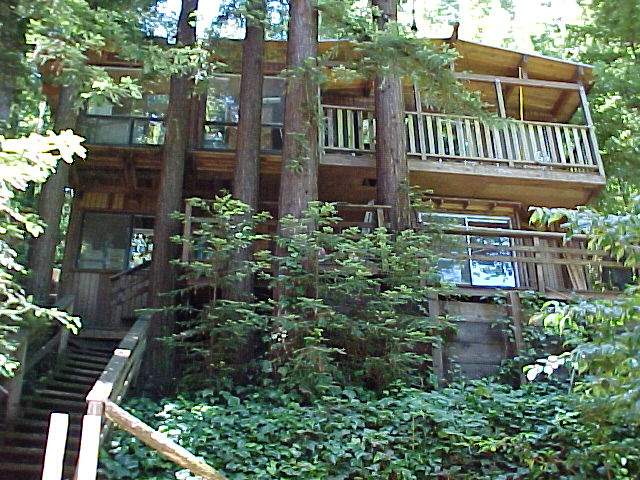
I'm doing fairly well for my age (78). My family has a history of >cardiovascular maladies. My "solution" was accidental. In 1974, I
bought a house in the Santa Cruz mountains. ><https://www.learnbydestroying.com/jeffl/pics/home/BL-house1.jpg>
To enter, I need to climb about 50 stairs. When I bought the house,
climbing the stairs were not a problem. Recently, the stairs have
become a problem.
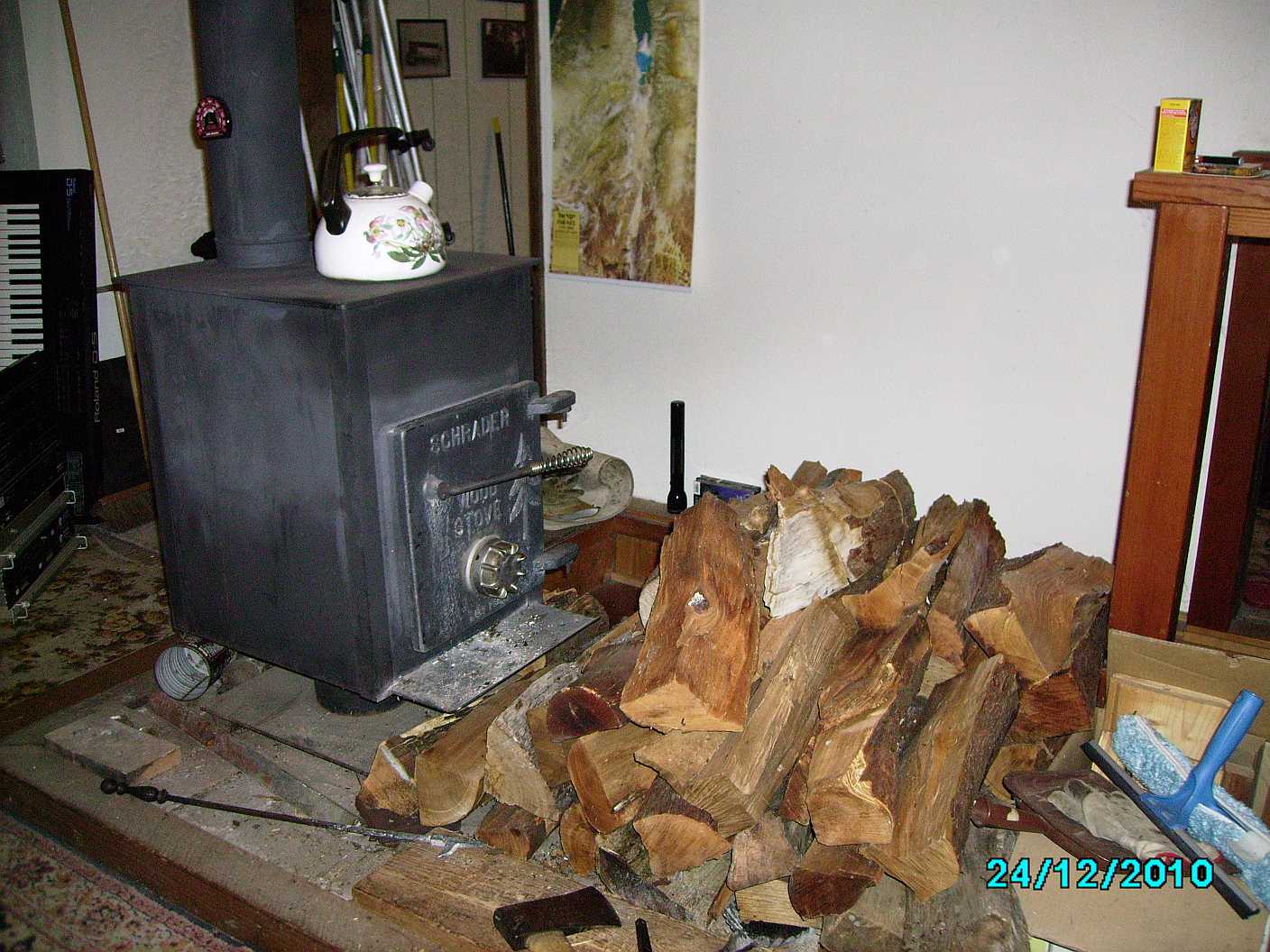
I may have solved the exercise problem by accident. I heat the house
with a wood burning stove: ><https://www.learnbydestroying.com/jeffl/pics/home/wood-burner.jpg>
I buy about 2 cords of firewood each year, and scrounge a 3rd cord.
The firewood is typically delivered split and partly dried. I split
some of the larger logs to a more manageable size. I stack the wood
near the bottom of the stairs and then carry the wood up the stairs,
30 lbs at a time. Currently, I can do 12 trips up/down the stairs
before I need to stop. I think this qualifies as exercise. My
cardiologist tells me to continue as it seems to be what is keeping me
alive. Because of this, I've resisted the temptation to build a
conveyor belt, tram, or other labor saving device. I also hike 2 to 3
miles on Friday mornings with some friends: ><https://www.strava.com/athletes/103870441>
If you're worried about AMS (acute mountain sickness), you might want
to carry a pulse oximeter, which will indicate how well your body is >>>absorbing oxygen.
I'm not worried, just curious. I'm wearing an old Garmin
Forerunner watch, got it as a gift from one of my sons, after he
had bought a newer model. It does heart rate tracking and has a
pulse oximeter. I haven't enabled All-Day Mode, so it only tracks
that during sleep, if I am wearing the watch. It would have been >>interesting to switch on All-Day mode for riding up Mount
Ventoux, but I hadn't thought of that. It just didn't occur to
me, because my readings where between 95 and 100%, most of the
time.
That won't work. Both the finger-tip and wrist watch style of pulse >oximeters expect the user to be at rest or at least not moving.
The
device detects erratic changes in heart rate and refuses to display
anything until it sees several fairly consistent measurements in
succession. I have a problem where my heart erratically decides to
skip a beat (arrhythmia). That's not a problem, which I usually
ignore.
I looked for a sports medicine study using a pulse oximeter on a
bicycle. ><https://scholar.google.com/scholar?hl=en&as_sdt=0%2C5&q=pulse%20oximeter%20bicycle>
There was some, but most involved obtaining data while riding a
stationary exercise bicycle. For example:
"Reliability of Pulse Oximetry During Exercise in Pulmonary Patients" ><https://www.sciencedirect.com/science/article/abs/pii/S0012369215409298>
| Sysop: | Amessyroom |
|---|---|
| Location: | Fayetteville, NC |
| Users: | 65 |
| Nodes: | 6 (0 / 6) |
| Uptime: | 07:14:03 |
| Calls: | 862 |
| Files: | 1,311 |
| Messages: | 264,829 |