Hi all,Quick correction on my math. The actual detection range was close to .003 AU --- Synchronet 3.21d-Linux NewsLink 1.2
I know the stealth in space argument has been done to death and conclusively has come down on the side of "there is no stealth in space." However, I was designing a spacecraft for a short story and it struck me that this ship, to my dismay, may in fact be stealthy. It uses a Negative Matter Drive (see here on the Atomic Rockets website for details http://www.projectrho.com/public_html/rocket/antigravity.php#id--Paragravity--Carrot_On_A_Stick--Negative_Matter_Drive) which is an actual plausible reactionless drive. The craft is small and has a low surface temperature. It lacks radiators because it uses a Visser Wormhole to transfer heat to a heat sink/radiator system located thousands of lightyears away. Using the equation provided on Atomic Rockets for the maximum detection range of a craft with no active drive using current technology [Rd = 13.4 * sqrt(A) * T2, where: Rd = detection range (km), A = spacecraft projected area (m2 ), T = surface temperature (K)], I came to a detection range of about .3 AU. While this may not seem like a stealthy craft, the detection range I was hoping for is closer to 30 AU. Is there any plausible way to increase the detection range without raising the surface temperature or size? I was thinking that I could make it travel at relativistic speed, so the particle impacts off of a magnetic shield might be a giveaway. Would that be plausible?
Hi all,One wonders what kind of machinations is needed to open and maintain a wormhole, and if that would not be like waving, singing and dancing for anyone able to peak inside wormspace?
I know the stealth in space argument has been done to death and conclusively has come down on the side of "there is no stealth in space." However, I was designing a spacecraft for a short story and it struck me that this ship, to my dismay, may in fact be stealthy. It uses a Negative Matter Drive (see here on the Atomic Rockets website for details http://www.projectrho.com/public_html/rocket/antigravity.php#id--Paragravity--Carrot_On_A_Stick--Negative_Matter_Drive) which is an actual plausible reactionless drive. The craft is small and has a low surface temperature. It lacks radiators because it uses a Visser Wormhole to transfer heat to a heat sink/radiator system located thousands of lightyears away. Using the equation provided on Atomic Rockets for the maximum detection range of a craft with no active drive using current technology [Rd = 13.4 * sqrt(A) * T2, where: Rd = detection range (km), A = spacecraft projected area (m2 ), T = surface temperature (K)], I came to a detection range of about 0.003 AU. While this may not seem like a stealthy craft, the detection range I was hoping for is closer to 30 AU. Is there any plausible way to increase the detection range without raising the surface temperature or size? I was thinking that I could make it travel at relativistic speed, so the particle impacts off of a magnetic shield might be a giveaway. Would that be plausible?
On Thursday, March 25, 2021 at 1:47:05 AM UTC+7, Will Oestreich wrote:
Hi all,
I know the stealth in space argument has been done to death and conclusively has come down on the side of "there is no stealth in space." However, I was designing a spacecraft for a short story and it struck me that this ship, to my dismay, may in fact be stealthy. It uses a Negative Matter Drive (see here on the Atomic Rockets website for details http://www.projectrho.com/public_html/rocket/antigravity.php#id--Paragravity--Carrot_On_A_Stick--Negative_Matter_Drive) which is an actual plausible reactionless drive. The craft is small and has a low surface temperature. It lacks radiators because it uses a Visser Wormhole to transfer heat to a heat sink/radiator system located thousands of lightyears away. Using the equation provided on Atomic Rockets for the maximum detection range of a craft with no active drive using current technology [Rd = 13.4 * sqrt(A) * T2, where: Rd = detection range (km), A = spacecraft projected area (m2 ), T = surface temperature (K)], I came to a detection range of about 0.003 AU. While this may not seem like a stealthy craft, the detection range I was hoping for is closer to 30 AU. Is there any plausible way to increase the detection range without raising the surface temperature or size? I was thinking that I could make it travel at relativistic speed, so the particle impacts off of a magnetic shield might be a giveaway. Would that be plausible?
One wonders what kind of machinations is needed to open and maintain a wormhole, and if that would not be like waving, singing and dancing for anyone able to peak inside wormspace?Why would someone notice a neutrino source?
That said, particle impact on a magnetic field will give of a little radiation as the change direction. It should correlate to an increase in temperature for the whole magnetic field which must be large, but I dont know how much.
The other thing is to look at how 13,4 factor is derived, probably its the size of the detector, so maybe cover Mercury in sensors?
Or a network of satellites spread throughout the solar system, able to detect magnetic fields.
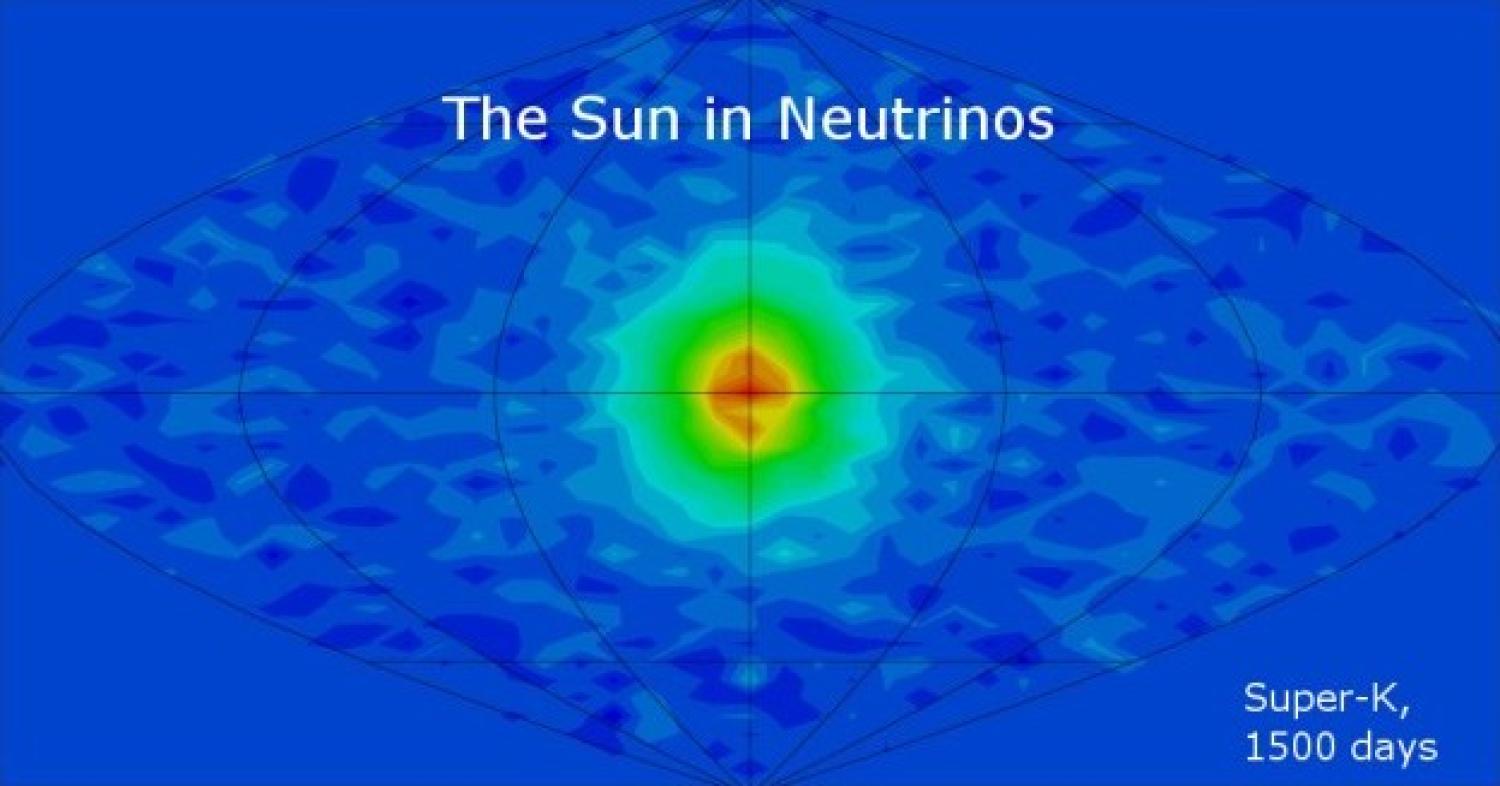
Someone might notice a neutrino source.
Last thing is star occlusion. If anyone happens to be looking that way when the ship passes.
On Friday, March 26, 2021 at 5:52:12 PM UTC-7, eripe wrote:
On Thursday, March 25, 2021 at 1:47:05 AM UTC+7, Will Oestreich wrote:
Hi all,
I know the stealth in space argument has been done to death and conclusively has come down on the side of "there is no stealth in space." However, I was designing a spacecraft for a short story and it struck me that this ship, to my dismay, may in fact be stealthy. It uses a Negative Matter Drive (see here on the Atomic Rockets website for details http://www.projectrho.com/public_html/rocket/antigravity.php#id--Paragravity--Carrot_On_A_Stick--Negative_Matter_Drive) which is an actual plausible reactionless drive. The craft is small and has a low surface temperature. It lacks radiators because it uses a Visser Wormhole to transfer heat to a heat sink/radiator system located thousands of lightyears away. Using the equation provided on Atomic Rockets for the maximum detection range of a craft with no active drive using current technology [Rd = 13.4 * sqrt(A) * T2, where: Rd = detection range (km), A = spacecraft projected area (m2 ), T = surface temperature (K)], I came to a detection range of about 0.003 AU. While this may not seem like a stealthy craft, the detection range I was hoping for is closer to 30 AU. Is there any plausible way to increase the detection range without raising the surface temperature or size? I was thinking that I could make it travel at relativistic speed, so the particle impacts off of a magnetic shield might be a giveaway. Would that be plausible?
Because we have neutrino detectors, looking everywhere, even through the planets.. They are not very sensitive, but they might just pick up a source crossing the sky.One wonders what kind of machinations is needed to open and maintain a wormhole, and if that would not be like waving, singing and dancing for anyone able to peak inside wormspace?
That said, particle impact on a magnetic field will give of a little radiation as the change direction. It should correlate to an increase in temperature for the whole magnetic field which must be large, but I dont know how much.Why would someone notice a neutrino source?
The other thing is to look at how 13,4 factor is derived, probably its the size of the detector, so maybe cover Mercury in sensors?
Or a network of satellites spread throughout the solar system, able to detect magnetic fields.
Someone might notice a neutrino source.
Last thing is star occlusion. If anyone happens to be looking that way when the ship passes.
On Saturday, March 27, 2021 at 11:37:38 PM UTC+7, Will Oestreich wrote:
On Friday, March 26, 2021 at 5:52:12 PM UTC-7, eripe wrote:
On Thursday, March 25, 2021 at 1:47:05 AM UTC+7, Will Oestreich wrote:
Hi all,
I know the stealth in space argument has been done to death and conclusively has come down on the side of "there is no stealth in space." However, I was designing a spacecraft for a short story and it struck me that this ship, to my dismay, may in fact be stealthy. It uses a Negative Matter Drive (see here on the Atomic Rockets website for details http://www.projectrho.com/public_html/rocket/antigravity.php#id--Paragravity--Carrot_On_A_Stick--Negative_Matter_Drive) which is an actual plausible reactionless drive. The craft is small and has a low surface temperature. It lacks radiators because it uses a Visser Wormhole to transfer heat to a heat sink/radiator system located thousands of lightyears away. Using the equation provided on Atomic Rockets for the maximum detection range of a craft with no active drive using current technology [Rd = 13.4 * sqrt(A) * T2, where: Rd = detection range (km), A = spacecraft projected area (m2 ), T = surface temperature (K)], I came to a detection range of about 0.003 AU. While this may not seem like a stealthy craft, the detection range I was hoping for is closer to 30 AU. Is there any plausible way to increase the detection range without raising the surface temperature or size? I was thinking that I could make it travel at relativistic speed, so the particle impacts off of a magnetic shield might be a giveaway. Would that be plausible?
Sorry, I phrased the question badly. I meant what would be producing neutrinos enough to be noticed above the background noise on the ship?One wonders what kind of machinations is needed to open and maintain a wormhole, and if that would not be like waving, singing and dancing for anyone able to peak inside wormspace?
Because we have neutrino detectors, looking everywhere, even through the planets.. They are not very sensitive, but they might just pick up a source crossing the sky.That said, particle impact on a magnetic field will give of a little radiation as the change direction. It should correlate to an increase in temperature for the whole magnetic field which must be large, but I dont know how much.Why would someone notice a neutrino source?
The other thing is to look at how 13,4 factor is derived, probably its the size of the detector, so maybe cover Mercury in sensors?
Or a network of satellites spread throughout the solar system, able to detect magnetic fields.
Someone might notice a neutrino source.
Last thing is star occlusion. If anyone happens to be looking that way when the ship passes.
https://www.colorado.edu/today/sites/default/files/styles/large/public/article-image/sun_neutrinos_0.jpg?itok=4mqzCeB6
https://www.wired.com/story/neutrino-detectors-could-be-used-to-spot-nuclear-rogues/
Then again, if you have negative mass and wormholes, you probably have some tinfoil that neutrinos cant penetrate.
On Saturday, March 27, 2021 at 6:46:00 PM UTC-7, eripe wrote:
On Saturday, March 27, 2021 at 11:37:38 PM UTC+7, Will Oestreich wrote:
On Friday, March 26, 2021 at 5:52:12 PM UTC-7, eripe wrote:
On Thursday, March 25, 2021 at 1:47:05 AM UTC+7, Will Oestreich wrote:
Hi all,
I know the stealth in space argument has been done to death and conclusively has come down on the side of "there is no stealth in space." However, I was designing a spacecraft for a short story and it struck me that this ship, to my dismay, may in fact be stealthy. It uses a Negative Matter Drive (see here on the Atomic Rockets website for details http://www.projectrho.com/public_html/rocket/antigravity.php#id--Paragravity--Carrot_On_A_Stick--Negative_Matter_Drive) which is an actual plausible reactionless drive. The craft is small and has a low surface temperature. It lacks radiators because it uses a Visser Wormhole to transfer heat to a heat sink/radiator system located thousands of lightyears away. Using the equation provided on Atomic Rockets for the maximum detection range of a craft with no active drive using current technology [Rd = 13.4 * sqrt(A) * T2, where: Rd = detection range (km), A = spacecraft projected area (m2 ), T = surface temperature (K)], I came to a detection range of about 0.003 AU. While this may not seem like a stealthy craft, the detection range I was hoping for is closer to 30 AU. Is there any plausible way to increase the detection range without raising the surface temperature or size? I was thinking that I could make it travel at relativistic speed, so the particle impacts off of a magnetic shield might be a giveaway. Would that be plausible?
A nuclear reactor. I don't know the detection range...One wonders what kind of machinations is needed to open and maintain a wormhole, and if that would not be like waving, singing and dancing for anyone able to peak inside wormspace?
Because we have neutrino detectors, looking everywhere, even through the planets.. They are not very sensitive, but they might just pick up a source crossing the sky.That said, particle impact on a magnetic field will give of a little radiation as the change direction. It should correlate to an increase in temperature for the whole magnetic field which must be large, but I dont know how much.Why would someone notice a neutrino source?
The other thing is to look at how 13,4 factor is derived, probably its the size of the detector, so maybe cover Mercury in sensors?
Or a network of satellites spread throughout the solar system, able to detect magnetic fields.
Someone might notice a neutrino source.
Last thing is star occlusion. If anyone happens to be looking that way when the ship passes.
https://www.colorado.edu/today/sites/default/files/styles/large/public/article-image/sun_neutrinos_0.jpg?itok=4mqzCeB6
https://www.wired.com/story/neutrino-detectors-could-be-used-to-spot-nuclear-rogues/
Then again, if you have negative mass and wormholes, you probably have some tinfoil that neutrinos cant penetrate.Sorry, I phrased the question badly. I meant what would be producing neutrinos enough to be noticed above the background noise on the ship?
On Sunday, March 28, 2021 at 9:51:18 AM UTC+7, Will Oestreich wrote:
On Saturday, March 27, 2021 at 6:46:00 PM UTC-7, eripe wrote:
On Saturday, March 27, 2021 at 11:37:38 PM UTC+7, Will Oestreich wrote:
On Friday, March 26, 2021 at 5:52:12 PM UTC-7, eripe wrote:
On Thursday, March 25, 2021 at 1:47:05 AM UTC+7, Will Oestreich wrote:
Hi all,
I know the stealth in space argument has been done to death and conclusively has come down on the side of "there is no stealth in space." However, I was designing a spacecraft for a short story and it struck me that this ship, to my dismay, may in fact be stealthy. It uses a Negative Matter Drive (see here on the Atomic Rockets website for details http://www.projectrho.com/public_html/rocket/antigravity.php#id--Paragravity--Carrot_On_A_Stick--Negative_Matter_Drive) which is an actual plausible reactionless drive. The craft is small and has a low surface temperature. It lacks radiators because it uses a Visser Wormhole to transfer heat to a heat sink/radiator system located thousands of lightyears away. Using the equation provided on Atomic Rockets for the maximum detection range of a craft with no active drive using current technology [Rd = 13.4 * sqrt(A) * T2, where: Rd = detection range (km), A = spacecraft projected area (m2 ), T = surface temperature (K)], I came to a detection range of about 0.003 AU. While this may not seem like a stealthy craft, the detection range I was hoping for is closer to 30 AU. Is there any plausible way to increase the detection range without raising the surface temperature or size? I was thinking that I could make it travel at relativistic speed, so the particle impacts off of a magnetic shield might be a giveaway. Would that be plausible?
Alright. You mentioned covering Mercury in sensors, do you think quantity of sensors could help the problem?One wonders what kind of machinations is needed to open and maintain a wormhole, and if that would not be like waving, singing and dancing for anyone able to peak inside wormspace?
Because we have neutrino detectors, looking everywhere, even through the planets.. They are not very sensitive, but they might just pick up a source crossing the sky.That said, particle impact on a magnetic field will give of a little radiation as the change direction. It should correlate to an increase in temperature for the whole magnetic field which must be large, but I dont know how much.Why would someone notice a neutrino source?
The other thing is to look at how 13,4 factor is derived, probably its the size of the detector, so maybe cover Mercury in sensors?
Or a network of satellites spread throughout the solar system, able to detect magnetic fields.
Someone might notice a neutrino source.
Last thing is star occlusion. If anyone happens to be looking that way when the ship passes.
https://www.colorado.edu/today/sites/default/files/styles/large/public/article-image/sun_neutrinos_0.jpg?itok=4mqzCeB6
https://www.wired.com/story/neutrino-detectors-could-be-used-to-spot-nuclear-rogues/
A nuclear reactor. I don't know the detection range...Then again, if you have negative mass and wormholes, you probably have some tinfoil that neutrinos cant penetrate.Sorry, I phrased the question badly. I meant what would be producing neutrinos enough to be noticed above the background noise on the ship?
On Sunday, March 28, 2021 at 1:47:06 AM UTC-7, eripe wrote:
On Sunday, March 28, 2021 at 9:51:18 AM UTC+7, Will Oestreich wrote:
On Saturday, March 27, 2021 at 6:46:00 PM UTC-7, eripe wrote:
On Saturday, March 27, 2021 at 11:37:38 PM UTC+7, Will Oestreich wrote:
On Friday, March 26, 2021 at 5:52:12 PM UTC-7, eripe wrote:
On Thursday, March 25, 2021 at 1:47:05 AM UTC+7, Will Oestreich wrote:
Hi all,
I know the stealth in space argument has been done to death and conclusively has come down on the side of "there is no stealth in space." However, I was designing a spacecraft for a short story and it struck me that this ship, to my dismay, may in fact be stealthy. It uses a Negative Matter Drive (see here on the Atomic Rockets website for details http://www.projectrho.com/public_html/rocket/antigravity.php#id--Paragravity--Carrot_On_A_Stick--Negative_Matter_Drive) which is an actual plausible reactionless drive. The craft is small and has a low surface temperature. It lacks radiators because it uses a Visser Wormhole to transfer heat to a heat sink/radiator system located thousands of lightyears away. Using the equation provided on Atomic Rockets for the maximum detection range of a craft with no active drive using current technology [Rd = 13.4 * sqrt(A) * T2, where: Rd = detection range (km), A = spacecraft projected area (m2 ), T = surface temperature (K)], I came to a detection range of about 0.003 AU. While this may not seem like a stealthy craft, the detection range I was hoping for is closer to 30 AU. Is there any plausible way to increase the detection range without raising the surface temperature or size? I was thinking that I could make it travel at relativistic speed, so the particle impacts off of a magnetic shield might be a giveaway. Would that be plausible?
Yes, the bigger the sensor, the more light you can collect. One needs to find out how the 13,4 factor was derived, and then work on those factors.One wonders what kind of machinations is needed to open and maintain a wormhole, and if that would not be like waving, singing and dancing for anyone able to peak inside wormspace?
Because we have neutrino detectors, looking everywhere, even through the planets.. They are not very sensitive, but they might just pick up a source crossing the sky.That said, particle impact on a magnetic field will give of a little radiation as the change direction. It should correlate to an increase in temperature for the whole magnetic field which must be large, but I dont know how much.Why would someone notice a neutrino source?
The other thing is to look at how 13,4 factor is derived, probably its the size of the detector, so maybe cover Mercury in sensors?
Or a network of satellites spread throughout the solar system, able to detect magnetic fields.
Someone might notice a neutrino source.
Last thing is star occlusion. If anyone happens to be looking that way when the ship passes.
https://www.colorado.edu/today/sites/default/files/styles/large/public/article-image/sun_neutrinos_0.jpg?itok=4mqzCeB6
https://www.wired.com/story/neutrino-detectors-could-be-used-to-spot-nuclear-rogues/
Alright. You mentioned covering Mercury in sensors, do you think quantity of sensors could help the problem?A nuclear reactor. I don't know the detection range...Then again, if you have negative mass and wormholes, you probably have some tinfoil that neutrinos cant penetrate.Sorry, I phrased the question badly. I meant what would be producing neutrinos enough to be noticed above the background noise on the ship?
| Sysop: | Amessyroom |
|---|---|
| Location: | Fayetteville, NC |
| Users: | 74 |
| Nodes: | 6 (0 / 6) |
| Uptime: | 52:38:42 |
| Calls: | 1,101 |
| Calls today: | 1 |
| Files: | 1,339 |
| Messages: | 276,095 |