On Mon, 2 Feb 2026 12:25:41 -0500
The True Melissa <thetruemelissa@gmail.com> wrote:
I love short stories from the Golden Age. I recently reread Isaac
Asimov's collected short stories, and I enjoyed it very much.
Definitely =^_^= Finally crossed "The Martian Chronicles" off my to-do
list last year; "There Will Come Soft Rains" has long been a favorite,
but there's just a *pile* of other good stuff in there.
Verily, in article <20260202105936.0000758d@gmail.com>, did commodorejohn@gmail.com deliver unto us this message:
On Mon, 2 Feb 2026 12:25:41 -0500
The True Melissa <thetruemelissa@gmail.com> wrote:
I love short stories from the Golden Age. I recently reread Isaac
Asimov's collected short stories, and I enjoyed it very much.
Definitely =^_^= Finally crossed "The Martian Chronicles" off my to-do
list last year; "There Will Come Soft Rains" has long been a favorite,
but there's just a *pile* of other good stuff in there.
The one I can't forget is "Dark They Were, And Golden-Eyed." "Mars Is Heaven!" was also pretty memorable.
It's interesting that they're not all set on the same Mars, or at least
they don't appear to be.
Definitely =^_^= Finally crossed "The Martian Chronicles" off my
to-do list last year; "There Will Come Soft Rains" has long been a favorite, but there's just a *pile* of other good stuff in there.
The one I can't forget is "Dark They Were, And Golden-Eyed." "Mars Is Heaven!" was also pretty memorable.
It's interesting that they're not all set on the same Mars, or at
least they don't appear to be.
Look at the stories about Venus. Tropical with oceans and maybe 'saurians. When a place is completely unknown then writers are free to impose multiple realities.
Once the terrain is known Mars is barren and cold, Venus is barren and hot,
writers are constrained to the known conditions, unless they posit alternate universes or realities.
I recall classic Mars as a desert and classic Venus as a jungle, not
barren. Bradbury certainly didn't paint it as barren in "All Summer
In a Day." Pasty white plants tower to the skies, and the temperature
seems about like ours (it must be all that rain).
(Also reminds me of a children's book from the '50s - '60s that I
found once upon a time; that had Earth colonists landing on an
inhospitable and seemingly-deserted Mars, only for their children to
meet a couple Martian children, who along with the rest of their
civilization have retreated to underground cavern-cities or something
to that effect. I've never managed to track it down since...)
It'd be interesting to track the evolution of Mars in popular culture
over time, as the accuracy of our astronomical observations improved.
The "canals" were always a mistranslation from Schiaparelli's "canali,"
but I don't think the idea was conclusively debunked 'til the 1900s. >Nevertheless, Burroughs's Barsoom is a dying, desert world, and Welles
has implications of the same as the motive for his Martian invasion.
On Mon, 2 Feb 2026 14:54:04 -0800, John Ames <commodorejohn@gmail.com>
wrote:
It'd be interesting to track the evolution of Mars in popular culture
over time, as the accuracy of our astronomical observations improved.
The "canals" were always a mistranslation from Schiaparelli's "canali,"
but I don't think the idea was conclusively debunked 'til the 1900s. >>Nevertheless, Burroughs's Barsoom is a dying, desert world, and Welles
has implications of the same as the motive for his Martian invasion.
It's been done for Venus:
Aldiss, Brian (ed) 1971. Farewell, fantastic Venus. London:
Panther.
Venus in science fiction & fantasy
I tried to remove AUE from follow-ups, but something, possibly Eternal >September, would not let me.
(follow-ups set)
----
Stephen Hayes, Author of The Year of the Dragon
Sample or purchase The Year of the Dragon: >https://www.smashwords.com/books/view/907935
Web site: http://www.khanya.org.za/stevesig.htm
Blog: http://methodius.blogspot.com
E-mail: shayes@dunelm.org.uk or if you use Gmail hayesstw@telkomsa.net
On 2/2/26 12:05, The True Melissa wrote:
Verily, in article <20260202105936.0000758d@gmail.com>, did
commodorejohn@gmail.com deliver unto us this message:
On Mon, 2 Feb 2026 12:25:41 -0500
The True Melissa <thetruemelissa@gmail.com> wrote:
I love short stories from the Golden Age. I recently reread Isaac
Asimov's collected short stories, and I enjoyed it very much.
Definitely =^_^= Finally crossed "The Martian Chronicles" off my to-do
list last year; "There Will Come Soft Rains" has long been a favorite,
but there's just a *pile* of other good stuff in there.
The one I can't forget is "Dark They Were, And Golden-Eyed." "Mars Is
Heaven!" was also pretty memorable.
It's interesting that they're not all set on the same Mars, or at least
they don't appear to be.
-a-a-a-aThat is because Mars was like Africa was for Burroughs, unexplored and possibly
full of various peoples and polities.-a A fine place for unknown civilizations and alien
peoples possibly immortals and Roman survivals, intelligent apes or hominids.
-a-a-a-aLook at the stories about Venus.-a Tropical with oceans and maybe 'saurians.
When a place is-a completely unknown then writers are free to impose multiple
realities.
-a-a-a-aOnce the terrain is known Mars is barren and cold, Venus is barren and hot,
writers are constrained to the known conditions, unless they posit
alternate
universes or realities.-a \
Niven's "Rainbow Mars" does a similar thing for the Red Planet,
with different SF-Mars concepts all jumbled together in a fun
mish-mash.
The 1968 anthology 'Farewell Fantastic Venus!" was a nostalgic
adieu to old Venus, put together after the first atmospheric
probes showed the reality.
It'd be interesting to track the evolution of Mars in popular
culture over time, as the accuracy of our astronomical observations
improved. The "canals" were always a mistranslation from
Schiaparelli's "canali," but I don't think the idea was conclusively
debunked 'til the 1900s. Nevertheless, Burroughs's Barsoom is a
dying, desert world, and Welles has implications of the same as the
motive for his Martian invasion.
On Mon, 2 Feb 2026 14:54:04 -0800, John Ames wrote:
It'd be interesting to track the evolution of Mars in popular
culture over time, as the accuracy of our astronomical observations improved. The "canals" were always a mistranslation from
Schiaparelli's "canali," but I don't think the idea was conclusively debunked 'til the 1900s. Nevertheless, Burroughs's Barsoom is a
dying, desert world, and Welles has implications of the same as the
motive for his Martian invasion.
Well, Wells before Welles, anyway. ;)
The earlier half of the 20th century was full of depictions of the
other planets as being like exotic versions of far-flung parts of
Earth -- none of the need for this ?space-suit? folderol. The plants
and animals might look like nothing on Earth, but they still were
basically plants and animals, of a sort. Basically an extension of the ?darkest Africa? and ?exotic Asia? stories of the earlier century.
The interplanetary settings let writers get crazier, though. For
instance, Barsoom no longer had a stable atmosphere, and a single air >factory pumped out enough breathable air for the whole planet. The far-
flung areas don't seem to be aware of this, and nobody ever got around
to creating a backup system -- when the air-maker and his apprentice >happened to die at once, the whole planet started smothering.
You can't set *that* level of nonsense in darkest Africa or the exotic >Orient.
On 03/02/26 10:01, John Ames wrote:
(Also reminds me of a children's book from the '50s - '60s that I
found once upon a time; that had Earth colonists landing on an
inhospitable and seemingly-deserted Mars, only for their children to
meet a couple Martian children, who along with the rest of their
civilization have retreated to underground cavern-cities or something
to that effect. I've never managed to track it down since...)
I've re-read that in the not-so-distant past, but I can't identify it. I remember that the Earth explorers sending out exploration vehicles, and
the Martian children had fun riding on top of them, in a game that anticipated cats riding on vacuum cleaners.
Perhaps some more details will come to mind in the next few days.
Verily, in article <10ndqrk$1pg48$2@dont-email.me>, did
ldo@nz.invalid deliver unto us this message:
The earlier half of the 20th century was full of depictions of the
other planets as being like exotic versions of far-flung parts of
Earth -- none of the need for this rCLspace-suitrCY folderol. The
plants and animals might look like nothing on Earth, but they still
were basically plants and animals, of a sort. Basically an
extension of the rCLdarkest AfricarCY and rCLexotic AsiarCY stories of the >> earlier century.
The interplanetary settings let writers get crazier, though. For
instance, Barsoom no longer had a stable atmosphere, and a single
air factory pumped out enough breathable air for the whole planet.
The far- flung areas don't seem to be aware of this, and nobody ever
got around to creating a backup system -- when the air-maker and his apprentice happened to die at once, the whole planet started
smothering.
You can't set *that* level of nonsense in darkest Africa or the
exotic Orient.
The True Melissa <thetruemelissa@gmail.com> wrote:
The interplanetary settings let writers get crazier, though. For
instance, Barsoom no longer had a stable atmosphere, and a single air >>factory pumped out enough breathable air for the whole planet. The far- >>flung areas don't seem to be aware of this, and nobody ever got around
to creating a backup system -- when the air-maker and his apprentice >>happened to die at once, the whole planet started smothering.
You can't set *that* level of nonsense in darkest Africa or the exotic >>Orient.
Maybe. But where is the source of the Nile? It's actually a giant spring turned into a river by a giant pumping plant built by the ancient Egyptians.
When the Nile started to dry up in the 1850s, destroying the crocodile
purse and shoe industry, Speke and Burton were sent up the dry riverbed to find out what had happened.
Warning: contains obscene digressions in Burton's footnotes.
--scott
But where is the source of the Nile?
On Sun, 22 Feb 2026 11:05:28 -0500 (EST), Scott Dorsey wrote:
But where is the source of the Nile?
I remember a doco where Joanna Lumley started a journey from the Nile
delta, and went all the way up to what was supposed to be the
rCLsourcerCY, which was an nondescript trickle of a little brook somewhere
in Sudan, I think it was.
Obviously what they meant by rCLsourcerCY was rCLhighest upstream point
where at least *some* of the water comes fromrCY. Because if they mean
to ask rCLwhere does the water come from?rCY, then the correct answer is >rCLall the tributaries and streams that feed into it along its lengthrCY.
There is a river on the border of Namibia and Angola now labelled on
maps as Kunene, and got to be so labelled because early foreign
tourists waved vaguely at the river and asked what it was called, and
the locals replied "Kunene", meaning the left bank, as opposed to the
far side of the river in what is now called Angola, which was the
right bank.
On 2/24/2026 5:42 AM, Steve Hayes wrote:
There is a river on the border of Namibia and Angola now labelled on
maps as Kunene, and got to be so labelled because early foreign
tourists waved vaguely at the river and asked what it was called, and
the locals replied "Kunene", meaning the left bank, as opposed to the
far side of the river in what is now called Angola, which was the
right bank.
I guess this kind of misinterpretation (or over-) is common: The island Krakatoa which exploded about one and a half century ago was apparently
named thus when westerners asking the locals what the name was, and got
the answer "I don't know". In the local tongue something like "kaga tau"
Anders D. Nygaard <news2012adn@google.com> wrote:always implicate the next tribe over, never the one making the claim. >According to Dutch sources (1676) based on earlier Indonesian sources
On 2/24/2026 5:42 AM, Steve Hayes wrote:
There is a river on the border of Namibia and Angola now labelled on
maps as Kunene, and got to be so labelled because early foreign
tourists waved vaguely at the river and asked what it was called, and
the locals replied "Kunene", meaning the left bank, as opposed to the
far side of the river in what is now called Angola, which was the
right bank.
I guess this kind of misinterpretation (or over-) is common: The island
Krakatoa which exploded about one and a half century ago was apparently
named thus when westerners asking the locals what the name was, and got
the answer "I don't know". In the local tongue something like "kaga tau"
A myth, probably. A general one even, valid for many other place names. Similar, perhaps, to many of the reports of cannibalism -- which
the name Krakatau derives from Sanskrit 'Karkata' meaning 'crab'. [1] >Speculation: the island and surrounding atols--
may have been crab-shaped, or something like it.
The Portugese spelling of the name 'Krakatao'
is the source of the pidgin-Portugese, (aka English) Krakatoa,
Jan
(fide wikip)
[1] The group of islands in Sunda Strait may be the remains
of a much larger volcanic explosion of the Proto-Krakatau
that destroyed the land connection between Sumatra and Java,
ca 500 CE.
On Sun, 22 Feb 2026 11:05:28 -0500 (EST), Scott Dorsey wrote:
But where is the source of the Nile?
I remember a doco where Joanna Lumley started a journey from the Nile
delta, and went all the way up to what was supposed to be the
rCLsourcerCY, which was an nondescript trickle of a little brook somewhere
in Sudan, I think it was.
Obviously what they meant by rCLsourcerCY was rCLhighest upstream point
where at least *some* of the water comes fromrCY. Because if they mean
to ask rCLwhere does the water come from?rCY, then the correct answer is rCLall the tributaries and streams that feed into it along its lengthrCY.
On 2/23/2026 9:05 PM, Lawrence DrCOOliveiro wrote:
On Sun, 22 Feb 2026 11:05:28 -0500 (EST), Scott Dorsey wrote:
But where is the source of the Nile?
I remember a doco where Joanna Lumley started a journey from the Nile
delta, and went all the way up to what was supposed to be the
rCLsourcerCY, which was an nondescript trickle of a little brook somewhere >> in Sudan, I think it was.
Obviously what they meant by rCLsourcerCY was rCLhighest upstream point
where at least *some* of the water comes fromrCY. Because if they mean
to ask rCLwhere does the water come from?rCY, then the correct answer is
rCLall the tributaries and streams that feed into it along its lengthrCY.
'Source' is pretty ambiguous for most rivers.
1. Highest altitude stream that feeds into it? Permanent? Seasonal?
2. Furthest from the mouth? Missouri River needs to be renamed then.
3. Some are obvious, such as where a river runs from a large lake.
On 2/23/2026 9:05 PM, Lawrence DrCOOliveiro wrote:
On Sun, 22 Feb 2026 11:05:28 -0500 (EST), Scott Dorsey wrote:
But where is the source of the Nile?
I remember a doco where Joanna Lumley started a journey from the Nile
delta, and went all the way up to what was supposed to be the
rCLsourcerCY, which was an nondescript trickle of a little brook somewhere >> in Sudan, I think it was.
Obviously what they meant by rCLsourcerCY was rCLhighest upstream point
where at least *some* of the water comes fromrCY. Because if they mean
to ask rCLwhere does the water come from?rCY, then the correct answer is
rCLall the tributaries and streams that feed into it along its lengthrCY.
'Source' is pretty ambiguous for most rivers.
1. Highest altitude stream that feeds into it? Permanent? Seasonal?
2. Furthest from the mouth? Missouri River needs to be renamed then.
3. Some are obvious, such as where a river runs from a large lake.
pt
On 24/02/2026 16:43, Cryptoengineer wrote:
On 2/23/2026 9:05 PM, Lawrence D'Oliveiro wrote:
On Sun, 22 Feb 2026 11:05:28 -0500 (EST), Scott Dorsey wrote:
But where is the source of the Nile?
I remember a doco where Joanna Lumley started a journey from the Nile
delta, and went all the way up to what was supposed to be the
"source", which was an nondescript trickle of a little brook somewhere
in Sudan, I think it was.
Obviously what they meant by "source" was "highest upstream point
where at least *some* of the water comes from". Because if they mean
to ask "where does the water come from?", then the correct answer is
"all the tributaries and streams that feed into it along its length".
'Source' is pretty ambiguous for most rivers.
1. Highest altitude stream that feeds into it? Permanent? Seasonal?
2. Furthest from the mouth? Missouri River needs to be renamed then.
3. Some are obvious, such as where a river runs from a large lake.
pt
yes, but where does that lake get its water from?
Anders D. Nygaard <news2012adn@google.com> wrote:
On 2/24/2026 5:42 AM, Steve Hayes wrote:
There is a river on the border of Namibia and Angola now labelled on
maps as Kunene, and got to be so labelled because early foreign
tourists waved vaguely at the river and asked what it was called, and
the locals replied "Kunene", meaning the left bank, as opposed to the
far side of the river in what is now called Angola, which was the
right bank.
I guess this kind of misinterpretation (or over-) is common: The island
Krakatoa which exploded about one and a half century ago was apparently
named thus when westerners asking the locals what the name was, and got
the answer "I don't know". In the local tongue something like "kaga tau"
A myth, probably. A general one even, valid for many other place names.
According to Dutch sources (1676) based on earlier Indonesian sources
the name Krakatau derives from Sanskrit 'Karkata' meaning 'crab'. [1] Speculation: the island and surrounding atols
may have been crab-shaped, or something like it.
The Portugese spelling of the name 'Krakatao'
is the source of the pidgin-Portugese, (aka English) Krakatoa,
Jan
(fide wikip)
[1] The group of islands in Sunda Strait may be the remains
of a much larger volcanic explosion of the Proto-Krakatau
that destroyed the land connection between Sumatra and Java,
ca 500 CE.
In article <ii617m-aos3.ln1@newsauth.orpheusnet.co.uk>,
Charles Hope <clh@candehope.me.uk> wrote:
On 24/02/2026 16:43, Cryptoengineer wrote:
On 2/23/2026 9:05 PM, Lawrence DrCOOliveiro wrote:
On Sun, 22 Feb 2026 11:05:28 -0500 (EST), Scott Dorsey wrote:'Source' is pretty ambiguous for most rivers.
But where is the source of the Nile?
I remember a doco where Joanna Lumley started a journey from the Nile
delta, and went all the way up to what was supposed to be the
rCLsourcerCY, which was an nondescript trickle of a little brook somewhere >>>> in Sudan, I think it was.
Obviously what they meant by rCLsourcerCY was rCLhighest upstream point >>>> where at least *some* of the water comes fromrCY. Because if they mean >>>> to ask rCLwhere does the water come from?rCY, then the correct answer is >>>> rCLall the tributaries and streams that feed into it along its lengthrCY. >>>
1. Highest altitude stream that feeds into it? Permanent? Seasonal?
2. Furthest from the mouth? Missouri River needs to be renamed then.
3. Some are obvious, such as where a river runs from a large lake.
pt
yes, but where does that lake get its water from?
Turtles!
I went into a book store and asked the girl,
"Do you have the Prince Harry book, the one you can put on your phone?"
She said, "Do you mean the PDF file?"
"No" I said, "that's his uncle."
On 2/24/2026 9:24 PM, lar3ryca wrote:
I went into a book store and asked the girl,
"Do you have the Prince Harry book, the one you can put
on your phone?" She said, "Do you mean the PDF file?"
"No" I said, "that's his uncle."
Usually, your .sig gives rise to a chuckle or two; sometimes
after I've turned it around in my mind for a while.
But this one ... I just don't get it.
A hint for the humour-challenged, please?
Cryptoengineer <petertrei@gmail.com> writes:
On 2/23/2026 9:05 PM, Lawrence DrCOOliveiro wrote:
On Sun, 22 Feb 2026 11:05:28 -0500 (EST), Scott Dorsey wrote:'Source' is pretty ambiguous for most rivers.
But where is the source of the Nile?
I remember a doco where Joanna Lumley started a journey from the Nile
delta, and went all the way up to what was supposed to be the
rCLsourcerCY, which was an nondescript trickle of a little brook somewhere >>> in Sudan, I think it was.
Obviously what they meant by rCLsourcerCY was rCLhighest upstream point
where at least *some* of the water comes fromrCY. Because if they mean
to ask rCLwhere does the water come from?rCY, then the correct answer is >>> rCLall the tributaries and streams that feed into it along its lengthrCY. >>
1. Highest altitude stream that feeds into it? Permanent? Seasonal?
2. Furthest from the mouth? Missouri River needs to be renamed then.
3. Some are obvious, such as where a river runs from a large lake.
Take the Mississippi for example, where Schoolcraft named Lake Itasca as
the "source"; yet many smaller tributaries feed Lake Itasca itself.
On 2/24/2026 9:24 PM, lar3ryca wrote:
I went into a book store and asked the girl,
"Do you have the Prince Harry book, the one you can put on your phone?"
She said, "Do you mean the PDF file?"
"No" I said, "that's his uncle."
Usually, your .sig gives rise to a chuckle or two; sometimes after
I've turned it around in my mind for a while.
But this one ... I just don't get it.
A hint for the humour-challenged, please?
/Anders, Denmark
On 2/24/2026 12:41 PM, Scott Lurndal wrote:
Cryptoengineer <petertrei@gmail.com> writes:
On 2/23/2026 9:05 PM, Lawrence DrCOOliveiro wrote:
On Sun, 22 Feb 2026 11:05:28 -0500 (EST), Scott Dorsey wrote:'Source' is pretty ambiguous for most rivers.
But where is the source of the Nile?
I remember a doco where Joanna Lumley started a journey from the Nile
delta, and went all the way up to what was supposed to be the
rCLsourcerCY, which was an nondescript trickle of a little brook somewhere >>>> in Sudan, I think it was.
Obviously what they meant by rCLsourcerCY was rCLhighest upstream point >>>> where at least *some* of the water comes fromrCY. Because if they mean >>>> to ask rCLwhere does the water come from?rCY, then the correct answer is >>>> rCLall the tributaries and streams that feed into it along its lengthrCY. >>>
1. Highest altitude stream that feeds into it? Permanent? Seasonal?
2. Furthest from the mouth? Missouri River needs to be renamed then.
3. Some are obvious, such as where a river runs from a large lake.
Take the Mississippi for example, where Schoolcraft named Lake Itasca as
the "source"; yet many smaller tributaries feed Lake Itasca itself.
I've seen a qualification concerning whether there is a detectable
current running from a tributary across the lake to the exiting river.
On 2/23/2026 9:05 PM, Lawrence DrCOOliveiro wrote:
I remember a doco where Joanna Lumley started a journey from the
Nile delta, and went all the way up to what was supposed to be the
rCLsourcerCY, which was an nondescript trickle of a little brook
somewhere in Sudan, I think it was.
Obviously what they meant by rCLsourcerCY was rCLhighest upstream point
where at least *some* of the water comes fromrCY. Because if they
mean to ask rCLwhere does the water come from?rCY, then the correct
answer is rCLall the tributaries and streams that feed into it along
its lengthrCY.
'Source' is pretty ambiguous for most rivers.
1. Highest altitude stream that feeds into it? Permanent? Seasonal?
2. Furthest from the mouth? Missouri River needs to be renamed then.
3. Some are obvious, such as where a river runs from a large lake.
In English, 'PDF File' sounds fairly close to 'Pedophile'
Anders D. Nygaard wrote:
On 2/24/2026 9:24 PM, lar3ryca wrote:
I went into a book store and asked the girl,
"Do you have the Prince Harry book, the one you can put
on your phone?" She said, "Do you mean the PDF file?"
"No" I said, "that's his uncle."
Usually, your .sig gives rise to a chuckle or two; sometimes
after I've turned it around in my mind for a while.
But this one ... I just don't get it.
A hint for the humour-challenged, please?
Clue: Jeffrey Epstein...
On 2/23/2026 9:05 PM, Lawrence DrCOOliveiro wrote:
On Sun, 22 Feb 2026 11:05:28 -0500 (EST), Scott Dorsey wrote:
But where is the source of the Nile?
I remember a doco where Joanna Lumley started a journey from the Nile
delta, and went all the way up to what was supposed to be the
rCLsourcerCY, which was an nondescript trickle of a little brook somewhere >> in Sudan, I think it was.
Obviously what they meant by rCLsourcerCY was rCLhighest upstream point
where at least *some* of the water comes fromrCY. Because if they mean
to ask rCLwhere does the water come from?rCY, then the correct answer is
rCLall the tributaries and streams that feed into it along its lengthrCY.
'Source' is pretty ambiguous for most rivers.
1. Highest altitude stream that feeds into it? Permanent? Seasonal?
2. Furthest from the mouth? Missouri River needs to be renamed then.
3. Some are obvious, such as where a river runs from a large lake.
On 25/02/2026 12:40 a.m., J. J. Lodder wrote:
Anders D. Nygaard <news2012adn@google.com> wrote:
On 2/24/2026 5:42 AM, Steve Hayes wrote:
There is a river on the border of Namibia and Angola now labelled on
maps as Kunene, and got to be so labelled because early foreign
tourists waved vaguely at the river and asked what it was called, and
the locals replied "Kunene", meaning the left bank, as opposed to the
far side of the river in what is now called Angola, which was the
right bank.
I guess this kind of misinterpretation (or over-) is common: The island
Krakatoa which exploded about one and a half century ago was apparently
named thus when westerners asking the locals what the name was, and got
the answer "I don't know". In the local tongue something like "kaga tau"
A myth, probably. A general one even, valid for many other place names.
According to Dutch sources (1676) based on earlier Indonesian sources
the name Krakatau derives from Sanskrit 'Karkata' meaning 'crab'. [1] Speculation: the island and surrounding atols
may have been crab-shaped, or something like it.
Just as I always want to double-check those "I don't know" etymology stories, I always look a little harder at Sanskrit etymologies,
particularly of things quite a long way from northern India. There is a
lot of "Sanskrit explains everything" ideology out there.
Anyhow, for what it's worth, Andro Cherpillod (Dictionnaire Etymologique
des Noms Goographiques) derives it from Malay/Javanese ke-rekatak
meaning "split".
On Tue, 24 Feb 2026 08:57:11 +0100, Anders D. Nygaard wrote:
I guess this kind of misinterpretation (or over-) is common: The
island Krakatoa which exploded about one and a half century ago was apparently named thus when westerners asking the locals what the
name was, and got the answer "I don't know". In the local tongue
something like "kaga tau"
That kind of explanation is only plausible in areas taken over by
colonists unfamiliar with the language and culture of prior
inhabitants.
Since those inhabitants from before colonial times are still very much
in charge on that island, as in the rest of Indonesia, they would know
what name to use.
On 2/24/2026 4:45 PM, Anders D. Nygaard wrote:
On 2/24/2026 9:24 PM, lar3ryca wrote:
I went into a book store and asked the girl,
"Do you have the Prince Harry book, the one you can put on your phone?"
She said, "Do you mean the PDF file?"
"No" I said, "that's his uncle."
Usually, your .sig gives rise to a chuckle or two; sometimes after
I've turned it around in my mind for a while.
But this one ... I just don't get it.
A hint for the humour-challenged, please?
In English, 'PDF File' sounds fairly close
to 'Pedophile'
On 2/24/2026 10:57 PM, Cryptoengineer wrote:
On 2/24/2026 4:45 PM, Anders D. Nygaard wrote:
On 2/24/2026 9:24 PM, lar3ryca wrote:
I went into a book store and asked the girl,
"Do you have the Prince Harry book, the one you can put on your phone?" >>>> She said, "Do you mean the PDF file?"
"No" I said, "that's his uncle."
Usually, your .sig gives rise to a chuckle or two; sometimes after
I've turned it around in my mind for a while.
But this one ... I just don't get it.
A hint for the humour-challenged, please?
In English, 'PDF File' sounds fairly close
to 'Pedophile'
Fsvo "fairly close", I suppose - thank you.
But I see now why I had difficulties in getting it:
As I understand it, Ms. Giuffre was 17 at the time in question,
which in MyE is not sufficiently low to qualify.
Have I missed other cases, or are norms merely different elsewhere?
Lawrence D'Oliveiro <ldo@nz.invalid> wrote:
On Tue, 24 Feb 2026 08:57:11 +0100, Anders D. Nygaard wrote:
I guess this kind of misinterpretation (or over-) is common: The
island Krakatoa which exploded about one and a half century ago was
apparently named thus when westerners asking the locals what the
name was, and got the answer "I don't know". In the local tongue
something like "kaga tau"
That kind of explanation is only plausible in areas taken over by
colonists unfamiliar with the language and culture of prior
inhabitants.
Since those inhabitants from before colonial times are still very much
in charge on that island, as in the rest of Indonesia, they would know
what name to use.
Indeed. When the Portugese and the Dutch arrived in those parts
they found well-organised local states.
They did not try to colonise or conquer, they just traded.
That involved learning some of the local languages,
But then, this just shows how Burroughs was a cut above a lot of his contemporaries ...Funnily enough that's how Burroughs got into the game to begin with; he
Ross Clark <benlizro@ihug.co.nz> wrote:
On 25/02/2026 12:40 a.m., J. J. Lodder wrote:
Anders D. Nygaard <news2012adn@google.com> wrote:
On 2/24/2026 5:42 AM, Steve Hayes wrote:A myth, probably. A general one even, valid for many other place names.
There is a river on the border of Namibia and Angola now labelled on >>>>> maps as Kunene, and got to be so labelled because early foreign
tourists waved vaguely at the river and asked what it was called, and >>>>> the locals replied "Kunene", meaning the left bank, as opposed to the >>>>> far side of the river in what is now called Angola, which was the
right bank.
I guess this kind of misinterpretation (or over-) is common: The island >>>> Krakatoa which exploded about one and a half century ago was apparently >>>> named thus when westerners asking the locals what the name was, and got >>>> the answer "I don't know". In the local tongue something like "kaga tau" >>>
According to Dutch sources (1676) based on earlier Indonesian sources
the name Krakatau derives from Sanskrit 'Karkata' meaning 'crab'. [1]
Speculation: the island and surrounding atols
may have been crab-shaped, or something like it.
Just as I always want to double-check those "I don't know" etymology
stories, I always look a little harder at Sanskrit etymologies,
particularly of things quite a long way from northern India. There is a
lot of "Sanskrit explains everything" ideology out there.
Anyhow, for what it's worth, Andr|- Cherpillod (Dictionnaire Etymologique
des Noms G|-ographiques) derives it from Malay/Javanese ke-rekatak
meaning "split".
Whatever, it is clear that the name was current in local
Sundanese/Javanese long before the Dutch arrived in those parts,
and wrote it down in its present form. [1]
The connection of those early Indonesian languages with India
is indeed something you can freely speculate and argue about,
because there are not many sources,
nospam@de-ster.demon.nl (J. J. Lodder) writes:
Lawrence D'Oliveiro <ldo@nz.invalid> wrote:
On Tue, 24 Feb 2026 08:57:11 +0100, Anders D. Nygaard wrote:
I guess this kind of misinterpretation (or over-) is common: The
island Krakatoa which exploded about one and a half century ago was
apparently named thus when westerners asking the locals what the
name was, and got the answer "I don't know". In the local tongue
something like "kaga tau"
That kind of explanation is only plausible in areas taken over by
colonists unfamiliar with the language and culture of prior
inhabitants.
Since those inhabitants from before colonial times are still very much
in charge on that island, as in the rest of Indonesia, they would know
what name to use.
Indeed. When the Portugese and the Dutch arrived in those parts
they found well-organised local states.
They did not try to colonise or conquer, they just traded.
That involved learning some of the local languages,
An ozzie once told me that Canberra (which is generally thought
to mean "meeting place") meant 'meeting place for orgy'.
On 25/02/2026 10:17 p.m., J. J. Lodder wrote:
Ross Clark <benlizro@ihug.co.nz> wrote:
On 25/02/2026 12:40 a.m., J. J. Lodder wrote:
Anders D. Nygaard <news2012adn@google.com> wrote:
On 2/24/2026 5:42 AM, Steve Hayes wrote:A myth, probably. A general one even, valid for many other place names. >>>
There is a river on the border of Namibia and Angola now labelled on >>>>> maps as Kunene, and got to be so labelled because early foreign
tourists waved vaguely at the river and asked what it was called, and >>>>> the locals replied "Kunene", meaning the left bank, as opposed to the >>>>> far side of the river in what is now called Angola, which was the
right bank.
I guess this kind of misinterpretation (or over-) is common: The island >>>> Krakatoa which exploded about one and a half century ago was apparently >>>> named thus when westerners asking the locals what the name was, and got >>>> the answer "I don't know". In the local tongue something like "kaga tau" >>>
According to Dutch sources (1676) based on earlier Indonesian sources
the name Krakatau derives from Sanskrit 'Karkata' meaning 'crab'. [1]
Speculation: the island and surrounding atols
may have been crab-shaped, or something like it.
Just as I always want to double-check those "I don't know" etymology
stories, I always look a little harder at Sanskrit etymologies,
particularly of things quite a long way from northern India. There is a
lot of "Sanskrit explains everything" ideology out there.
Anyhow, for what it's worth, Andro Cherpillod (Dictionnaire Etymologique >> des Noms Goographiques) derives it from Malay/Javanese ke-rekatak
meaning "split".
Whatever, it is clear that the name was current in local
Sundanese/Javanese long before the Dutch arrived in those parts,
and wrote it down in its present form. [1]
The connection of those early Indonesian languages with India
is indeed something you can freely speculate and argue about,
because there are not many sources,
The languages in the area are all Austronesian, and quite well
documented and studied. Indian cultural and linguistic influence in the
early centuries AD is also well known -- Old Javanese (documented from
9th century) is heavily laden with Sanskrit vocabulary.
For place names, however, there is always room to "freely speculate and argue". Wikipedia has more than I expected on the etymology:
https://en.wikipedia.org/wiki/Krakatoa
- Apparently the earliest recorded name for the island is in an Old Sundanese manuscript of the 15th century,as "Rakata". This looks like
the proposed Sanskrit-derived word for crab.
- The first European record has "Carcata" (1611, map by L.J.Waghenaer),
which is different enough to make me think the Sanskrit case is not
entirely proven, particularly in the light of numerous suggestive words
such as Malay kerak-keruk 'to crack".
On Tue, 24 Feb 2026 08:57:11 +0100, Anders D. Nygaard wrote:Then again, there is the probable legend that, as the USA expanded
I guess this kind of misinterpretation (or over-) is common: The
island Krakatoa which exploded about one and a half century ago was
apparently named thus when westerners asking the locals what the
name was, and got the answer "I don't know". In the local tongue
something like "kaga tau"
That kind of explanation is only plausible in areas taken over by
colonists unfamiliar with the language and culture of prior
inhabitants.
Since those inhabitants from before colonial times are still very much
in charge on that island, as in the rest of Indonesia, they would know
what name to use.
On 2/24/2026 4:45 PM, Anders D. Nygaard wrote:Apparently, "PDF" has some pronounciation other than the three
On 2/24/2026 9:24 PM, lar3ryca wrote:
I went into a book store and asked the girl,
"Do you have the Prince Harry book, the one you can put on your phone?"
She said, "Do you mean the PDF file?"
"No" I said, "that's his uncle."
Usually, your .sig gives rise to a chuckle or two; sometimes after
I've turned it around in my mind for a while.
But this one ... I just don't get it.
A hint for the humour-challenged, please?
/Anders, Denmark
In English, 'PDF File' sounds fairly close
to 'Pedophile'
On Mon, 23 Feb 2026 00:05:46 -0000 (UTC)
Lawrence DrCOOliveiro <ldo@nz.invalid> wrote:
But then, this just shows how Burroughs was a cut above a lot of his
contemporaries ...
Funnily enough that's how Burroughs got into the game to begin with; he
read some of the slop that the pulps were printing and figured "hell,
if *this* can get printed, I can do better..." A classic example of how
much difference just *giving a damn* can make.
When the Portugese and the Dutch arrived in those parts they found well-organised local states. They did not try to colonise or
conquer, they just traded.
The languages in the area are all Austronesian, and quite well
documented and studied. Indian cultural and linguistic influence in
the early centuries AD is also well known -- Old Javanese
(documented from 9th century) is heavily laden with Sanskrit
vocabulary.
On 2/25/2026 12:55 PM, John Ames wrote:
On Mon, 23 Feb 2026 00:05:46 -0000 (UTC)
Lawrence DrCOOliveiro <ldo@nz.invalid> wrote:
But then, this just shows how Burroughs was a cut above a lot of his
contemporaries ...
Funnily enough that's how Burroughs got into the game to begin with; he
read some of the slop that the pulps were printing and figured "hell,
if *this* can get printed, I can do better..." A classic example of how
much difference just *giving a damn* can make.
In the 1970s, you could buy most of Burrough's Tarzan, Pellucidar, and
Mars books in B. Daltons. I bought and read them all. Pure pulp and I >loved them all.
Lynn
In the 1970s, you could buy most of Burrough's Tarzan, Pellucidar,
and Mars books in B. Daltons. I bought and read them all. Pure pulp
and I loved them all.
On 2/25/2026 12:55 PM, John Ames wrote:
On Mon, 23 Feb 2026 00:05:46 -0000 (UTC)
Lawrence DrCOOliveiro <ldo@nz.invalid> wrote:
But then, this just shows how Burroughs was a cut above a lot of his
contemporaries ...
Funnily enough that's how Burroughs got into the game to begin with; he
read some of the slop that the pulps were printing and figured "hell,
if *this* can get printed, I can do better..." A classic example of how
much difference just *giving a damn* can make.
In the 1970s, you could buy most of Burrough's Tarzan, Pellucidar, and
Mars books in B. Daltons.-a I bought and read them all.-a Pure pulp and I loved them all.
Lynn
On 2/25/26 14:32, Lynn McGuire wrote:
On 2/25/2026 12:55 PM, John Ames wrote:
On Mon, 23 Feb 2026 00:05:46 -0000 (UTC)
Lawrence DrCOOliveiro <ldo@nz.invalid> wrote:
But then, this just shows how Burroughs was a cut above a lot of his
contemporaries ...
Funnily enough that's how Burroughs got into the game to begin with; he
read some of the slop that the pulps were printing and figured "hell,
if *this* can get printed, I can do better..." A classic example of how
much difference just *giving a damn* can make.
In the 1970s, you could buy most of Burrough's Tarzan, Pellucidar, and
Mars books in B. Daltons.-a I bought and read them all.-a Pure pulp and
I loved them all.
Lynn
-a-a-a-aI read those much earlier from public libraries.
-a-a-a-aAre your sure that we are not talking about the Burroughs of "Naked Lunch",
"Nova", "Junkie" and other prefigurations of modern horror.
-a-a-a-abliss
Then again, there is the probable legend that, as the USA expanded
West, the explorers asked each tribe in turn what the next tribe was
called. The tribes mostly used something like "The People" for
themselves, and something like "Those Sh*tHeads" for the others.
On 2/25/2026 7:22 PM, Bobbie Sellers wrote:
On 2/25/26 14:32, Lynn McGuire wrote:
On 2/25/2026 12:55 PM, John Ames wrote:
On Mon, 23 Feb 2026 00:05:46 -0000 (UTC)
Lawrence DrCOOliveiro <ldo@nz.invalid> wrote:
But then, this just shows how Burroughs was a cut above a lot of his >>>>> contemporaries ...
Funnily enough that's how Burroughs got into the game to begin with; he >>>> read some of the slop that the pulps were printing and figured "hell,
if *this* can get printed, I can do better..." A classic example of how >>>> much difference just *giving a damn* can make.
In the 1970s, you could buy most of Burrough's Tarzan, Pellucidar,
and Mars books in B. Daltons.-a I bought and read them all.-a Pure pulp >>> and I loved them all.
Lynn
-a-a-a-a-aI read those much earlier from public libraries.
-a-a-a-a-aAre your sure that we are not talking about the Burroughs of
"Naked Lunch",
"Nova", "Junkie" and other prefigurations of modern horror.
-a-a-a-a-abliss
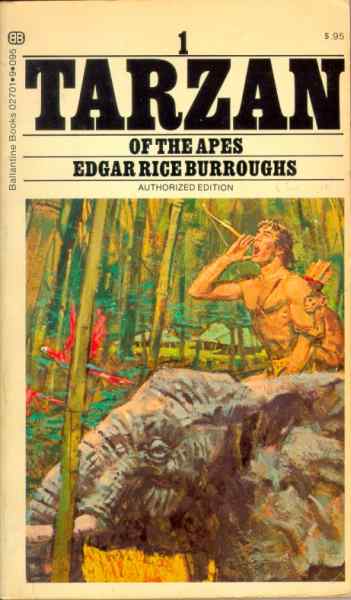
I bought "Tarzan of the Apes" by Edgar Rice Burroughs published by Ballantine Books in 1972 for 95 cents:
-a-a https://www.isfdb.org/cgi-bin/pl.cgi?342428
Here is the cover:
-a-a https://www.isfdb.org/wiki/images/4/46/TRZNFTHPSQ1972.jpg
I lost all of my 50 ? 60 ? 70 ? ERB books in The Great Flood of 1989.
Lynn
Tarzan
Novel series by Edgar Rice Burroughs
tarzan.com
Tarzan is a series of 24 adventure novels written by Edgar Rice Burroughs and published between 1912 and 1966, followed by several novels either co-written by Burroughs, or officially authorized by his estate. There are also two works written by Burroughs especially for children that are not considered part of the main series Continued in Wikipedia
https://en.wikipedia.org rC| wiki rC| William_S._Burroughs> WikipediaWell if Burroughs William had read pulps his work is far above that.
https://en.wikipedia.org rC| wiki rC| William_S._Burroughs
William S. Burroughs - Wikipedia
Excerpts from Naked Lunch were first published in the United States in 1958. The novel was initially rejected by City Lights Books, the publisher of Ginsberg's Howl, and Olympia Press publisher Maurice Girodias, who had published English-language novels in France that were controversial for their subjective views of sex and antisocial characters.
On Thu, 26 Feb 2026 09:28:30 +1300, Ross Clark wrote:
The languages in the area are all Austronesian, and quite well
documented and studied. Indian cultural and linguistic influence in
the early centuries AD is also well known -- Old Javanese
(documented from 9th century) is heavily laden with Sanskrit
vocabulary.
Oddly, they never took on any Indic writing systems -- that I can
recall, anyway. The earliest form of writing (on the Malay Peninsula,
anyway) was based on Arabic script. You can still see it in use today.
On 2/24/2026 10:57 PM, Cryptoengineer wrote:
On 2/24/2026 4:45 PM, Anders D. Nygaard wrote:
On 2/24/2026 9:24 PM, lar3ryca wrote:
I went into a book store and asked the girl,
"Do you have the Prince Harry book, the one you can put on your phone?" >>>> She said, "Do you mean the PDF file?"
"No" I said, "that's his uncle."
Usually, your .sig gives rise to a chuckle or two; sometimes after
I've turned it around in my mind for a while.
But this one ... I just don't get it.
A hint for the humour-challenged, please?
In English, 'PDF File' sounds fairly close
to 'Pedophile'
Fsvo "fairly close", I suppose - thank you.
But I see now why I had difficulties in getting it:
As I understand it, Ms. Giuffre was 17 at the time in question,
which in MyE is not sufficiently low to qualify.
Have I missed other cases, or are norms merely different elsewhere?
/Anders, Denmark
On Tue, 24 Feb 2026 11:43:20 -0500, Cryptoengineer wrote:
On 2/23/2026 9:05 PM, Lawrence DrCOOliveiro wrote:
I remember a doco where Joanna Lumley started a journey from the
Nile delta, and went all the way up to what was supposed to be the
rCLsourcerCY, which was an nondescript trickle of a little brook
somewhere in Sudan, I think it was.
Obviously what they meant by rCLsourcerCY was rCLhighest upstream point
where at least *some* of the water comes fromrCY. Because if they
mean to ask rCLwhere does the water come from?rCY, then the correct
answer is rCLall the tributaries and streams that feed into it along
its lengthrCY.
'Source' is pretty ambiguous for most rivers.
1. Highest altitude stream that feeds into it? Permanent? Seasonal?
2. Furthest from the mouth? Missouri River needs to be renamed then.
3. Some are obvious, such as where a river runs from a large lake.
Also (I guess restating point 2):
4. What happens if the river is fed from another river with a
different name?
For consider: the rCLNilerCY river, under that name, ends (begins?) at Khartoum. Upstream from that, you have no rCLNilerCY as such, only the rCLWhite NilerCY and the rCLBlue NilerCY. (You can see the difference in the colours of the water where they join -- the separation continues quite
some distance downstream from that.)
As I remember, the rCLBlue NilerCY comes from somewhere in Ethiopia, where there are some tall cliffs that turn into a line of truly magnificent waterfalls in the rainy season; these are what feed the annual floods
that the ancient Egyptians depended on so crucially for their
agrarian-based society to survive in a desert.
Whereas the rCLWhite NilerCY is the source of water that has never dried
up in human history, so it has kept the Nile flowing no matter what.
LumleyrCOs journey seemed to consider the rCLWhite NilerCY as the continuation of the rCLNilerCY, for the purposes of determining the
source. This seems to me pretty arbitrary.
On 2/25/2026 5:58 AM, Anders D. Nygaard wrote:
On 2/24/2026 10:57 PM, Cryptoengineer wrote:
On 2/24/2026 4:45 PM, Anders D. Nygaard wrote:
On 2/24/2026 9:24 PM, lar3ryca wrote:
I went into a book store and asked the girl,
"Do you have the Prince Harry book, the one you can put on your phone?" >>>>> She said, "Do you mean the PDF file?"
"No" I said, "that's his uncle."
Usually, your .sig gives rise to a chuckle or two; sometimes after
I've turned it around in my mind for a while.
But this one ... I just don't get it.
A hint for the humour-challenged, please?
In English, 'PDF File' sounds fairly close
to 'Pedophile'
Fsvo "fairly close", I suppose - thank you.
But I see now why I had difficulties in getting it:
As I understand it, Ms. Giuffre was 17 at the time in question,
which in MyE is not sufficiently low to qualify.
Have I missed other cases, or are norms merely different elsewhere?
/Anders, Denmark
Norms vary, even within the US, where Age of Consent
can be 16, 17, or 18, depending on state. Some states
have 'Romeo and Juliet Laws', making sex legal as
young as 13, if the partners are close in age (typically
less than two years).
In article <10nod6g$1a8js$1@dont-email.me>,
Cryptoengineer <petertrei@gmail.com> wrote:
On 2/25/2026 5:58 AM, Anders D. Nygaard wrote:
On 2/24/2026 10:57 PM, Cryptoengineer wrote:
On 2/24/2026 4:45 PM, Anders D. Nygaard wrote:
On 2/24/2026 9:24 PM, lar3ryca wrote:
I went into a book store and asked the girl,
"Do you have the Prince Harry book, the one you can put on your phone?" >>>>>> She said, "Do you mean the PDF file?"
"No" I said, "that's his uncle."
Usually, your .sig gives rise to a chuckle or two; sometimes after
I've turned it around in my mind for a while.
But this one ... I just don't get it.
A hint for the humour-challenged, please?
In English, 'PDF File' sounds fairly close
to 'Pedophile'
Fsvo "fairly close", I suppose - thank you.
But I see now why I had difficulties in getting it:
As I understand it, Ms. Giuffre was 17 at the time in question,
which in MyE is not sufficiently low to qualify.
Have I missed other cases, or are norms merely different elsewhere?
/Anders, Denmark
Norms vary, even within the US, where Age of Consent
can be 16, 17, or 18, depending on state. Some states
have 'Romeo and Juliet Laws', making sex legal as
young as 13, if the partners are close in age (typically
less than two years).
Also known as "shotgun wedding" laws...
On Tue, 24 Feb 2026 16:57:52 -0500, Cryptoengineer
<petertrei@gmail.com> wrote:
On 2/24/2026 4:45 PM, Anders D. Nygaard wrote:
On 2/24/2026 9:24 PM, lar3ryca wrote:
I went into a book store and asked the girl,
"Do you have the Prince Harry book, the one you can put on your phone?" >>>> She said, "Do you mean the PDF file?"
"No" I said, "that's his uncle."
Usually, your .sig gives rise to a chuckle or two; sometimes after
I've turned it around in my mind for a while.
But this one ... I just don't get it.
A hint for the humour-challenged, please?
/Anders, Denmark
In English, 'PDF File' sounds fairly close
to 'Pedophile'
Apparently, "PDF" has some pronounciation other than the three
letters. One that sounds a lot like "pedo".
But not here.
On Tue, 24 Feb 2026 11:43:20 -0500, Cryptoengineer
<petertrei@gmail.com> wrote:
On 2/23/2026 9:05 PM, Lawrence DrCOOliveiro wrote:
On Sun, 22 Feb 2026 11:05:28 -0500 (EST), Scott Dorsey wrote:
But where is the source of the Nile?
I remember a doco where Joanna Lumley started a journey from the Nile
delta, and went all the way up to what was supposed to be the
rCLsourcerCY, which was an nondescript trickle of a little brook somewhere >> in Sudan, I think it was.
Obviously what they meant by rCLsourcerCY was rCLhighest upstream point
where at least *some* of the water comes fromrCY. Because if they mean
to ask rCLwhere does the water come from?rCY, then the correct answer is >> rCLall the tributaries and streams that feed into it along its lengthrCY.
'Source' is pretty ambiguous for most rivers.
1. Highest altitude stream that feeds into it? Permanent? Seasonal?
2. Furthest from the mouth? Missouri River needs to be renamed then.
3. Some are obvious, such as where a river runs from a large lake.
2. is most important for those who want to make lists of the world's
longest rivers, highest mountains, etc.
The main contenders were the Amazon, the Nile, and the
Mississippi/Missouri. I believe the Amazon won at the last count,
because a branch of its delta made it a bit longer than the Nile.
When my wife and I visited England some years ago we made a point of
visiting Wastwater in Cumbria, because my wife's grandmother had
always told her that it had the highest mountain, the deepest lake,
the smallest church, and the biggest liar (but he's dead).
Pics here: <https://ondermynende.wordpress.com/2015/05/10/uk-trip-10-may-2005-whitehaven-to-girvan/>
On Wed, 25 Feb 2026 11:46:44 +0100, J. J. Lodder wrote:
When the Portugese and the Dutch arrived in those parts they found well-organised local states. They did not try to colonise or
conquer, they just traded.
They did indeed both colonize and conquer.
nospam@de-ster.demon.nl (J. J. Lodder) writes:
Lawrence D'Oliveiro <ldo@nz.invalid> wrote:
On Tue, 24 Feb 2026 08:57:11 +0100, Anders D. Nygaard wrote:
I guess this kind of misinterpretation (or over-) is common: The
island Krakatoa which exploded about one and a half century ago was
apparently named thus when westerners asking the locals what the
name was, and got the answer "I don't know". In the local tongue
something like "kaga tau"
That kind of explanation is only plausible in areas taken over by
colonists unfamiliar with the language and culture of prior
inhabitants.
Since those inhabitants from before colonial times are still very much
in charge on that island, as in the rest of Indonesia, they would know
what name to use.
Indeed. When the Portugese and the Dutch arrived in those parts
they found well-organised local states.
They did not try to colonise or conquer, they just traded.
That involved learning some of the local languages,
An ozzie once told me that Canberra (which is generally thought
to mean "meeting place") meant 'meeting place for orgy'.
In article <10nod6g$1a8js$1@dont-email.me>,<snippo, topic is age of consent>
Cryptoengineer <petertrei@gmail.com> wrote:
IIRC, the "R&J laws" were passed to prevent the application ofNorms vary, even within the US, where Age of Consent
can be 16, 17, or 18, depending on state. Some states
have 'Romeo and Juliet Laws', making sex legal as
young as 13, if the partners are close in age (typically
less than two years).
Also known as "shotgun wedding" laws...
On 2026-02-25 16:03, Paul S Person wrote:My point is that, for me, it is nowhere near close enough.
On Tue, 24 Feb 2026 16:57:52 -0500, Cryptoengineer
<petertrei@gmail.com> wrote:
On 2/24/2026 4:45 PM, Anders D. Nygaard wrote:
On 2/24/2026 9:24 PM, lar3ryca wrote:
I went into a book store and asked the girl,
"Do you have the Prince Harry book, the one you can put on your phone?" >>>>> She said, "Do you mean the PDF file?"
"No" I said, "that's his uncle."
Usually, your .sig gives rise to a chuckle or two; sometimes after
I've turned it around in my mind for a while.
But this one ... I just don't get it.
A hint for the humour-challenged, please?
/Anders, Denmark
In English, 'PDF File' sounds fairly close
to 'Pedophile'
Apparently, "PDF" has some pronounciation other than the three
letters. One that sounds a lot like "pedo".
But not here.
It's a joke, son. It only has to be close enough.
Steve Hayes <hayesstw@telkomsa.net> posted:out lies a lot more regularly.
On Tue, 24 Feb 2026 11:43:20 -0500, Cryptoengineer
<petertrei@gmail.com> wrote:
On 2/23/2026 9:05 PM, Lawrence DAOliveiro wrote:
On Sun, 22 Feb 2026 11:05:28 -0500 (EST), Scott Dorsey wrote:
But where is the source of the Nile?
I remember a doco where Joanna Lumley started a journey from the Nile
delta, and went all the way up to what was supposed to be the
osourceo, which was an nondescript trickle of a little brook somewhere
in Sudan, I think it was.
Obviously what they meant by osourceo was ohighest upstream point
where at least *some* of the water comes fromo. Because if they mean
to ask owhere does the water come from?o, then the correct answer is
oall the tributaries and streams that feed into it along its lengtho.
'Source' is pretty ambiguous for most rivers.
1. Highest altitude stream that feeds into it? Permanent? Seasonal?
2. Furthest from the mouth? Missouri River needs to be renamed then.
3. Some are obvious, such as where a river runs from a large lake.
2. is most important for those who want to make lists of the world's
longest rivers, highest mountains, etc.
The main contenders were the Amazon, the Nile, and the
Mississippi/Missouri. I believe the Amazon won at the last count,
because a branch of its delta made it a bit longer than the Nile.
When my wife and I visited England some years ago we made a point of
visiting Wastwater in Cumbria, because my wife's grandmother had
always told her that it had the highest mountain, the deepest lake,
the smallest church, and the biggest liar (but he's dead).
Not as dead as one might hope. He's still in the White House spewing out lies. Actually, the Secretary for Homeland Insecurity appears to be spewing
On 2/25/26 14:32, Lynn McGuire wrote:The DVD for Cronenberg's film of /Naked Lunch/ has a contemporary-with-the-film's-release interview with Burroughs doing a
On 2/25/2026 12:55 PM, John Ames wrote:
On Mon, 23 Feb 2026 00:05:46 -0000 (UTC)
Lawrence DAOliveiro <ldo@nz.invalid> wrote:
But then, this just shows how Burroughs was a cut above a lot of his
contemporaries ...
Funnily enough that's how Burroughs got into the game to begin with; he
read some of the slop that the pulps were printing and figured "hell,
if *this* can get printed, I can do better..." A classic example of how
much difference just *giving a damn* can make.
In the 1970s, you could buy most of Burrough's Tarzan, Pellucidar, and
Mars books in B. Daltons.a I bought and read them all.a Pure pulp and I
loved them all.
Lynn
I read those much earlier from public libraries.
Are your sure that we are not talking about the Burroughs of "Naked Lunch",
"Nova", "Junkie" and other prefigurations of modern horror.
On 2/25/2026 7:22 PM, Bobbie Sellers wrote:
On 2/25/26 14:32, Lynn McGuire wrote:
On 2/25/2026 12:55 PM, John Ames wrote:
On Mon, 23 Feb 2026 00:05:46 -0000 (UTC)
Lawrence DrCOOliveiro <ldo@nz.invalid> wrote:
But then, this just shows how Burroughs was a cut above a lot of his >>>>> contemporaries ...
Funnily enough that's how Burroughs got into the game to begin with; he >>>> read some of the slop that the pulps were printing and figured "hell,
if *this* can get printed, I can do better..." A classic example of how >>>> much difference just *giving a damn* can make.
In the 1970s, you could buy most of Burrough's Tarzan, Pellucidar,
and Mars books in B. Daltons.-a I bought and read them all.-a Pure pulp >>> and I loved them all.
Lynn
-a-a-a-a-aI read those much earlier from public libraries.
-a-a-a-a-aAre your sure that we are not talking about the Burroughs of
"Naked Lunch",
"Nova", "Junkie" and other prefigurations of modern horror.
-a-a-a-a-abliss
I bought "Tarzan of the Apes" by Edgar Rice Burroughs published by Ballantine Books in 1972 for 95 cents:
-a-a https://www.isfdb.org/cgi-bin/pl.cgi?342428
Here is the cover:
-a-a https://www.isfdb.org/wiki/images/4/46/TRZNFTHPSQ1972.jpg
I lost all of my 50 ? 60 ? 70 ? ERB books in The Great Flood of 1989.
On 26/02/2026 04:31, Scott Lurndal wrote:
nospam@de-ster.demon.nl (J. J. Lodder) writes:
Lawrence D'Oliveiro <ldo@nz.invalid> wrote:
On Tue, 24 Feb 2026 08:57:11 +0100, Anders D. Nygaard wrote:
I guess this kind of misinterpretation (or over-) is common: The
island Krakatoa which exploded about one and a half century ago was
apparently named thus when westerners asking the locals what the
name was, and got the answer "I don't know". In the local tongue
something like "kaga tau"
That kind of explanation is only plausible in areas taken over by
colonists unfamiliar with the language and culture of prior
inhabitants.
Since those inhabitants from before colonial times are still very much >>>> in charge on that island, as in the rest of Indonesia, they would know >>>> what name to use.
Indeed. When the Portugese and the Dutch arrived in those parts
they found well-organised local states.
They did not try to colonise or conquer, they just traded.
That involved learning some of the local languages,
An ozzie once told me that Canberra (which is generally thought
to mean "meeting place") meant 'meeting place for orgy'.
Try "Aussie." We use Oz for the land but we use don't use it for the >inhabitants. :-)
And it can't be explained, it's like knowing why the nickname for
someone with red hair is "Blue" (or Bluey).
On 2/25/26 17:45, Lynn McGuire wrote:
On 2/25/2026 7:22 PM, Bobbie Sellers wrote:
On 2/25/26 14:32, Lynn McGuire wrote:
On 2/25/2026 12:55 PM, John Ames wrote:
On Mon, 23 Feb 2026 00:05:46 -0000 (UTC)
Lawrence DrCOOliveiro <ldo@nz.invalid> wrote:
But then, this just shows how Burroughs was a cut above a lot of his >>>>>> contemporaries ...
Funnily enough that's how Burroughs got into the game to begin
with; he
read some of the slop that the pulps were printing and figured "hell, >>>>> if *this* can get printed, I can do better..." A classic example of >>>>> how
much difference just *giving a damn* can make.
In the 1970s, you could buy most of Burrough's Tarzan, Pellucidar,
and Mars books in B. Daltons.-a I bought and read them all.-a Pure
pulp and I loved them all.
Lynn
-a-a-a-a-aI read those much earlier from public libraries.
-a-a-a-a-aAre your sure that we are not talking about the Burroughs of
"Naked Lunch",
"Nova", "Junkie" and other prefigurations of modern horror.
-a-a-a-a-abliss
I bought "Tarzan of the Apes" by Edgar Rice Burroughs published by
Ballantine Books in 1972 for 95 cents:
-a-a-a https://www.isfdb.org/cgi-bin/pl.cgi?342428
Here is the cover:
-a-a-a https://www.isfdb.org/wiki/images/4/46/TRZNFTHPSQ1972.jpg
I lost all of my 50 ? 60 ? 70 ? ERB books in The Great Flood of 1989.
Lynn
-a-a-a-aI refer to a different but related Burroughs
-a-a-a-a"Naked Lunch" by William Seward. Burroughs.
-a-a-a-aEdgar Rice was before pulps but William Seward
was of an age to be reading pulps.
-a-a-a-aEdgar Rice may have been reading "Penny Dreadfuls".
Lynn McGuire wrote:
On 2/25/2026 7:22 PM, Bobbie Sellers wrote:
On 2/25/26 14:32, Lynn McGuire wrote:
On 2/25/2026 12:55 PM, John Ames wrote:
On Mon, 23 Feb 2026 00:05:46 -0000 (UTC)
Lawrence DrCOOliveiro <ldo@nz.invalid> wrote:
But then, this just shows how Burroughs was a cut above a lot of his >>>>>> contemporaries ...
Funnily enough that's how Burroughs got into the game to begin with; he >>>>> read some of the slop that the pulps were printing and figured "hell, >>>>> if *this* can get printed, I can do better..." A classic example of how >>>>> much difference just *giving a damn* can make.
In the 1970s, you could buy most of Burrough's Tarzan, Pellucidar,
and Mars books in B. Daltons.-a I bought and read them all.-a Pure pulp >>>> and I loved them all.
Lynn
-a-a-a-a-aI read those much earlier from public libraries.
-a-a-a-a-aAre your sure that we are not talking about the Burroughs of
"Naked Lunch",
"Nova", "Junkie" and other prefigurations of modern horror.
-a-a-a-a-abliss
I bought "Tarzan of the Apes" by Edgar Rice Burroughs published by
Ballantine Books in 1972 for 95 cents:
-a-a https://www.isfdb.org/cgi-bin/pl.cgi?342428
Here is the cover:
-a-a https://www.isfdb.org/wiki/images/4/46/TRZNFTHPSQ1972.jpg
I lost all of my 50 ? 60 ? 70 ? ERB books in The Great Flood of 1989.
I bought the Tarzan books when I was nine or ten years old, read them
over and over, along with a book or two from his other series.
Regrettably, I decided at age 12 that these were too "childish" and gave >them away. The only ERB I have left is his "Beyond the Farthest Star", >mentioned in an earlier thread.
In article <10nod6g$1a8js$1@dont-email.me>,
Cryptoengineer <petertrei@gmail.com> wrote:
Norms vary, even within the US, where Age of Consent
can be 16, 17, or 18, depending on state. Some states
have 'Romeo and Juliet Laws', making sex legal as
young as 13, if the partners are close in age (typically
less than two years).
Also known as "shotgun wedding" laws...
On Wed, 25 Feb 2026 17:22:19 -0800, Bobbie Sellers <bliss-sf4ever@dslextreme.com> wrote:
On 2/25/26 14:32, Lynn McGuire wrote:
On 2/25/2026 12:55 PM, John Ames wrote:
On Mon, 23 Feb 2026 00:05:46 -0000 (UTC)
Lawrence DrCOOliveiro <ldo@nz.invalid> wrote:
But then, this just shows how Burroughs was a cut above a lot of his >>>>> contemporaries ...
Funnily enough that's how Burroughs got into the game to begin with; he >>>> read some of the slop that the pulps were printing and figured "hell,
if *this* can get printed, I can do better..." A classic example of how >>>> much difference just *giving a damn* can make.
In the 1970s, you could buy most of Burrough's Tarzan, Pellucidar, and
Mars books in B. Daltons.-a I bought and read them all.-a Pure pulp and I >>> loved them all.
Lynn
I read those much earlier from public libraries.
Are your sure that we are not talking about the Burroughs of "Naked Lunch",
"Nova", "Junkie" and other prefigurations of modern horror.
The DVD for Cronenberg's film of /Naked Lunch/ has a contemporary-with-the-film's-release interview with Burroughs doing a
fine spaced-out druggee act and Cronenberg visibly trying to stay as
far away from him (while remaining in frame) as possible.
I don't know about the book (never having read it) but the /film/
appears to be more about how the book was written (and the death of Burrough's wife) than anything else.
This is the Cronenberg film with the /really/ big bugs, BTW.
Verily, in article <n09skfF9a0vU1@mid.individual.net>, did >ted@loft.tnolan.com deliver unto us this message:
In article <10nod6g$1a8js$1@dont-email.me>,
Cryptoengineer <petertrei@gmail.com> wrote:
Norms vary, even within the US, where Age of Consent
can be 16, 17, or 18, depending on state. Some states
have 'Romeo and Juliet Laws', making sex legal as
young as 13, if the partners are close in age (typically
less than two years).
Also known as "shotgun wedding" laws...
A shotgun wedding generally means that the bride is pregnant, not
something about either party's age.
It supposedly comes from a stereotype of an angry father forcing a man
to make an honest woman of his pregnant daughter, allegedly standing
there with a shotgun to make sure the groom didn't bolt from the
ceremony.
Lynn McGuire wrote:
On 2/25/2026 7:22 PM, Bobbie Sellers wrote:
On 2/25/26 14:32, Lynn McGuire wrote:
On 2/25/2026 12:55 PM, John Ames wrote:
On Mon, 23 Feb 2026 00:05:46 -0000 (UTC)
Lawrence D'Oliveiro <ldo@nz.invalid> wrote:
But then, this just shows how Burroughs was a cut above a lot of his >>>>> contemporaries ...
Funnily enough that's how Burroughs got into the game to begin with; he >>>> read some of the slop that the pulps were printing and figured "hell, >>>> if *this* can get printed, I can do better..." A classic example of how >>>> much difference just *giving a damn* can make.
In the 1970s, you could buy most of Burrough's Tarzan, Pellucidar,
and Mars books in B. Daltons. I bought and read them all. Pure pulp
and I loved them all.
Lynn
I read those much earlier from public libraries.
Are your sure that we are not talking about the Burroughs of
"Naked Lunch",
"Nova", "Junkie" and other prefigurations of modern horror.
bliss
I bought "Tarzan of the Apes" by Edgar Rice Burroughs published by Ballantine Books in 1972 for 95 cents:
https://www.isfdb.org/cgi-bin/pl.cgi?342428
Here is the cover:
https://www.isfdb.org/wiki/images/4/46/TRZNFTHPSQ1972.jpg
I lost all of my 50 ? 60 ? 70 ? ERB books in The Great Flood of 1989.
I bought the Tarzan books when I was nine or ten years old, read them
over and over, along with a book or two from his other series.
Regrettably, I decided at age 12 that these were too "childish" and gave
them away. The only ERB I have left is his "Beyond the Farthest Star", mentioned in an earlier thread.
--[I broke the sig sep]
I never made a mistake in my life. I thought I did once, but I was wrong.
William Hyde <wthyde1953@gmail.com> wrote:
Lynn McGuire wrote:
On 2/25/2026 7:22 PM, Bobbie Sellers wrote:
On 2/25/26 14:32, Lynn McGuire wrote:
On 2/25/2026 12:55 PM, John Ames wrote:
On Mon, 23 Feb 2026 00:05:46 -0000 (UTC)
Lawrence D'Oliveiro <ldo@nz.invalid> wrote:
But then, this just shows how Burroughs was a cut above a lot of his >>>>>>> contemporaries ...
Funnily enough that's how Burroughs got into the game to begin with; he >>>>>> read some of the slop that the pulps were printing and figured "hell, >>>>>> if *this* can get printed, I can do better..." A classic example of how >>>>>> much difference just *giving a damn* can make.
In the 1970s, you could buy most of Burrough's Tarzan, Pellucidar,
and Mars books in B. Daltons. I bought and read them all. Pure pulp >>>>> and I loved them all.
Lynn
I read those much earlier from public libraries.
Are your sure that we are not talking about the Burroughs of
"Naked Lunch",
"Nova", "Junkie" and other prefigurations of modern horror.
bliss
I bought "Tarzan of the Apes" by Edgar Rice Burroughs published by
Ballantine Books in 1972 for 95 cents:
https://www.isfdb.org/cgi-bin/pl.cgi?342428
Here is the cover:
https://www.isfdb.org/wiki/images/4/46/TRZNFTHPSQ1972.jpg
I lost all of my 50 ? 60 ? 70 ? ERB books in The Great Flood of 1989.
I bought the Tarzan books when I was nine or ten years old, read them
over and over, along with a book or two from his other series.
Regrettably, I decided at age 12 that these were too "childish" and gave
them away. The only ERB I have left is his "Beyond the Farthest Star",
mentioned in an earlier thread.
Much ERB may be found on-line, if you would really want to,
Lawrence D'Oliveiro <ldo@nz.invalid> wrote:
They did indeed both colonize and conquer.
Later, much later.
J. J. Lodder wrote:
William Hyde <wthyde1953@gmail.com> wrote:
Lynn McGuire wrote:
On 2/25/2026 7:22 PM, Bobbie Sellers wrote:
On 2/25/26 14:32, Lynn McGuire wrote:
On 2/25/2026 12:55 PM, John Ames wrote:
On Mon, 23 Feb 2026 00:05:46 -0000 (UTC)
Lawrence D'Oliveiro <ldo@nz.invalid> wrote:
But then, this just shows how Burroughs was a cut above a lot of his >>>>>>>> contemporaries ...
Funnily enough that's how Burroughs got into the game to begin with; >>>>>>> he
read some of the slop that the pulps were printing and figured "hell, >>>>>>> if *this* can get printed, I can do better..." A classic example of >>>>>>> how
much difference just *giving a damn* can make.
In the 1970s, you could buy most of Burrough's Tarzan, Pellucidar, >>>>>> and Mars books in B. Daltons. I bought and read them all. Pure pulp >>>>>> and I loved them all.
Lynn
I read those much earlier from public libraries.
Are your sure that we are not talking about the Burroughs of
"Naked Lunch",
"Nova", "Junkie" and other prefigurations of modern horror.
bliss
I bought "Tarzan of the Apes" by Edgar Rice Burroughs published by
Ballantine Books in 1972 for 95 cents:
https://www.isfdb.org/cgi-bin/pl.cgi?342428
Here is the cover:
https://www.isfdb.org/wiki/images/4/46/TRZNFTHPSQ1972.jpg
I lost all of my 50 ? 60 ? 70 ? ERB books in The Great Flood of 1989.
I bought the Tarzan books when I was nine or ten years old, read them
over and over, along with a book or two from his other series.
Regrettably, I decided at age 12 that these were too "childish" and gave >>> them away. The only ERB I have left is his "Beyond the Farthest Star",
mentioned in an earlier thread.
Much ERB may be found on-line, if you would really want to,
I'm still trying to catch up on "new" SF, by which I mean anything written since 1990.
But a nostalgia read or two may not be such a bad idea.
William Hyde
On Thu, 26 Feb 2026 11:21:45 +0100, J. J. Lodder wrote:
Lawrence D'Oliveiro <ldo@nz.invalid> wrote:
They did indeed both colonize and conquer.
Later, much later.
The Portuguese deposed the Malacca Sultanate and conquered Malacca in
1511.
On Wed, 25 Feb 2026 11:46:44 +0100, J. J. Lodder wrote:
When the Portugese and the Dutch arrived in those parts they found
well-organised local states. They did not try to colonise or
conquer, they just traded.
They did indeed both colonize and conquer.
On Wed, 25 Feb 2026 22:11:55 -0600, lar3ryca <larry@invalid.ca> wrote:
On 2026-02-25 16:03, Paul S Person wrote:
On Tue, 24 Feb 2026 16:57:52 -0500, Cryptoengineer
<petertrei@gmail.com> wrote:
On 2/24/2026 4:45 PM, Anders D. Nygaard wrote:
On 2/24/2026 9:24 PM, lar3ryca wrote:
I went into a book store and asked the girl,
"Do you have the Prince Harry book, the one you can put on your phone?" >>>>>> She said, "Do you mean the PDF file?"
"No" I said, "that's his uncle."
Usually, your .sig gives rise to a chuckle or two; sometimes after
I've turned it around in my mind for a while.
But this one ... I just don't get it.
A hint for the humour-challenged, please?
/Anders, Denmark
In English, 'PDF File' sounds fairly close
to 'Pedophile'
Apparently, "PDF" has some pronounciation other than the three
letters. One that sounds a lot like "pedo".
But not here.
It's a joke, son. It only has to be close enough.
My point is that, for me, it is nowhere near close enough.
Maybe if it involved a bicycle and its pedals ...
Your eyes is like pools -- pools of muddy water
Your lips is like petals -- bicycle pedals
Your teeth is like the stars -- they come out at night.
On Wed, 25 Feb 2026 22:35:36 -0000 (UTC), Lawrence DrCOOliveiro wrote:
On Wed, 25 Feb 2026 11:46:44 +0100, J. J. Lodder wrote:
When the Portugese and the Dutch arrived in those parts they found
well-organised local states. They did not try to colonise or
conquer, they just traded.
They did indeed both colonize and conquer.
Yes, but much, much later.
Remember Thursday, when William Hyde asked plaintively:
J. J. Lodder wrote:
William Hyde <wthyde1953@gmail.com> wrote:
Lynn McGuire wrote:
On 2/25/2026 7:22 PM, Bobbie Sellers wrote:I bought the Tarzan books when I was nine or ten years old, read them
On 2/25/26 14:32, Lynn McGuire wrote:
On 2/25/2026 12:55 PM, John Ames wrote:
On Mon, 23 Feb 2026 00:05:46 -0000 (UTC)
Lawrence D'Oliveiro <ldo@nz.invalid> wrote:
But then, this just shows how Burroughs was a cut above a lot of his >>>>>>>> contemporaries ...
Funnily enough that's how Burroughs got into the game to begin with; >>>>>>> he
read some of the slop that the pulps were printing and figured "hell, >>>>>>> if *this* can get printed, I can do better..." A classic example of >>>>>>> how
much difference just *giving a damn* can make.
In the 1970s, you could buy most of Burrough's Tarzan, Pellucidar, >>>>>> and Mars books in B. Daltons. I bought and read them all. Pure pulp >>>>>> and I loved them all.
Lynn
I read those much earlier from public libraries.
Are your sure that we are not talking about the Burroughs of >>>>> "Naked Lunch",
"Nova", "Junkie" and other prefigurations of modern horror.
bliss
I bought "Tarzan of the Apes" by Edgar Rice Burroughs published by
Ballantine Books in 1972 for 95 cents:
https://www.isfdb.org/cgi-bin/pl.cgi?342428
Here is the cover:
https://www.isfdb.org/wiki/images/4/46/TRZNFTHPSQ1972.jpg
I lost all of my 50 ? 60 ? 70 ? ERB books in The Great Flood of 1989. >>>
over and over, along with a book or two from his other series.
Regrettably, I decided at age 12 that these were too "childish" and gave >>> them away. The only ERB I have left is his "Beyond the Farthest Star", >>> mentioned in an earlier thread.
Much ERB may be found on-line, if you would really want to,
I'm still trying to catch up on "new" SF, by which I mean anything written since 1990.
I'm fond of the books by Anne Leckie. I even managed to read the
Ancillary series in correct order.
But a nostalgia read or two may not be such a bad idea.
I've got a copy of _The Man Who Sold The Moon_ on hand.
William Hyde <wthyde1953@gmail.com> writes:That first one appears to be ... non-canonical.
Lynn McGuire wrote:
On 2/25/2026 7:22 PM, Bobbie Sellers wrote:
On 2/25/26 14:32, Lynn McGuire wrote:
On 2/25/2026 12:55 PM, John Ames wrote:
On Mon, 23 Feb 2026 00:05:46 -0000 (UTC)
Lawrence DrCOOliveiro <ldo@nz.invalid> wrote:
But then, this just shows how Burroughs was a cut above a lot of his >>>>>>> contemporaries ...
Funnily enough that's how Burroughs got into the game to begin with; he >>>>>> read some of the slop that the pulps were printing and figured "hell, >>>>>> if *this* can get printed, I can do better..." A classic example of how >>>>>> much difference just *giving a damn* can make.
In the 1970s, you could buy most of Burrough's Tarzan, Pellucidar,
and Mars books in B. Daltons.-a I bought and read them all.-a Pure pulp >>>>> and I loved them all.
Lynn
-a-a-a-a-aI read those much earlier from public libraries.
-a-a-a-a-aAre your sure that we are not talking about the Burroughs of >>>> "Naked Lunch",
"Nova", "Junkie" and other prefigurations of modern horror.
-a-a-a-a-abliss
I bought "Tarzan of the Apes" by Edgar Rice Burroughs published by
Ballantine Books in 1972 for 95 cents:
-a-a https://www.isfdb.org/cgi-bin/pl.cgi?342428
Here is the cover:
-a-a https://www.isfdb.org/wiki/images/4/46/TRZNFTHPSQ1972.jpg
I lost all of my 50 ? 60 ? 70 ? ERB books in The Great Flood of 1989.
I bought the Tarzan books when I was nine or ten years old, read them
over and over, along with a book or two from his other series.
Regrettably, I decided at age 12 that these were too "childish" and gave >>them away. The only ERB I have left is his "Beyond the Farthest Star", >>mentioned in an earlier thread.
I still have a handful. Haven't read them in decades, however.
$ testa burroughs
artist title format location
Burroughs Corporation B7000/B6000 ALGOL Reference Manual Perfect A027 >Burroughs, Edgar Rice 10 Llana of Gathol soft A016
Burroughs, Edgar Rice 11 John Carter of Mars soft A016
Burroughs, Edgar Rice 6 The Master Mind of Mars soft A016 >Burroughs, Edgar Rice 7 A Fighting Man of Mars soft A016 >Burroughs, Edgar Rice 9 Synthetic Men of Mars soft A016
Burroughs, Edgar Rice Savage Pellucidar soft A016
Burroughs, Edgar Rice Science Fiction Classics hard A016
(final column is box number in storage).
Lawrence =?iso-8859-13?q?D=FFOliveiro?= <ldo@nz.invalid> wrote:IIRC, "open" in this context meant "allow trade with the USA". The
On Wed, 25 Feb 2026 11:46:44 +0100, J. J. Lodder wrote:
When the Portugese and the Dutch arrived in those parts they found
well-organised local states. They did not try to colonise or
conquer, they just traded.
They did indeed both colonize and conquer.
Yes, but much, much later. They talk about Matthew Perry opening up
Japan in school, but they don't mention that he met Portuguese priests
who had been there for a long time. It wasn't until Perry's era when
the Dutch and Portuguese had enough resources to actually start colonizing >Southeast Asia.
On Thu, 26 Feb 2026 20:26:20 -0500 (EST), kludge@panix.com (Scott
Dorsey) wrote:
Lawrence =?iso-8859-13?q?D=FFOliveiro?= <ldo@nz.invalid> wrote:
On Wed, 25 Feb 2026 11:46:44 +0100, J. J. Lodder wrote:
When the Portugese and the Dutch arrived in those parts they found
well-organised local states. They did not try to colonise or
conquer, they just traded.
They did indeed both colonize and conquer.
Yes, but much, much later. They talk about Matthew Perry opening up
Japan in school, but they don't mention that he met Portuguese priests
who had been there for a long time. It wasn't until Perry's era when
the Dutch and Portuguese had enough resources to actually start colonizing >> Southeast Asia.
IIRC, "open" in this context meant "allow trade with the USA". The
priests weren't traders.
On 2/27/26 08:39, Paul S Person wrote:
On Thu, 26 Feb 2026 20:26:20 -0500 (EST), kludge@panix.com (Scott
Dorsey) wrote:
Lawrence =?iso-8859-13?q?D=FFOliveiro?= <ldo@nz.invalid> wrote:
On Wed, 25 Feb 2026 11:46:44 +0100, J. J. Lodder wrote:
When the Portugese and the Dutch arrived in those parts they found
well-organised local states. They did not try to colonise or
conquer, they just traded.
They did indeed both colonize and conquer.
Yes, but much, much later. They talk about Matthew Perry opening up
Japan in school, but they don't mention that he met Portuguese priests
who had been there for a long time. It wasn't until Perry's era when
the Dutch and Portuguese had enough resources to actually start colonizing >>> Southeast Asia.
IIRC, "open" in this context meant "allow trade with the USA". The
priests weren't traders.
Any Christian priests were either attached to the trading with the
Netherlands
or lurking illegally in Japan where they had been banned for over 200
years on pain
of painful death. The Christians in Japan hid from the authorities.
Snidely <snidely.too@gmail.com> wrote:
Remember Thursday, when William Hyde asked plaintively:
J. J. Lodder wrote:
William Hyde <wthyde1953@gmail.com> wrote:
Lynn McGuire wrote:
On 2/25/2026 7:22 PM, Bobbie Sellers wrote:I bought the Tarzan books when I was nine or ten years old, read them >>>>> over and over, along with a book or two from his other series.
On 2/25/26 14:32, Lynn McGuire wrote:
On 2/25/2026 12:55 PM, John Ames wrote:
On Mon, 23 Feb 2026 00:05:46 -0000 (UTC)
Lawrence D'Oliveiro <ldo@nz.invalid> wrote:
But then, this just shows how Burroughs was a cut above a lot of his >>>>>>>>>> contemporaries ...
Funnily enough that's how Burroughs got into the game to begin with; >>>>>>>>> he
read some of the slop that the pulps were printing and figured "hell, >>>>>>>>> if *this* can get printed, I can do better..." A classic example of >>>>>>>>> how
much difference just *giving a damn* can make.
In the 1970s, you could buy most of Burrough's Tarzan, Pellucidar, >>>>>>>> and Mars books in B. Daltons. I bought and read them all. Pure pulp >>>>>>>> and I loved them all.
Lynn
I read those much earlier from public libraries.
Are your sure that we are not talking about the Burroughs of >>>>>>> "Naked Lunch",
"Nova", "Junkie" and other prefigurations of modern horror.
bliss
I bought "Tarzan of the Apes" by Edgar Rice Burroughs published by >>>>>> Ballantine Books in 1972 for 95 cents:
https://www.isfdb.org/cgi-bin/pl.cgi?342428
Here is the cover:
https://www.isfdb.org/wiki/images/4/46/TRZNFTHPSQ1972.jpg
I lost all of my 50 ? 60 ? 70 ? ERB books in The Great Flood of 1989. >>>>>
Regrettably, I decided at age 12 that these were too "childish" and gave >>>>> them away. The only ERB I have left is his "Beyond the Farthest Star", >>>>> mentioned in an earlier thread.
Much ERB may be found on-line, if you would really want to,
I'm still trying to catch up on "new" SF, by which I mean anything written >>> since 1990.
I'm fond of the books by Anne Leckie. I even managed to read the
Ancillary series in correct order.
I'll have a look, on your say so.
I had taken it, without having a look,
to be yet more galactic empire junk,
like Star Wars.
But a nostalgia read or two may not be such a bad idea.
I've got a copy of _The Man Who Sold The Moon_ on hand.
'At hand' is the best place to keep it, I think,
provided you have an edition with a decorative cover.
(or a first edition)
For safety it is best to shrink-wrap those books,
and to keep them as collectibles,
Jan
(not tempted)
On Wed, 25 Feb 2026 22:11:55 -0600, lar3ryca <larry@invalid.ca> wrote:
On 2026-02-25 16:03, Paul S Person wrote:
On Tue, 24 Feb 2026 16:57:52 -0500, Cryptoengineer
<petertrei@gmail.com> wrote:
On 2/24/2026 4:45 PM, Anders D. Nygaard wrote:
On 2/24/2026 9:24 PM, lar3ryca wrote:
I went into a book store and asked the girl,
"Do you have the Prince Harry book, the one you can put on your phone?" >>>>>> She said, "Do you mean the PDF file?"
"No" I said, "that's his uncle."
Usually, your .sig gives rise to a chuckle or two; sometimes after
I've turned it around in my mind for a while.
But this one ... I just don't get it.
A hint for the humour-challenged, please?
/Anders, Denmark
In English, 'PDF File' sounds fairly close
to 'Pedophile'
Apparently, "PDF" has some pronounciation other than the three
letters. One that sounds a lot like "pedo".
But not here.
It's a joke, son. It only has to be close enough.
My point is that, for me, it is nowhere near close enough.
Maybe if it involved a bicycle and its pedals ...
With a quizzical look, J. J. Lodder observed:
Snidely <snidely.too@gmail.com> wrote:
Remember Thursday, when William Hyde asked plaintively:
J. J. Lodder wrote:
William Hyde <wthyde1953@gmail.com> wrote:
Lynn McGuire wrote:
On 2/25/2026 7:22 PM, Bobbie Sellers wrote:I bought the Tarzan books when I was nine or ten years old, read them >>>>> over and over, along with a book or two from his other series.
On 2/25/26 14:32, Lynn McGuire wrote:
On 2/25/2026 12:55 PM, John Ames wrote:
On Mon, 23 Feb 2026 00:05:46 -0000 (UTC)In the 1970s, you could buy most of Burrough's Tarzan, Pellucidar, >>>>>>>> and Mars books in B. Daltons. I bought and read them all. Pure pulp
Lawrence D'Oliveiro <ldo@nz.invalid> wrote:
But then, this just shows how Burroughs was a cut above a lot >>>>>>>>>> of his contemporaries ...
Funnily enough that's how Burroughs got into the game to begin with;
he
read some of the slop that the pulps were printing and figured >>>>>>>>> "hell, if *this* can get printed, I can do better..." A classic >>>>>>>>> example of how much difference just *giving a damn* can make. >>>>>>>>
and I loved them all.
Lynn
I read those much earlier from public libraries.
Are your sure that we are not talking about the Burroughs of >>>>>>> "Naked Lunch",
"Nova", "Junkie" and other prefigurations of modern horror.
bliss
I bought "Tarzan of the Apes" by Edgar Rice Burroughs published by >>>>>> Ballantine Books in 1972 for 95 cents:
https://www.isfdb.org/cgi-bin/pl.cgi?342428
Here is the cover:
https://www.isfdb.org/wiki/images/4/46/TRZNFTHPSQ1972.jpg
I lost all of my 50 ? 60 ? 70 ? ERB books in The Great Flood of 1989. >>>>>
Regrettably, I decided at age 12 that these were too "childish" and gave
them away. The only ERB I have left is his "Beyond the Farthest Star", >>>>> mentioned in an earlier thread.
Much ERB may be found on-line, if you would really want to,
I'm still trying to catch up on "new" SF, by which I mean anything written
since 1990.
I'm fond of the books by Anne Leckie. I even managed to read the
Ancillary series in correct order.
I'll have a look, on your say so.
I had taken it, without having a look,
to be yet more galactic empire junk,
like Star Wars.
There is an empire, but it isn't just space cowboys or Horatio
Hornblower. And the non-Ancillary books use the same universe, but
explore different cultures that humans might have.
But a nostalgia read or two may not be such a bad idea.
I've got a copy of _The Man Who Sold The Moon_ on hand.
'At hand' is the best place to keep it, I think,
provided you have an edition with a decorative cover.
(or a first edition)
For safety it is best to shrink-wrap those books,
and to keep them as collectibles,
Jan
(not tempted)
It was a used paperback book when I bought it 50ish years ago, and
probably not a first edition, although it predates the ink-blot SF
covers.
Lawrence =?iso-8859-13?q?D=FFOliveiro?= <ldo@nz.invalid> wrote:
On Wed, 25 Feb 2026 11:46:44 +0100, J. J. Lodder wrote:
When the Portugese and the Dutch arrived in those parts they found
well-organised local states. They did not try to colonise or
conquer, they just traded.
They did indeed both colonize and conquer.
Yes, but much, much later. They talk about Matthew Perry opening up
Japan in school, but they don't mention that he met Portuguese priests
who had been there for a long time.
It wasn't until Perry's era when
the Dutch and Portuguese had enough resources to actually start colonizing Southeast Asia.
On 2/27/26 08:39, Paul S Person wrote:
On Thu, 26 Feb 2026 20:26:20 -0500 (EST), kludge@panix.com (Scott
Dorsey) wrote:
Lawrence =?iso-8859-13?q?D=FFOliveiro?= <ldo@nz.invalid> wrote:
On Wed, 25 Feb 2026 11:46:44 +0100, J. J. Lodder wrote:
When the Portugese and the Dutch arrived in those parts they found
well-organised local states. They did not try to colonise or
conquer, they just traded.
They did indeed both colonize and conquer.
Yes, but much, much later. They talk about Matthew Perry opening up
Japan in school, but they don't mention that he met Portuguese priests
who had been there for a long time. It wasn't until Perry's era when
the Dutch and Portuguese had enough resources to actually start colonizing >> Southeast Asia.
IIRC, "open" in this context meant "allow trade with the USA". The
priests weren't traders.
Any Christian priests were either attached to the trading with the Netherlands
or lurking illegally in Japan where they had been banned for over 200
years on pain
of painful death.
The Christians in Japan hid from the authorities. The Dutch were
subjected to severe restrictions on a single island connected by a foot bridge to mainland. They had a small community on that island and
permission to teach some few Japanese people foreign languages so that they could study Western Learning.
The original opening of Japan by Perry was in order to get coaling startions
for American ships trading with China. China also maintained trading relationships
with Japan by the way.
The Jesuit priests had been in Japan during the Unification of Japan in the late 1500 under the three great leaders Nobunaga, Hideyoshi, and finally Ieyasu Tokugawa whose successor drove out the Christian priests and
crushed the Christian Rebellion in Southern Japan. Participating in the crushing was Miyamoto Musashi, the great swordsman. He is the hero
of a series of films and TV shows as well as manga and anime and
at least one great novel.
Participating in the crushing was Miyamoto Musashi, the great
swordsman. He is the hero of a series of films and TV shows as well
as manga and anime and at least one great novel.
Ah, but Jesus actually visited Japan.
https://en.wikipedia.org/wiki/Kirisuto_no_Haka
In article <klloR.5$1%Hc.3@fx18.iad>, Scott Lurndal <slp53@pacbell.net> wrote: >>
Ah, but Jesus actually visited Japan.
https://en.wikipedia.org/wiki/Kirisuto_no_Haka
And did those feet
In ancient times
Nihon o aruku?
Bobbie Sellers <bliss-sf4ever@dslextreme.com> wrote:
On 2/27/26 08:39, Paul S Person wrote:
On Thu, 26 Feb 2026 20:26:20 -0500 (EST), kludge@panix.com (Scott
Dorsey) wrote:
Lawrence =?iso-8859-13?q?D=FFOliveiro?= <ldo@nz.invalid> wrote:
On Wed, 25 Feb 2026 11:46:44 +0100, J. J. Lodder wrote:
When the Portugese and the Dutch arrived in those parts they found >>>>>> well-organised local states. They did not try to colonise or
conquer, they just traded.
They did indeed both colonize and conquer.
Yes, but much, much later. They talk about Matthew Perry opening up
Japan in school, but they don't mention that he met Portuguese priests >>>> who had been there for a long time. It wasn't until Perry's era when
the Dutch and Portuguese had enough resources to actually start colonizing >>>> Southeast Asia.
IIRC, "open" in this context meant "allow trade with the USA". The
priests weren't traders.
Any Christian priests were either attached to the trading with the
Netherlands
or lurking illegally in Japan where they had been banned for over 200
years on pain
of painful death.
Certainly not by way of the Dutch.
(who were thoroughly Protestant,
and not at all inclined to help catholicism in any way)
The Japanese felt that crucifying christians was doing them a favour,
by their own christian doctrines.
In short, there probably weren't catholic missionaries before Perry.
The Christians in Japan hid from the authorities. The Dutch were
subjected to severe restrictions on a single island connected by a foot
bridge to mainland. They had a small community on that island and
permission to teach some few Japanese people foreign languages so that they >> could study Western Learning.
Not foreign languages, just Dutch.
The Shogunate provided translators,
because they did not want the Dutch to learn Japanese.
The Dutch sciences (Oranda Rangaku) were the window on the west
for Japanese scholars. <https://www.the-low-countries.com/article/when-japans-elite-spoke-dutch/> Many scientific Japanese terms still have obviously Dutch roots.
The original opening of Japan by Perry was in order to get coaling
startions
for American ships trading with China. China also maintained trading
relationships
with Japan by the way.
The Jesuit priests had been in Japan during the Unification of Japan in
the late 1500 under the three great leaders Nobunaga, Hideyoshi, and finally >> Ieyasu Tokugawa whose successor drove out the Christian priests and
crushed the Christian Rebellion in Southern Japan. Participating in the
crushing was Miyamoto Musashi, the great swordsman. He is the hero
of a series of films and TV shows as well as manga and anime and
at least one great novel.
They had gambled on the wrong side in the civil wars, and lost all,
Jan
On 2/27/2026 3:48 PM, J. J. Lodder wrote:
Bobbie Sellers <bliss-sf4ever@dslextreme.com> wrote:
On 2/27/26 08:39, Paul S Person wrote:
On Thu, 26 Feb 2026 20:26:20 -0500 (EST), kludge@panix.com (Scott
Dorsey) wrote:
Lawrence =?iso-8859-13?q?D=FFOliveiro?=-a <ldo@nz.invalid> wrote:
On Wed, 25 Feb 2026 11:46:44 +0100, J. J. Lodder wrote:
When the Portugese and the Dutch arrived in those parts they found >>>>>>> well-organised local states. They did not try to colonise or
conquer, they just traded.
They did indeed both colonize and conquer.
Yes, but much, much later.-a They talk about Matthew Perry opening up >>>>> Japan in school, but they don't mention that he met Portuguese priests >>>>> who had been there for a long time.-a It wasn't until Perry's era when >>>>> the Dutch and Portuguese had enough resources to actually start
colonizing
Southeast Asia.
IIRC, "open" in this context meant "allow trade with the USA". The
priests weren't traders.
-a-a-a-a-a-a Any Christian priests were either attached to the trading with
the
Netherlands
or lurking illegally in Japan where they had been banned for over 200
years on pain
of painful death.
Certainly not by way of the Dutch.
(who were thoroughly Protestant,
-a and not at all inclined to help catholicism in any way)
The Japanese felt that crucifying christians was doing them a favour,
by their own christian doctrines.
In short, there probably weren't catholic missionaries before Perry.
-a The Christians in Japan hid from the authorities. The Dutch were
subjected to severe restrictions on a single island connected by a foot
bridge to mainland.-a They had a small community on that island and
permission to teach some few Japanese people foreign languages so
that they
could study Western Learning.
Not foreign languages, just Dutch.
The Shogunate provided translators,
because they did not want the Dutch to learn Japanese.
The Dutch sciences (Oranda Rangaku) were the window on the west
for Japanese scholars.
<https://www.the-low-countries.com/article/when-japans-elite-spoke-
dutch/>
Many scientific Japanese terms still have obviously Dutch roots.
Just to clarify the timeline:
-a-a-a-a-a-a The original opening of Japan by Perry was in order to get >>> coaling
startions
for American ships trading with China.-a China also maintained trading
relationships
with Japan by the way.
-a-a-a-a-a-a The Jesuit priests had been in Japan during the Unification of
Japan in
the late 1500 under the three great leaders Nobunaga, Hideyoshi, and
finally
Ieyasu Tokugawa whose successor drove out the Christian priests and
crushed the Christian Rebellion in Southern Japan.-a Participating in the >>> crushing was Miyamoto Musashi,-a the great swordsman. He is the hero
of a series of films and TV shows as well as manga and anime and
at least one great novel.
They had gambled on the wrong side in the civil wars, and lost all,
Jan
1549: First Portuguese Missionaries arrive. Many converts made.
~1597: Christianity brutally suppressed. A few crypto-Christians remain underground until after the opening.
From roughly 1600 to 1853, Japan is 'closed'. The only foreign mission
was a small Dutch group on an island in Hiroshima harbor.
1871: Freedom of religion restored, many Christian missions arrive.
pt
~1597: Christianity brutally suppressed.
On 2/27/2026 3:48 PM, J. J. Lodder wrote:
Bobbie Sellers <bliss-sf4ever@dslextreme.com> wrote:
On 2/27/26 08:39, Paul S Person wrote:
On Thu, 26 Feb 2026 20:26:20 -0500 (EST), kludge@panix.com (Scott
Dorsey) wrote:
Lawrence =?iso-8859-13?q?D=FFOliveiro?= <ldo@nz.invalid> wrote:
On Wed, 25 Feb 2026 11:46:44 +0100, J. J. Lodder wrote:
When the Portugese and the Dutch arrived in those parts they found >>>>>> well-organised local states. They did not try to colonise or
conquer, they just traded.
They did indeed both colonize and conquer.
Yes, but much, much later. They talk about Matthew Perry opening up >>>> Japan in school, but they don't mention that he met Portuguese priests >>>> who had been there for a long time. It wasn't until Perry's era when >>>> the Dutch and Portuguese had enough resources to actually start
colonizing Southeast Asia.
IIRC, "open" in this context meant "allow trade with the USA". The
priests weren't traders.
Any Christian priests were either attached to the trading with the >> Netherlands
or lurking illegally in Japan where they had been banned for over 200
years on pain
of painful death.
Certainly not by way of the Dutch.
(who were thoroughly Protestant,
and not at all inclined to help catholicism in any way)
The Japanese felt that crucifying christians was doing them a favour,
by their own christian doctrines.
In short, there probably weren't catholic missionaries before Perry.
The Christians in Japan hid from the authorities. The Dutch were
subjected to severe restrictions on a single island connected by a foot
bridge to mainland. They had a small community on that island and
permission to teach some few Japanese people foreign languages so that
they could study Western Learning.
Not foreign languages, just Dutch.
The Shogunate provided translators,
because they did not want the Dutch to learn Japanese.
The Dutch sciences (Oranda Rangaku) were the window on the west
for Japanese scholars. <https://www.the-low-countries.com/article/when-japans-elite-spoke-dutch/> Many scientific Japanese terms still have obviously Dutch roots.
The original opening of Japan by Perry was in order to get coaling >> startions
for American ships trading with China. China also maintained trading
relationships
with Japan by the way.
The Jesuit priests had been in Japan during the Unification of
Japan in the late 1500 under the three great leaders Nobunaga,
Hideyoshi, and finally Ieyasu Tokugawa whose successor drove out the
Christian priests and crushed the Christian Rebellion in Southern
Japan. Participating in the crushing was Miyamoto Musashi, the great
swordsman. He is the hero of a series of films and TV shows as well as
manga and anime and at least one great novel.
They had gambled on the wrong side in the civil wars, and lost all,
Jan
Just to clarify the timeline:
1549: First Portuguese Missionaries arrive. Many converts made.
~1597: Christianity brutally suppressed. A few crypto-Christians remain underground until after the opening.
From roughly 1600 to 1853, Japan is 'closed'. The only foreign mission
was a small Dutch group on an island in Hiroshima harbor.
(I havenrCOt read the Burroughs story in question -- rCLWarlord Of
MarsrCY, is it? -- but this description <https://barsoom.fandom.com/wiki/Atmosphere_Factory> is
illuminating.)
That is certainly the kind of theme that is unique to SF -- the
current inhabitants of an exotic world have regressed from the
original civilization that long ago set up certain life-critical
systems, which have started failing, so it is up to our heroes to
fix them and save the entire world.
Was Burroughs the first to think up this plot? Larry Niven certainly
reused the idea in his second Ringworld novel, rCLThe Ringworld
EngineersrCY.
On 2026-02-26 10:02, Paul S Person wrote:<snippo>
"pedal file" (file here being a tool using for filing metal) andMy point is that, for me, it is nowhere near close enough.
Not everyone gets every joke.
Maybe if it involved a bicycle and its pedals ...
Say what? How can "PDF file" possibly be pronounced in a way that would >suggest 'pedal'?
I pronounce "PDF file" as "pee dee eff file".Which, as I said above, does not work. For me.
On 23/02/26 11:05, Lawrence DrCOOliveiro wrote:
(I havenrCOt read the Burroughs story in question -- rCLWarlord Of
MarsrCY, is it? -- but this description
<https://barsoom.fandom.com/wiki/Atmosphere_Factory> is
illuminating.)
That is certainly the kind of theme that is unique to SF -- the
current inhabitants of an exotic world have regressed from the
original civilization that long ago set up certain life-critical
systems, which have started failing, so it is up to our heroes to
fix them and save the entire world.
Was Burroughs the first to think up this plot? Larry Niven certainly
reused the idea in his second Ringworld novel, rCLThe Ringworld
EngineersrCY.
Before Niven (but after Burroughs), that theme appeared in at least two >well-known "multi-generation ship" novels that are probably familiar to
most readers of this thread. I can't name them because of a temporary
senior moment, but it will come back to me by tomorrow.
Peter Moylan <peter@pmoylan.org> writes:
On 23/02/26 11:05, Lawrence DrCOOliveiro wrote:
(I havenrCOt read the Burroughs story in question -- rCLWarlord Of
MarsrCY, is it? -- but this description
<https://barsoom.fandom.com/wiki/Atmosphere_Factory> is
illuminating.)
That is certainly the kind of theme that is unique to SF -- the
current inhabitants of an exotic world have regressed from the
original civilization that long ago set up certain life-critical
systems, which have started failing, so it is up to our heroes to
fix them and save the entire world.
Was Burroughs the first to think up this plot? Larry Niven certainly
reused the idea in his second Ringworld novel, rCLThe Ringworld
EngineersrCY.
Before Niven (but after Burroughs), that theme appeared in at least two
well-known "multi-generation ship" novels that are probably familiar to
most readers of this thread. I can't name them because of a temporary
senior moment, but it will come back to me by tomorrow.
Heinlein. _Universe_ (1941) and _Common Sense_ (1941), combined by
1963 into _Orphans of the Sky_, and touched on in _Time Enough for Love_.
On Fri, 27 Feb 2026 23:23:17 -0500, Cryptoengineer wrote:
~1597: Christianity brutally suppressed.
Maybe somebody accidentally told them about the Crusades ...
On 2/28/2026 12:44 PM, Scott Lurndal wrote:
Peter Moylan <peter@pmoylan.org> writes:
On 23/02/26 11:05, Lawrence DrCOOliveiro wrote:
(I havenrCOt read the Burroughs story in question -- rCLWarlord Of
MarsrCY, is it? -- but this description
<https://barsoom.fandom.com/wiki/Atmosphere_Factory> is
illuminating.)
That is certainly the kind of theme that is unique to SF -- the
current inhabitants of an exotic world have regressed from the
original civilization that long ago set up certain life-critical
systems, which have started failing, so it is up to our heroes to
fix them and save the entire world.
Was Burroughs the first to think up this plot? Larry Niven certainly
reused the idea in his second Ringworld novel, rCLThe Ringworld
EngineersrCY.
Before Niven (but after Burroughs), that theme appeared in at least two
well-known "multi-generation ship" novels that are probably familiar to
most readers of this thread. I can't name them because of a temporary
senior moment, but it will come back to me by tomorrow.
Heinlein. _Universe_ (1941) and _Common Sense_ (1941), combined by
1963 into _Orphans of the Sky_, and touched on in _Time Enough for Love_.
To which we add 'Non-Stop' (aka 'Starship). Brian Aldiss, 1958
That I knew, but also:
Aniara Swedish epic poem, 1956 Harry Martinson
Before Niven (but after Burroughs), that theme appeared in at least
two well-known "multi-generation ship" novels that are probably
familiar to most readers of this thread.
Just to clarify the timeline:
1549: First Portuguese Missionaries arrive. Many converts made.
~1597: Christianity brutally suppressed. A few crypto-Christians remain underground until after the opening.
From roughly 1600 to 1853, Japan is 'closed'. The only foreign mission
was a small Dutch group on an island in Hiroshima harbor.
"Gary R. Schmidt" <grschmidt@acm.org> writes:
And it can't be explained, it's like knowing why the nickname for
someone with red hair is "Blue" (or Bluey).
Hmm. I have a red heeler mix (named Bernadette). My grand-niece
watches a cartoon called Bluey (which appears to be about a blue
heeler).
On 27/02/26 03:24, Scott Lurndal wrote:
"Gary R. Schmidt" <grschmidt@acm.org> writes:
And it can't be explained, it's like knowing why the nickname for
someone with red hair is "Blue" (or Bluey).
When I were a lad the newspapers carried a comic strip called "Bluey and >Curly". Curly had straight hair, of course. The comics were in black and >white in those days, but everyone knew that Bluey must have had red hair.
Hmm. I have a red heeler mix (named Bernadette). My grand-niece
watches a cartoon called Bluey (which appears to be about a blue
heeler).
The ABC cartoon series Bluey is enormously popular with children, and I >believe it has received multiple awards for quality.
On Sat, 28 Feb 2026 22:50:13 +1100, Peter Moylan wrote:
Before Niven (but after Burroughs), that theme appeared in at least
two well-known "multi-generation ship" novels that are probably
familiar to most readers of this thread.
Which in turn reminds me of rCLThe StarlostrCY TV series, which started
out so promisingly ... and left Harlan Ellison permanently embittered
...
On Sat, 28 Feb 2026 22:50:13 +1100, Peter Moylan wrote:
Before Niven (but after Burroughs), that theme appeared in at least
two well-known "multi-generation ship" novels that are probably
familiar to most readers of this thread.
Which in turn reminds me of rCLThe StarlostrCY TV series, which started
out so promisingly ... and left Harlan Ellison permanently embittered
...
On 2/28/2026 12:44 PM, Scott Lurndal wrote:
Peter Moylan <peter@pmoylan.org> writes:
On 23/02/26 11:05, Lawrence DrCOOliveiro wrote:
(I havenrCOt read the Burroughs story in question -- rCLWarlord Of
MarsrCY, is it? -- but this description
<https://barsoom.fandom.com/wiki/Atmosphere_Factory> is
illuminating.)
That is certainly the kind of theme that is unique to SF -- the
current inhabitants of an exotic world have regressed from the
original civilization that long ago set up certain life-critical
systems, which have started failing, so it is up to our heroes to
fix them and save the entire world.
Was Burroughs the first to think up this plot? Larry Niven certainly
reused the idea in his second Ringworld novel, rCLThe Ringworld
EngineersrCY.
Before Niven (but after Burroughs), that theme appeared in at least two
well-known "multi-generation ship" novels that are probably familiar to
most readers of this thread. I can't name them because of a temporary
senior moment, but it will come back to me by tomorrow.
Heinlein. _Universe_ (1941) and _Common Sense_ (1941), combined by
1963 into _Orphans of the Sky_, and touched on in _Time Enough for Love_.
To which we add 'Non-Stop' (aka 'Starship). Brian Aldiss, 1958
That I knew, but also:
Aniara Swedish epic poem, 1956 Harry Martinson
On 2/28/2026 2:20 PM, Lawrence DrCOOliveiro wrote:
Which in turn reminds me of rCLThe StarlostrCY TV series, which started
out so promisingly ... and left Harlan Ellison permanently
embittered ...
As someone who recently watched that show, the "Started out" period
ended before the production had finished hiring. Ellison pulled his
name and replaced it with his "I hate this production" pen name
before they had even finished re-writing his premiere episode.
I donrCOt recall if Malaysian TV showed all the episodes -- I know
there werenrCOt that many made. So it either ended (unexpectedly), or
they pulled it prematurely, without any announcement -- and replaced
it with that (to me) festering pile of trash called rCLThe InvadersrCY,
yet another formulaic rehash of the tired old hostile-aliens-secretly-trying-to-take-over-Earth trope.
On Sat, 28 Feb 2026 20:28:53 -0800, Dimensional Traveler wrote:
On 2/28/2026 2:20 PM, Lawrence DrCOOliveiro wrote:
Which in turn reminds me of rCLThe StarlostrCY TV series, which started
out so promisingly ... and left Harlan Ellison permanently
embittered ...
As someone who recently watched that show, the "Started out" period
ended before the production had finished hiring. Ellison pulled his
name and replaced it with his "I hate this production" pen name
before they had even finished re-writing his premiere episode.
As a teenage SF fan, the premise seemed to me to hold so much
potential. I must have been less critical about things back then,
because I faithfully sat down and watched it every week. Certainly my >imagination was triggered in a major way -- I think that must have
been my first exposure to the generation-ship idea. I had never, to
that point, thought of a spaceship vast enough to hold the equivalent
of entire citiesrCO (multiple cities!) worth of inhabitants.
And a generation ship whose navigation system had broken down and was
heading for disaster? And the inhabitants totally unaware of this, any >members of the crew who might have been qualified to know what was
going on -- and do something about it -- being (seemingly) long since
dead? To me, that sounded amazing.
I donrCOt recall if Malaysian TV showed all the episodes -- I know there >werenrCOt that many made. So it either ended (unexpectedly), or they
pulled it prematurely, without any announcement -- and replaced it
with that (to me) festering pile of trash called rCLThe InvadersrCY, yet >another formulaic rehash of the tired old >hostile-aliens-secretly-trying-to-take-over-Earth trope.--
I remember being just about physically sick.
We all know that 90% of everything is crap, but there's a
little-known extension to that law. When choosing what to show, TV programmers will almost always make their pick from that 90%.
On 2/28/2026 2:20 PM, Lawrence DrCOOliveiro wrote:
On Sat, 28 Feb 2026 22:50:13 +1100, Peter Moylan wrote:
Before Niven (but after Burroughs), that theme appeared in at least
two well-known "multi-generation ship" novels that are probably
familiar to most readers of this thread.
Which in turn reminds me of rCLThe StarlostrCY TV series, which started
out so promisingly ... and left Harlan Ellison permanently embittered
...
As someone who recently watched that show, the "Started out" period
ended before the production had finished hiring. Ellison pulled his
name and replaced it with his "I hate this production" pen name before
they had even finished re-writing his premiere episode.
Dimensional Traveler <dtravel@sonic.net> wrote:TV shows only exist to create audiences for commercials. The actual
On 2/28/2026 2:20 PM, Lawrence DrCOOliveiro wrote:
On Sat, 28 Feb 2026 22:50:13 +1100, Peter Moylan wrote:
Before Niven (but after Burroughs), that theme appeared in at least
two well-known "multi-generation ship" novels that are probably
familiar to most readers of this thread.
Which in turn reminds me of rCLThe StarlostrC? TV series, which started
out so promisingly ... and left Harlan Ellison permanently embittered
...
As someone who recently watched that show, the "Started out" period
ended before the production had finished hiring. Ellison pulled his
name and replaced it with his "I hate this production" pen name before >>they had even finished re-writing his premiere episode.
This is true.
Interestingly, this was a show that was built around a new computerized >motion control technology. There's a demo reel explaining and demonstrating >the technology, and apparently making the demo reel was such a feat that
they weren't really able to duplicate the effort and the technology never >actually worked to the point where they were able to use it on the show.
I think production thought about the show only as a an effects gimmick >program, and didn't care so much about characters and plot. When the
effects gimmicks didn't work, they had nothing left. They had hired
Eliison for his name and didn't understand that he actually cared about >science fiction because they'd never known anyone to do that before.
We may still have access to a print of the demo reel although when we showed >it at Arisia a decade back it had turned pretty badly red. We can show it--
at Boskone if there's demand for it. It was distributed at the NAB back
in the era when Ellison was quitting.
IMDb says "18 episodes" but in the episode list, #17 and #18 sayWhich seems prudent, as the program /may/ have gotten better.
that they were written but never filmed.
The IMDb rating is 6.2, fromr 656 raters. That would be a bit
higher than the average rating for a movie (I think), but TV
series generally have higher scores than movies. (I assume that
some other people are like me -- we will quit watching a TV series
we don't like, but won't rate it since we did not see much of it.)
TV shows only exist to create audiences for commercials. The actual
program is of no importance whatsoever.
TV shows only exist to create audiences for commercials.
TV shows only exist to create audiences for commercials. The actual
program is of no importance whatsoever.
In article <5pr8qk1drbapjmvv4fa4rm5o0hq8iod3qf@4ax.com>,
Paul S Person <psperson@old.netcom.invalid> wrote:
TV shows only exist to create audiences for commercials.
And yet we have channels with no commercials.
-- Richard
On 2026-03-01, Paul S Person <psperson@old.netcom.invalid> wrote:
TV shows only exist to create audiences for commercials. The actual
program is of no importance whatsoever.
Obviously not true for premium cable or (premium) streaming.
I read years ago that we remember commericals from mediocre shows
better than commercials from shows which genuinely interest us. If
that's so, it does raise interesting questions about advertisers' requirements.
I think production thought about the show only as a an effects
gimmick program, and didn't care so much about characters and plot.
Just to clarify the timeline:
1549: First Portuguese Missionaries arrive. Many converts made.
~1597: Christianity brutally suppressed. A few crypto-Christians
remain underground until after the opening.
From roughly 1600 to 1853, Japan is 'closed'. The only foreign
mission was a small Dutch group on an island in Hiroshima harbor.
1871: Freedom of religion restored, many Christian missions arrive.
On Fri, 27 Feb 2026 23:23:17 -0500, Cryptoengineer wrote:
Just to clarify the timeline:
1549: First Portuguese Missionaries arrive. Many converts made.
~1597: Christianity brutally suppressed. A few crypto-Christians
remain underground until after the opening.
From roughly 1600 to 1853, Japan is 'closed'. The only foreign
mission was a small Dutch group on an island in Hiroshima harbor.
1871: Freedom of religion restored, many Christian missions
arrive.
DoesnrCOt it make you wonder, in a country where Buddhism and
Shintoism, and I think even animism and Confucianism, could coexist peacefully for centuries, the moment Christianity appears on the
scene, the trouble starts?
Could it be because this was the first time the Japanese were
exposed to a religion with intolerance built deeply into its core
doctrines? Namely: rCLour god is the true god, all other gods are
falserCY?
In article <5pr8qk1drbapjmvv4fa4rm5o0hq8iod3qf@4ax.com>, Paul S
Person <psperson@old.netcom.invalid> wrote:
TV shows only exist to create audiences for commercials.
And yet we have channels with no commercials.
On 2026-02-28 16:20, Lawrence DrCOOliveiro wrote:
On Sat, 28 Feb 2026 22:50:13 +1100, Peter Moylan wrote:
Before Niven (but after Burroughs), that theme appeared in at least
two well-known "multi-generation ship" novels that are probably
familiar to most readers of this thread.
Which in turn reminds me of rCLThe StarlostrCY TV series, which started
out so promisingly ... and left Harlan Ellison permanently embittered
...
Oh, is that what made him such a dickhead?
I posted this back in 2021, but I'll post it again for the cross-posters.
It's disappointing to find out that someone whose art you admire turns
out to be a jackass or worse.
My wife and I attended a late-night TV talk show hosted by Peter
Gzowski. There were, I seem to recall, four guests, but the only ones I remember (I think) were Gilda Radner and Harlan Ellison. After the show, Ellison stood by the exit, shaking hands with the audience. I shook his
hand and said that I really enjoyed his work, especially his short
stories. He replied, "Name one." I named four of my favourites, turned
and walked away, and muttered "Jerk!" loud enough for him to hear.
Many years later I met and became friends with the son of another well- known S.F. author whose wife was a literary agent. I asked him if he had ever met Harlan Ellison. He said yes, he had, many times. I mentioned my encounter with him, and asked what he thought of the man.
I can't remember his exact reply, but it was along the line of "When you first meet him, he seems like an arrogant little prick trying to make up
for his short stature by being a total asshole, but deep down inside, he
IS an arrogant little prick trying to make up for his short stature by
being a total asshole.
On Sun, 1 Mar 2026 09:40:48 -0500 (EST), kludge@panix.com (Scott
Dorsey) wrote:
Dimensional Traveler <dtravel@sonic.net> wrote:
On 2/28/2026 2:20 PM, Lawrence D|ore4raoOliveiro wrote:
On Sat, 28 Feb 2026 22:50:13 +1100, Peter Moylan wrote:
Before Niven (but after Burroughs), that theme appeared in at least
two well-known "multi-generation ship" novels that are probably
familiar to most readers of this thread.
Which in turn reminds me of |ore4+oThe Starlost|ore4? TV series, which started
out so promisingly ... and left Harlan Ellison permanently embittered
...
As someone who recently watched that show, the "Started out" period
ended before the production had finished hiring. Ellison pulled his
name and replaced it with his "I hate this production" pen name before
they had even finished re-writing his premiere episode.
This is true.
Interestingly, this was a show that was built around a new computerized
motion control technology. There's a demo reel explaining and demonstrating >> the technology, and apparently making the demo reel was such a feat that
they weren't really able to duplicate the effort and the technology never
actually worked to the point where they were able to use it on the show.
I think production thought about the show only as a an effects gimmick
program, and didn't care so much about characters and plot. When the
effects gimmicks didn't work, they had nothing left. They had hired
Eliison for his name and didn't understand that he actually cared about
science fiction because they'd never known anyone to do that before.
TV shows only exist to create audiences for commercials. The actual
program is of no importance whatsoever.
And having Ellison abandon it probably made it better.
On Sun, 1 Mar 2026 12:46:37 -0500, The True Melissa wrote:
I read years ago that we remember commericals from mediocre shows
better than commercials from shows which genuinely interest us. If
that's so, it does raise interesting questions about advertisers'
requirements.
IrCOve often wondered why the ratings services didnrCOt directly measure viewership of ads, rather than bothering with the programs between
them at all. WouldnrCOt that give the sponsors a more accurate measure
of the value of their spend?
Maybe it would be *too* accurate, and tell them things they didnrCOt
want to know ...
On Fri, 27 Feb 2026 23:23:17 -0500, Cryptoengineer wrote:
Just to clarify the timeline:
1549: First Portuguese Missionaries arrive. Many converts made.
~1597: Christianity brutally suppressed. A few crypto-Christians
remain underground until after the opening.
From roughly 1600 to 1853, Japan is 'closed'. The only foreign
mission was a small Dutch group on an island in Hiroshima harbor.
1871: Freedom of religion restored, many Christian missions arrive.
DoesnrCOt it make you wonder, in a country where Buddhism and Shintoism,
and I think even animism and Confucianism, could coexist peacefully
for centuries, the moment Christianity appears on the scene, the
trouble starts?
Could it be because this was the first time the Japanese were exposed
to a religion with intolerance built deeply into its core doctrines?
Namely: rCLour god is the true god, all other gods are falserCY?
On 3/1/2026 2:01 PM, Lawrence DrCOOliveiro wrote:
On Sun, 1 Mar 2026 12:46:37 -0500, The True Melissa wrote:
I read years ago that we remember commericals from mediocre shows
better than commercials from shows which genuinely interest us. If
that's so, it does raise interesting questions about advertisers'
requirements.
IrCOve often wondered why the ratings services didnrCOt directly measure
viewership of ads, rather than bothering with the programs between
them at all. WouldnrCOt that give the sponsors a more accurate measure
of the value of their spend?
Maybe it would be *too* accurate, and tell them things they didnrCOt
want to know ...
Probably couldn't get those numbers.-a Different stations will put commercial breaks in at different times.-a Nielsen would have had to know exactly when those breaks were, which would have originally required the registered households to record that information in their diaries.-a Not gonna happen.
On 3/1/2026 6:59 PM, Dimensional Traveler wrote:
On 3/1/2026 2:01 PM, Lawrence DrCOOliveiro wrote:
On Sun, 1 Mar 2026 12:46:37 -0500, The True Melissa wrote:
I read years ago that we remember commericals from mediocre shows
better than commercials from shows which genuinely interest us. If
that's so, it does raise interesting questions about advertisers'
requirements.
IrCOve often wondered why the ratings services didnrCOt directly measure >>> viewership of ads, rather than bothering with the programs between
them at all. WouldnrCOt that give the sponsors a more accurate measure
of the value of their spend?
Maybe it would be *too* accurate, and tell them things they didnrCOt
want to know ...
Probably couldn't get those numbers.-a Different stations will put
commercial breaks in at different times.-a Nielsen would have had to know >> exactly when those breaks were, which would have originally required the
registered households to record that information in their diaries.-a Not
gonna happen.
Not for lack of trying - learn about ultrasonic beacons.
https://cybersnowden.com/ultrasound-tracking-beacons-in-mobile-ads/
Short version: TV ads can carry ultrasonic tags, which are picked
up by an app on your smartphone, and data sent to a tracking
agency.
pt
Short version: TV ads can carry ultrasonic tags,
TV shows only exist to create audiences for commercials.
And yet we have channels with no commercials.
Only for people who can afford it.
On 3/1/2026 5:30 PM, Lawrence D'Oliveiro wrote:
On Fri, 27 Feb 2026 23:23:17 -0500, Cryptoengineer wrote:
Just to clarify the timeline:
1549: First Portuguese Missionaries arrive. Many converts made.
~1597: Christianity brutally suppressed. A few crypto-Christians
remain underground until after the opening.
From roughly 1600 to 1853, Japan is 'closed'. The only foreign
mission was a small Dutch group on an island in Hiroshima harbor.
1871: Freedom of religion restored, many Christian missions arrive.
Doesn't it make you wonder, in a country where Buddhism and Shintoism,
and I think even animism and Confucianism, could coexist peacefully
for centuries, the moment Christianity appears on the scene, the
trouble starts?
Could it be because this was the first time the Japanese were exposed
to a religion with intolerance built deeply into its core doctrines? Namely: "our god is the true god, all other gods are false"?
My quick perusal of Wikipedia finds:
"Under Oda Nobunaga, the Jesuits enjoyed the favor of his regency. The successor of Oda, Toyotomi Hideyoshi at first protected Christianity,
however later changed his policy with the publishing of the Bateren
Edict, banning missionary activities. After conquering Kyushu, Hideyoshi visited Hakozaki and came to believe that Jesuits were selling Japanese people as slaves overseas, Christians were destroying shrines and
temples, and people were being forced to convert to Christianity,
resulting in the aforementioned edict. Alessandro Valignano, on 14
December 1582 wrote a letter to Governor-General of the Philippines Francisco de Sande Pic<n stating that it would be impossible to conquer
Japan by military power and converting Japan to Christianity was the
most important task of church.[18][19] Scholars also theorise that
Hideyoshi believed the true mission of the Christian missionaries was to convert the Japanese population to Christianity, overthrow the
government, and turn it into a colony".
I've also heard that around 1600 a British{?} diplomat gave the
Shogun a copy of the Treaty of Zaragoza in Latin, which the
Shogun ordered a Jesuit priest to translate. This specified
Spanish and Portuguese colonial spheres of the far east, ceding
Japan to Portugal.
The Shogun was not happy.
On Sun, 1 Mar 2026 19:44:52 -0000 (UTC), Christian Weisgerber <naddy@mips.inka.de> wrote:
On 2026-03-01, Paul S Person <psperson@old.netcom.invalid> wrote:
TV shows only exist to create audiences for commercials. The actual
program is of no importance whatsoever.
Obviously not true for premium cable or (premium) streaming.
What part of "TV shows" did you not understand?
On 3/2/2026 1:18 PM, Tony Cooper wrote:
On Mon, 02 Mar 2026 08:50:57 -0800, Paul S Person
<psperson@old.netcom.invalid> wrote:
On Sun, 1 Mar 2026 19:49:25 -0000 (UTC), richard@cogsci.ed.ac.uk
(Richard Tobin) wrote:
In article <5pr8qk1drbapjmvv4fa4rm5o0hq8iod3qf@4ax.com>,
Paul S Person-a <psperson@old.netcom.invalid> wrote:
TV shows only exist to create audiences for commercials.
And yet we have channels with no commercials.
If it ain't broadcast, it ain't a channel.
Well, in the sense that the statement above would apply to, anyway.
On my television set, when I go to "Channel Guide", channels 2 and 15
are PBS stations that do not carry ads.-a Channel 248 is HBO, which
does not carry ads.-a As far as I'm concerned, they are both channels
which carry ad-less "shows".
Paul has a noticeable tendency to redefine words when his proclamations
are called into question.
In my English, a 'channel' is something that allows something to go
from one place to another ...
On Mon, 2 Mar 2026 12:35:10 -0800, Bobbie Sellers <bliss-sf4ever@dslextreme.com> wrote:
On 3/2/26 10:18, Tony Cooper wrote:
On Mon, 02 Mar 2026 08:50:57 -0800, Paul S Person
<psperson@old.netcom.invalid> wrote:
On Sun, 1 Mar 2026 19:49:25 -0000 (UTC), richard@cogsci.ed.ac.uk
(Richard Tobin) wrote:
In article <5pr8qk1drbapjmvv4fa4rm5o0hq8iod3qf@4ax.com>,
Paul S Person <psperson@old.netcom.invalid> wrote:
TV shows only exist to create audiences for commercials.
And yet we have channels with no commercials.
If it ain't broadcast, it ain't a channel.
Well, in the sense that the statement above would apply to, anyway.
On my television set, when I go to "Channel Guide", channels 2 and 15
are PBS stations that do not carry ads. Channel 248 is HBO, which
does not carry ads. As far as I'm concerned, they are both channels
which carry ad-less "shows".
In San Francisco we have 4 Main PBS channels. The largest KQED-TV
has 4 sub channels having absorbed channel 54 with its own 4 separate
sub-channesls which now carries the same shows as the original channel 9.
They have commercials. Channel 60 has few commercials but they happen >>from time to time. Channel 32 is frequently billed as the NASA Channel but
it runs classical music and dance from time to time. Since it became
the NASA
outlet I don't watch it often.
PBS does not air commercials that are what we commonly consider to be commercials. No soap, injury attorney, prescription drug, etc
commericals. However, they do acknowledge certain sponsors by name,
but they are usually foundations or summat like that.
The exception is Masterpiece productions that are funded by Viking
Cruises. (European river cruises) Viking's Torstein Hagen narrates
the Viking ads. At least, the Viking ads are inoffensive (to me) and Masterpiece is worth any inconvenience.
My television programming is via cable, but absent an antennae or
dish, that's the only way to get a signal.
I used to be able to pay when working for cable connection.
Some of the stuff on specialized channels was good but there was a lot
of it.
I'm lucky. The condominium complex I live in negotiated a deal with
Spectrum where each unit pays $9.11 a month for cable including over
100 channels, HBO, and internet. Very reasonable compared to
securing those services independently.
The system includes a box that allows me to record every program,
watch it later, and fast-forward through any commercial. The only programming I watch "live" is news and sports.
Utter nonsense. The audio bandwidth of TV isn't sufficient to carry ultrasonic signals.
Utter nonsense. The audio bandwidth of TV isn't sufficient to carry ultrasonic signals.
It's not actually ultrasonic, it's around 18kc so kids can hear it.
Google "arbitron portable people meter" to see how it works. It's
annoying but not as annoying as NTSC video sweep was.
--scott
On Mon, 02 Mar 2026 08:50:57 -0800, Paul S Person ><psperson@old.netcom.invalid> wrote:Yes, I was too general and should have noted that a few channels do
On Sun, 1 Mar 2026 19:49:25 -0000 (UTC), richard@cogsci.ed.ac.uk
(Richard Tobin) wrote:
In article <5pr8qk1drbapjmvv4fa4rm5o0hq8iod3qf@4ax.com>,
Paul S Person <psperson@old.netcom.invalid> wrote:
TV shows only exist to create audiences for commercials.
And yet we have channels with no commercials.
If it ain't broadcast, it ain't a channel.
Well, in the sense that the statement above would apply to, anyway.
On my television set, when I go to "Channel Guide", channels 2 and 15
are PBS stations that do not carry ads. Channel 248 is HBO, which
does not carry ads. As far as I'm concerned, they are both channels
which carry ad-less "shows".
On Mon, 02 Mar 2026 13:18:55 -0500, Tony Cooper
<tonycooper214@gmail.com> wrote:
On Mon, 02 Mar 2026 08:50:57 -0800, Paul S Person
<psperson@old.netcom.invalid> wrote:
On Sun, 1 Mar 2026 19:49:25 -0000 (UTC), richard@cogsci.ed.ac.uk
(Richard Tobin) wrote:
In article <5pr8qk1drbapjmvv4fa4rm5o0hq8iod3qf@4ax.com>,
Paul S Person <psperson@old.netcom.invalid> wrote:
TV shows only exist to create audiences for commercials.
And yet we have channels with no commercials.
If it ain't broadcast, it ain't a channel.
Well, in the sense that the statement above would apply to, anyway.
On my television set, when I go to "Channel Guide", channels 2 and 15
are PBS stations that do not carry ads. Channel 248 is HBO, which
does not carry ads. As far as I'm concerned, they are both channels
which carry ad-less "shows".
Yes, I was too general and should have noted that a few channels do
not do commercials at all.
On 2026-03-03 10:24, Paul S Person wrote:That is because the opinion cited is a direct consequence of the
On Mon, 02 Mar 2026 13:18:55 -0500, Tony Cooper
<tonycooper214@gmail.com> wrote:
On Mon, 02 Mar 2026 08:50:57 -0800, Paul S Person
<psperson@old.netcom.invalid> wrote:
On Sun, 1 Mar 2026 19:49:25 -0000 (UTC), richard@cogsci.ed.ac.uk
(Richard Tobin) wrote:
In article <5pr8qk1drbapjmvv4fa4rm5o0hq8iod3qf@4ax.com>,
Paul S Person <psperson@old.netcom.invalid> wrote:
TV shows only exist to create audiences for commercials.
And yet we have channels with no commercials.
If it ain't broadcast, it ain't a channel.
Well, in the sense that the statement above would apply to, anyway.
On my television set, when I go to "Channel Guide", channels 2 and 15
are PBS stations that do not carry ads. Channel 248 is HBO, which
does not carry ads. As far as I'm concerned, they are both channels
which carry ad-less "shows".
Yes, I was too general and should have noted that a few channels do
not do commercials at all.
A worse generality was your limiting the meaning of 'channel'.
On Tue, 3 Mar 2026 13:51:27 -0600, lar3ryca <larry@invalid.ca> wrote:
On 2026-03-03 10:24, Paul S Person wrote:
On Mon, 02 Mar 2026 13:18:55 -0500, Tony Cooper
<tonycooper214@gmail.com> wrote:
On Mon, 02 Mar 2026 08:50:57 -0800, Paul S Person
<psperson@old.netcom.invalid> wrote:
On Sun, 1 Mar 2026 19:49:25 -0000 (UTC), richard@cogsci.ed.ac.uk
(Richard Tobin) wrote:
In article <5pr8qk1drbapjmvv4fa4rm5o0hq8iod3qf@4ax.com>,
Paul S Person <psperson@old.netcom.invalid> wrote:
TV shows only exist to create audiences for commercials.
And yet we have channels with no commercials.
If it ain't broadcast, it ain't a channel.
Well, in the sense that the statement above would apply to, anyway.
On my television set, when I go to "Channel Guide", channels 2 and 15
are PBS stations that do not carry ads. Channel 248 is HBO, which
does not carry ads. As far as I'm concerned, they are both channels
which carry ad-less "shows".
Yes, I was too general and should have noted that a few channels do
not do commercials at all.
A worse generality was your limiting the meaning of 'channel'.
That is because the opinion cited is a direct consequence of the
opinion I have expressed several times that the commercials often have
a higher production value than the shows. This is based on my
experience back when I watched TV, and so is indeed limited to the
channels available over-the-air or delivered-by-cable-but-identical-to-what-is-available-over-the-air.
I should note that the various posts on how the ratings work (dog-whistle-level signals and all) was about something radically
different, then I apologize for my lack of attention.
On Sun, 22 Feb 2026 06:51:12 -0500, The True Melissa wrote:/A Princess of Mars/ <https://en.wikipedia.org/wiki/A_Princess_of_Mars#Plot_summary> that
Verily, in article <10ndqrk$1pg48$2@dont-email.me>, did
ldo@nz.invalid deliver unto us this message:
The earlier half of the 20th century was full of depictions of the
other planets as being like exotic versions of far-flung parts of
Earth -- none of the need for this ospace-suito folderol. The
plants and animals might look like nothing on Earth, but they still
were basically plants and animals, of a sort. Basically an
extension of the odarkest Africao and oexotic Asiao stories of the
earlier century.
The interplanetary settings let writers get crazier, though. For
instance, Barsoom no longer had a stable atmosphere, and a single
air factory pumped out enough breathable air for the whole planet.
The far- flung areas don't seem to be aware of this, and nobody ever
got around to creating a backup system -- when the air-maker and his
apprentice happened to die at once, the whole planet started
smothering.
You can't set *that* level of nonsense in darkest Africa or the
exotic Orient.
(I havenAt read the Burroughs story in question -- oWarlord Of Marso,
is it? -- but this description ><https://barsoom.fandom.com/wiki/Atmosphere_Factory> is illuminating.) Although the Air Factory may appear in other books, it is in fact
On 2/23/2026 9:05 PM, Lawrence D'Oliveiro wrote:
On Sun, 22 Feb 2026 11:05:28 -0500 (EST), Scott Dorsey wrote:
But where is the source of the Nile?
I remember a doco where Joanna Lumley started a journey from the Nile delta, and went all the way up to what was supposed to be the
"source", which was an nondescript trickle of a little brook somewhere
in Sudan, I think it was.
Obviously what they meant by "source" was "highest upstream point
where at least *some* of the water comes from". Because if they mean
to ask "where does the water come from?", then the correct answer is
"all the tributaries and streams that feed into it along its length".
'Source' is pretty ambiguous for most rivers.
On 24/02/2026 16:43, Cryptoengineer wrote:
On 2/23/2026 9:05 PM, Lawrence DrCOOliveiro wrote:
On Sun, 22 Feb 2026 11:05:28 -0500 (EST), Scott Dorsey wrote:'Source' is pretty ambiguous for most rivers.
But where is the source of the Nile?
I remember a doco where Joanna Lumley started a journey from the Nile
delta, and went all the way up to what was supposed to be the
rCLsourcerCY, which was an nondescript trickle of a little brook somewhere >>> in Sudan, I think it was.
Obviously what they meant by rCLsourcerCY was rCLhighest upstream point
where at least *some* of the water comes fromrCY. Because if they mean
to ask rCLwhere does the water come from?rCY, then the correct answer is >>> rCLall the tributaries and streams that feed into it along its lengthrCY. >>
1. Highest altitude stream that feeds into it? Permanent? Seasonal?
2. Furthest from the mouth? Missouri River needs to be renamed then.
3. Some are obvious, such as where a river runs from a large lake.
pt
yes, but where does that lake get its water from?
I guess this kind of misinterpretation (or over-) is common: The
island Krakatoa which exploded about one and a half century ago was apparently named thus when westerners asking the locals what the
name was, and got the answer "I don't know". In the local tongue
something like "kaga tau"
Cryptoengineer <petertrei@gmail.com> wrote:
On 3/1/2026 5:30 PM, Lawrence D'Oliveiro wrote:
On Fri, 27 Feb 2026 23:23:17 -0500, Cryptoengineer wrote:
Just to clarify the timeline:
1549: First Portuguese Missionaries arrive. Many converts made.
~1597: Christianity brutally suppressed. A few crypto-Christians
remain underground until after the opening.
From roughly 1600 to 1853, Japan is 'closed'. The only foreign
mission was a small Dutch group on an island in Hiroshima harbor.
1871: Freedom of religion restored, many Christian missions arrive.
Doesn't it make you wonder, in a country where Buddhism and Shintoism,
and I think even animism and Confucianism, could coexist peacefully
for centuries, the moment Christianity appears on the scene, the
trouble starts?
Could it be because this was the first time the Japanese were exposed
to a religion with intolerance built deeply into its core doctrines?
Namely: "our god is the true god, all other gods are false"?
My quick perusal of Wikipedia finds:
"Under Oda Nobunaga, the Jesuits enjoyed the favor of his regency. The
successor of Oda, Toyotomi Hideyoshi at first protected Christianity,
however later changed his policy with the publishing of the Bateren
Edict, banning missionary activities. After conquering Kyushu, Hideyoshi
visited Hakozaki and came to believe that Jesuits were selling Japanese
people as slaves overseas, Christians were destroying shrines and
temples, and people were being forced to convert to Christianity,
resulting in the aforementioned edict. Alessandro Valignano, on 14
December 1582 wrote a letter to Governor-General of the Philippines
Francisco de Sande Pic||n stating that it would be impossible to conquer
Japan by military power and converting Japan to Christianity was the
most important task of church.[18][19] Scholars also theorise that
Hideyoshi believed the true mission of the Christian missionaries was to
convert the Japanese population to Christianity, overthrow the
government, and turn it into a colony".
I've also heard that around 1600 a British{?} diplomat gave the
Shogun a copy of the Treaty of Zaragoza in Latin, which the
Shogun ordered a Jesuit priest to translate. This specified
Spanish and Portuguese colonial spheres of the far east, ceding
Japan to Portugal.
In 1600 the Dutch ship 'De Liefde' (The Love) stranded in Japan.
The Captain, Jacob Quaeckernaeck, the ships officer, Jan Joosten van Lodensteyn, and the ship's pilot, William Adams
were ordered to present themselves at the Shogun's court.
William Adams was an Englishman by birth.
(the Dutch were equal opportunity employers)
They could do little but obey, because they were effectively prisoners.
But of course they were happy with it,
for making contacts was just what the journey was about.
And yes, the treaty of Zaragossa was a refinement of
the earlier treaty of Tordesillas.
The Shogun was not happy.
Of course not, it stipulated effectively
that he was to consider himself a subject of the king of Portugal.
He had good reason to see the attempts at conversion of the missionaries
as an attempt to take control of Japan, ultimately.
He was happy with the Dutch and the English. [1]
Adams got Japanese titles, an estate, and a Japanese wife,
and he became the first non-Japanese samurai.
The Dutch got trade licences, and became rich.
The most useful knowledge that the Dutch brought with them
was that there are several kinds of christianity,
and that they were at war with each other in Europe.
Good christians, like the Dutch and the English,
versus bad christians like those horrible Jesuits.
Jan
[1] There is much popularised history of it in the 'Shogun' series
by James Clavell.
Yeah, that makes sense. Was gonna say it was the plot on a couple "StarWas Burroughs the first to think up this plot? Larry Niven
certainly reused the idea in his second Ringworld novel, |ore4+oThe Ringworld Engineers|ore4_.
Before Niven (but after Burroughs), that theme appeared in at least
two well-known "multi-generation ship" novels that are probably
familiar to most readers of this thread. I can't name them because
of a temporary senior moment, but it will come back to me by
tomorrow.
Heinlein. _Universe_ (1941) and _Common Sense_ (1941), combined by
1963 into _Orphans of the Sky_, and touched on in _Time Enough for
Love_.
On 3/1/2026 2:01 PM, Lawrence DAOliveiro wrote:I have a very strange DVD (/Carol + 2/; the case claims it is from
On Sun, 1 Mar 2026 12:46:37 -0500, The True Melissa wrote:
I read years ago that we remember commericals from mediocre shows
better than commercials from shows which genuinely interest us. If
that's so, it does raise interesting questions about advertisers'
requirements.
IAve often wondered why the ratings services didnAt directly measure
viewership of ads, rather than bothering with the programs between
them at all. WouldnAt that give the sponsors a more accurate measure
of the value of their spend?
Maybe it would be *too* accurate, and tell them things they didnAt
want to know ...
Probably couldn't get those numbers. Different stations will put
commercial breaks in at different times. Nielsen would have had to know >exactly when those breaks were, which would have originally required the >registered households to record that information in their diaries. Not >gonna happen.
On 2026-03-01, Paul S Person <psperson@old.netcom.invalid> wrote:What part of "TV shows" did you not understand?
TV shows only exist to create audiences for commercials. The actual
program is of no importance whatsoever.
Obviously not true for premium cable or (premium) streaming.
In article <5pr8qk1drbapjmvv4fa4rm5o0hq8iod3qf@4ax.com>,If it ain't broadcast, it ain't a channel.
Paul S Person <psperson@old.netcom.invalid> wrote:
TV shows only exist to create audiences for commercials.
And yet we have channels with no commercials.
On 3/1/26 11:49, Richard Tobin wrote:Both Pluto and Plex are free and offer TV channels -- and that usually
In article <5pr8qk1drbapjmvv4fa4rm5o0hq8iod3qf@4ax.com>,
Paul S Person <psperson@old.netcom.invalid> wrote:
TV shows only exist to create audiences for commercials.
And yet we have channels with no commercials.
-- Richard
Only for people who can afford it. I haven't been able to afford
cable in many years. I watch broadcast station by and large though
I use some PBS streaming when the static is too bad.
On 02/03/26 06:49, Richard Tobin wrote:But are any of them wholly-owned subsidiaries of 1%-ers?
In article <5pr8qk1drbapjmvv4fa4rm5o0hq8iod3qf@4ax.com>, Paul S
Person <psperson@old.netcom.invalid> wrote:
TV shows only exist to create audiences for commercials.
And yet we have channels with no commercials.
Australia has two public TV networks, ABC and SBS, and initially both
were ad-free. Then a succession of governments forced SBS to get more
and more of its funding from ads.
ABC is still ad-free, apart from promotion of its own shows, but those
same governments stacked the board of directors with right-wing members,
to the point where it almost looked like the US Supreme Court. The ABC >journalists tend to lean to the left, so that was a recipe for internal >dissension that has badly damaged the network.
In article <10o2c4k$jmf3$2@dont-email.me>,Probably (including my comment preceded by ">>>>" above).
Bobbie Sellers <blissInSanFrancisco@mouse-potato.com> wrote:
TV shows only exist to create audiences for commercials.
And yet we have channels with no commercials.
Only for people who can afford it.
Are you perhaps imagining that the situation in your country
applies to the whole world?
On Fri, 27 Feb 2026 23:23:17 -0500, Cryptoengineer wrote:Why would it make us wonder when the same thing happened 1500 years
Just to clarify the timeline:
1549: First Portuguese Missionaries arrive. Many converts made.
~1597: Christianity brutally suppressed. A few crypto-Christians
remain underground until after the opening.
From roughly 1600 to 1853, Japan is 'closed'. The only foreign
mission was a small Dutch group on an island in Hiroshima harbor.
1871: Freedom of religion restored, many Christian missions arrive.
DoesnAt it make you wonder, in a country where Buddhism and Shintoism,
and I think even animism and Confucianism, could coexist peacefully
for centuries, the moment Christianity appears on the scene, the
trouble starts?
Could it be because this was the first time the Japanese were exposedNo Jews or Muslims present, then.
to a religion with intolerance built deeply into its core doctrines?
Namely: oour god is the true god, all other gods are falseo?
On Sun, 1 Mar 2026 19:49:25 -0000 (UTC), richard@cogsci.ed.ac.uk
(Richard Tobin) wrote:
In article <5pr8qk1drbapjmvv4fa4rm5o0hq8iod3qf@4ax.com>,
Paul S Person <psperson@old.netcom.invalid> wrote:
TV shows only exist to create audiences for commercials.
And yet we have channels with no commercials.
If it ain't broadcast, it ain't a channel.
Well, in the sense that the statement above would apply to, anyway.
On Sun, 1 Mar 2026 22:30:15 -0000 (UTC), Lawrence D|Oliveiro
<ldo@nz.invalid> wrote:
On Fri, 27 Feb 2026 23:23:17 -0500, Cryptoengineer wrote:
Just to clarify the timeline:
1549: First Portuguese Missionaries arrive. Many converts made.
~1597: Christianity brutally suppressed. A few crypto-Christians
remain underground until after the opening.
From roughly 1600 to 1853, Japan is 'closed'. The only foreign
mission was a small Dutch group on an island in Hiroshima harbor.
1871: Freedom of religion restored, many Christian missions arrive.
DoesnAt it make you wonder, in a country where Buddhism and Shintoism,
and I think even animism and Confucianism, could coexist peacefully
for centuries, the moment Christianity appears on the scene, the
trouble starts?
Why would it make us wonder when the same thing happened 1500 years
earlier in the Roman Empire?
Could it be because this was the first time the Japanese were exposed
to a religion with intolerance built deeply into its core doctrines?
Namely: oour god is the true god, all other gods are falseo?
No Jews or Muslims present, then.
Cryptoengineer <petertrei@gmail.com> wrote:
[...]
Short version: TV ads can carry ultrasonic tags,
Utter nonsense. The audio bandwidth of TV isn't sufficient to carry ultrasonic signals.
On Mon, 02 Mar 2026 08:50:57 -0800, Paul S Person <psperson@old.netcom.invalid> wrote:
On Sun, 1 Mar 2026 19:49:25 -0000 (UTC), richard@cogsci.ed.ac.uk
(Richard Tobin) wrote:
In article <5pr8qk1drbapjmvv4fa4rm5o0hq8iod3qf@4ax.com>,
Paul S Person <psperson@old.netcom.invalid> wrote:
TV shows only exist to create audiences for commercials.
And yet we have channels with no commercials.
If it ain't broadcast, it ain't a channel.
Well, in the sense that the statement above would apply to, anyway.
On my television set, when I go to "Channel Guide", channels 2 and 15
are PBS stations that do not carry ads. Channel 248 is HBO, which
does not carry ads. As far as I'm concerned, they are both channels
which carry ad-less "shows".
On Mon, 02 Mar 2026 08:50:57 -0800, Paul S Person <psperson@old.netcom.invalid> wrote:
On Sun, 1 Mar 2026 19:49:25 -0000 (UTC), richard@cogsci.ed.ac.uk
(Richard Tobin) wrote:
In article <5pr8qk1drbapjmvv4fa4rm5o0hq8iod3qf@4ax.com>,
Paul S Person <psperson@old.netcom.invalid> wrote:
TV shows only exist to create audiences for commercials.
And yet we have channels with no commercials.
If it ain't broadcast, it ain't a channel.
Well, in the sense that the statement above would apply to, anyway.
On my television set, when I go to "Channel Guide", channels 2 and 15
are PBS stations that do not carry ads. Channel 248 is HBO, which
does not carry ads. As far as I'm concerned, they are both channels
which carry ad-less "shows".
On 3/2/26 10:18, Tony Cooper wrote:
On Mon, 02 Mar 2026 08:50:57 -0800, Paul S Person
<psperson@old.netcom.invalid> wrote:
On Sun, 1 Mar 2026 19:49:25 -0000 (UTC), richard@cogsci.ed.ac.uk
(Richard Tobin) wrote:
In article <5pr8qk1drbapjmvv4fa4rm5o0hq8iod3qf@4ax.com>,
Paul S Person <psperson@old.netcom.invalid> wrote:
TV shows only exist to create audiences for commercials.
And yet we have channels with no commercials.
If it ain't broadcast, it ain't a channel.
Well, in the sense that the statement above would apply to, anyway.
On my television set, when I go to "Channel Guide", channels 2 and 15
are PBS stations that do not carry ads. Channel 248 is HBO, which
does not carry ads. As far as I'm concerned, they are both channels
which carry ad-less "shows".
In San Francisco we have 4 Main PBS channels. The largest KQED-TV
has 4 sub channels having absorbed channel 54 with its own 4 separate >sub-channesls which now carries the same shows as the original channel 9. >They have commercials. Channel 60 has few commercials but they happen
from time to time. Channel 32 is frequently billed as the NASA Channel but
it runs classical music and dance from time to time. Since it became
the NASA
outlet I don't watch it often.
I used to be able to pay when working for cable connection.
Some of the stuff on specialized channels was good but there was a lot
of it.
On 2026-03-04 10:16, Paul S Person wrote:<snippo any actual content>
That may be fine for some of the rec. crossposts, but in AUE we noticeGood luck with that. rec.arts.books.tolkien /regularly/ descends into
when someone tries to redefine or limit the meaning of words. You have
been noticed doing just that more than once.
On Wed, 4 Mar 2026 11:26:49 -0600, lar3ryca <larry@invalid.ca> wrote:
On 2026-03-04 10:16, Paul S Person wrote:
<snippo any actual content>
That may be fine for some of the rec. crossposts, but in AUE we notice
when someone tries to redefine or limit the meaning of words. You have
been noticed doing just that more than once.
Good luck with that. rec.arts.books.tolkien /regularly/ descends into
what I call "semantic goo", where meanings shift as regularly as the
Sun moves ("appears to move" for pedants) in the heavens ("sky" for
pedants).
In many threads, the vital term has no meaning precisely because it
has many meanings.
So, if you are trying to keep the meanings of words stable, you have a
/lot/ of work to do. With no prospect of success. How well has the
French Academy fared in its effort to that with French?
On 2026-03-05 10:31, Paul S Person wrote:Good for you!
On Wed, 4 Mar 2026 11:26:49 -0600, lar3ryca <larry@invalid.ca> wrote:
On 2026-03-04 10:16, Paul S Person wrote:
<snippo any actual content>
That may be fine for some of the rec. crossposts, but in AUE we notice
when someone tries to redefine or limit the meaning of words. You have
been noticed doing just that more than once.
Good luck with that. rec.arts.books.tolkien /regularly/ descends into
what I call "semantic goo", where meanings shift as regularly as the
Sun moves ("appears to move" for pedants) in the heavens ("sky" for
pedants).
In many threads, the vital term has no meaning precisely because it
has many meanings.
My point exactly.
So, if you are trying to keep the meanings of words stable, you have a
/lot/ of work to do. With no prospect of success. How well has the
French Academy fared in its effort to that with French?
I am not trying yo 'keep the meaning stable'. I am pointing out that you >limited the meaning of one word that had a meaning pertinent to your claim. Which I explained and apologized for.
I'm done with this, Mr. Dumpty.
Amazon, OTOH, is well-known to insert commercials /just before/ the
end of a scene. This takes just as much care as inserting them
/between/ two scenes would, but I guess doing it just before the end
of is done to enhance viewer dissatisfaction and encourage paying
extra for no commercials.
Only for people who can afford it. I haven't been able to afford
cable in many years. I watch broadcast station by and large though
I use some PBS streaming when the static is too bad.
On Sun, 1 Mar 2026 09:40:48 -0500 (EST), Scott Dorsey wrote:
I think production thought about the show only as a an effects
gimmick program, and didn't care so much about characters and plot.
I feel the script was a big part of the problem.
The way I saw it, Ellison had worked out an entire story arc, which
would lead to actual progress over the whole series in our heroes
figuring out how to regain control of the Ark and save its
inhabitants.
But I think story arcs were unheard of back then, because they meant
the series would have to have a beginning, a middle and--worst of
all--an end.
Instead, we got the usual skirmish-of-the-week format, same as a
thousand other formulaic series, where each episode didnAt really lead >anywhere, just leaving the protagonists at the end, just as they were
at the beginning.
An ozzie once told me that Canberra (which is generally thought
to mean "meeting place") meant 'meeting place for orgy'.
Any Christian priests were either attached to the trading with the >>Netherlands
or lurking illegally in Japan where they had been banned for over 200 >>years on pain
of painful death. The Christians in Japan hid from the authorities.
Ah, but Jesus actually visited Japan.
https://en.wikipedia.org/wiki/Kirisuto_no_Haka
| Sysop: | Amessyroom |
|---|---|
| Location: | Fayetteville, NC |
| Users: | 74 |
| Nodes: | 6 (0 / 6) |
| Uptime: | 53:59:54 |
| Calls: | 1,101 |
| Calls today: | 1 |
| Files: | 1,339 |
| Messages: | 276,288 |