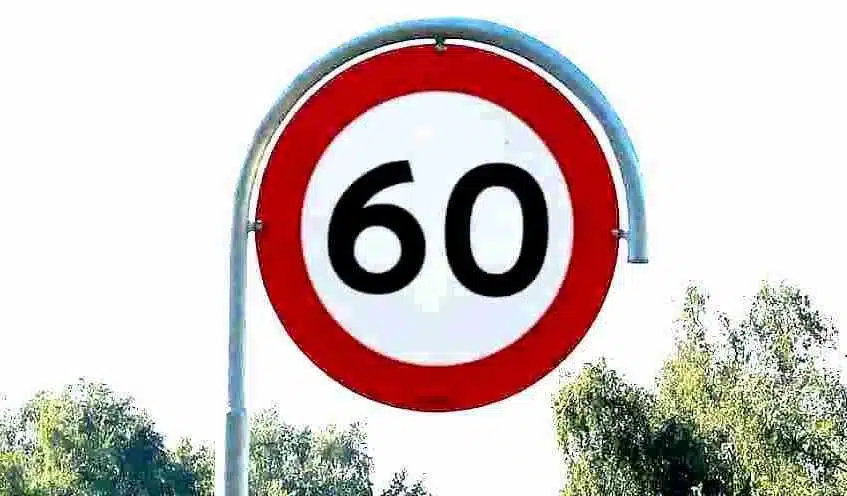
Don't blink or you'll miss a speed-limit sign. In France, the award goes
to the N7 between Lyon and Avignon, which has 120 changes in speed limit
in 100 miles (and a goodly number of radars to issue tickets too).
Source: JT de France 2 at 20h yesterday: <https://www.franceinfo.fr/replay-jt/france-2/20-heures/jt-de-20h-du- mardi-30-juin-2026_8053049.html> from 17m 15s - in French, of course.
(I dismiss it as the signage of a peoples who think 'four twenty &
ten nine" is a rational way of saying '99'. )
On 01/07/26 20:30, occam wrote:
(I dismiss it as the signage of a peoples who think 'four twenty &
ten nine" is a rational way of saying '99'. )
I once worked for three months in Paris. I occupied the desk of someone
who had moved to another section, so had to field lots of phone calls
for him. Unfortunately, the phone number had several eights and nines in it.
My French is heavily influenced by Belgian French, so I'm comfortable
with words like "nonante".
Parisian French when giving phone numbers. Sometimes I hypercorrected,
and came up with "trois vingts" for sixty.
Don't blink or you'll miss a speed-limit sign. In France, the award goes
to the N7 between Lyon and Avignon, which has 120 changes in speed limit
in 100 miles (and a goodly number of radars to issue tickets too).
Source: JT de France 2 at 20h yesterday: <https://www.franceinfo.fr/replay-jt/france-2/20-heures/jt-de-20h-du-mardi -30-juin-2026_8053049.html>
from 17m 15s - in French, of course.
Don't blink or you'll miss a speed-limit sign. In France, the award goes
to the N7 between Lyon and Avignon, which has 120 changes in speed limit
in 100 miles (and a goodly number of radars to issue tickets too).
Source: JT de France 2 at 20h yesterday: <https://www.franceinfo.fr/replay-jt/france-2/20-heures/jt-de-20h-du-mardi-30-juin-2026_8053049.html>
from 17m 15s - in French, of course.
Peter Moylan <peter@pmoylan.org> posted:
On 01/07/26 20:30, occam wrote:
(I dismiss it as the signage of a peoples who think 'four twenty &
ten nine" is a rational way of saying '99'. )
I once worked for three months in Paris. I occupied the desk of someone
who had moved to another section, so had to field lots of phone calls
for him. Unfortunately, the phone number had several eights and nines in it.
Ha. You'd love my telephone number, which isn't zero four, four twenties twelve,
sixty ten eight, zero nine, four twenties six, but resembles that.
My French is heavily influenced by Belgian French, so I'm comfortable
with words like "nonante".
Do you also have "septante" in Belgian French? I never remember. I think "octante" and "huitante" only survive in Switzerland.
On 01/07/26 20:30, occam wrote:
(I dismiss it as the signage of a peoples who think 'four twenty &
ten nine" is a rational way of saying '99'. )
I once worked for three months in Paris. I occupied the desk of someone
who had moved to another section, so had to field lots of phone calls
for him. Unfortunately, the phone number had several eights and nines in it.
My French is heavily influenced by Belgian French, so I'm comfortable
with words like "nonante". That meant I had to translate back into
Parisian French when giving phone numbers. Sometimes I hypercorrected,
and came up with "trois vingts" for sixty.
On Wed, 1 Jul 2026 11:16:19 +0100, Hibou wrote:
Don't blink or you'll miss a speed-limit sign. In France, the award goes
to the N7 between Lyon and Avignon, which has 120 changes in speed limit
in 100 miles (and a goodly number of radars to issue tickets too).
Source: JT de France 2 at 20h yesterday:
<https://www.franceinfo.fr/replay-jt/france-2/20-heures/jt-de-20h-du-mardi-30-juin-2026_8053049.html>
from 17m 15s - in French, of course.
Come visit Belgium.
We're the king of traffic signs (and bad roads). As
for speed limits and fines: they've been installing 'traject controles' everywhere, not always for safety, but for profit. It's a very lucrative business. Two ANPR cameras are placed on a road to measure your speed,
so your plates are always registered, even if you're not speeding.
People are now being fined for doing 53 km/h in a 50 km/h zone.
On 2026-07-01, athel.cb gmail.com wrote:
Peter Moylan <peter@pmoylan.org> posted:
On 01/07/26 20:30, occam wrote:
(I dismiss it as the signage of a peoples who think 'four twenty &
ten nine" is a rational way of saying '99'. )
I once worked for three months in Paris. I occupied the desk of someone
who had moved to another section, so had to field lots of phone calls
for him. Unfortunately, the phone number had several eights and nines in it.
Ha. You'd love my telephone number, which isn't zero four, four twenties twelve,
sixty ten eight, zero nine, four twenties six, but resembles that.
My French is heavily influenced by Belgian French, so I'm comfortable
with words like "nonante".
Do you also have "septante" in Belgian French? I never remember. I think "octante" and "huitante" only survive in Switzerland.
I thought "huitante" was Belgian & "octante" was Swiss, but Wikipedia
says "huitante" is Swiss & "octante" used to be Belgian (in some
parts).
<https://fr.wikipedia.org/wiki/80_(nombre)#Linguistique>
Le 01/07/2026 |a 16:06, s|b a |-crit :
Come visit Belgium.
Well I might, you know, one day. (It was a candidate for this Autumn,
but we're now booked for France again.)
I thought "huitante" was Belgian & "octante" was Swiss, but Wikipedia
says "huitante" is Swiss & "octante" used to be Belgian (in some
parts).
<https://fr.wikipedia.org/wiki/80_(nombre)#Linguistique>
Don't blink or you'll miss a speed-limit sign. In France, the award goes
to the N7 between Lyon and Avignon, which has 120 changes in speed limit
in 100 miles (and a goodly number of radars to issue tickets too).
Source: JT de France 2 at 20h yesterday: <https://www.franceinfo.fr/replay-jt/france-2/20-heures/jt-de-20h-du- mardi-30-juin-2026_8053049.html> from 17m 15s - in French, of course.
Le 01/07/2026 |a 16:06, s|b a |-crit :
On Wed, 1 Jul 2026 11:16:19 +0100, Hibou wrote:
Don't blink or you'll miss a speed-limit sign. In France, the award goes >>> to the N7 between Lyon and Avignon, which has 120 changes in speed limit >>> in 100 miles (and a goodly number of radars to issue tickets too).
Source: JT de France 2 at 20h yesterday:
<https://www.franceinfo.fr/replay-jt/france-2/20-heures/jt-de-20h-du-
mardi-30-juin-2026_8053049.html>
from 17m 15s - in French, of course.
Come visit Belgium.
Well I might, you know, one day. (It was a candidate for this Autumn,
but we're now booked for France again.)
We're the king of traffic signs (and bad roads). As
for speed limits and fines: they've been installing 'traject controles'
everywhere, not always for safety, but for profit. It's a very lucrative
business. Two ANPR cameras are placed on a road to measure your speed,
so your plates are always registered, even if you're not speeding.
People are now being fined for doing 53 km/h in a 50 km/h zone.
Noted.
Here a distinction is drawn between 'inappropriate speed' (dangerous in
the circumstances) and 'excess speed' (above the limit). More and more,
we have automated enforcement of the latter - except that some rules (20
mph limits, no entries, forbidden turnsrCa are largely unenforced; the
idea seems to be to inconvenience the law-abiding).
On 2026-07-01, Peter Moylan wrote:
On 01/07/26 20:30, occam wrote:
(I dismiss it as the signage of a peoples who think 'four twenty &
ten nine" is a rational way of saying '99'. )
I once worked for three months in Paris. I occupied the desk of someone
who had moved to another section, so had to field lots of phone calls
for him. Unfortunately, the phone number had several eights and nines in it.
Relevant cartoon:
<https://www.itchyfeetcomic.com/2016/11/cryptic-sequence.html>
My French is heavily influenced by Belgian French, so I'm comfortable
with words like "nonante". That meant I had to translate back into
Parisian French when giving phone numbers. Sometimes I hypercorrected,
and came up with "trois vingts" for sixty.
There used to be "six vingts" for 120.
On Wed, 01 Jul 2026 16:43:21 +0100, Adam Funk wrote:
I thought "huitante" was Belgian & "octante" was Swiss, but Wikipedia
says "huitante" is Swiss & "octante" used to be Belgian (in some
parts).
<https://fr.wikipedia.org/wiki/80_(nombre)#Linguistique>
I've never heard of 'octante'. In Flemish schools we are taught 'quartre-vingt'. I remember a teacher telling us about 'nonante' and forbidding us to use it. I believe they still use it in Wallonia.
Le 01/07/2026 |a 16:06, s|b a |-crit :
On Wed, 1 Jul 2026 11:16:19 +0100, Hibou wrote:
Don't blink or you'll miss a speed-limit sign. In France, the award goes >>> to the N7 between Lyon and Avignon, which has 120 changes in speed limit >>> in 100 miles (and a goodly number of radars to issue tickets too).
Source: JT de France 2 at 20h yesterday:
<https://www.franceinfo.fr/replay-jt/france-2/20-heures/jt-de-20h-du-mardi-30-juin-2026_8053049.html>
from 17m 15s - in French, of course.
Come visit Belgium.
Well I might, you know, one day. (It was a candidate for this Autumn,
but we're now booked for France again.)
We're the king of traffic signs (and bad roads). As
for speed limits and fines: they've been installing 'traject controles'
everywhere, not always for safety, but for profit. It's a very lucrative
business. Two ANPR cameras are placed on a road to measure your speed,
so your plates are always registered, even if you're not speeding.
People are now being fined for doing 53 km/h in a 50 km/h zone.
Noted.
Here a distinction is drawn between 'inappropriate speed' (dangerous in
the circumstances) and 'excess speed' (above the limit). More and more,
we have automated enforcement of the latter - except that some rules (20
mph limits, no entries, forbidden turnsrCa are largely unenforced; the
idea seems to be to inconvenience the law-abiding).
In article <1123ulp$24ri1$1@dont-email.me>, wugi <wugi@brol.invalid> wrote:
nonante-dix-onze.
"Un decante-un" in the Lord of the Rings.
-- Richard
Come visit Belgium. We're the king of traffic signs (and bad roads).
Don't blink or you'll miss a speed-limit sign. In France, the award goes
to the N7 between Lyon and Avignon, which has 120 changes in speed limit
in 100 miles (and a goodly number of radars to issue tickets too).
On 2026-07-01, athel.cb gmail.com wrote:
Peter Moylan <peter@pmoylan.org> posted:
On 01/07/26 20:30, occam wrote:
(I dismiss it as the signage of a peoples who think 'four twenty &
ten nine" is a rational way of saying '99'. )
I once worked for three months in Paris. I occupied the desk of someone
who had moved to another section, so had to field lots of phone calls
for him. Unfortunately, the phone number had several eights and nines in it.
Ha. You'd love my telephone number, which isn't zero four, four twenties twelve,
sixty ten eight, zero nine, four twenties six, but resembles that.
My French is heavily influenced by Belgian French, so I'm comfortable
with words like "nonante".
Do you also have "septante" in Belgian French? I never remember. I think
"octante" and "huitante" only survive in Switzerland.
I thought "huitante" was Belgian & "octante" was Swiss, but Wikipedia
says "huitante" is Swiss & "octante" used to be Belgian (in some
parts).
On my first visit to Belgiium I was left wondering why there were so
many roads from Sortie to Uitrit.
On Wed, 01 Jul 2026 16:43:21 +0100, Adam Funk <a24061@ducksburg.com>
wrote:
I thought "huitante" was Belgian & "octante" was Swiss, but Wikipedia
says "huitante" is Swiss & "octante" used to be Belgian (in some
parts).
A bit like "shiyangalolunye" which is Zulu for 'nine" -- "ten minus
one".
On Wed, 1 Jul 2026 17:15:38 +0100, Hibou wrote:
Le 01/07/2026 |a 16:06, s|b a |-crit :
Come visit Belgium.
Well I might, you know, one day. (It was a candidate for this Autumn,
but we're now booked for France again.)
If you do come, I'd suggest you use Waze. It warns about these trajectcontroles (and various other fixed speed cameras) and it's
perfectly legal to use it.
At least (I think, ICBW,) the English speaking nations have got numbers up
to nine hundred and ninety million, nine hundred thousand, nine hundred
and ninety nine sorted out.
Op 1/07/2026 om 19:31 schreef s|b:
On Wed, 01 Jul 2026 16:43:21 +0100, Adam Funk wrote:
I thought "huitante" was Belgian & "octante" was Swiss, but Wikipedia
says "huitante" is Swiss & "octante" used to be Belgian (in some
parts).
<https://fr.wikipedia.org/wiki/80_(nombre)#Linguistique>
I've never heard of 'octante'. In Flemish schools we are taught
'quartre-vingt'. I remember a teacher telling us about 'nonante' and
forbidding us to use it. I believe they still use it in Wallonia.
Septante, quatre-vingt, nonante are standard in Belgian French.
Go try to write down dictated numbers containing soixante-dix-huit and quatre-vingt-dix-neuf. I love to confuse the French with septante-dix-
six and nonante-dix-onze.
On 02/07/26 13:50, Steve Hayes wrote:
On Wed, 01 Jul 2026 16:43:21 +0100, Adam Funk <a24061@ducksburg.com>
wrote:
I thought "huitante" was Belgian & "octante" was Swiss, but Wikipedia
says "huitante" is Swiss & "octante" used to be Belgian (in some
parts).
A bit like "shiyangalolunye" which is Zulu for 'nine" -- "ten minus
one".
So the same as Roman IX.
On 01/07/2026 22:52, wugi wrote:
Op 1/07/2026 om 19:31 schreef s|b:
On Wed, 01 Jul 2026 16:43:21 +0100, Adam Funk wrote:
I thought "huitante" was Belgian & "octante" was Swiss, but Wikipedia
says "huitante" is Swiss & "octante" used to be Belgian (in some
parts).
<https://fr.wikipedia.org/wiki/80_(nombre)#Linguistique>
I've never heard of 'octante'. In Flemish schools we are taught
'quartre-vingt'. I remember a teacher telling us about 'nonante' and
forbidding us to use it. I believe they still use it in Wallonia.
Septante, quatre-vingt, nonante are standard in Belgian French.
Go try to write down dictated numbers containing soixante-dix-huit and quatre-vingt-dix-neuf. I love to confuse the French with septante-dix-
six and nonante-dix-onze.
You may be joking, however I recall a conversation I overheard in Paris between two 'trendies'. One said he was "vingt-douze ans". I guessed he
was unhappy not being in his twenties any more.
Our usual source of information about all things Danish has been very silent in his discussion. I seem to recall that Danish is more extreme than French in counting by twenties.
Here a distinction is drawn between 'inappropriate speed' (dangerous in
the circumstances) and 'excess speed' (above the limit).
Op 1/07/2026 om 19:31 schreef s|b:
I've never heard of 'octante'. In Flemish schools we are taught
'quartre-vingt'. I remember a teacher telling us about 'nonante' and
forbidding us to use it. I believe they still use it in Wallonia.
Septante, quatre-vingt, nonante are standard in Belgian French.
Go try to write down dictated numbers containing soixante-dix-huit and quatre-vingt-dix-neuf. I love to confuse the French with septante-dix-
six and nonante-dix-onze.
Another classic is: announcing "70", and the next one a few hundred
meters later: "50 (repeat)".
Peter Moylan <peter@pmoylan.org> posted:
On 01/07/26 20:30, occam wrote:
(I dismiss it as the signage of a peoples who think 'four twenty &
ten nine" is a rational way of saying '99'. )
I once worked for three months in Paris. I occupied the desk of someone
who had moved to another section, so had to field lots of phone calls
for him. Unfortunately, the phone number had several eights and nines in it.
Ha. You'd love my telephone number, which isn't zero four, four twenties twelve, sixty ten eight, zero nine, four twenties six, but resembles that.
My French is heavily influenced by Belgian French, so I'm comfortable
with words like "nonante".
Do you also have "septante" in Belgian French? I never remember. I think "octante" and "huitante" only survive in Switzerland.
Den 01.07.2026 kl. 23.10 skrev wugi:
Another classic is: announcing "70", and the next one a few hundred
meters later: "50 (repeat)".
What does "repeat" mean in this context?
Den 01.07.2026 kl. 18.15 skrev Hibou:
Here a distinction is drawn between 'inappropriate speed' (dangerous
in the circumstances) and 'excess speed' (above the limit).
In Danish we use "madness driver" about people who do excess speed. It's defined as:
1. at least twice the legal limit if that is more than 100 km/h.
2. a speed of 200 km/t or more
3. DUI of alcohol with a per mille of 2 or more
4. DUI of narcotics or N2O
5. very ruthless driving
6. willfully risking bodily harm or the death of others
plus a few more points.
The car will be unconditionally empounded - no matter who owns it.
A bit like "shiyangalolunye" which is Zulu for 'nine" -- "ten minus
one".
On 02/07/26 13:50, Steve Hayes wrote:
On Wed, 01 Jul 2026 16:43:21 +0100, Adam Funk <a24061@ducksburg.com>
wrote:
I thought "huitante" was Belgian & "octante" was Swiss, but Wikipedia
says "huitante" is Swiss & "octante" used to be Belgian (in some
parts).
A bit like "shiyangalolunye" which is Zulu for 'nine" -- "ten minus
one".
So the same as Roman IX.
On Thu, 2 Jul 2026 10:24:20 +1000, Peter Moylan <peter@pmoylan.org>
wrote:
On my first visit to Belgiium I was left wondering why there were so
many roads from Sortie to Uitrit.
Om my first visit to Bologna I wondered why there were so many signs
pointing to Senso Unico. I imagined there was some sort of United
Nations conference taking place in town.
On Wed, 1 Jul 2026 11:16:19 +0100, Hibou wrote:0-juin-2026_8053049.html>
Don't blink or you'll miss a speed-limit sign. In France, the award goes
to the N7 between Lyon and Avignon, which has 120 changes in speed limit
in 100 miles (and a goodly number of radars to issue tickets too).
Source: JT de France 2 at 20h yesterday: <https://www.franceinfo.fr/replay-jt/france-2/20-heures/jt-de-20h-du-mardi-3
from 17m 15s - in French, of course.
Come visit Belgium. We're the king of traffic signs (and bad roads). As
for speed limits and fines: they've been installing 'traject controles' everywhere, not always for safety, but for profit.
Op 1/07/2026 om 23:08 schreef Richard Tobin:
In article <1123ulp$24ri1$1@dont-email.me>, wugi <wugi@brol.invalid> wrote:
nonante-dix-onze.
"Un decante-un" in the Lord of the Rings.
-- Richard
Elfendertig (eleven-and-thirty), not?
Den 02.07.2026 kl. 08.35 skrev athel.cb@gmail.com:
Our usual source of information about all things Danish has been very
silent
in his discussion. I seem to recall that Danish is more extreme than
French
in counting by twenties.
I've made this page which explains the origin of our slightly weird
numbers:
-a-a-a-a-a https://tools.lundhansen.dk/Danish_numbers.html
On 02/07/26 13:50, Steve Hayes wrote:
On Wed, 01 Jul 2026 16:43:21 +0100, Adam Funk <a24061@ducksburg.com>
wrote:
I thought "huitante" was Belgian & "octante" was Swiss, but Wikipedia
says "huitante" is Swiss & "octante" used to be Belgian (in some
parts).
A bit like "shiyangalolunye" which is Zulu for 'nine" -- "ten minus
one".
So the same as Roman IX.
On Wed, 01 Jul 2026 16:43:21 +0100
Adam Funk <a24061@ducksburg.com> wrote:
On 2026-07-01, athel.cb gmail.com wrote:
Peter Moylan <peter@pmoylan.org> posted:
On 01/07/26 20:30, occam wrote:
(I dismiss it as the signage of a peoples who think 'four twenty &
ten nine" is a rational way of saying '99'. )
I once worked for three months in Paris. I occupied the desk of someone >> >> who had moved to another section, so had to field lots of phone calls
for him. Unfortunately, the phone number had several eights and nines in it.
Ha. You'd love my telephone number, which isn't zero four, four twenties twelve,
sixty ten eight, zero nine, four twenties six, but resembles that.
My French is heavily influenced by Belgian French, so I'm comfortable
with words like "nonante".
Do you also have "septante" in Belgian French? I never remember. I think >> > "octante" and "huitante" only survive in Switzerland.
I thought "huitante" was Belgian & "octante" was Swiss, but Wikipedia
says "huitante" is Swiss & "octante" used to be Belgian (in some
parts).
<https://fr.wikipedia.org/wiki/80_(nombre)#Linguistique>
What's needed is a national committee to decide what's allowed in French
and what's not.
On 02/07/26 17:30, Bertel Lund Hansen wrote:
Den 01.07.2026 kl. 23.10 skrev wugi:
Another classic is: announcing "70", and the next one a few hundred
-ameters later: "50 (repeat)".
What does "repeat" mean in this context?
IIRC the word is "rappel" in French, meaning "reminder". 50 (rappel)
means that the limit was already 50, but they're telling you again in
case you missed the last sign.
In article <psnb4l5p7vr6er8n1rbvs62gk64mbno3i4@4ax.com>,
Steve Hayes <hayesstw@telkomsa.net> wrote:
A bit like "shiyangalolunye" which is Zulu for 'nine" -- "ten minus
one".
The compilers of the Unicode standard believed that Tibetan allows any
digit to have a line through it, meaning one-half less then the plain
digit. So for example the character U+0F31 represents one-half less
than eight, 7 1/2. The digit zero is included, so that the character
U+0F33 represents -1/2.
There seems to be some doubt about the reality of this.
Septante, quatre-vingt, nonante are standard in Belgian French.
Go try to write down dictated numbers containing soixante-dix-huit and quatre-vingt-dix-neuf. I love to confuse the French with
septante-dix-six and nonante-dix-onze.
On Wed, 01 Jul 2026 16:43:21 +0100, Adam Funk <a24061@ducksburg.com>
wrote:
I thought "huitante" was Belgian & "octante" was Swiss, but Wikipedia
says "huitante" is Swiss & "octante" used to be Belgian (in some
parts).
A bit like "shiyangalolunye" which is Zulu for 'nine" -- "ten minus
one".
On 02/07/26 17:30, Bertel Lund Hansen wrote:
What does "repeat" mean in this context?
IIRC the word is "rappel" in French, meaning "reminder". 50 (rappel)
means that the limit was already 50, but they're telling you again in
case you missed the last sign.
On my first visit to Belgiium I was left wondering why there were so
many roads from Sortie to Uitrit.
s|b <me@privacy.invalid> wrote:
Come visit Belgium. We're the king of traffic signs (and bad roads). As
for speed limits and fines: they've been installing 'traject controles' everywhere, not always for safety, but for profit.
Great, isn't it? Two false friends in one word.
BTW, your French background is showing again:
correct Dutch is 'trajectcontrole', (one word)
On 02/07/26 17:30, Bertel Lund Hansen wrote:
Den 01.07.2026 kl. 23.10 skrev wugi:
Another classic is: announcing "70", and the next one a few hundred
-ameters later: "50 (repeat)".
What does "repeat" mean in this context?
IIRC the word is "rappel" in French, meaning "reminder". 50 (rappel)
means that the limit was already 50, but they're telling you again in
case you missed the last sign.
On 2026-07-01, Kerr-Mudd, John wrote:
On Wed, 01 Jul 2026 16:43:21 +0100 Adam Funk <a24061@ducksburg.com>
wrote:
On 2026-07-01, athel.cb gmail.com wrote:
Peter Moylan <peter@pmoylan.org> posted:
On 01/07/26 20:30, occam wrote:
(I dismiss it as the signage of a peoples who think 'four
twenty & ten nine" is a rational way of saying '99'. )
I once worked for three months in Paris. I occupied the desk
of someone who had moved to another section, so had to field
lots of phone calls for him. Unfortunately, the phone number
had several eights and nines in it.
Ha. You'd love my telephone number, which isn't zero four, four
twenties twelve, sixty ten eight, zero nine, four twenties six,
but resembles that.
My French is heavily influenced by Belgian French, so I'm
comfortable with words like "nonante".
Do you also have "septante" in Belgian French? I never
remember. I think "octante" and "huitante" only survive in
Switzerland.
I thought "huitante" was Belgian & "octante" was Swiss, but
Wikipedia says "huitante" is Swiss & "octante" used to be Belgian
(in some parts).
<https://fr.wikipedia.org/wiki/80_(nombre)#Linguistique>
What's needed is a national committee to decide what's allowed in
French and what's not.
France (at least) has one already --- do you mean an international
committee?
We're lucky to watch a bit of the great Maigret series with Bruno
Cremer on television. The titles put the date of 1992 as
MIXCLXXXXII. Is IXC acceptable for 900? Looks rather as 91 to me. Why
not MCMXCII as you'd expect?
I hadn't really thought about our "anderhalf" for 1 1/2: it's a twin of
your "halvanden". Only that our "ander" just means other, not second.
Want some more background?
I'll give you some: madame, v|-lo, peignoir, bougies, joint de culasse, merde, miljaar,
nom de dieu (nondedju), remorque, camion, camionette,--- Synchronet 3.22a-Linux NewsLink 1.2
perte totale, gendarme, carroserie, moment supr|-me, sacoche, ...
I've made this page which explains the origin of our slightly weird
numbers:
-a-a-a-a-a-a https://tools.lundhansen.dk/Danish_numbers.html
Pas nu valt mijn frank (just now the little coin has dropped:-).
I hadn't really thought about our "anderhalf" for 1 1/2: it's a twin of
your "halvanden". Only that our "ander" just means other, not second.
On 02/07/26 20:56, wugi wrote:
We're lucky to watch a bit of the great Maigret series with Bruno
Cremer on television. The titles put the date of 1992 as
MIXCLXXXXII. Is IXC acceptable for 900? Looks rather as 91 to me. Why
not MCMXCII as you'd expect?
Somebody doesn't understand Roman numerals. IXC is simply illegal. As I understand it, the "subtractive" notation only allows a number to
precede a larger number only only if that smaller number is one level
down in the hierarchy. And the rule is not recursive, so going two steps
down as in IXC is not allowed.
If IXC has any meaning at all, it is IX less than C, so 91, but more
likely I less than XC, i.e. 89.
The sensible British rule is that if there are street lamps less than
200 yards apart, the limit is 30 mph. No need for a 'rappel' unless
signs impose a different limit. Simples!
The car will be unconditionally empounded - no matter who owns it.
Police in Australia now have a demolition facility where they crush
impounded e-bikes. If you do something stupid on an e-bike, like
disabling the speed governor, they make sure that you don't get the bike back.
I'm not sure whether they also do it to cars.
On 02/07/2026 11:49, wugi wrote:
I hadn't really thought about our "anderhalf" for 1 1/2: it's a twin of your "halvanden". Only that our "ander" just means other, not second.
Which reminds me that when I was but a wee lad, my bus fare to school
was three ha'pence (1-+d). That usage has died out AFAIKT.
The central control in France is one of the reasons for the survival of archaic forms like quatre-vingts. Belgium and Switzerland, and some
other places, are more open to the correction of ancient infelicities.
Le 02/07/2026 |a 12:54, s|b a |-crit :
Want some more background?
I'll give you some: madame, v|-lo, peignoir, bougies, joint de culasse, merde, miljaar,
Ah ! Milliard, semble-t-il (10?).
Phil <phil@anonymous.invalid> posted:
On 02/07/2026 11:49, wugi wrote:Lucky you. No bus for me when I was but a wee lad. 1-+ km walk up a steepish hill,
I hadn't really thought about our "anderhalf" for 1 1/2: it's a twin of
your "halvanden". Only that our "ander" just means other, not second.
Which reminds me that when I was but a wee lad, my bus fare to school
was three ha'pence (1-+d). That usage has died out AFAIKT.
unaccompanied.
Den 02.07.2026 kl. 12.49 skrev wugi:
I've made this page which explains the origin of our slightly weird
numbers:
-a-a-a-a-a-a https://tools.lundhansen.dk/Danish_numbers.html
Pas nu valt mijn frank (just now the little coin has dropped:-).
I hadn't really thought about our "anderhalf" for 1 1/2: it's a twin
of your "halvanden". Only that our "ander" just means other, not second.
"Anden" menas both "other" and "second" where both meanings are current,
but in the number context it's "second". Check if "ander" has a history
of meaning "second".
On Thu, 2 Jul 2026 14:33:38 +0100, Hibou wrote:
Le 02/07/2026 |a 12:54, s|b a |-crit :
Want some more background?
I'll give you some: madame, v|-lo, peignoir, bougies, joint de culasse,
merde, miljaar,
Ah ! Milliard, semble-t-il (10?).
Yes, I wrote it like we say it. It's used as a curse, for instance
'miljaardedju' (milliard de dieux).--
Den 02.07.2026 kl. 14.33 skrev Hibou:
The sensible British rule is that if there are street lamps less than
200 yards apart, the limit is 30 mph. No need for a 'rappel' unless
signs impose a different limit. Simples!
In Denmark the 50 km/h limit is announced when you enter a city, town or village. No reminders. [...]
I've made this page which explains the origin of our slightly weird
numbers:
-a-a-a-a-a-a https://tools.lundhansen.dk/Danish_numbers.html
Pas nu valt mijn frank (just now the little coin has dropped:-).
I hadn't really thought about our "anderhalf" for 1 1/2: it's a twin
of your "halvanden". Only that our "ander" just means other, not second.
"Anden" menas both "other" and "second" where both meanings are
current, but in the number context it's "second". Check if "ander" has
a history of meaning "second".
Originally "an-|+ara-" (a comparative) meant "the other of two".
Le 02/07/2026 |a 08:50, Peter Moylan a |-crit :
On 02/07/26 17:30, Bertel Lund Hansen wrote:
Den 01.07.2026 kl. 23.10 skrev wugi:
Another classic is: announcing "70", and the next one a few hundred
-ameters later: "50 (repeat)".
What does "repeat" mean in this context?
IIRC the word is "rappel" in French, meaning "reminder". 50 (rappel)
means that the limit was already 50, but they're telling you again in
case you missed the last sign.
The sensible British rule is that if there are street lamps less than
200 yards apart, the limit is 30 mph. No need for a 'rappel' unless
signs impose a different limit. Simples!
"The Department has no plans to update legislation to allow 30mph speed limit repeater signs on roads with street lighting. Repeater signing is
not used on street lit roads subject to a 30mph speed limit because the
lamp columns act as the repeaters. Guidance is provided in rule 124 of
the Highway Code. This has been law for over 70 years and all drivers
are required to learn this in order to pass their driving test" - <https://questions-statements.parliament.uk/written-questions/ detail/2025-12-01/95755>
The sensible British rule is that if there are street lamps less than
200 yards apart, the limit is 30 mph. No need for a 'rappel' unless
signs impose a different limit. Simples!
Objection M'Lud! 'Round 'ere that limit is more likely to be 20mph -
but I agree about the foolishness of such a scheme for determining the
speed limit.
On Thu, 2 Jul 2026 17:50:03 +1000, Peter Moylan wrote:
On 02/07/26 17:30, Bertel Lund Hansen wrote:
What does "repeat" mean in this context?
IIRC the word is "rappel" in French, meaning "reminder". 50 (rappel)
means that the limit was already 50, but they're telling you again in
case you missed the last sign.
I wouldn't say that. IMO it's a statement telling you it's still 50,
like the last sign you didn't miss. ;-)
On Thursday or thereabouts, s|b asked ...
I wouldn't say that. IMO it's a statement telling you it's still 50,
like the last sign you didn't miss. ;-)
So far as I know from the examples I've seen, in the US both signs are
just "50" and indistinguishable. The second sign is apt to be after a >junction, probably a major junction.
On Thursday or thereabouts, s|b asked ...
On Thu, 2 Jul 2026 17:50:03 +1000, Peter Moylan wrote:
On 02/07/26 17:30, Bertel Lund Hansen wrote:
What does "repeat" mean in this context?
IIRC the word is "rappel" in French, meaning "reminder". 50 (rappel)
means that the limit was already 50, but they're telling you again in
case you missed the last sign.
I wouldn't say that. IMO it's a statement telling you it's still 50,
like the last sign you didn't miss. ;-)
So far as I know from the examples I've seen, in the US both signs are
just "50" and indistinguishable.-a The second sign is apt to be after a junction, probably a major junction.
In article <9Wx1S.2$ZV0f.0@fx09.ams1>, Sam Plusnet <not@home.com> wrote:
The sensible British rule is that if there are street lamps less than
200 yards apart, the limit is 30 mph. No need for a 'rappel' unless
signs impose a different limit. Simples!
[...]
Objection M'Lud! 'Round 'ere that limit is more likely to be 20mph -
but I agree about the foolishness of such a scheme for determining the
speed limit.
Overruled. That's just an example of the quoted rule - where the
limit is 20 rather then 30, you should find regular signs for it.
When it changes from 20 to 30, there's one sign then no reminders.
Reminders aren't marked as such, but are usually smaller.--
Den 02.07.2026 kl. 17.33 skrev wugi:
I've made this page which explains the origin of our slightly weird >>>>> numbers:
-a-a-a-a-a-a https://tools.lundhansen.dk/Danish_numbers.html
Pas nu valt mijn frank (just now the little coin has dropped:-).
I hadn't really thought about our "anderhalf" for 1 1/2: it's a twin
of your "halvanden". Only that our "ander" just means other, not
second.
"Anden" menas both "other" and "second" where both meanings are
current, but in the number context it's "second". Check if "ander"
has a history of meaning "second".
Originally "an-|+ara-" (a comparative) meant "the other of two".
The concept of "two" is in the word "ander", and "anderhalf" makes no
sense unless the explanation is identical to what I explain about "halvanden".
On Thu, 2 Jul 2026 22:57:42 +1000, Peter Moylan wrote:
The central control in France is one of the reasons for the
survival of archaic forms like quatre-vingts. Belgium and
Switzerland, and some other places, are more open to the
correction of ancient infelicities.
I always thought 'nonante' was archaic, but you're saying it's the
other way around? As I've said: Flemish schools in Belgium teach us 'quatre-vingt', but we're made aware of 'nonante' etc.
Now I wonder what schools in Wallonia are teaching.
Phil <phil@anonymous.invalid> posted:
On 02/07/2026 11:49, wugi wrote:Lucky you. No bus for me when I was but a wee lad. 1-+ km walk up a
I hadn't really thought about our "anderhalf" for 1 1/2: it's a
twin of your "halvanden". Only that our "ander" just means
other, not second.
Which reminds me that when I was but a wee lad, my bus fare to
school was three ha'pence (1-+d). That usage has died out AFAIKT.
steepish hill, unaccompanied.
On 02/07/26 20:56, wugi wrote:
We're lucky to watch a bit of the great Maigret series with Bruno
Cremer on television. The titles put the date of 1992 as
MIXCLXXXXII. Is IXC acceptable for 900? Looks rather as 91 to me. Why
not MCMXCII as you'd expect?
Somebody doesn't understand Roman numerals. IXC is simply illegal. As I understand it, the "subtractive" notation only allows a number to
precede a larger number only only if that smaller number is one level
down in the hierarchy. And the rule is not recursive, so going two steps
down as in IXC is not allowed.
If IXC has any meaning at all, it is IX less than C, so 91, but more
likely I less than XC, i.e. 89.
I sometimes I see illogical signs like a sign disabling a limit of 70
km/h ten meters before a town-sign meaning "50 km/h".
| Sysop: | Amessyroom |
|---|---|
| Location: | Fayetteville, NC |
| Users: | 70 |
| Nodes: | 6 (0 / 6) |
| Uptime: | 39:28:56 |
| Calls: | 948 |
| Calls today: | 2 |
| Files: | 1,325 |
| Messages: | 280,644 |