xkcd: Truly Universal Outlet
-a-a https://www.xkcd.com/3186/
Uh, no.-a There are different voltages involved for a start.
Explained at:
-a-a https://www.explainxkcd.com/wiki/index.php/3186:_Truly_Universal_Outlet
Lynn
On 12/26/25 13:54, Lynn McGuire wrote:
xkcd: Truly Universal OutletI found out an interesting thing while we were staying in Amsterdam
-a-a https://www.xkcd.com/3186/
Uh, no.-a There are different voltages involved for a start.
Explained at:
-a-a https://www.explainxkcd.com/wiki/index.php/3186:_Truly_Universal_Outlet
Lynn
after being on a river cruise on the Rhine earlier this year. I had left
the voltage adapter in the cabin of the cruise ship when we left, one
that went from the European 2 prong 220-240 volt to 2/3 prong American
110 volt. I discovered this when we got to our hotel.
So I had to go find an adapter. I walked all over Amsterdam, or at least
all over the area in which we were staying. (Near the Van Gogh museum
for those who care.) No joy. Lots of straight pass thru, 220 European 2 prong to American 2 prong with NO voltage change. Um, this won't work,
until I happened to read that my CPAP and all of the 2 prong USB transformers for IPhones and our IPad are quite happy with 220. So I
bought a pass thru and I could again breathe at night.
Of course, I told my wife to make sure she did NOT plug her blow dryer
into the pass thru. Things would have got interesting.
xkcd: Truly Universal OutletAt least of the devices I bought some years back came with a single
https://www.xkcd.com/3186/
Uh, no. There are different voltages involved for a start.
Explained at:
https://www.explainxkcd.com/wiki/index.php/3186:_Truly_Universal_Outlet
On Fri, 26 Dec 2025 15:54:46 -0600, Lynn McGuire
<lynnmcguire5@gmail.com> wrote:
xkcd: Truly Universal Outlet
https://www.xkcd.com/3186/
Uh, no. There are different voltages involved for a start.
Explained at:
https://www.explainxkcd.com/wiki/index.php/3186:_Truly_Universal_Outlet
At least of the devices I bought some years back came with a single
dongle but several slide-in plug adatapters. You slid the one that
matched to wall socket in and it worked.
Of course, all necessary electonics would have been in the dongle.
Electricians are funny: they object to power strips (even with surge protectors built in), yet they think that a single 2-socket wall
outlet is sufficient for an entire room. Maybe two of them, or a
single 4-socket outlet, for larger rooms. *Note that I am talking
about residential here, not industrial. There is no need to tell me
about your plant's wall with 100 outlets on it*
IOW, they create the problem, and then they whine about the solution.
On Fri, 26 Dec 2025 15:54:46 -0600, Lynn McGuire
<lynnmcguire5@gmail.com> wrote:
xkcd: Truly Universal Outlet
https://www.xkcd.com/3186/
Uh, no. There are different voltages involved for a start.
Explained at:
= >https://www.explainxkcd.com/wiki/index.php/3186:_Truly_Universal_Outlet
At least of the devices I bought some years back came with a single
dongle but several slide-in plug adatapters. You slid the one that
matched to wall socket in and it worked.
Of course, all necessary electonics would have been in the dongle.
Electricians are funny: they object to power strips (even with surge >protectors built in), yet they think that a single 2-socket wall
outlet is sufficient for an entire room.
xkcd: Truly Universal Outlet
https://www.xkcd.com/3186/
Uh, no. There are different voltages involved for a start.
all over the area in which we were staying. (Near the Van Gogh museum
for those who care.) No joy. Lots of straight pass thru, 220 European 2 >prong to American 2 prong with NO voltage change. Um, this won't work,
until I happened to read that my CPAP and all of the 2 prong USB >transformers for IPhones and our IPad are quite happy with 220. So I
bought a pass thru and I could again breathe at night.
Don't blame the electricians if you're shorted (pun intended);
they're contracted and paid by the builder.
Paul S Person <psperson@old.netcom.invalid> writes:Older houses, of course, don't. Some of them have wiring that is
On Fri, 26 Dec 2025 15:54:46 -0600, Lynn McGuire
<lynnmcguire5@gmail.com> wrote:
xkcd: Truly Universal Outlet
https://www.xkcd.com/3186/
Uh, no. There are different voltages involved for a start.
Explained at:
= >>https://www.explainxkcd.com/wiki/index.php/3186:_Truly_Universal_Outlet
At least of the devices I bought some years back came with a single
dongle but several slide-in plug adatapters. You slid the one that
matched to wall socket in and it worked.
Of course, all necessary electonics would have been in the dongle.
Electricians are funny: they object to power strips (even with surge >>protectors built in), yet they think that a single 2-socket wall
outlet is sufficient for an entire room.
50+ years ago, perhaps. For the recent five decades, electricians
follow the NEC, which has clear requirements on how many outlets
are required in every room. Note that those requirements are
designed around the typical appliance line-cord length to
reduce the use of extension cords.
"The NEC requires receptacles in living spaces so no point
along a wall is more than 6 feet from an outlet, meaning
outlets are generally needed every 12 feet, covering all
wall spaces 2 feet or wider (NEC 210.52). Key rules include
the 6-foot cord rule (no point more than 6ft from outlet),
the 12-foot spacing (ensures coverage), and a receptacle for
any wall section 2 feet or wider, broken by doors/fireplaces/cabinets.
These rules prevent reliance on extension cords for general use
appliances like lamps or TVs".
In tract housing, the minimums above will be honored in mostA brave defense -- were it not for the articles I've read in which an electrician whines about the use of power strips.
jurisdictions (unless they've bribed an inspector). Custom
homes are likely to have more, and quads rather than
duplexes in areas likely used for home entertainment.
Don't blame the electricians if you're shorted (pun intended);
they're contracted and paid by the builder.
On 12/27/25 09:04, Paul S Person wrote:Our older and quite nasty [1] circuits, probably not quite that old,
On Fri, 26 Dec 2025 15:54:46 -0600, Lynn McGuire
<lynnmcguire5@gmail.com> wrote:
xkcd: Truly Universal OutletAt least of the devices I bought some years back came with a single
https://www.xkcd.com/3186/
Uh, no. There are different voltages involved for a start.
Explained at:
https://www.explainxkcd.com/wiki/index.php/3186:_Truly_Universal_Outlet >>
dongle but several slide-in plug adatapters. You slid the one that
matched to wall socket in and it worked.
Of course, all necessary electonics would have been in the dongle.
Electricians are funny: they object to power strips (even with surge
protectors built in), yet they think that a single 2-socket wall
outlet is sufficient for an entire room. Maybe two of them, or a
single 4-socket outlet, for larger rooms. *Note that I am talking
about residential here, not industrial. There is no need to tell me
about your plant's wall with 100 outlets on it*
IOW, they create the problem, and then they whine about the solution.
No the electricians but the developers and actually the refurbishers who
are working to the Developer's specifications who is thinking about how much >he will have to pay for materials and for work. i live in an apartment
over 100
years old and it had lots of electrical outlets for the 1915-1916 time
when it
was built but it has not been refurbished since the 1950s or earlier. There >are no power outlets in the bathroom aside from the overhead lights.
Extension cords are ugly but better than nothing. Power strips with surge >protection for my 2 computers(one at a time), TV, etc. More outlets inMy very first surge protector, an Isolator (ISO-1) Circuit
the Kitchen but still had to add a power stip to handle the table lites
and ventilating fan.
On 12/27/2025 1:44 PM, Scott Lurndal wrote:
Don't blame the electricians if you're shorted (pun intended);
they're contracted and paid by the builder.
While doing my thesis research I discovered that the floor receptacle
where I worked, although with a three-pin face, had no internal
connection for the safety ground.
On Sat, 27 Dec 2025 18:44:53 GMT, scott@slp53.sl.home (Scott Lurndal)
wrote:
doors/fireplaces/cabinets.
Electricians are funny: they object to power strips (even with surge >>>protectors built in), yet they think that a single 2-socket wall
outlet is sufficient for an entire room.=20
50+ years ago, perhaps. For the recent five decades, electricians
follow the NEC, which has clear requirements on how many outlets
are required in every room. Note that those requirements are
designed around the typical appliance line-cord length to
reduce the use of extension cords.
"The NEC requires receptacles in living spaces so no point
along a wall is more than 6 feet from an outlet, meaning
outlets are generally needed every 12 feet, covering all
wall spaces 2 feet or wider (NEC 210.52). Key rules include
the 6-foot cord rule (no point more than 6ft from outlet),
the 12-foot spacing (ensures coverage), and a receptacle for
any wall section 2 feet or wider, broken by =
These rules prevent reliance on extension cords for general use
appliances like lamps or TVs".
Older houses, of course, don't. Some of them have wiring that is
downright nasty. Ours has two sets of circuits: the older ones
(perhaps 100 years or so old) , and newer ones (1980s) with
three-prong sockets (and a grounding stake setup outside). But, by the >standards above, my bedroom and computer room are missing at least six >recepticals. Since my Mom hired the newer wiring, I have no idea who >specified what.
In tract housing, the minimums above will be honored in most
jurisdictions (unless they've bribed an inspector). Custom
homes are likely to have more, and quads rather than
duplexes in areas likely used for home entertainment.
Don't blame the electricians if you're shorted (pun intended);
they're contracted and paid by the builder.
A brave defense -- were it not for the articles I've read in which an >electrician whines about the use of power strips.
They should be more realistic about what people currently use.
On Sat, 27 Dec 2025 09:29:36 -0800, Bobbie Sellers <bliss-sf4ever@dslextreme.com> wrote:
On 12/27/25 09:04, Paul S Person wrote:
On Fri, 26 Dec 2025 15:54:46 -0600, Lynn McGuire
<lynnmcguire5@gmail.com> wrote:
xkcd: Truly Universal Outlet
https://www.xkcd.com/3186/
Uh, no. There are different voltages involved for a start.
Explained at:
https://www.explainxkcd.com/wiki/index.php/3186:_Truly_Universal_Outlet
At least of the devices I bought some years back came with a single
dongle but several slide-in plug adatapters. You slid the one that
matched to wall socket in and it worked.
Of course, all necessary electonics would have been in the dongle.
Electricians are funny: they object to power strips (even with surge
protectors built in), yet they think that a single 2-socket wall
outlet is sufficient for an entire room. Maybe two of them, or a
single 4-socket outlet, for larger rooms. *Note that I am talking
about residential here, not industrial. There is no need to tell me
about your plant's wall with 100 outlets on it*
IOW, they create the problem, and then they whine about the solution.
No the electricians but the developers and actually the refurbishers who
are working to the Developer's specifications who is thinking about how much >> he will have to pay for materials and for work. i live in an apartment
over 100
years old and it had lots of electrical outlets for the 1915-1916 time
when it
was built but it has not been refurbished since the 1950s or earlier. There >> are no power outlets in the bathroom aside from the overhead lights.
Our older and quite nasty [1] circuits, probably not quite that old,
do include a socket in the bathroom -- attached to the fluorescent
light fixture (which may be not quite as old as the wiring) above the
sink. It only has power when the fluorescent lights have power.
[1] What I mostly am calling "nasty" is how hard they are two worknot an electrician.
with: whenever I have looked at them they have had no flexibility at
all. Elictricians have things to say about them as well, and they
aren't positive.
_I_ don't have positive things to say about that kind of setup and I'm
Mark Jackson <mjackson@alumni.caltech.edu> writes:
On 12/27/2025 1:44 PM, Scott Lurndal wrote:
Don't blame the electricians if you're shorted (pun intended);
they're contracted and paid by the builder.
While doing my thesis research I discovered that the floor receptacle
where I worked, although with a three-pin face, had no internal
connection for the safety ground.
If the circuit is run in metal pipe, the conduit itself can act
as the grounding conductor[*]. I believe that this was allowed by
NEC in the past, so you won't find an explicit grounding
conductor in that situation.
xkcd: Truly Universal Outlet
https://www.xkcd.com/3186/
Uh, no. There are different voltages involved for a start.
Explained at:--- Synchronet 3.21a-Linux NewsLink 1.2
https://www.explainxkcd.com/wiki/index.php/3186:_Truly_Universal_Outlet
On 12/28/2025 12:42 PM, Scott Lurndal wrote:
Mark Jackson <mjackson@alumni.caltech.edu> writes:
On 12/27/2025 1:44 PM, Scott Lurndal wrote:
Don't blame the electricians if you're shorted (pun intended); they're >>>> contracted and paid by the builder.
While doing my thesis research I discovered that the floor receptacle
where I worked, although with a three-pin face, had no internal
connection for the safety ground.
If the circuit is run in metal pipe, the conduit itself can act as the
grounding conductor[*]. I believe that this was allowed by NEC in the
past, so you won't find an explicit grounding conductor in that
situation.
The grounding pin receptacle was connected to *nothing*. Had it somhow
been grounded the other half of the problem - hot and return flipped,
for most of the equipment on the island - would have instantly tripped
the breaker.
Lynn McGuire <lynnmcguire5@gmail.com> wrote:
xkcd: Truly Universal Outlet
https://www.xkcd.com/3186/
Uh, no. There are different voltages involved for a start.
True, though I'm not sure I have *ANYTHING* at home that isn't capable
of running on 50/60Hz and 110-240V (and no need to switch any longer).
True, though I'm not sure I have *ANYTHING* at home that isn't capable
of running on 50/60Hz and 110-240V (and no need to switch any longer).
You don't have a hairdryer in your home, then?
(I just looked at one here, in Germany, and it was rated 220-240 V,
50 Hz).
On 2025-12-28 23:22:48 +0000, Mark Jackson said:Same here in the USA, but they are usually polarized (one pin longer
On 12/28/2025 12:42 PM, Scott Lurndal wrote:
Mark Jackson <mjackson@alumni.caltech.edu> writes:
On 12/27/2025 1:44 PM, Scott Lurndal wrote:
Don't blame the electricians if you're shorted (pun intended); they're >>>>> contracted and paid by the builder.
While doing my thesis research I discovered that the floor receptacle
where I worked, although with a three-pin face, had no internal
connection for the safety ground.
If the circuit is run in metal pipe, the conduit itself can act as the
grounding conductor[*]. I believe that this was allowed by NEC in the
past, so you won't find an explicit grounding conductor in that
situation.
The grounding pin receptacle was connected to *nothing*. Had it somhow
been grounded the other half of the problem - hot and return flipped,
for most of the equipment on the island - would have instantly tripped
the breaker.
New Zealand uses three pin plugs and sockets, ><https://www.worksafe.govt.nz/assets/Topic/Consumer/Electricity/image-electrical-how-to-wire-a-plug-3-pin-plug.jpg>
but many devices do not actually have the third / earth pin on the plug.
On 12/28/2025 12:42 PM, Scott Lurndal wrote:
Mark Jackson <mjackson@alumni.caltech.edu> writes:
On 12/27/2025 1:44 PM, Scott Lurndal wrote:
Don't blame the electricians if you're shorted (pun intended);
they're contracted and paid by the builder.
While doing my thesis research I discovered that the floor receptacle
where I worked, although with a three-pin face, had no internal
connection for the safety ground.
If the circuit is run in metal pipe, the conduit itself can act
as the grounding conductor[*]. I believe that this was allowed by
NEC in the past, so you won't find an explicit grounding
conductor in that situation.
The grounding pin receptacle was connected to *nothing*.
Had it somhow
been grounded the other half of the problem - hot and return flipped,
for most of the equipment on the island - would have instantly tripped
the breaker.
On Mon, 29 Dec 2025 13:24:20 +1300, Your Name <YourName@YourISP.com>
wrote:
On 2025-12-28 23:22:48 +0000, Mark Jackson said:receptacle
On 12/28/2025 12:42 PM, Scott Lurndal wrote:
Mark Jackson <mjackson@alumni.caltech.edu> writes:
On 12/27/2025 1:44 PM, Scott Lurndal wrote:
Don't blame the electricians if you're shorted (pun intended); = >they're=20=20
contracted and paid by the builder.
While doing my thesis research I discovered that the floor =
=20where I worked, although with a three-pin face, had no internal=20
connection for the safety ground.
If the circuit is run in metal pipe, the conduit itself can act as = >the=20
grounding conductor[*]. I believe that this was allowed by NEC in the= >=20
past, so you won't find an explicit grounding conductor in that=20
situation.
The grounding pin receptacle was connected to *nothing*. Had it = >somhow=20
been grounded the other half of the problem - hot and return flipped,=20 >>> for most of the equipment on the island - would have instantly tripped= >=20
the breaker.
New Zealand uses three pin plugs and sockets, >><https://www.worksafe.govt.nz/assets/Topic/Consumer/Electricity/image-el= >ectrical-how-to-wire-a-plug-3-pin-plug.jpg>=20
but many devices do not actually have the third / earth pin on the plug.
Same here in the USA, but they are usually polarized (one pin longer
on top than the other).
Mark Jackson <mjackson@alumni.caltech.edu> writes:
On 12/28/2025 12:42 PM, Scott Lurndal wrote:
Mark Jackson <mjackson@alumni.caltech.edu> writes:
On 12/27/2025 1:44 PM, Scott Lurndal wrote:
Don't blame the electricians if you're shorted (pun
intended); they're contracted and paid by the builder.
While doing my thesis research I discovered that the floor
receptacle where I worked, although with a three-pin face, had
no internal connection for the safety ground.
If the circuit is run in metal pipe, the conduit itself can act
as the grounding conductor[*]. I believe that this was allowed
by NEC in the past, so you won't find an explicit grounding
conductor in that situation.
The grounding pin receptacle was connected to *nothing*.
That doesn't necessarily mean that the receptacle wasn't grounded -
iff the above constraints (metal all the way) hold. The ground pin
in the receptacle socket is connected to the metal ears that are
used to screw the receptacle to the metal handy/outlet box.
Had it somhow been grounded the other half of the problem - hot
and return flipped, for most of the equipment on the island -
would have instantly tripped the breaker.
Would it? The return (neutral/grounded conductor) and ground
(grounding conductor) are only connected at the service entrance
(assuming the installation was correctly done). Old equipment (e.g.
stoves in pre-grounding conductor days) tied the frame to neutral,
which was a shock hazard if the hot and neutral were flipped but
wouldn't result in an overcurrent device triggering.
The wider blade identifies the neutral (grounded) conductor.
Paul S Person <psperson@old.netcom.invalid> writes:Well, hopefully grounded, anyway.
On Mon, 29 Dec 2025 13:24:20 +1300, Your Name <YourName@YourISP.com>
wrote:
On 2025-12-28 23:22:48 +0000, Mark Jackson said:
On 12/28/2025 12:42 PM, Scott Lurndal wrote:
Mark Jackson <mjackson@alumni.caltech.edu> writes:=20
On 12/27/2025 1:44 PM, Scott Lurndal wrote:=20
Don't blame the electricians if you're shorted (pun intended); = >>they're=20=20
contracted and paid by the builder.
While doing my thesis research I discovered that the floor = >>receptacle
where I worked, although with a three-pin face, had no internal
connection for the safety ground.
If the circuit is run in metal pipe, the conduit itself can act as = >>the=20
grounding conductor[*]. I believe that this was allowed by NEC in the= >>=20
past, so you won't find an explicit grounding conductor in that=20
situation.
The grounding pin receptacle was connected to *nothing*. Had it = >>somhow=20
been grounded the other half of the problem - hot and return flipped,=20 >>>> for most of the equipment on the island - would have instantly tripped= >>=20
the breaker.
New Zealand uses three pin plugs and sockets, >>><https://www.worksafe.govt.nz/assets/Topic/Consumer/Electricity/image-el= >>ectrical-how-to-wire-a-plug-3-pin-plug.jpg>=20
but many devices do not actually have the third / earth pin on the plug.
Same here in the USA, but they are usually polarized (one pin longer
on top than the other).
The wider blade identifies the neutral (grounded) conductor.
On Mon, 29 Dec 2025 20:19:49 GMT, scott@slp53.sl.home (Scott Lurndal)
wrote:
Same here in the USA, but they are usually polarized (one pin longer
on top than the other).
The wider blade identifies the neutral (grounded) conductor.
Well, hopefully grounded, anyway.
Paul S Person <psperson@old.netcom.invalid> writes:
On Mon, 29 Dec 2025 20:19:49 GMT, scott@slp53.sl.home (Scott Lurndal) >>wrote:
Same here in the USA, but they are usually polarized (one pin longer
on top than the other).
The wider blade identifies the neutral (grounded) conductor.
Well, hopefully grounded, anyway.
if the neutral conductor is not grounded, then you aren't using
a standard north american center-tapped single-phase 240VAC service which >provides two 120VAC circuits.
On 2025-12-28 23:22:48 +0000, Mark Jackson said:
On 12/28/2025 12:42 PM, Scott Lurndal wrote:
Mark Jackson <mjackson@alumni.caltech.edu> writes:
On 12/27/2025 1:44 PM, Scott Lurndal wrote:
Don't blame the electricians if you're shorted (pun intended); they're >>>>> contracted and paid by the builder.
While doing my thesis research I discovered that the floor receptacle
where I worked, although with a three-pin face, had no internal
connection for the safety ground.
If the circuit is run in metal pipe, the conduit itself can act as the
grounding conductor[*]. I believe that this was allowed by NEC in the
past, so you won't find an explicit grounding conductor in that
situation.
The grounding pin receptacle was connected to *nothing*. Had it somhow
been grounded the other half of the problem - hot and return flipped,
for most of the equipment on the island - would have instantly tripped
the breaker.
New Zealand uses three pin plugs and sockets, <https://www.worksafe.govt.nz/assets/Topic/Consumer/Electricity/image-electrical-how-to-wire-a-plug-3-pin-plug.jpg>
but many devices do not actually have the third / earth pin on the plug.
Torbjorn Lindgren <tl@none.invalid> schrieb:
Lynn McGuire <lynnmcguire5@gmail.com> wrote:
xkcd: Truly Universal Outlet
https://www.xkcd.com/3186/
Uh, no. There are different voltages involved for a start.
True, though I'm not sure I have *ANYTHING* at home that isn't capable
of running on 50/60Hz and 110-240V (and no need to switch any longer).
You don't have a hairdryer in your home, then?
In the UK every "standard" plug used to have its own fuse in it,
instead of / as well as a fuse box elsewhere in the building. That has >likely mostly changed due to international companies not wanting to
bother with the added expense as well as newer buliding standards.
Scott Lurndal <slp53@pacbell.net> wrote:
Paul S Person <psperson@old.netcom.invalid> writes:
On Mon, 29 Dec 2025 20:19:49 GMT, scott@slp53.sl.home (Scott Lurndal) >>>wrote:
Same here in the USA, but they are usually polarized (one pin longer >>>>>on top than the other).
The wider blade identifies the neutral (grounded) conductor.
Well, hopefully grounded, anyway.
if the neutral conductor is not grounded, then you aren't using
a standard north american center-tapped single-phase 240VAC service which >>provides two 120VAC circuits.
The neutral is NOT grounded. It is bonded to ground at the panel to keep it >as close as possible to ground potential...
but it may be several volts away
from ground due to voltage drop in the conductor.
Yes, they are connected
together at one point but it is unwise to consider them the same thing. >--scott
Your Name <YourName@YourISP.com> wrote:
In the UK every "standard" plug used to have its own fuse in it,
instead of / as well as a fuse box elsewhere in the building. That has >>likely mostly changed due to international companies not wanting to
bother with the added expense as well as newer buliding standards.
This is a feature of the ring mains arrangement, which was a sort of
crazy attempt to save on copper wire, and which is still standard in
the UK.
Paul S Person <psperson@old.netcom.invalid> writes:You missed the last line:
On Mon, 29 Dec 2025 20:19:49 GMT, scott@slp53.sl.home (Scott Lurndal) >>wrote:
Same here in the USA, but they are usually polarized (one pin longer
on top than the other).
The wider blade identifies the neutral (grounded) conductor.
Well, hopefully grounded, anyway.
Ours was built in the late 1920's. I doubt very much that it conformsOld houses ...
if the neutral conductor is not grounded, then you aren't using<etc>
a standard north american center-tapped single-phase 240VAC service which >provides two 120VAC circuits.
Thomas Koenig <tkoenig@netcologne.de> wrote:When we moved into our current house in 1984, the contractor had not yet
Torbjorn Lindgren <tl@none.invalid> schrieb:
Lynn McGuire <lynnmcguire5@gmail.com> wrote:
xkcd: Truly Universal Outlet
https://www.xkcd.com/3186/
Uh, no. There are different voltages involved for a start.
True, though I'm not sure I have *ANYTHING* at home that isn't capable
of running on 50/60Hz and 110-240V (and no need to switch any longer).
You don't have a hairdryer in your home, then?
Nope but pointing that out made me remember that I do have a water
kettle which thanks to the heating element is always? single-voltage.
Same reason.
And there's a bunch of items in the kitchen that isn't multi-voltage
either - like oven/cooker unit, local water heater, microwave, fridge
and so on. I didn't think of them since they're all on dedicated MCBs
- but there might be plugs hiding behind them in some cases and I
forgot to limit it to plugged in items anyway!
I did dodge two other "bullets", my apartment is heated via District heating[1] and my floor fan is a "smart" model which is "universal"
(uses a DC motor, not the more common AC fan motor).
So, I made two mistakes - I was only thinking of smaller plug in items
AND didn't think of the kitchen. Mea culpa.
1. https://en.wikipedia.org/wiki/District_heating
When we moved into our current house in 1984, the contractor had not yet taken out the temporary power hookup that was on an 10x10 post in the
front yard (sandy patch in reality). I was working on something next to
the power pole, plugged in my electric drill, and pulled the trigger.
Blue sparks shot out the vent holes about a foot in all directions.
After changing my pants, I determined that the contractor had wired the
220v into a standard 120v socket. I had some uncharitable thoughts about
him and his ancestors.
On 2025-12-29, Thomas Koenig <tkoenig@netcologne.de> wrote:
True, though I'm not sure I have *ANYTHING* at home that isn't capable
of running on 50/60Hz and 110-240V (and no need to switch any longer).
You don't have a hairdryer in your home, then?
(I just looked at one here, in Germany, and it was rated 220-240 V,
50 Hz).
Fair enough. Appliances built around a simple heating element (hair
dryer, electric kettle, clothes iron, etc.) are typically limited
to a single voltage.
What is 220 V used for in the US (assuming that this took place
there)? I assume it would be 220 V/60 Hz?
Thomas Koenig <tkoenig@netcologne.de> wrote:
What is 220 V used for in the US (assuming that this took place
there)? I assume it would be 220 V/60 Hz?
A 120V 20A outlet is limited to producing 2400W, and you're only supposed
to run loads at 80% of capacity, so that means continuous loads of 1920W.
So anything larger than that (stoves, clothes dryers, air conditioners,
film projectors, etc.) get put onto 220V or 208V lines.
Yes, this means that American electric kettles are limited to 1750W so
they can go onto typical 120V 15W circuits, and yes, this means that
American electric kettles are slow and frustrating.
240V in the US consists of two hot legs, each of which is 120V from the neutral. Many appliances have a neutral connection as well as the two
hots, so a clothes dryer may use 240V for the heating elements but 120V
for the light bulb and the control circuits. It's fairly ingenious and
I thing it's another thing we can thank Karl Steinmetz for.
Scott Dorsey <kludge@panix.com> schrieb:
Thomas Koenig <tkoenig@netcologne.de> wrote:
What is 220 V used for in the US (assuming that this took place
there)? I assume it would be 220 V/60 Hz?
A 120V 20A outlet is limited to producing 2400W, and you're only supposed
to run loads at 80% of capacity, so that means continuous loads of 1920W.
So anything larger than that (stoves, clothes dryers, air conditioners,
film projectors, etc.) get put onto 220V or 208V lines.
Yes, this means that American electric kettles are limited to 1750W so
they can go onto typical 120V 15W circuits, and yes, this means that
American electric kettles are slow and frustrating.
240V in the US consists of two hot legs, each of which is 120V from the
neutral. Many appliances have a neutral connection as well as the two
hots, so a clothes dryer may use 240V for the heating elements but 120V
for the light bulb and the control circuits. It's fairly ingenious and
I thing it's another thing we can thank Karl Steinmetz for.
Interesting.
In Europe, every household has three phases (plus a neutral
conductor), so 400 V between any two phases. They are distributed
more or less equally between different rooms, but high-power
appliances like ovens or stoves use all three.
On 1/1/2026 10:04 AM, Thomas Koenig wrote:
Scott Dorsey <kludge@panix.com> schrieb:
Thomas Koenig <tkoenig@netcologne.de> wrote:
What is 220 V used for in the US (assuming that this took place
there)? I assume it would be 220 V/60 Hz?
A 120V 20A outlet is limited to producing 2400W, and you're only supposed >>> to run loads at 80% of capacity, so that means continuous loads of 1920W. >>> So anything larger than that (stoves, clothes dryers, air conditioners,
film projectors, etc.) get put onto 220V or 208V lines.
Yes, this means that American electric kettles are limited to 1750W so
they can go onto typical 120V 15W circuits, and yes, this means that
American electric kettles are slow and frustrating.
240V in the US consists of two hot legs, each of which is 120V from the
neutral. Many appliances have a neutral connection as well as the two
hots, so a clothes dryer may use 240V for the heating elements but 120V
for the light bulb and the control circuits. It's fairly ingenious and
I thing it's another thing we can thank Karl Steinmetz for.
Interesting.
In Europe, every household has three phases (plus a neutral
conductor), so 400 V between any two phases. They are distributed
more or less equally between different rooms, but high-power
appliances like ovens or stoves use all three.
Europe has more wiring. Expensive.
Here in Texas, three phase wired homes cost another 1.0 cents / kwh on
the monthly electric bill. So do buildings and homes with electric
service over 200 amps.
But I read upthread about 220 V (or 240 V) in the US being supplied
by having two opposite phases. How is that generated from three
phases? Sound weird.
On 1/1/2026 10:04 AM, Thomas Koenig wrote:
Scott Dorsey <kludge@panix.com> schrieb:
Thomas Koenig <tkoenig@netcologne.de> wrote:
What is 220 V used for in the US (assuming that this took place
there)? I assume it would be 220 V/60 Hz?
A 120V 20A outlet is limited to producing 2400W, and you're only supposed >>> to run loads at 80% of capacity, so that means continuous loads of 1920W. >>> So anything larger than that (stoves, clothes dryers, air conditioners,
film projectors, etc.) get put onto 220V or 208V lines.
Yes, this means that American electric kettles are limited to 1750W so
they can go onto typical 120V 15W circuits, and yes, this means that
American electric kettles are slow and frustrating.
240V in the US consists of two hot legs, each of which is 120V from the
neutral. Many appliances have a neutral connection as well as the two
hots, so a clothes dryer may use 240V for the heating elements but 120V
for the light bulb and the control circuits. It's fairly ingenious and
I thing it's another thing we can thank Karl Steinmetz for.
Interesting.
In Europe, every household has three phases (plus a neutral
conductor), so 400 V between any two phases. They are distributed
more or less equally between different rooms, but high-power
appliances like ovens or stoves use all three.
Europe has more wiring. Expensive.
Here in Texas, three phase wired homes cost another 1.0 cents / kwh on
the monthly electric bill. So do buildings and homes with electric
service over 200 amps.
Lynn
Thomas Koenig <tkoenig@netcologne.de> wrote:
But I read upthread about 220 V (or 240 V) in the US being supplied
by having two opposite phases. How is that generated from three
phases? Sound weird.
Center-tapped transformer. You have your 24KV mains in three-phase
but you take one phase put it into a 24KV:240VCT with the center tap
as your neutral and now you have two opposing hot legs off of one phase. (This is why it's called single phase power and not two-phase power,
because both legs come off the same phase of the distribution network.)
There are way more complicated tricks possible with transformers. There
is actually still 2-phase power in the US, with two phases shifted by
90 degrees. It may still exist in Sweden too, or it did when I was a
kid. This is created from a three-phase source using the "Scott-T" transformer arrangement which is truly mindbending. As far as I know this only still exists in Philadelphia here.
xkcd: Truly Universal Outlet
-a-a https://www.xkcd.com/3186/
Uh, no.-a There are different voltages involved for a start.
Explained at:
-a-a https://www.explainxkcd.com/wiki/index.php/3186:_Truly_Universal_Outlet
Lynn
Lynn McGuire <lynnmcguire5@gmail.com> schrieb:
On 1/1/2026 10:04 AM, Thomas Koenig wrote:
But I read upthread about 220 V (or 240 V) in the US being supplied
by having two opposite phases. How is that generated from three
phases? Sound weird.
On 2025-12-29 00:24:20 +0000, Your Name said:
On 2025-12-28 23:22:48 +0000, Mark Jackson said:
On 12/28/2025 12:42 PM, Scott Lurndal wrote:
Mark Jackson <mjackson@alumni.caltech.edu> writes:
On 12/27/2025 1:44 PM, Scott Lurndal wrote:
Don't blame the electricians if you're shorted (pun intended);
they're contracted and paid by the builder.
While doing my thesis research I discovered that the floor receptacle >>>>> where I worked, although with a three-pin face, had no internal
connection for the safety ground.
If the circuit is run in metal pipe, the conduit itself can act as
the grounding conductor[*]. I believe that this was allowed by NEC
in the past, so you won't find an explicit grounding conductor in
that situation.
The grounding pin receptacle was connected to *nothing*.-a Had it
somhow been grounded the other half of the problem - hot and return
flipped, for most of the equipment on the island - would have
instantly tripped the breaker.
New Zealand uses three pin plugs and sockets,
<https://www.worksafe.govt.nz/assets/Topic/Consumer/Electricity/image-
electrical-how-to-wire-a-plug-3-pin-plug.jpg>
but many devices do not actually have the third / earth pin on the plug.
In the UK every "standard" plug used to have its own fuse in it, instead
of / as well as a fuse box elsewhere in the building. That has likely
mostly changed due to international companies not wanting to bother with
the added expense as well as newer buliding standards.
BCFD 36 <bcfd36@cruzio.com> schrieb:
When we moved into our current house in 1984, the contractor had not yet
taken out the temporary power hookup that was on an 10x10 post in the
front yard (sandy patch in reality). I was working on something next to
the power pole, plugged in my electric drill, and pulled the trigger.
Blue sparks shot out the vent holes about a foot in all directions.
After changing my pants, I determined that the contractor had wired the
220v into a standard 120v socket. I had some uncharitable thoughts about
him and his ancestors.
What is 220 V used for in the US (assuming that this took place
there)? I assume it would be 220 V/60 Hz?
On 1/1/2026 4:22 AM, Thomas Koenig wrote:
BCFD 36 <bcfd36@cruzio.com> schrieb:Stoves and clothes driers are the most common uses in domestic settings.
When we moved into our current house in 1984, the contractor had not yet >>> taken out the temporary power hookup that was on an 10x10 post in the
front yard (sandy patch in reality). I was working on something next to
the power pole, plugged in my electric drill, and pulled the trigger.
Blue sparks shot out the vent holes about a foot in all directions.
After changing my pants, I determined that the contractor had wired the
220v into a standard 120v socket. I had some uncharitable thoughts about >>> him and his ancestors.
What is 220 V used for in the US (assuming that this took place
there)? I assume it would be 220 V/60 Hz?
The US '220v' outlets are apparently of some half-assed variety
compared the the European ones, due to some mummmery with 3 phase
power I don't fully understand.
But that was not all - the turntable used AC cycles for timing,
and had to be modified with a replacement pulley for the drive
belt, to account for the difference in frequency.
Electric clocks had similar problems.
Cryptoengineer <petertrei@gmail.com> wrote:
The US '220v' outlets are apparently of some half-assed variety
compared the the European ones, due to some mummmery with 3 phase
power I don't fully understand.
Not sure what you mean. The only difference besides frequency is that
both legs are hot, which is fine and not half-assed. The NEMA 240V >straight-blade connectors are maybe not as nice as CEE connectors and
they have no arc protection, but they're a step up from Europlugs.
On 1/1/2026 4:22 AM, Thomas Koenig wrote:<snippo>
BCFD 36 <bcfd36@cruzio.com> schrieb:
Oil furnaces, while getting rarer as they are replaced by heat pumps,What is 220 V used for in the US (assuming that this took placeStoves and clothes driers are the most common uses in domestic settings.
there)? I assume it would be 220 V/60 Hz?
My EV charger is also on a 220 line.
Thomas Koenig <tkoenig@netcologne.de> wrote:
But I read upthread about 220 V (or 240 V) in the US being supplied
by having two opposite phases. How is that generated from three
phases? Sound weird.
Center-tapped transformer. You have your 24KV mains in three-phase
but you take one phase put it into a 24KV:240VCT with the center tap
as your neutral and now you have two opposing hot legs off of one phase. >(This is why it's called single phase power and not two-phase power,
because both legs come off the same phase of the distribution network.)
Scott Dorsey <kludge@panix.com> schrieb:
Thomas Koenig <tkoenig@netcologne.de> wrote:
What is 220 V used for in the US (assuming that this took place
there)? I assume it would be 220 V/60 Hz?
A 120V 20A outlet is limited to producing 2400W, and you're only supposed
to run loads at 80% of capacity, so that means continuous loads of 1920W.
So anything larger than that (stoves, clothes dryers, air conditioners,
film projectors, etc.) get put onto 220V or 208V lines.
Yes, this means that American electric kettles are limited to 1750W so
they can go onto typical 120V 15W circuits, and yes, this means that
American electric kettles are slow and frustrating.
240V in the US consists of two hot legs, each of which is 120V from the
neutral. Many appliances have a neutral connection as well as the two
hots, so a clothes dryer may use 240V for the heating elements but 120V
for the light bulb and the control circuits. It's fairly ingenious and
I thing it's another thing we can thank Karl Steinmetz for.
Interesting.
In Europe, every household has three phases (plus a neutral
conductor), so 400 V between any two phases. They are distributed
more or less equally between different rooms, but high-power
appliances like ovens or stoves use all three.
It's not uncommon to use NEMA L6-xxP/R connectors for 240VAC appliances. For >120VAC non-GFCI circuits in a garage, one typically is required by NEC to
use L5-20P/R receptacles and plugs to prevent Joe Sixpack from
electrocuting himself in a wet garage.
Scott Lurndal <slp53@pacbell.net> wrote:Twistlocks or arcs?
It's not uncommon to use NEMA L6-xxP/R connectors for 240VAC appliances. For >>120VAC non-GFCI circuits in a garage, one typically is required by NEC to >>use L5-20P/R receptacles and plugs to prevent Joe Sixpack from >>electrocuting himself in a wet garage.
Yes, I do think the twistlocks are a win for a number of reasons. And they >do disconnect while plugged in, so you don't get the arc in your face if
you disconnect under load like you do with straight-blades. I have never seen >them in a residential install but I'd love to see more of them.
On Sat, 3 Jan 2026 13:54:15 -0500, CryptoengineerOur central heating/cooling system motor for the house and the dryer are
<petertrei@gmail.com> wrote:
On 1/1/2026 4:22 AM, Thomas Koenig wrote:
BCFD 36 <bcfd36@cruzio.com> schrieb:
<snippo>
What is 220 V used for in the US (assuming that this took placeStoves and clothes driers are the most common uses in domestic settings.
there)? I assume it would be 220 V/60 Hz?
My EV charger is also on a 220 line.
Oil furnaces, while getting rarer as they are replaced by heat pumps,
use them.
Or at least ours does. As did the one before it.
On 1/4/26 08:36, Paul S Person wrote:
On Sat, 3 Jan 2026 13:54:15 -0500, CryptoengineerOur central heating/cooling system motor for the house and the dryer are
<petertrei@gmail.com> wrote:
On 1/1/2026 4:22 AM, Thomas Koenig wrote:
BCFD 36 <bcfd36@cruzio.com> schrieb:
<snippo>
What is 220 V used for in the US (assuming that this took placeStoves and clothes driers are the most common uses in domestic settings. >>> My EV charger is also on a 220 line.
there)? I assume it would be 220 V/60 Hz?
Oil furnaces, while getting rarer as they are replaced by heat pumps,
use them.
Or at least ours does. As did the one before it.
on the 240 volt circuit. The actual heating, the stove, and the water
heater are all propane, as is the 22kw standby generator.
"Why a generator?", you may ask. Well, over Christmas our PG&E power was
out for 5 days. Expensive? Very! But no food spoiled, the TV and
confuser still worked, etc.
BCFD 36 <bcfd36@cruzio.com> writes:
On 1/4/26 08:36, Paul S Person wrote:
On Sat, 3 Jan 2026 13:54:15 -0500, CryptoengineerOur central heating/cooling system motor for the house and the dryer are
<petertrei@gmail.com> wrote:
On 1/1/2026 4:22 AM, Thomas Koenig wrote:
BCFD 36 <bcfd36@cruzio.com> schrieb:
<snippo>
What is 220 V used for in the US (assuming that this took placeStoves and clothes driers are the most common uses in domestic settings. >>>> My EV charger is also on a 220 line.
there)? I assume it would be 220 V/60 Hz?
Oil furnaces, while getting rarer as they are replaced by heat pumps,
use them.
Or at least ours does. As did the one before it.
on the 240 volt circuit. The actual heating, the stove, and the water
heater are all propane, as is the 22kw standby generator.
"Why a generator?", you may ask. Well, over Christmas our PG&E power was
out for 5 days. Expensive? Very! But no food spoiled, the TV and
confuser still worked, etc.
Most of Carmel and Pebble Beach/17 Mile Drive and parts of Pacific
Grove and Monterey were also out for several days during that same set of storms.
Down here at the southern end of the Santa Cruz mountains, we didn't
have any power outages during the holidays - but I did have 12 total
outages in 2025, most due to overly sensitive safety device false-alarm disconnects during wildfire season, one due to a failed 50yo underground primary circuit and two due to auto-vs-power-pole [either related
to the dozen wineries in the area or the local high school kids].
On 1/4/26 08:36, Paul S Person wrote:
On Sat, 3 Jan 2026 13:54:15 -0500, CryptoengineerOur central heating/cooling system motor for the house and the dryer are
<petertrei@gmail.com> wrote:
On 1/1/2026 4:22 AM, Thomas Koenig wrote:
BCFD 36 <bcfd36@cruzio.com> schrieb:
<snippo>
What is 220 V used for in the US (assuming that this took placeStoves and clothes driers are the most common uses in domestic settings. >>> My EV charger is also on a 220 line.
there)?-a I assume it would be 220 V/60 Hz?
Oil furnaces, while getting rarer as they are replaced by heat pumps,
use them.
Or at least ours does. As did the one before it.
on the 240 volt circuit. The actual heating, the stove, and the water
heater are all propane, as is the 22kw standby generator.
"Why a generator?", you may ask. Well, over Christmas our PG&E power was
out for 5 days. Expensive? Very! But no food spoiled, the TV and
confuser still worked, etc.
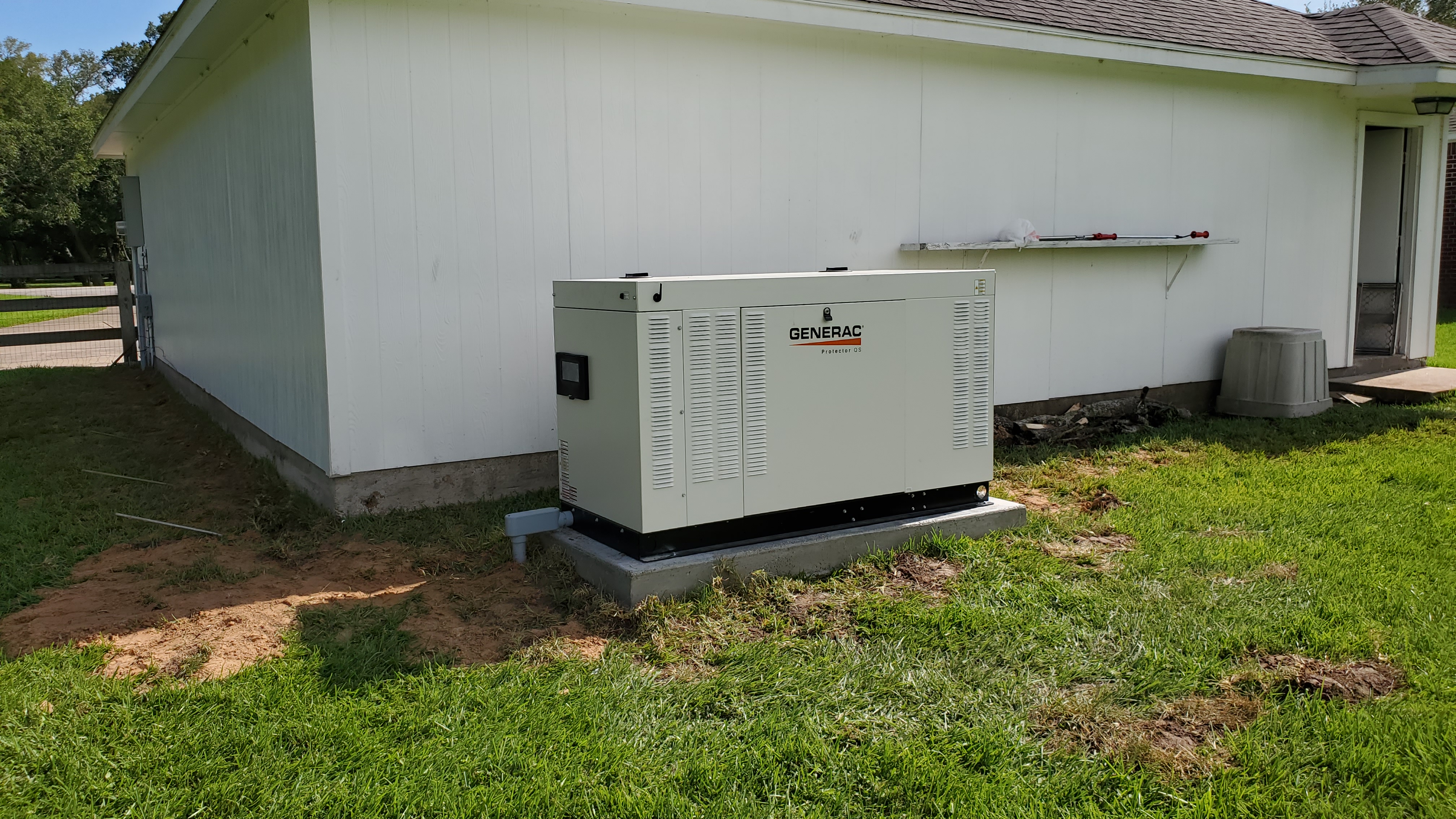
We ran on our 38 kW whole house generator last summer for four days
after hurricane Beryl in the Houston area. It runs our 7 tons of air conditioning easily,
Lynn McGuire <lynnmcguire5@gmail.com> schrieb:
We ran on our 38 kW whole house generator last summer for four days
after hurricane Beryl in the Houston area. It runs our 7 tons of air
conditioning easily,
7 tons of air conditioning?
On 1/10/2026 4:31 AM, Thomas Koenig wrote:
Lynn McGuire <lynnmcguire5@gmail.com> schrieb:
We ran on our 38 kW whole house generator last summer for four days
after hurricane Beryl in the Houston area. It runs our 7 tons of air
conditioning easily,
7 tons of air conditioning?
Freedom units!
From Wikipedia:
"A ton of refrigeration (TR or TOR), also called a refrigeration ton
(RT), is a unit of power used in some countries (especially in North America) to describe the heat-extraction rate of refrigeration and air conditioning equipment. It was originally defined as the rate of heat transfer that results in the freezing or melting of 1 short ton (2,000
lb; 907 kg) of pure ice at 0 -#C (32 -#F) in 24 hours.[1][2]"
Is also 12,000 Btu/hour, or 3.5 kW.
Lynn McGuire <lynnmcguire5@gmail.com> schrieb:
We ran on our 38 kW whole house generator last summer for four days
after hurricane Beryl in the Houston area. It runs our 7 tons of air
conditioning easily,
7 tons of air conditioning?
Sounds like a_really_ huge air conditioning unit, but I know that
building insulation is almost unheard of in the US.
On 1/10/2026 3:12 PM, Thomas Koenig wrote:
Sounds like a_really_ huge air conditioning unit, but I know that
building insulation is almost unheard of in the US.
And this is based on?
My last three houses, from 1996, have all been around R-20 in the walls
and R-30 in the ceilings.
Cryptoengineer <petertrei@gmail.com> schrieb:
On 1/10/2026 4:31 AM, Thomas Koenig wrote:
Lynn McGuire <lynnmcguire5@gmail.com> schrieb:
"A ton of refrigeration (TR or TOR), also called a refrigeration ton
(RT), is a unit of power used in some countries (especially in North
America) to describe the heat-extraction rate of refrigeration and air
conditioning equipment. It was originally defined as the rate of heat
transfer that results in the freezing or melting of 1 short ton (2,000
lb; 907 kg) of pure ice at 0 -#C (32 -#F) in 24 hours.[1][2]"
Is also 12,000 Btu/hour, or 3.5 kW.
So 7 tons is around 24 kW (at 0-#C, of course efficiency depends
on temperature; this is obviously a nameplate capacity. Actual
cooling capacity depends on the temperatures involved, obviously).
Sounds like a _really_ huge air conditioning unit, but I know that
building insulation is almost unheard of in the US.
Thomas Koenig <tkoenig@netcologne.de> writes:
Cryptoengineer <petertrei@gmail.com> schrieb:
On 1/10/2026 4:31 AM, Thomas Koenig wrote:
Lynn McGuire <lynnmcguire5@gmail.com> schrieb:
"A ton of refrigeration (TR or TOR), also called a refrigeration ton
(RT), is a unit of power used in some countries (especially in North
America) to describe the heat-extraction rate of refrigeration and air
conditioning equipment. It was originally defined as the rate of heat
transfer that results in the freezing or melting of 1 short ton (2,000
lb; 907 kg) of pure ice at 0 -#C (32 -#F) in 24 hours.[1][2]"
Is also 12,000 Btu/hour, or 3.5 kW.
So 7 tons is around 24 kW (at 0-#C, of course efficiency depends
on temperature; this is obviously a nameplate capacity. Actual
cooling capacity depends on the temperatures involved, obviously).
Sounds like a _really_ huge air conditioning unit, but I know that
building insulation is almost unheard of in the US.
Acutally, US building codes since the 1970s have required
substantial insulation. They've only become more strict
with time.
My house is insulated well enough that I don't need
air conditioning at all (coastal california).
Lynn McGuire <lynnmcguire5@gmail.com> schrieb:
We ran on our 38 kW whole house generator last summer for four days
after hurricane Beryl in the Houston area. It runs our 7 tons of air
conditioning easily,
7 tons of air conditioning?
Thomas Koenig <tkoenig@netcologne.de> wrote:
Lynn McGuire <lynnmcguire5@gmail.com> schrieb:
We ran on our 38 kW whole house generator last summer for four days
after hurricane Beryl in the Houston area. It runs our 7 tons of air
conditioning easily,
7 tons of air conditioning?
Weird American unit. Air conditioning system with the equivalent cooling capacity of seven tons of ice melting. We use BTUs too, God only knows why. Even the British don't use BTUs anymore. I think a ton is about 3.5kw. --scott
On 1/10/2026 3:12 PM, Thomas Koenig wrote:
Sounds like a_really_ huge air conditioning unit, but I know that
building insulation is almost unheard of in the US.
And this is based on?
My last three houses, from 1996, have all been around R-20 in the walls
and R-30 in the ceilings.
Thomas Koenig <tkoenig@netcologne.de> wrote:
Lynn McGuire <lynnmcguire5@gmail.com> schrieb:
We ran on our 38 kW whole house generator last summer for four days
after hurricane Beryl in the Houston area. It runs our 7 tons of air
conditioning easily,
7 tons of air conditioning?
Weird American unit. Air conditioning system with the equivalent cooling capacity of seven tons of ice melting. We use BTUs too, God only knows why. Even the British don't use BTUs anymore. I think a ton is about 3.5kw.
On 2026-01-11, Jay Morris <morrisj@epsilon3.me> wrote:
On 1/10/2026 3:12 PM, Thomas Koenig wrote:
Sounds like a_really_ huge air conditioning unit, but I know that
building insulation is almost unheard of in the US.
And this is based on?
My last three houses, from 1996, have all been around R-20 in the walls
and R-30 in the ceilings.
What is R-20 and R-30? Another kind of liberty unit? :-)
it is common. I have seen BTUs, CFM at xxx degrees, etc.
What is R-20 and R-30? Another kind of liberty unit? :-)
On 1/10/26 18:31, Scott Dorsey wrote:
Thomas Koenig <tkoenig@netcologne.de> wrote:I have never run across "tons" when talking about cooling.
Lynn McGuire <lynnmcguire5@gmail.com> schrieb:
We ran on our 38 kW whole house generator last summer for four days
after hurricane Beryl in the Houston area. It runs our 7 tons of air
conditioning easily,
7 tons of air conditioning?
Weird American unit. Air conditioning system with the equivalent cooling
capacity of seven tons of ice melting. We use BTUs too, God only knows why. >> Even the British don't use BTUs anymore. I think a ton is about 3.5kw.
--scott
On 1/11/26 10:42, Thomas Koenig wrote:
On 2026-01-11, Jay Morris <morrisj@epsilon3.me> wrote:
On 1/10/2026 3:12 PM, Thomas Koenig wrote:
Sounds like a_really_ huge air conditioning unit, but I know that
building insulation is almost unheard of in the US.
And this is based on?
My last three houses, from 1996, have all been around R-20 in the walls
and R-30 in the ceilings.
What is R-20 and R-30? Another kind of liberty unit? :-)
You must not have shopped for insulation before.
There is a very good entry in Wikipedia about R rating: https://en.wikipedia.org/wiki/R-value_(insulation) that I won't
reproduce here. I recommend reading it. But it says that it is used in
both American and European settings.
This is the first paragraph of the article:
"The R-value is a measure of thermal resistance, specifically how well a two-dimensional barrier, such as a layer of insulation,
In article <10k0qgo$3r1s$1@dont-email.me>, BCFD 36 <bcfd36@cruzio.com> wrote:
I have never run across "tons" when talking about cooling. I don't think >>it is common. I have seen BTUs, CFM at xxx degrees, etc.
It's pretty common for any industrial AC stuff. Americans also use
"BTU" when we mean "BTU/hr" which is almost as bad as the whole
"calories meaning kcal" mess.
Thomas Koenig <tkoenig@netcologne.de> wrote:materials is not how its done?
What is R-20 and R-30? Another kind of liberty unit? :-)
Yes, it's a measure of thermal resistance. Ironically, it appeared in the
US at a time when we were actively moving toward the metric system, back
in the seventies.
Nobody outside of construction folks actually use it. It was never mentioned >in my thermo class. I saw how it was calculated and it was kind of a mess. Can I take it that actually measuring the effect with various
Scott Dorsey <kludge@panix.com> schrieb:But ... but ... but ... consistency is the hobgoblin of small minds.
In article <10k0qgo$3r1s$1@dont-email.me>, BCFD 36 <bcfd36@cruzio.com> wrote:
I have never run across "tons" when talking about cooling. I don't think >>>it is common. I have seen BTUs, CFM at xxx degrees, etc.
It's pretty common for any industrial AC stuff. Americans also use
"BTU" when we mean "BTU/hr" which is almost as bad as the whole
"calories meaning kcal" mess.
A good thing these were thrown out (except in the context of
nutrition, where they still occur).
Having different units for heat and mechanical energy is just
fundamentally broken, as is having things like Earth's gravity or
the density of certain liquids such as water or mercury in units
(except for their historical definition). Units just need to
be consistent.
I remember cracking up once when I read a definition of theI take it eta is some sort of constant whose manipulation can
Reynolds number not as
Re = u * d * rho / eta
but as
Re = u * d * rho / (eta * c)
where c was the correction factor for the units, left unspecified,
of course. Hilarious!
On Mon, 12 Jan 2026 07:07:43 -0000 (UTC), Thomas Koenig ><tkoenig@netcologne.de> wrote:
Scott Dorsey <kludge@panix.com> schrieb:<bcfd36@cruzio.com> wrote:
In article <10k0qgo$3r1s$1@dont-email.me>, BCFD 36 =
I have never run across "tons" when talking about cooling. I don't = >think=20
it is common. I have seen BTUs, CFM at xxx degrees, etc.=20
It's pretty common for any industrial AC stuff. Americans also use=20
"BTU" when we mean "BTU/hr" which is almost as bad as the whole
"calories meaning kcal" mess.
A good thing these were thrown out (except in the context of
nutrition, where they still occur).
Having different units for heat and mechanical energy is just
fundamentally broken, as is having things like Earth's gravity or
the density of certain liquids such as water or mercury in units
(except for their historical definition). Units just need to
be consistent.
But ... but ... but ... consistency is the hobgoblin of small minds.
On Mon, 12 Jan 2026 07:07:43 -0000 (UTC), Thomas Koenig
<tkoenig@netcologne.de> wrote:
Scott Dorsey <kludge@panix.com> schrieb:
In article <10k0qgo$3r1s$1@dont-email.me>, BCFD 36 <bcfd36@cruzio.com> wrote:
I have never run across "tons" when talking about cooling. I don't think >>>>it is common. I have seen BTUs, CFM at xxx degrees, etc.
It's pretty common for any industrial AC stuff. Americans also use
"BTU" when we mean "BTU/hr" which is almost as bad as the whole
"calories meaning kcal" mess.
A good thing these were thrown out (except in the context of
nutrition, where they still occur).
Having different units for heat and mechanical energy is just
fundamentally broken, as is having things like Earth's gravity or
the density of certain liquids such as water or mercury in units
(except for their historical definition). Units just need to
be consistent.
But ... but ... but ... consistency is the hobgoblin of small minds.
I remember cracking up once when I read a definition of the
Reynolds number not as
Re = u * d * rho / eta
but as
Re = u * d * rho / (eta * c)
where c was the correction factor for the units, left unspecified,
of course. Hilarious!
I take it eta is some sort of constant whose manipulation can
counteract different units.
Scott Dorsey <kludge@panix.com> schrieb:
In article <10k0qgo$3r1s$1@dont-email.me>, BCFD 36 <bcfd36@cruzio.com> wrote:
I have never run across "tons" when talking about cooling. I don't think >>> it is common. I have seen BTUs, CFM at xxx degrees, etc.
It's pretty common for any industrial AC stuff. Americans also use
"BTU" when we mean "BTU/hr" which is almost as bad as the whole
"calories meaning kcal" mess.
A good thing these were thrown out (except in the context of
nutrition, where they still occur).
Having different units for heat and mechanical energy is just
fundamentally broken, as is having things like Earth's gravity or
the density of certain liquids such as water or mercury in units
(except for their historical definition). Units just need to
be consistent.
I remember cracking up once when I read a definition of the
Reynolds number not as
Re = u * d * rho / eta
but as
Re = u * d * rho / (eta * c)
where c was the correction factor for the units, left unspecified,
of course. Hilarious!
On Sun, 11 Jan 2026 17:23:03 -0500 (EST), kludge@panix.com (Scott
Dorsey) wrote:
Thomas Koenig <tkoenig@netcologne.de> wrote:
What is R-20 and R-30? Another kind of liberty unit? :-)
Yes, it's a measure of thermal resistance. Ironically, it appeared in the >>US at a time when we were actively moving toward the metric system, back
in the seventies.
Nobody outside of construction folks actually use it. It was never mentioned >>in my thermo class. I saw how it was calculated and it was kind of a mess.
Can I take it that actually measuring the effect with various
materials is not how its done?
(eg: closed room, various panels, heat/cold source on the outside, thermometers on the walls/windows inside and out at the same height)
The /real/ question is: how is the thermal efficiency claimed for a
given oil furnace computed? Does someone just pull it out of his *ss
or is it something Marketing comes up with? Particularly measure
claiming to take into account the existing ducts.
Note that the thermal efficiency of a radiant electric heater is,
IIRC, 100%. I once explored this a little bit to try and figure out
the relative economics, but got lost in the details. Also note that
the current push against oil furnaces, at least up here, is based on
air pollution, not inefficiency or inadequacy.
The /real/ question is: how is the thermal efficiency claimed for a
given oil furnace computed? Does someone just pull it out of his *ss
or is it something Marketing comes up with? Particularly measure
claiming to take into account the existing ducts.
Note that the thermal efficiency of a radiant electric heater is,
IIRC, 100%. I once explored this a little bit to try and figure out
the relative economics, but got lost in the details.
Also note that
the current push against oil furnaces, at least up here, is based on
air pollution, not inefficiency or inadequacy.
In article <10k0qgo$3r1s$1@dont-email.me>, BCFD 36 <bcfd36@cruzio.com> wrote:
I have never run across "tons" when talking about cooling. I don't think
it is common. I have seen BTUs, CFM at xxx degrees, etc.
It's pretty common for any industrial AC stuff. Americans also use
"BTU" when we mean "BTU/hr" which is almost as bad as the whole
"calories meaning kcal" mess.
On 11/01/2026 22:20, Scott Dorsey wrote:
In article <10k0qgo$3r1s$1@dont-email.me>, BCFD 36 <bcfd36@cruzio.com> wrote:
I have never run across "tons" when talking about cooling. I don't think >>> it is common. I have seen BTUs, CFM at xxx degrees, etc.
It's pretty common for any industrial AC stuff. Americans also use
"BTU" when we mean "BTU/hr" which is almost as bad as the whole
"calories meaning kcal" mess.
Heh. Got my UK gas bill yesterday, it includes:
734.9 kWh - 23.5 gas units at 38.9 calorific value
In my case (it varies) a "gas unit" is 100 cubic feet (which isn't
stated on the bill);
the calorific value is given in MJ/m^3 (which isn't
stated on the bill); plus there is a "correction factor" of about 1.02 (which isn't even mentioned, never mind the exact value used being given
on the bill).
Still, they used to use therms. And maybe ergs, gallons and foot-pounds.
Or Batmans (a real unit, though now obsolete, and unrelated to Mr Wayne).
Aargh, I just found out they still use therms sometimes.
dunks head in bucket
Kiloseconds, anyone? 16 min 40 seconds.
Megasecond? 11 days 13 hours, 46 minutes and 40 seconds.
Gigasecond? about 31.7 years (about 'cos leap years etc)
millisecond - too fast for you or me, a young fit cat takes about 20 milliseconds to react
microseconds - timing accuracy of detonations in an atomic bomb
nanoseconds - light travels about a foot (see Grace Hopper)
On 11/01/2026 22:20, Scott Dorsey wrote:
In article <10k0qgo$3r1s$1@dont-email.me>, BCFD 36
<bcfd36@cruzio.com> wrote:
I have never run across "tons" when talking about cooling. I don't think >>> it is common. I have seen BTUs, CFM at xxx degrees, etc.
It's pretty common for any industrial AC stuff.-a Americans also use
"BTU" when we mean "BTU/hr" which is almost as bad as the whole
"calories meaning kcal" mess.
Heh. Got my UK gas bill yesterday, it includes:
734.9 kWh - 23.5 gas units at 38.9 calorific value
In my case (it varies) a "gas unit" is 100 cubic feet (which isn't
stated on the bill); the calorific value is given in MJ/m^3 (which isn't stated on the bill); plus there is a "correction factor" of about 1.02 (which isn't even mentioned, never mind the exact value used being given
on the bill).
Still, they used to use therms. And maybe ergs, gallons and foot-pounds.
Or Batmans (a real unit, though now obsolete, and unrelated to Mr Wayne).
Aargh, I just found out they still use therms sometimes.
dunks head in bucket
Kiloseconds, anyone? 16 min 40 seconds.
Megasecond? 11 days 13 hours, 46 minutes and 40 seconds.
Gigasecond? about 31.7 years (about 'cos leap years etc)
millisecond - too fast for you or me, a young fit cat takes about 20 milliseconds to react
microseconds - timing accuracy of detonations in an atomic bomb
nanoseconds - light travels about a foot (see Grace Hopper)
| Sysop: | Amessyroom |
|---|---|
| Location: | Fayetteville, NC |
| Users: | 54 |
| Nodes: | 6 (1 / 5) |
| Uptime: | 23:19:27 |
| Calls: | 742 |
| Files: | 1,218 |
| D/L today: |
6 files (8,794K bytes) |
| Messages: | 186,561 |
| Posted today: | 1 |